

Contracting
Questions to Establish Workplace Expectations
📚 Connect with us. Want to hear what’s new at The Pragmatic Bookshelf? Sign up for our newsletter. You’ll be the first to know about author speaking engagements, books in beta, new books in print, and promo codes that give you discounts of up to 40 percent.
Erm, so what should we talk about?
Just like meeting any human being for the first time, your first 1 to 1 can go in a multitude of different ways. You might be lucky enough to instantly gel with your direct report; the conversation flows and away you go. Equally, you might be unlucky enough to both sit down, stare at each other and not really know what to say. Depending on their experience in their career and the current organization, cultural background, and personality in general, people may approach this meeting in different ways.
If you have started your role in a new organization, you won't know your direct reports on a personal level yet, making it challenging to judge the right level of formality for the meeting. Too serious and you might cause alienation; too jovial may come across as strange in some workplaces. If you have been promoted from within, your relationship with colleagues is changing and you may face further awkwardness — especially if those colleagues have become close friends over years.
Well, this is getting complicated already! What should you do?
Rather than risk getting off to the wrong start, follow you can follow a useful exercise that allows both parties to talk openly. You’ll discuss what you expect from one other — the wants and needs of the relationship. This exercise is called contracting.
What Is Contracting?
Contracting is simply a set of questions that provoke a conversation about what is expected from you and your direct reports. These expectations come from both sides of the relationship — the contracting exercise aims to create a space to talk honestly and openly.
When sitting down for your first 1 to 1, explain that you’re going to do a short exercise to understand how best you can support that person as their manager. You can leave it until the meeting itself to reveal the questions, or you could forward them to your direct reports ahead of time so that they can prepare. The choice is yours.
Let’s have a look at each of the questions. I’ve used these myself in contracting sessions — they serve only as a guide. You, of course, can change them to suit your needs.
1. What areas would you like support with?
This is a broad question on purpose: it lets the other person think of potentially any area. For example, it could be with technical challenges, resolving difficult relationships with colleagues in their team, or even their self-confidence at work.
Try your best to keep the thought bubble over their head at this point; resist the urge to suggest items yourself. Note down everything they say, but don’t offer any solutions yet. Later, you can turn these talking points into more lengthly conversations at future 1 to 1s, thus building a thread of continuity through your meetings beyond status updates.
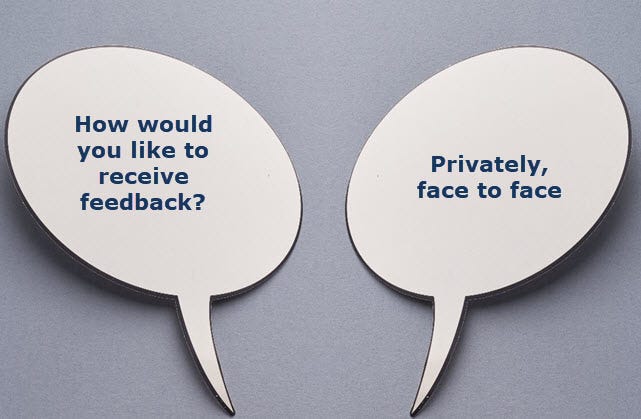
2. How would you like to receive feedback and support from me?
This question is about working out how the other person likes to operate. People have a range of personality types — make sure the other party feels comfortable with how you interact.
You may get a variety of responses to this question. A common response is, “I don’t mind,” which is usually not the case given more probing. If they are resistant to give a clear answer, frame the question with some examples. Ask them to imagine, for example, they are in a meeting at the front of the room, explaining something on a whiteboard. Would they be more comfortable with you, their manager, calling out an inconsistency in front of the whole room, or would they prefer that you tell them privately, face to face afterward? Would they prefer your comments on a document they have shared, face to face, or by email? Once you dig deeper, you may find that your direct reports all have very different feedback preferences.
Uncovering the best ways to deliver feedback and support will allow you to have the greatest impact when doing so. Your goal is a relationship where direct and honest feedback is given at all times. When doing this, you’ll want the feedback to land in the most impactful and humane way possible.
3. What challenges might we face while working together?
Like the first question, it’s good to give your direct reports the airtime to think properly about this one. They may have some first impressions of you that frame their interactions. For example, they may be a less confident public speaker and so are afraid of challenging you publicly. Or let’s say your background is in JavaScript and theirs in Java — they may wonder how you can support their technical development. All of these concerns are valid. Now is your opportunity to discuss them in detail and develop some strategies. In the last example, one suggestion could be to delegate technical mentorship to a senior engineer of the same skillset.
4. How will we know if the support I’m offering isn’t going well?
If the relationship is taking a turn for the worse, then it’s good for both of you both to be aware of the signs. It could degrade in numerous ways. You could be frequently experiencing negative emotions from your interactions. Or perhaps your direct report is not be benefiting from your particular coaching style.
If the situation is getting worse due to conflict, take the opportunity to explore how both of you react to negative emotions like disappointment, frustration, and anger. One person may become furiously vocal in a conflict situation while the other may be boiling inside but say very little. Be aware of each other’s signs so you can spot them.
If your coaching and support are not working out, then it may be as simple as agreeing that it is okay to openly tell each other. Then you can take further steps to improve the situation. Maybe mentorship can come from elsewhere in the organization.
5. How confidential is the content of our meetings?
A number of sensitive issues may come up during your meetings. For example, your direct report may say that her colleague’s performance has been getting worse over the quarter. However, how confidential do they consider this information? Would they feel uncomfortable if you went and followed up directly with that information? Would they feel uncomfortable if you mentioned that the feedback came from them?
Run through some example scenarios to help tease out answers if they are unsure.
In Summary
You now have a tool called contracting that you can use to break the ice, increase understanding, and set expectations between you and your direct reports. Contracting is useful when starting a new role, but it’s also useful to revisit it with time as needs evolve and adapt.
In addition to getting the relationship off on the right foot, contracting should provide plenty to talk about in the coming weeks. Next up, we’ll look at 1 to 1 meetings and how to make sure they go swimmingly.
If you enjoyed this article, be sure to pick up James Stanier’s book from The Pragmatic Bookshelf:
Through the end of October 2021, you can save 35 percent on the ebook version using promo code jsengman_medium_35. Note that promo codes are not valid for prior purchases.
Further Reading
Also by James Stanier:
Become An Effective Software Engineering Manager on Medium: