
Conserving Indonesian peatlands and improving farmers’ life
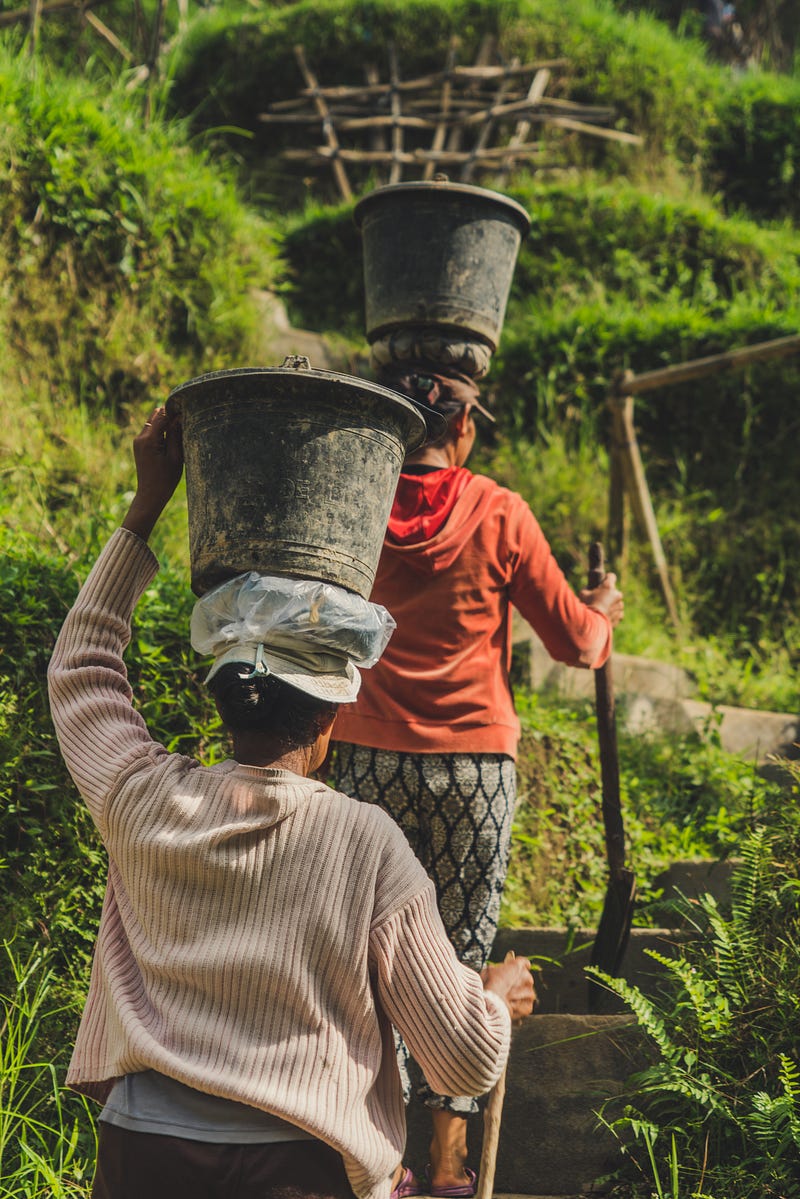
Peatlands are areas where partially decayed vegetation and organic matter accumulate. There are located in humid places and acid soils where microorganisms cannot decompose the dead vegetation. The accumulation of dead organic matter is a slow process, but because it is ongoing for centuries, peatlands can be as deep as 40 feet (9m). In Indonesia, peatlands cover one tenth of the country which is about 22.5 million ha.
Peatlands are poor soils, often saturated in water, but highly rich in carbon dioxide. Indonesian farmers’ traditional way of cultivating crops is to burn the land and use ashes as a natural fertilizer. After using the land for 3 years, they used to let it rest at least 20 years, a sufficient time for the soil to recover its fertility. Today, the increasing population and reduced land availability in Indonesia do not allow farmers to wait 20 years for the land to recover thus the fallow period has significantly decreased, i.e., 5 years.
The loss of soil fertility and productivity is not the only problem. Slash and burn farming often ignite large scale fire especially in drained and dry peatlands. A peatland fire is not like a forest fire, it can occur underground and burn for years. The large volume of burnt peatland releases carbon dioxide and contributes to amplify climate change.
In Southeast Asia, the burning peatlands of Indonesia cause an important problem known as haze. The smoke originated from the million hectares of burnt peatlands moves toward other countries. Singapore is especially irritated by the large cloud of smoke covering the city-country every year during the dry season.
Last Friday, I joined a talk organised by the Asian Research Institute at the National University of Singapore. The goal of this talk was to exchange ideas and testimonies about what was done on the ground to stop fires in Indonesian peatlands and thus the haze problem.
Dr Myria Safitri from the Indonesian peatland restoration agency (BRG) explained how the Indonesian government is helping villagers to prevent fires. “BRG with the financial support of the Indonesian government is currently monitoring 2.5 million hectares of peatland. 700 000 are located in protected areas, 400 000 are managed by farmers, and 1.5 million are under the responsibility of private oil palm companies.” BRG coordinates the different stakeholders and train farmers to sustainable agricultural practices as well. “Each village has a facilitator who has to live there at least one year to connect with villagers. He organizes farmers’ field schools where villagers learn agricultural practices using zero-burning farming,” Dr Safitri explained.
Three farmers were present at the talk and confirmed the success of the zero-burning program implementation. “When the government prohibited us to burn the land to farm, we didn’t know what to do. Then the field course taught us how to cultivate without burning. We tried this new practice and felt satisfied with the results. Now I can cultivate 6000 watermelon plants and produce 10 tonnes of fruits a year. I have a better livelihood,” shared M. Kholil a peatland farmer from Riau province.
“Through the program and its field course, we learnt how to manage the land and get local seeds of vegetable, corn and chili. Farmers who had no activity before, especially women, were empowered by the program and started producing vegetables on areas where there was no production before,” added Ms Erni Zulaika a peatland farmer from Jambi province.
“With my new knowledge, I can select the best seeds to grow in my area and I can make cheap fertilizers by fermenting rice. I became the best chili producer of my province because now I can have a high productivity at low cost while doing zero burning and using non-chemical fertilizers,” concluded Ms Theti, a farmer from a Dayak community in Kapuas province.
In Singapore too, people are making an effort to prevent fires from peatlands. Benjamin Tay started the People’s movement to stop the haze in Singapore in 2013. His goal is to prevent fires in Indonesia and make Singaporean citizens aware of the peatland value. “We focus our action on community as we try to balance conservation with rural development. For example, we train farmers in Indonesia to protect the land and maintain peatlands wet. Still, it’s hard to ensure that farmers will maintain the canals and preserve the peatlands after we leave,” shared M. Tay, “we push for a sustainable palm oil and a responsible consumption in Singapore as well. We are conscious of the role of the Singaporean finance sector in financing the haze, so we also try to take action on banks.”
In addition, the Singaporean government tries to incentivize sustainable consumption and production. Ranjeet Singh from the Singaporean ministry of water and environment pointed out that stopping peatland fires is not only important to reduce air pollution and related health issues in Singapore but also to release less carbon dioxide which contributes to climate change. “We need to develop capabilities in Singapore and Indonesia to work on peatlands and get a critical mass. A better coordination of stakeholders is also key for better outcomes and a more meaningful and significant impact,” concluded the government representative.
Helping farmers to cultivate without burning the land is a right step toward the preservation of peatlands, but it’s important to remember that farmers are not the most impactful actors in the area. “Farmers only control the ignition,” specified Alex Cobb researcher at the Singapore MIT alliance and specialized in peatland management, “large scale producers and private companies drain peatlands using large machinery and therefore influence the flammability of the peatland. In addition, more lucrative is a crop on peatlands and more companies will invest in draining peatlands.”
If we want to stop wildfires in Indonesian peatlands, it is necessary to help farmers to cultivate without burning, but it is essential to control oil palm private companies which are draining peatlands, increasing its flammability and risking the lives of the local population, for profit.