
Bring Back the Trees on Agricultural Fields!
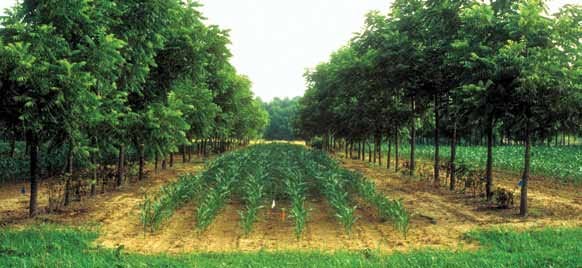
A tree grows tall and deep, spreading both its branches above the ground and its roots underground, therefore it makes the ground fresher and softer for other plants to settle. The roots increase the soil drainage and aeration, some trees can even fix nitrogen and enrich the soil. The leaves and branches of the tree shadow the ground and reduce the soil evapotranspiration and thus reduce the need for irrigation. A tree is the home of various living beings such as insects, birds and plants.
A tree is also great for farmers. It can be a source of food and medicine for home, and a source of fodder for the livestock. The wood can also be burnt and used to cook or warm up the house. A tree is definitely a valuable companion, so why are farmers neglecting it?
First, the period necessary for a tree to reach its productive stage is long. Fruit trees often need more than 3–5 years to start producing, and their optimum productive age comes even later. Farmers want to grow fast cash crops which will give them a sufficient income to send their children to school and university.
Second, the investment needed to start growing trees is high. This investment is higher than for annual crops and therefore small-holder farmers may not have the capital and time to start growing trees.
Third, crop and tree together are tricky to manage, they may compete for soil nutrient and water, moreover the tree shadow the crop. The shadow usually has a negative impact on the growth of non shade tolerant crop, a way to cope this problem is to often prune the tree.
The world needs alternatives to the current intensive monocrop farming. Monocropping agriculture poorly uses the resources, has a low resilience in front of climate change or market volatility, and has high environmental impact due to the high use of fertilizer and pesticides.
Next to this, the deforestation at the global scale especially in highly populated developing countries is contributing to land degradation which aliments the climate change negative feedback loop.
We need trees to mitigate climate change and keep the water and air clean. In this race to reforestation for carbon storing, many reforesting projects are focus on the number of tree and not much on the condition of the planting: e.g the social and natural environment.
Reforesting shouldn’t be done for the sake of planting trees, but rather to better balance the ecosystem and safely give an income to rural populations. The number of trees shouldn’t matter but their inclusion and acceptance in every local system should be considered.
We need to show farmers why it’s interesting to plant trees on their field. We shouldn’t tell them about climate change or air and water cleaning, farmers don’t care about these things. We should show them how much money they can save on fertilizer and pesticides, and how much more money they can make by selling tree by-products. Farmers have to realize by themselves that agroforestry is great.
Agroforestry is by definition an agricultural productive system including trees. It is a new science which is building on thousand of years of farmers experience.
According to the World Agroforestry Center:
“Agroforestry is a dynamic, ecologically based, natural resources management system that, through the integration of trees in farmland and rangeland, diversifies and sustain production for increased social, economic and environmental benefits for land users at all levels.”
Agroforestry blurs the frontier between agriculture and forestry. Depending on the country agroforestry projects can be managed either by the the forestry or agriculture ministry.
The objectives of this integrated agricultural system is to solve the problems mentioned above by increasing the land productivity and sustainability.
There are four designs of agroforestry system, each combining different land uses. This classification of system is mainly used to facilitate communication and the organization of the information and research effort, however in real-life farmers’s field can be difficult to classify.
The agrosilvocultural system is probably the most famous because considered as the narrow definition of agroforestry. In this system, trees and crops grow together.
Trees can be planted between rows of crop as in alley cropping, they can be planted in a corner of a field as a fallow, or they can be planted around the crop to create a natural fence or a windbreaker.
The temporal arrangement of trees and crops can differ between practices, for example they may be together at the same time on the field (coffee under tree shade), seasonal crop can be intermittently planted under trees, or many different crops and trees can be planted together at the same time (homegarden).
The agrosilvopastoral system is a combination of crops, trees and animals. It exists many designs, for example the Simple Agro Livestock Technology (SALT) has trees at the top of a hill, lower on the hill are the cash crop, and the lowest part of the hill is used to grow fodder and let livestock graze. In this system, the fertilizer used on the crops is transported by the rain run-off and is then available to fodder plants.
Silvopastoral systems are a combination of trees and animals. Under the trees, fodder grasses and herbs can be grown by the farmer. Ideally, these grasses are fast growing and cover the field quickly so the farmer doesn’t have to control weed by hand.
Legume plants are great to improve the soil fertility because they fix the atmospheric nitrogen and make it available to other plants. Moreover they are a high quality fodder rich in nutrient. This system usually requires low labour from the farmer and really accelerate the restoration of the land thanks to animal and green manure.
Agropastoral systems are a combination of crop and livestock production. Crop alternate with the cultivativation of forage plants and grazing period. The livestock can graze crop residues after harvest (rice straw) or graze on fallow land.
This system is very efficient to restore a land, both the animals and plants can improve the soil physical and chemical properties. However the number of animals have to be low to avoid soil compaction, and the plants have to be carefully chosen — nitrogen fixing plants are usually excellent.
In these four mentioned system each components has a role and must be chosen carefully.
The crop is often the most important component because the farmer depends on it either as its main income or as its main source of food. Usually all the other components of an agroforestry system are chosen depending on the need of the crop.
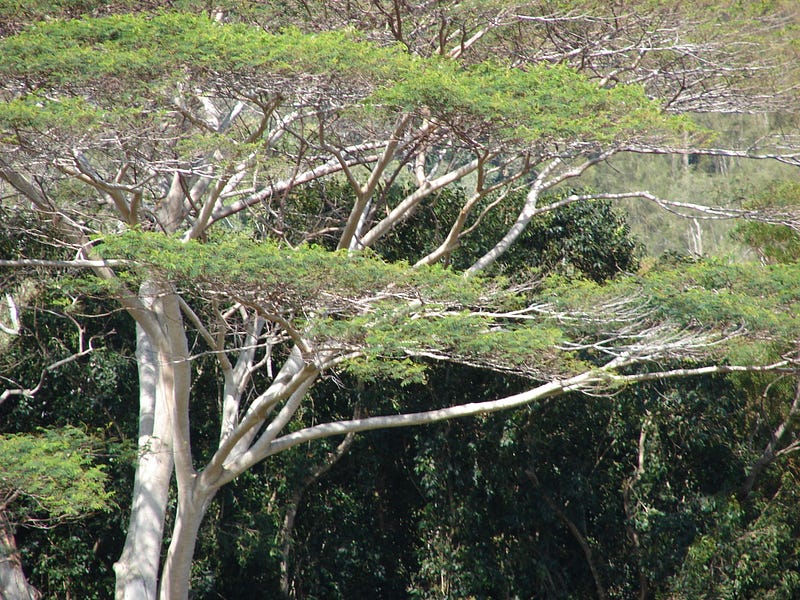
The tree is the most tricky element because it is slow to grow and will stay a long time on the field. As it grows its branches, a tree shades the crops under it. Some crops are shade tolerant and can grow under shade, in this case the tree is very useful to provide a fresh and wet habitat to the crop and control the weed which are not able to grow under shade.
However most crops need lots of light to be highly productive, in this case the tree can be pruned. Pruning is labour demanding and physically difficult, the farmer has to be sure to be able to prune before planting the trees.
Pruned branches can be used as fodder for animals or green manure to fertilize the field. The by-products of a tree are an extra food source of income for the farmer.
The ideal tree is multipurpose, moderately shading and competitive and doesn’t have allelopathic effect on the crop.
In semi-arid tropics where the rainfall period lasts less than 6 months the tree is a real asset. It can pump water and nutrient from deeper soil layers thanks to its root network. The surrounding plants (e.g crop) benefits from this water uplift and are more tolerant to drought.
The forage species must be easy to establish and manage because farmer don’t want to spend time and money in it. For this reason, it has to be disease and pest resistant, and requires low amount of nutrient.
The forage species must grow fast, quickly cover the ground to control weed, and produce lots of dry biomass. Depending on the goal of the farmer, either soil fertility improvement or fodder production, the forage species should be a legume or a grass species.
The livestock production is a great opportunity for farmers to join the growing global meat market (3% / year) and increase their income. However farmers are often reluctant to start raising animals because it requires an important knowledge to care the animals.
Moreover in poor rural areas, it’s often hard to find a high quality fodder providing the necessary nutrients for a healthy and productive livestock. Most of traditional fodder resources are low in protein and in essential mineral, and high in fibers. In an agroforestry system, trees can have edible foliage and fruit, crop residues can be fed to animals, and improved forage species can be grown when the field is left as a fallow.
The forage provided by tree is particularly rich in protein and minerals, however it contains secondary plant compound which can have negative or beneficial effects depending on its proportion in the livestock’s diet. For this reason, tree foliage is a good supplement to increase animal weight gain and overcome feed gaps in the dry season, yet it shouldn’t be the only feed source.
Two examples of the secondary plant compounds mentioned above are the tannins and saponins.
Tannins are a diverse group of polyphenols which are soluble in water and have the ability to precipitate proteins. The quality and quantity of tannin content in a plant depends on the plant species and variety, but also on the plant growth stage, the environmental conditions (stress) and the plant management (fertilization, cutting frequency).
A balanced intake of tannins results in a better digestion and utilization of protein by ruminants, a suppression of gastrointestinal parasites, a prevention of bloat, and a mitigation of potential nitrogen and methane emissions from animal excreta.
An unbalanced tannin intake can be toxic for livestock and decreases productivity by reducing animal intake, feed digestibility and nutrient absorption.
Tannins also affect the N mineralization from green manure in the soil. A high quality legume without tannins releases a high amount of N in a very short time while it’s the contrary for low quality legume.
Saponins decrease the amount of protozoa living in ruminants’ gut, moreover up to 25% of ruminal methanogens bacteria are associated with these protozoa. Therefore controlling protozoa population in ruminants gut contributes to decreasing methane emissions and participates in climate change mitigation.
Saponins are more efficient than tannins to modify the ruminal fermentation. The toxicity of saponins depends on, like for the tannins, the concentration and molecule type included in the animal diet. Different animal species and race are more or less tolerant to saponins, moreover the health, body condition and age of the animal alter the tolerance to saponins.
In an heterogeneous and complex crop system such as agroforestry system, the species diversity is higher, and species dispersion and population dynamics are more complicated.
The plant diversity provide different sources of food and a wide range of habitats both for pests and beneficials.
The integrated pest management requires a knowledge of the agroecosystems and their interactions. Then it can balance the combination of plants for an effective protection of the crop yield.
The integrated pest management aims to use natural ecological species features to control pest on the field. Three ways to control pest is:
- to interfere with their host finding system.
- to attract or disperse pests from valuable crops.
- to attract beneficials to infested crops. The use of natural pest enemies can be done by enhancing their habitat.
Pesticides are classified by target organism, crop, application time and site, spectrum and mode of action, chemical structure, and toxicity.
The integrated pest management is characterized by no routine treatment, a planned and coordinated management of cropping system, the use of selective pesticides only on absolute necessary areas, the adaptation of pesticides use to pest densities.
To be implemented successfully, agroforestry has to link the biophysical conditions of the environment with the economic, social and political aspect. It needs to create mutual interactions benefiting the economy, society and the environment.
Today, there is a need to complexify agricultural system to make them more resilient and resistant to climate change. A well design agroforestry system can bring all these benefits and help communities thrive under climate change.