
There is no such a Thing as Sustainable Palm Oil
Oil palm is the 3rd largest cultivated oil crop behind soy and rapeseed. In 2017, it was covering 18.7 million ha. That’s a lot of soccer fields and world cup! In 1980, 4.5 million tons of palm oil was produced while in 2014 this number reached 70 millions tons. An increase of fifteen fold in 34 years. And this number is predicted to grow even more in the next years. This rise in production and demand for the palm oil is correlated with the increasing number of people living in the cities. This middle class doesn’t take the time to cook and usually buy ready to eat processed food. Consumerism and an easier access to cosmetic products to a larger public also contribute to the rise in palm oil demand. Palm oil can be found in various products like your frozen pizza and your face care cream.
“palm oil” refers to the oil while “oil palm” refers to the palm tree from which the oil is harvested. Although palm oil is the most commonly used expression.
The first fruits containing the oil can be harvested when the tree is three years old. After 25 years, the tree is usually too old and tall to be easily harvested so the farmer cuts it down and let his field as a fallow. After few years, he can replants new trees.
Each fruit contains about 35% of oil. The harvest takes place every ten days and is done by hand. For this reason, oil palm production is important for the livelihood of many people in region where labor is abundant and wages low. One person is usually needed to take care of 8 to 12 ha of oil palm.
One oil palm tree can produce 40 kg of oil, this represents about 3.8 tons per hectare. This number varies depending on location and the biophysical conditions where trees are planted.
The main producers of palm oil are Indonesia and Malaysia, cumulating 85% of the world production in 2016. The three biggest importers at the same date were India, the European Union and China, importing respectively 9.2, 6.5 and 4.9 million tons of palm oil.
They are two categories of producers: the concessions who are corporate companies cultivating large fields, and the smallholders who are farmer families cultivating small fields usually less than 50 ha. The definition of smallholder is relative to each country and there is no consensus about the size of the field required to be considered a smallholder.
In many of these developing countries, field boundaries are blurry and can be different at each administrative level: village, state and country. The corruption and this imprecise land tenure give opportunities for illegal logging and plantation.
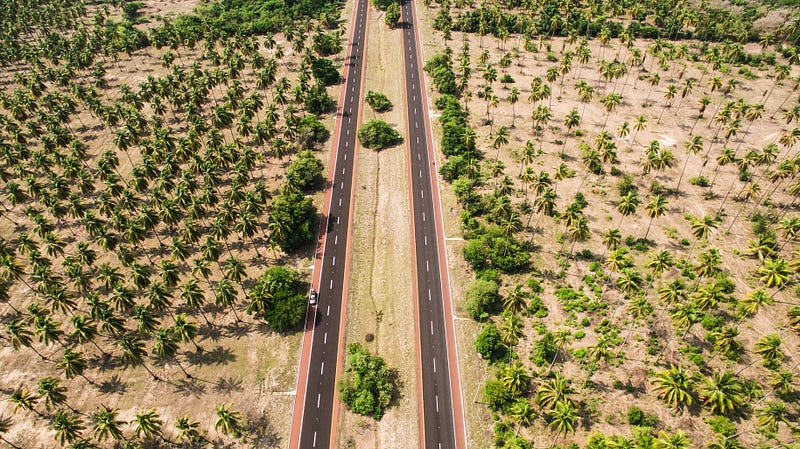
Biodiversity in the tropical ecosystems is victim of the bad governance. Forests are cut down and peatlands are burnt or drained to expand oil palm plantation. The habitat of tropical species is destroyed and replaced by monocultures which failed to provide the variety of resources and habitats present in the primary forest.
Specialist species which need a precise resource and condition to thrive usually disappear quickly while generalists able to use a wide range of resources can survive in this new environment. For example some species of rats, snakes and giant lizards are thriving in oil palm monocultures. However, the vast majority of species are impaired by the monotonous open landscape of the oil palm plantations. Only 8 species of snakes out of 400 are prospering, the other ones moved out of the system and disappeared.
Another threat are the farmers who hunt animals to protect their crop, eat them or sell them. For example a python can be sold 30$ on the market, this represents about 6 times the daily wage of the Indonesian worker in a palm oil plantation. Animals like the Sumatran bearded pig (Sus barbatus) is threaten by farmers hungry of its meat.
The soil fauna like earthworms are also impaired by oil palm low litter diversity. Soil conservation solutions exist, using the palm oil mill waste as compost for instance. However these practices are still rarely done by oil palm growers.

To conserve the primary forest and its biodiversity from oil palm expansion, the Roundtable on Sustainable Palm Oil (RSPO) acts on the supply chain to ensure the sustainability of the oil palm exploitation. Producers and all actors along the supply chain can get a certification from organizations such as the RSPO or the Rainforest Alliance to reach high value market and earn a premium for their sustainable practices. An example of the RSPO guidelines to obtain a certification is to not fence the field and not cut the primary forest to expand plantation.
41 out of 5 of the biggest companies are addressing the question of deforestation and 29 already committed to “zero deforestation”.
These initiatives are hopes for the biodiversity and forest conservation, however still many problems persist.
Even if there are legislative actions to protect forest in many countries, governments have great difficulties to monitor the land and enforce the law especially in remote places. Moreover there is often a long time lag between policy implementation and positive impact on forest cover.
Government and voluntary policies lack complementarity and can even be antagonist. For example, Malaysian law requires oil palm producers to keep their boundary information private which is contrary to the transparency policy of the RSPO certification scheme. Another example is from Indonesia where the government requests farmers to use the totality of their land while sustainability scheme requires farmers to let spare land for biodiversity. There is a need for a better communication between government and the non governmental bodies which certify plantations.
There is leakage from companies who did the no deforestation pledge to company who didn’t. This means that deforestation still occurs and can even increase on land owned by company who didn’t pledge anything and which are not certified.
There is a low demand for sustainable oil palm, one of the reason is the lack of trust from the customers. Even if there are trading regulations, it is hard to trace fresh fruit bunches of oil palm from the producer to the manufacturer, retailer, trader etc…. Companies may fill the demand of their downstream facilities by buying fresh fruit bunches from uncertified location and therefore mix sustainable and unsustainable palm oil altogether. In 2017, one fifth of the palm oil was certified of which only half was sold as certified in the EU and US market.

In the future, the demand for palm oil will be driven by the rise of the urban middle class and the biofuel production. This high demand can be met by the increase in yield of the areas already cultivated with oil palm. The current average production of 3.7 kg / ha can potentially be increased up to 10.5 kg/ha. Moreover losses due to diseases and poor post-harvest management can be reduced.
This agricultural intensification could increase the amount of spare land dedicated to conservation. However the high productivity and potential profit of palm oil could also attract more farmers and boost the palm oil industry. If farmers and investors are attracted by the profit of oil palm and expand it on all its biophysically suitable areas, about 270 million hectares of biodiversity hotspot could be threatened.
REFERENCES:


