
The Soft Voices of Community Forestry
The Center for People and Forest — RECOFTC was created in 1987 with the will to “improve the policies, institutions and practices of community forestry” in Southeast Asia. Such a will is shown through its staff. Rejani Kunjappan, who has been working as a trainer with RECOFTC for six years, wakes up every morning with the motivation to “give a voice to everybody and empower women and the youth,” as she told me recently. With a team of ten people, she designs courses, writes manuals and delivers trainings to promote a more inclusive vision of land management by reducing power asymmetries.
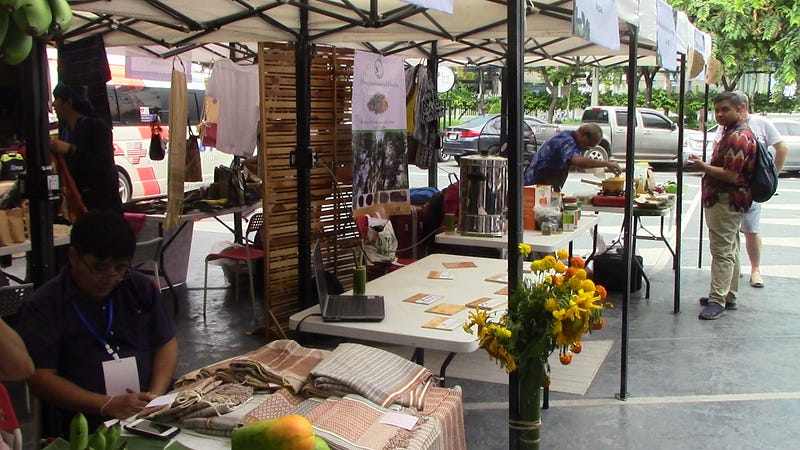
On the 18th of August, the Center for People and Forest organized a forum at Suan Plern market. This open setting gave the opportunity to people passing by to listen and learn more about community forestry. Community forestry is an approach to forest management that allows for local smallholders to take decisions about land management. Communities from Vietnam, Thailand, Myanmar and other Southeast Asian countries were represented at this forum to exchange their experience and present some of the forest-based products they made.
In Thailand, RECOFTC cooperates with the Royal Forest Department to support forested communities obtain formal status. Khao Aypod, a senior forestry officer, explained to us the administrative process a forest community has to go through: “the community has to express what they want to do with the forest and elect a committee. After that, the community has to show that they have the skills to care the forest. All this process takes more than one year. A community gets a contract to use the forest for 10 years, then they have to renew it.”
Once they receive this formal status, the community can then get substantial financial support from the government to develop their business.
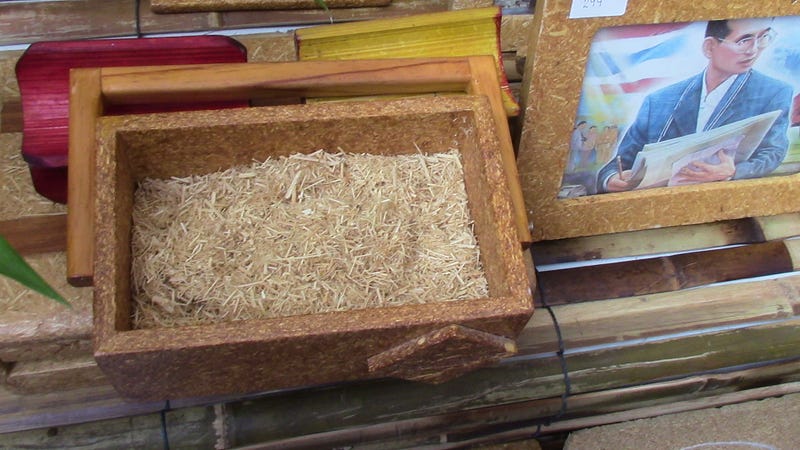
The V-Wan CFE organization from the province of Ratchaburi in Thailand has developed a community to manage a bamboo forest and sustainably utilize its wood. About 60 households are generating an income based on this business. They sustainably manage an area of 80 ha by cutting and replanting bamboo trees. The main bamboo species they are using is Dendrocalamus membranaceus, a species that grows fast and is ready to be harvested after only two years. The community makes bamboo mats and processes the bamboo waste into a wood pulp. This process allows them to make different items such as plates, frames and recipients. The goal of the organization is to engage new farmers and especially young people into the local bamboo business.
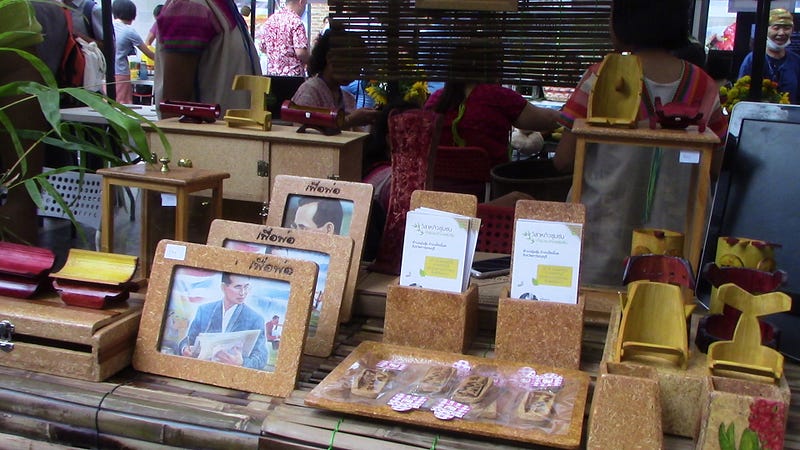
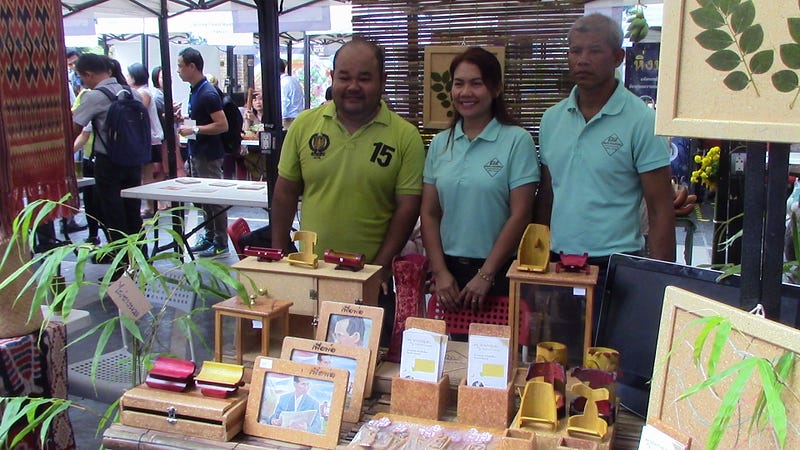
“Youth who can’t go to study at the city and stay in the rural area can learn how to grow and process bamboo” said Pathawee Suksawat, a representative of the organization at the forum.
The organization also trains farmers to better manage the forests by planting 2000 bamboo trees every year on the harvested areas. The community learns how to take care of the seedlings and propagate bamboo trees. They also learn how to use the processing machines funded by the government to help them start their business.
The main problem of this community is selling their products. They mainly sell at events and at their shop in Bangkok. Most of their customers are foreigners living in Bangkok.
The lack of demand for sustainable products exists for many other organisations making forest-based products. Aroma Forest Hung Rung, an organization from the north of Vietnam makes traditional medicines and cosmetics with wild forest plants. The project was funded by the Food Agriculture Organization (FAO) and enabled people to buy the necessary machinery to make all the products. The future goal of these organizations is to find customers to buy their products, because if there are no buyers then farmers will not be able to continue producing sustainable products from the forests. Instead, they would probably move to the city to find a better job or deforest the land to cultivate crops.
To make their projects viable, these communities really need support and training to access markets and export their products abroad, which is where demand for sustainable goods is higher.
If you want to participate in a system where rural communities are able to live on the sustainable management of their own natural resources, then you may contact RECOFTC.
Written by Thuan Sarzynski