
TRAVEL, PHOTOGRAPHY, NATURE
Confronting the Bloodsuckers
A Memorable Trek in Uttarakhand
Backstory
“…Madam, saath mein zaroor namak sang le jaiyiega (Please take some handful of salt while you go for the trek, Ma’am!),” said a 25-something young man, Ashok at the concierge of the resort while we were savoring breakfast.
Ashok already became a friend, especially with my son, during our week-long travel sometime back up in the Kumaon Himalayas in the Indian state of Uttarakhand.
We were like in awe, wondering as to why he asked us to do so!
I couldn’t restrain and readily asked, “Bhaiya, namak kyun saath le jaane hain ye to batao!”(Please tell us as to why do have to carry salt along, bro).
“…kyunki khoon chusnewalon ke sang aapki zaroor mulaqat hogi…”(…because you would confront the bloodsuckers), he chuckled. And I could see my son chuckled too!
“…Dariye mat! Yeh namak aaplogo ke bade kaam aanewale hain. Tab aap humhe zaroor yaad karenge aur shukriya kahenge” (…Don’t get scared! Keep the salt handy. You would then surely remember me and thank me).
Our driver arrived on time around 9 am and we left for our destination, Rudradhari Waterfall & Temple.
Trekking from Kantali Village
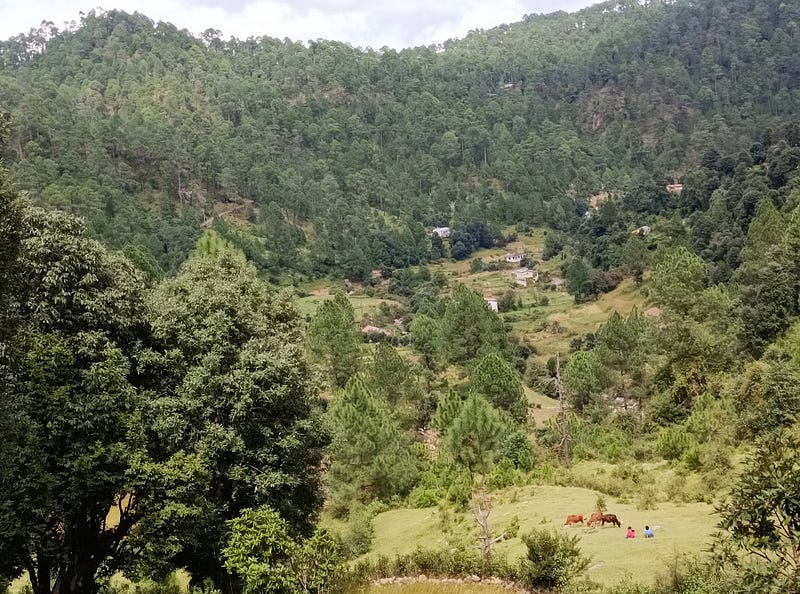
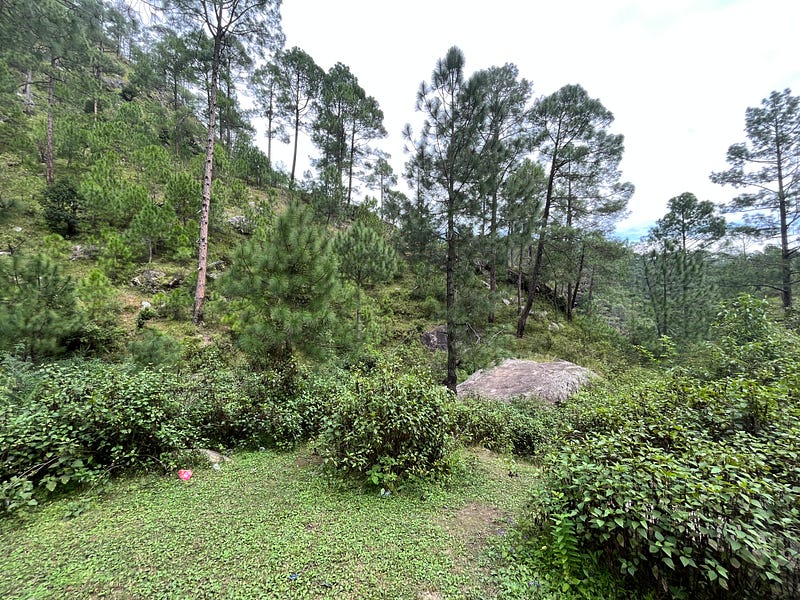
It downpoured the previous night and the ‘straight-out-from-the-picture-postcard’ locale at an average elevation of 1,890 meters (6,200 feet) grew more beautiful, wearing surreal hues of green, red, yellow and orange.
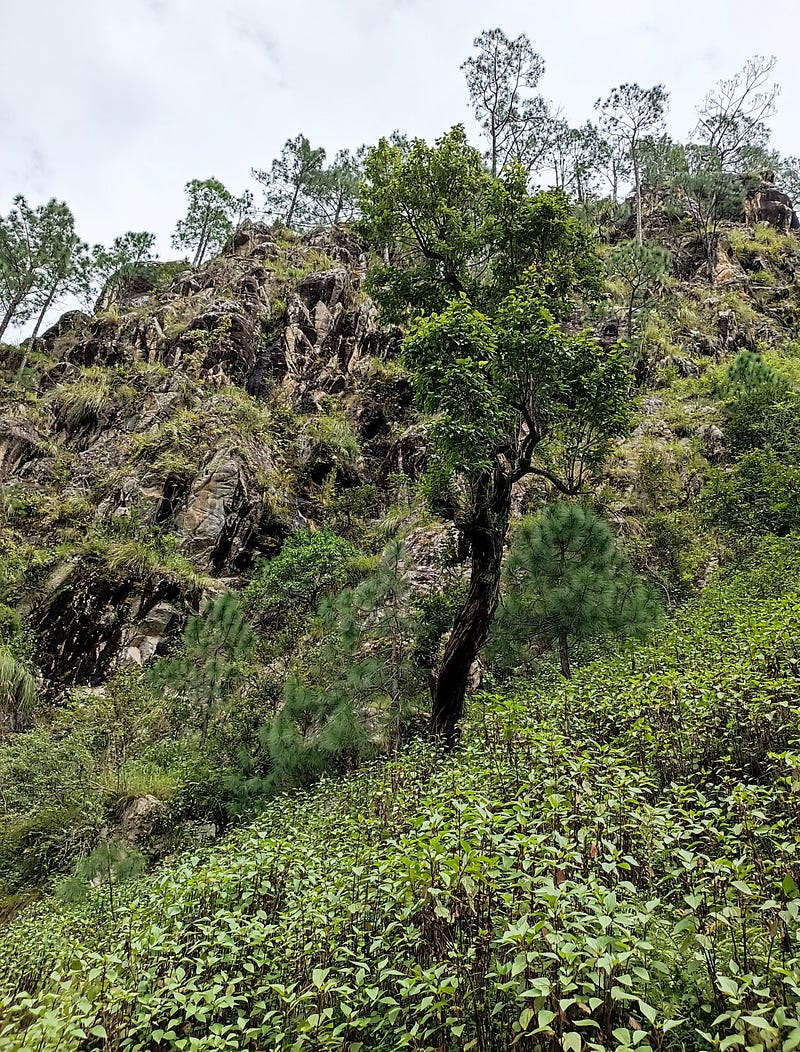
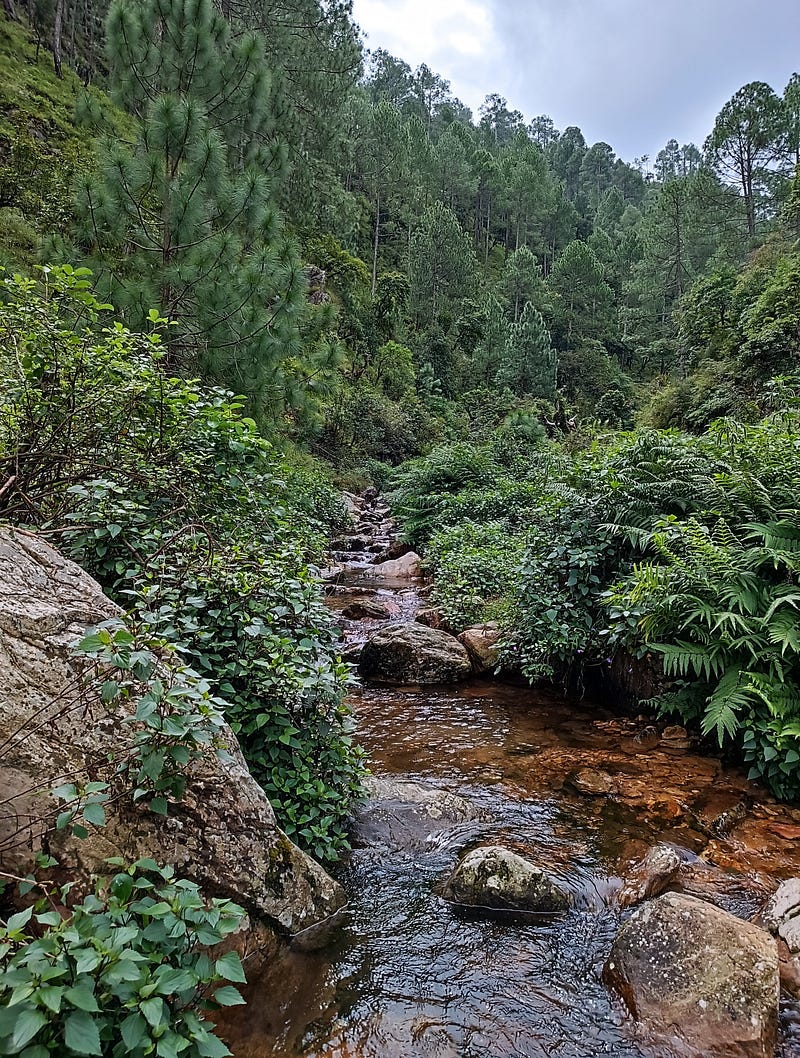
It was around a 12-km drive from the place we were put up traversing through the pristine nature — neverending pine forests, steep-sided jagged peaks, surreal valleys, deep river gorges and the stunning topography.
However, that didn’t deter me to be concerned about our impending mulaqat (meet) with the ‘bloodsuckers’…I was li’l scared…duh!
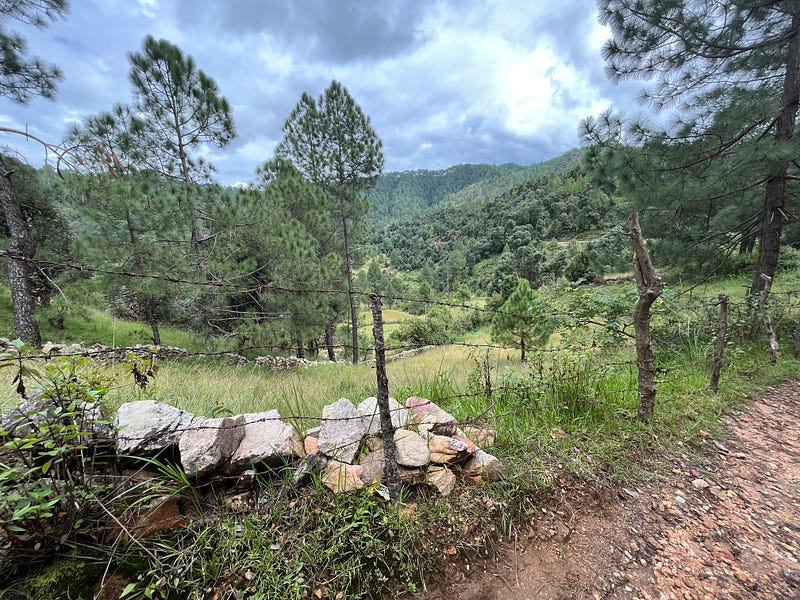
Reaching Kantali village (from where the trek started), our driver Harish bhaiya introduced us to Vipin — a smart, young and ever-smiling local guide. Vipin said that after we returned from trek, we would feel hungry.
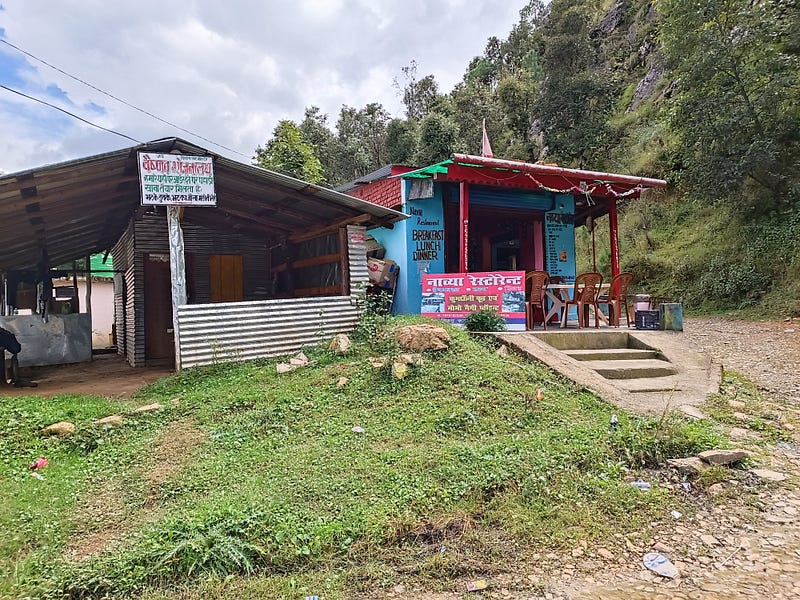
Some biscuits, tea and 2-minute noodles were also available. However, if we wished to order some simple, fresh, piping hot Kumaoni thaali (assorted food plate of Kumaon region of Uttarakhand state) for lunch, we needed to order it then only.
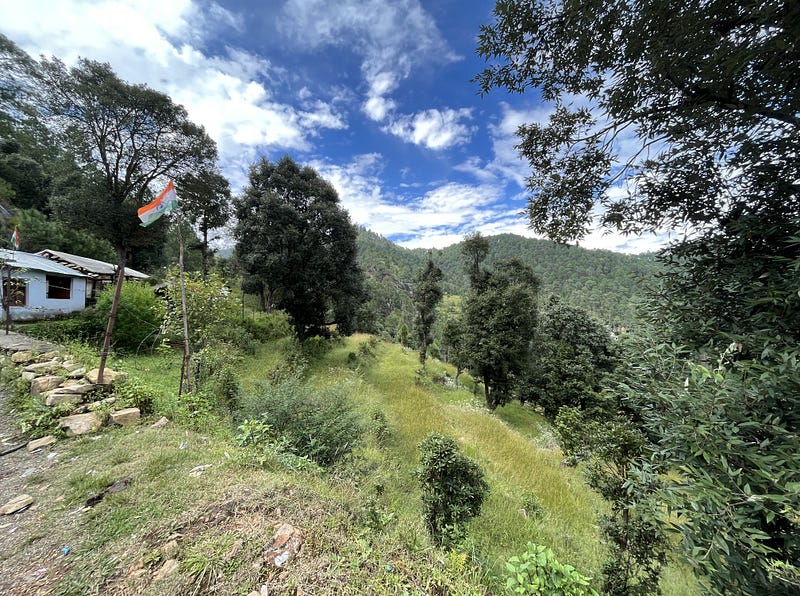
The food would be freshly prepared and served hot. That’s what the dhaba (a roadside food stall) owner claimed. Without wasting a single second, my husband readily ordered. Before leaving, we were given wooden sticks to support our gait over the topsy-turvy topography.
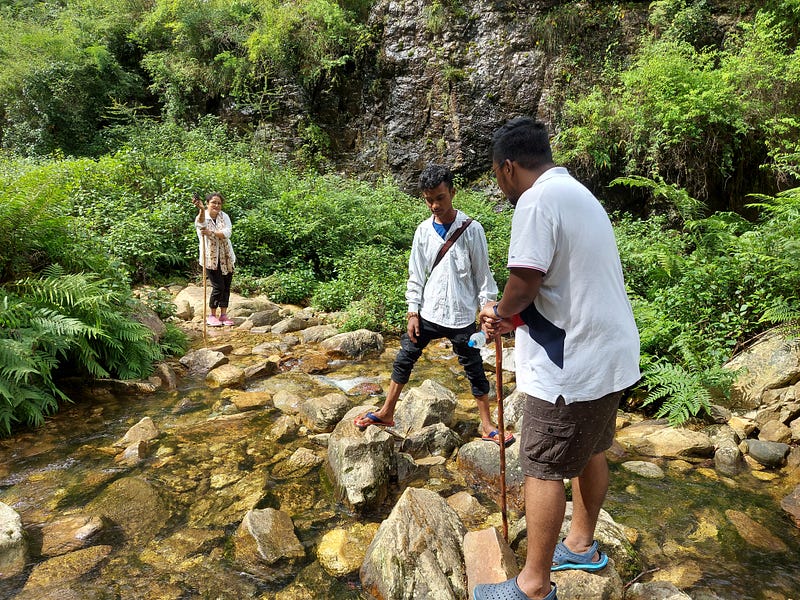
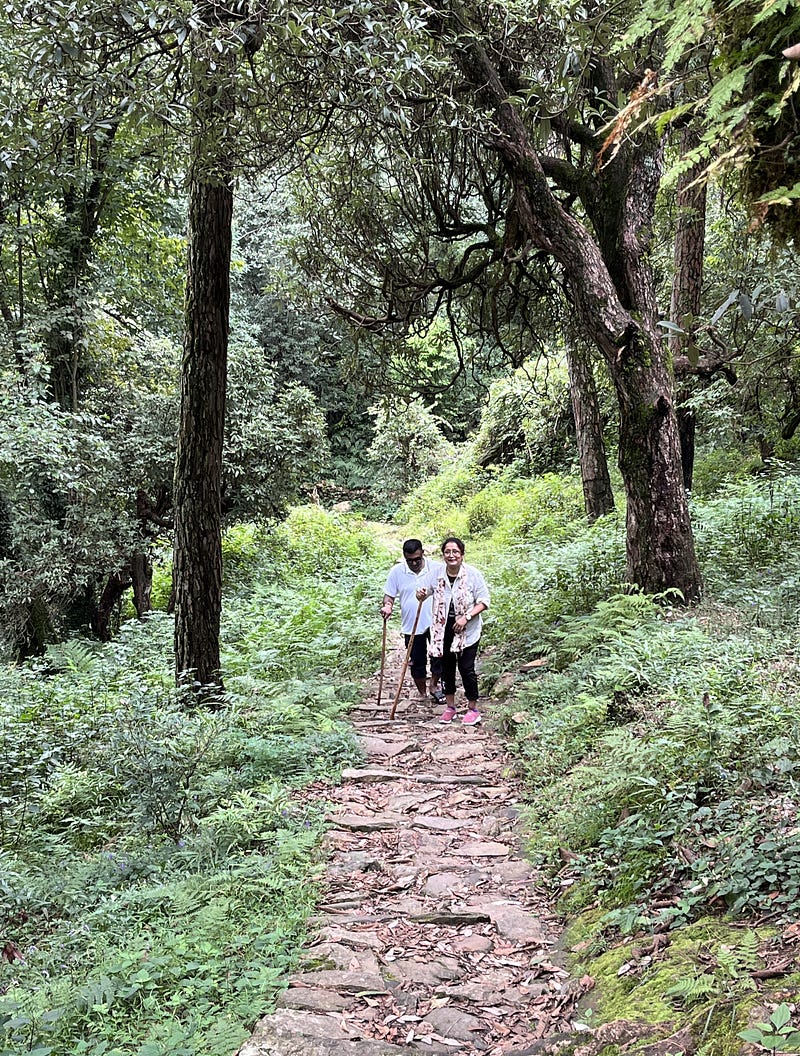
It is around a 2-km wonderful trek route to the Rudradhari Waterfall & Temple from the Kantali village. A tributary of River Kosi was our constant companion throughout the trek.
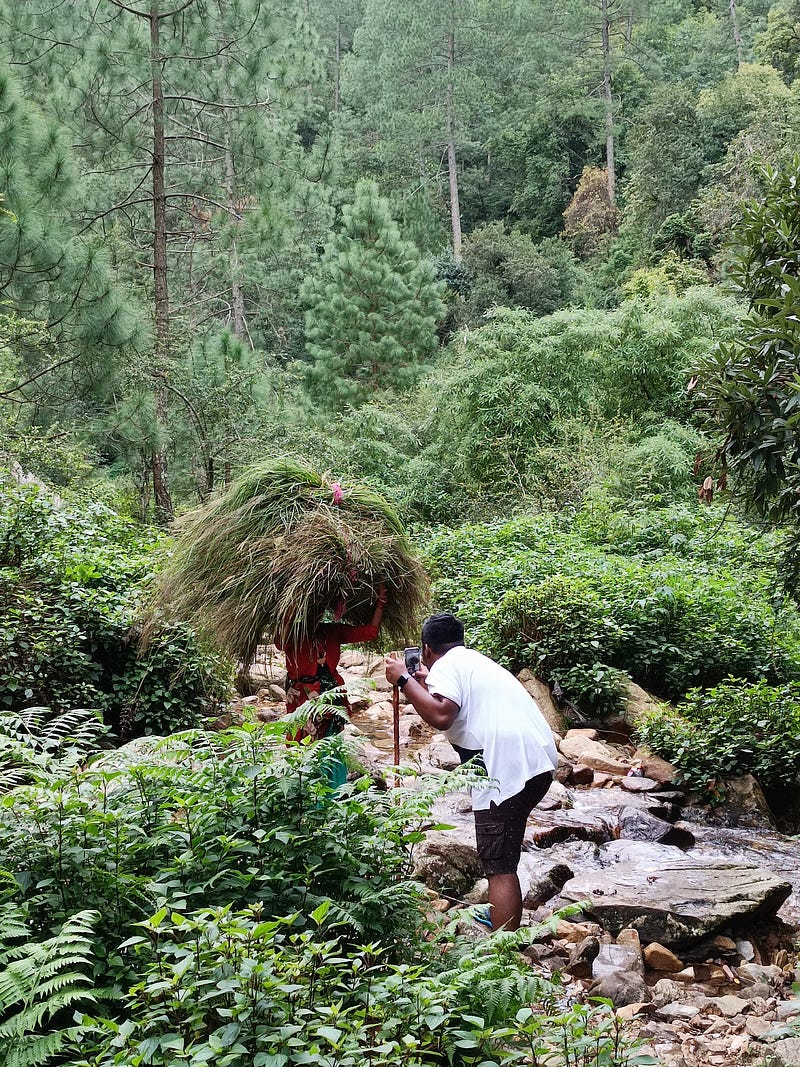
The Moderate to Less Difficult Trek
Visitors can reach Rudradhari Waterfall & Temple only through trekking. One has to drop at Kantali village by any vehicle and from here, visitors have to trek around 2 km to reach this place. It will take around 2–3 hours to finish the trek and return to the village.
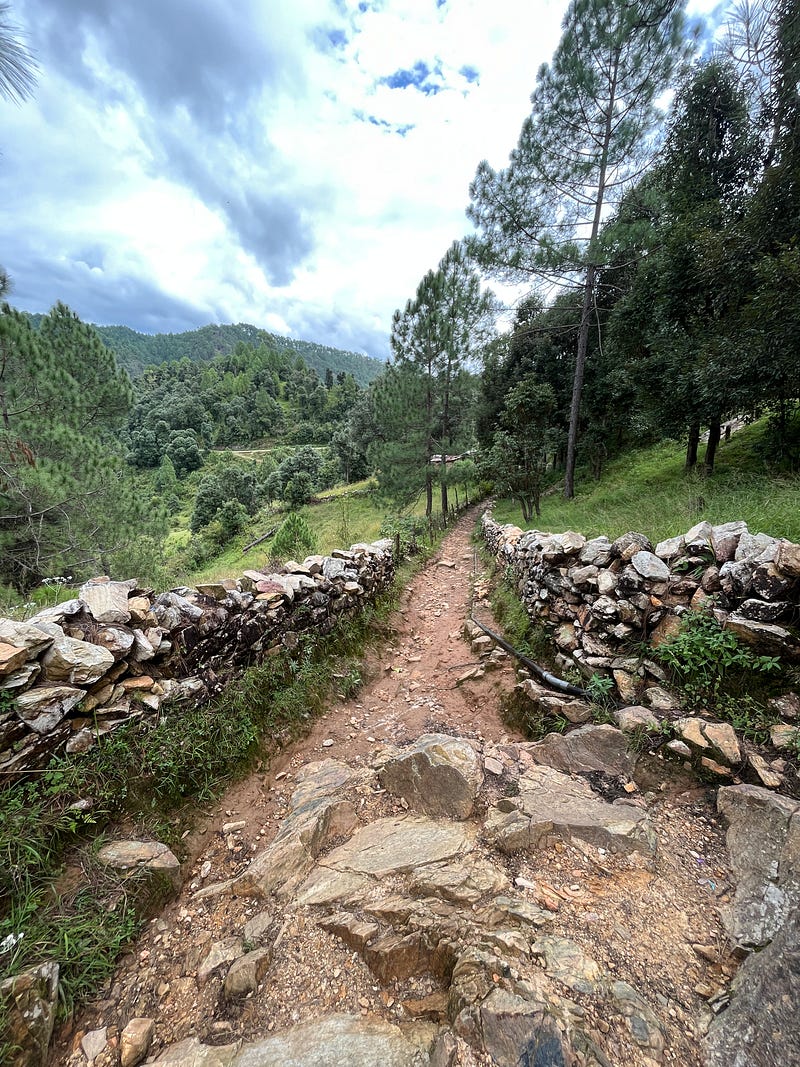
We came across a host of medicinal plants on the way. Wherever we looked around, we witnessed the life-giving and nurturing aspects of Mother Nature.
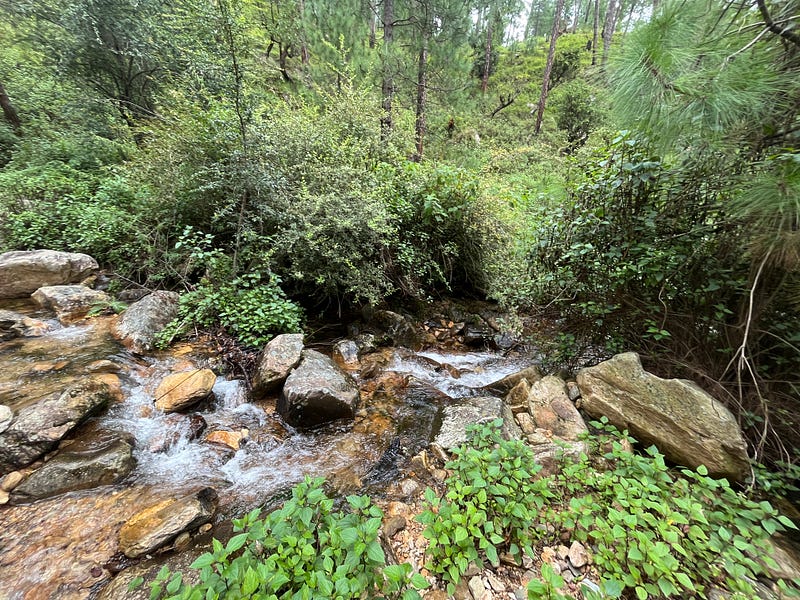
The Picturesque and Pristine Nature
It was a birds’ paradise. A host of birds were chirping along with the constant gurgling of the gushing water through a small tributary of Koshi river. There was slight chill in the air and there were intermittent drizzles too but not enough to pull our windcheater.
Somewhere deep down, some mountain goats were bleating. The dry leaves and the pebbles were producing such symphony to ears that I wished to absorb it all.
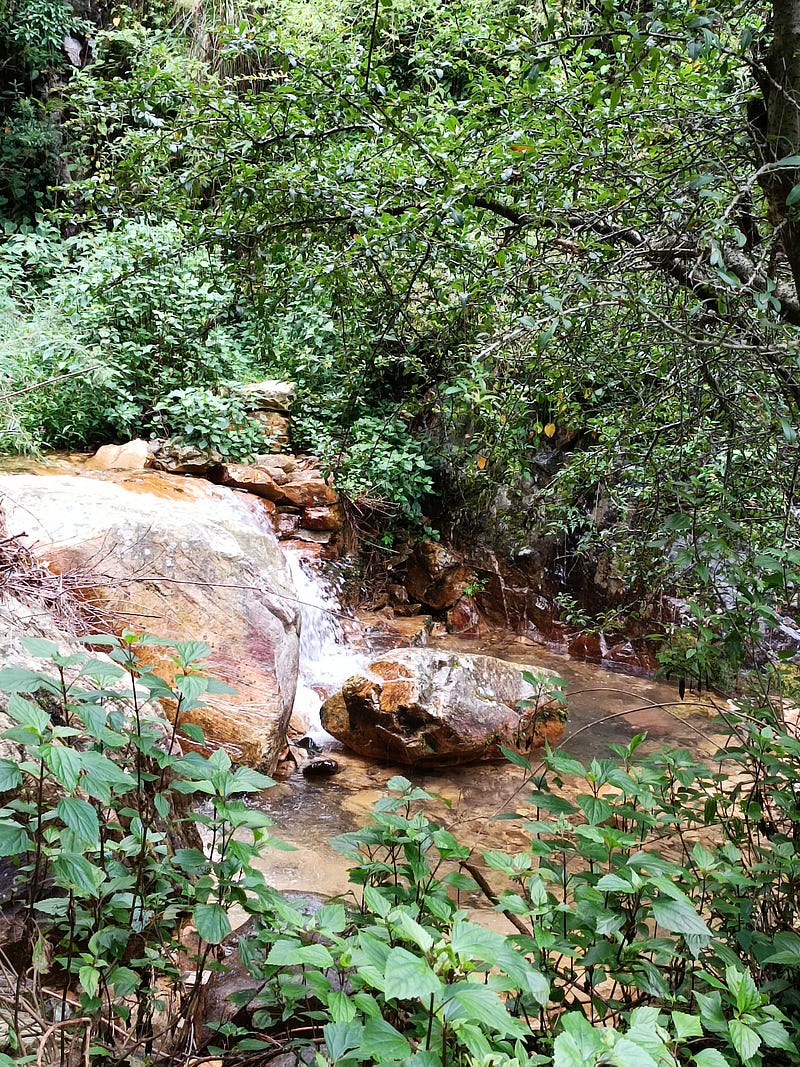
The constant hustle and bustle of the city tends to keep us away from the inner peace and harmony. When we spend time outside with nature, the stress of city life runs out the window.
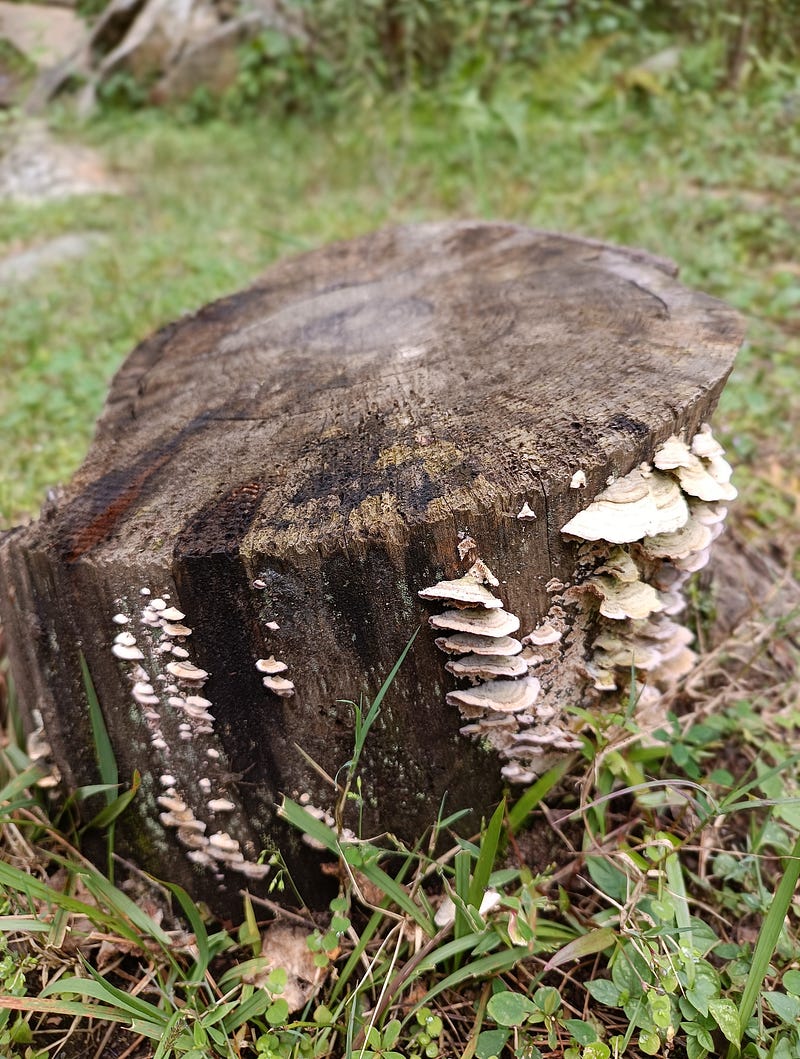
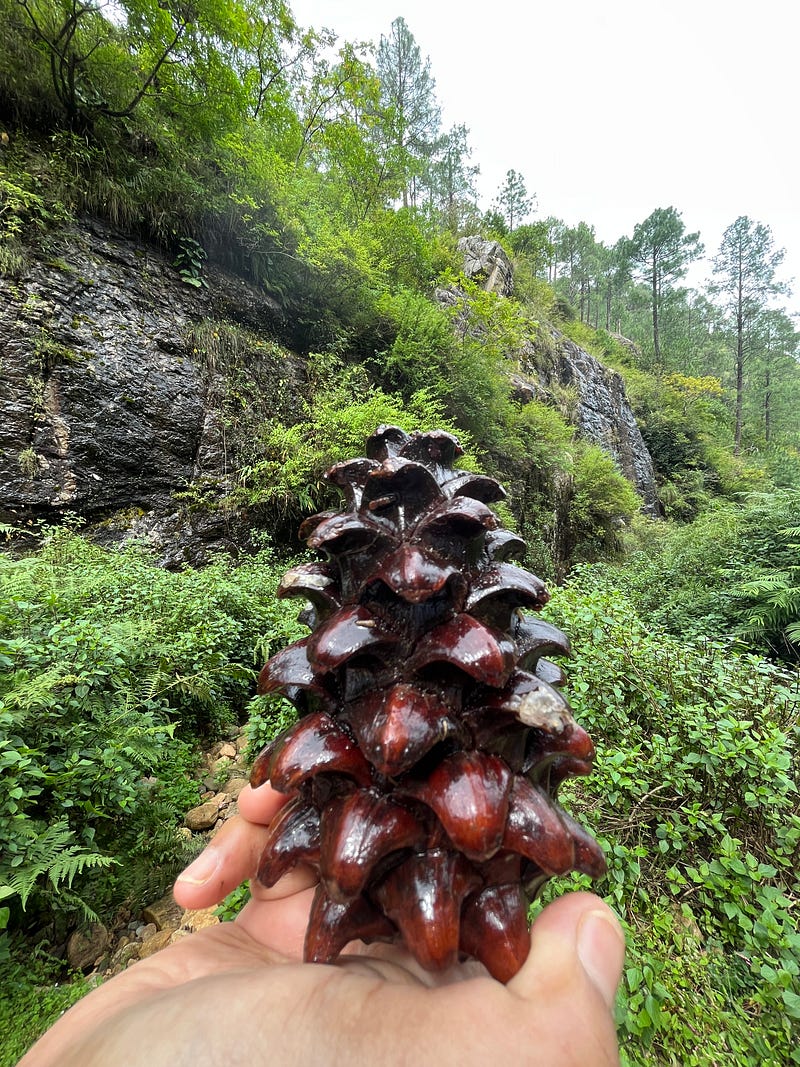
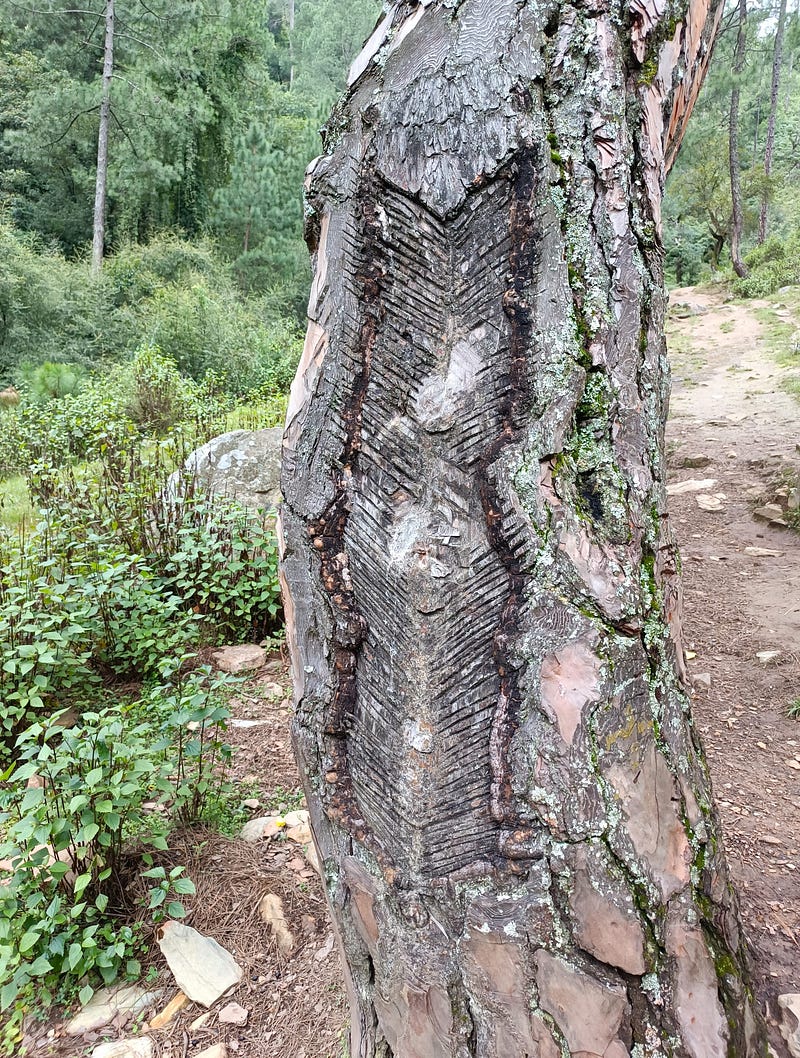
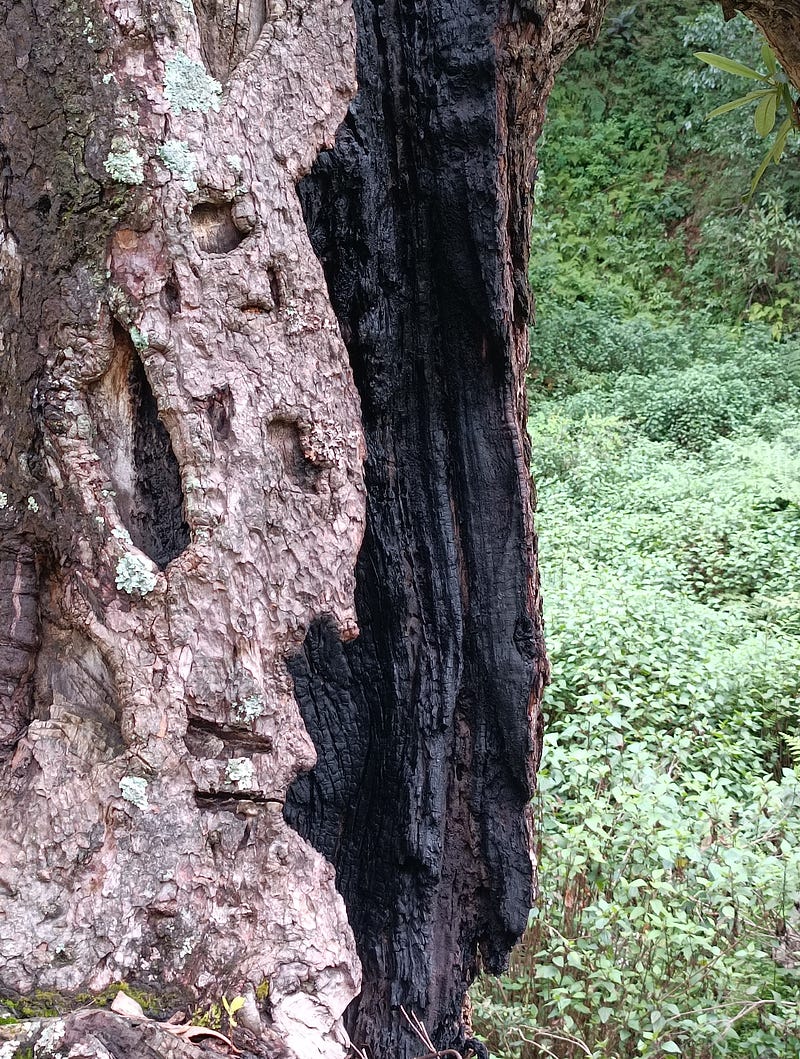
The moderate to less difficult trek was along a dense forest. There were uncountable pine trees, rhododendrons, rich flora and we saw the sap of a pine tree being collected as we trekked.
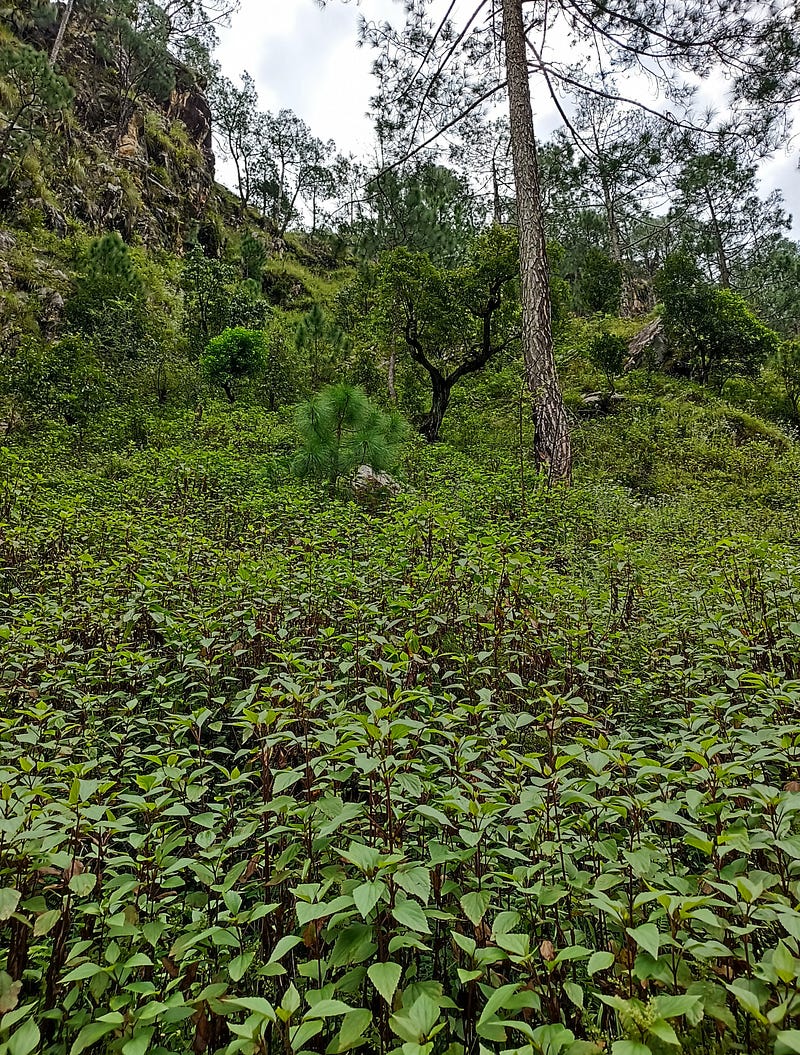
With no internet connectivity, we were breathing in the pollution-free Himalayan air as much as we could pump in and breathing out the worries and tensions, consciously, euphorically and mindfully (digital detox after quite some time).
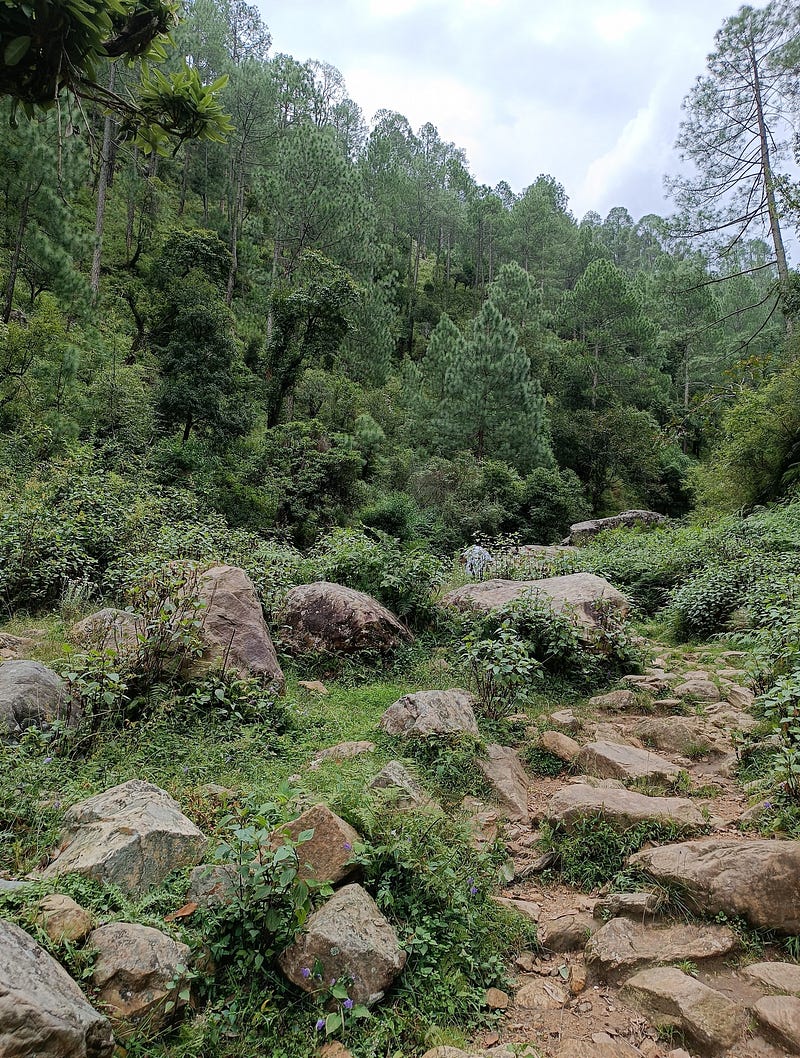
Vipin was a great company to be with. He was guiding us thoroughly. He said that on an average, during the peak tourist season, he had to guide 3–4 trips a day. He was kind enough to click some photos of us.
He also confessed that he didn’t like city life at all. He tried to get acclimatized in Delhi for a couple of months but he preferred to return to his village. And most importantly, he was happy with whatever he earned, remaining close to nature.
The Bloodsuckers
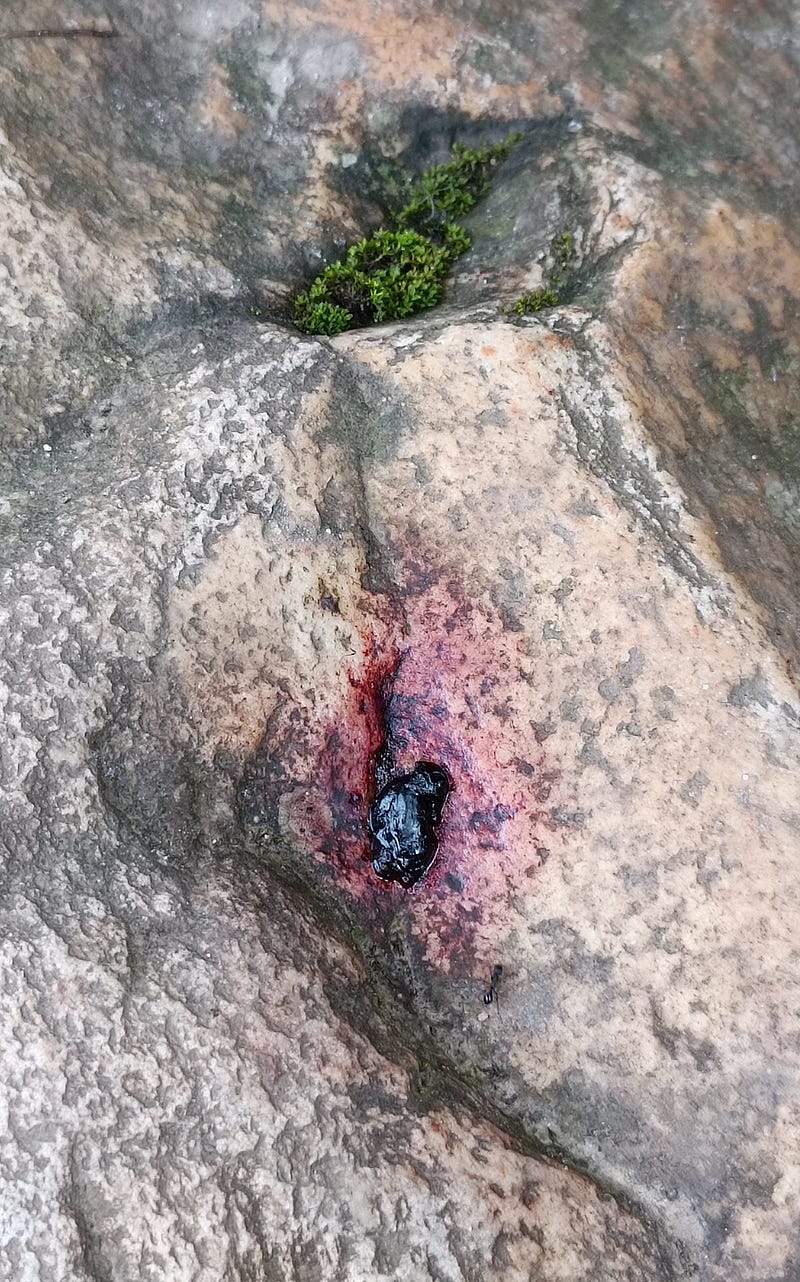
Before he could complete his words, my husband said some weird sensation and itching had started in his left toe. Vipin could readily find the bloodsuckers, the leech. I quickly handed him the salt and he instantly sprinkled some on the affected area.
By the time, it had sucked quite some blood. My son and I also searched minutely if we got ‘attacked’ but thankfully not yet!
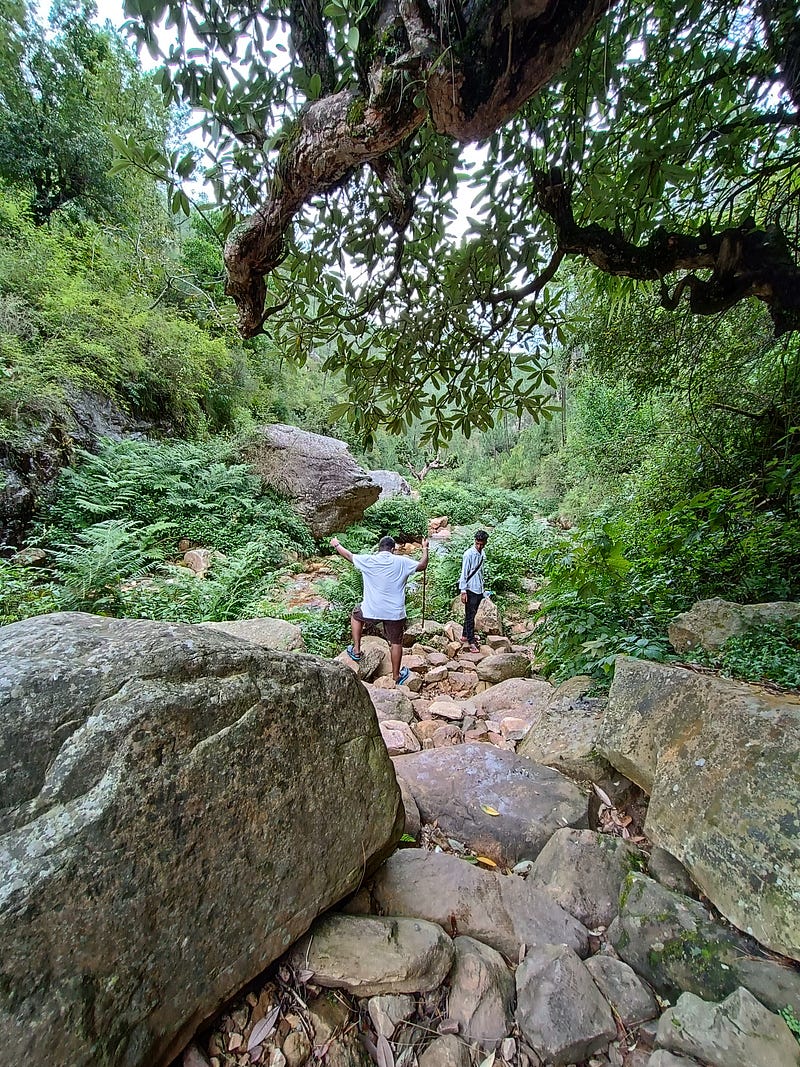
Vipin narrated that leech (jok) was a common worm/parasite there. There was seldom any tourist who were not attacked by them. He said not to get scared and it’s actually good to get your blood sucked by leeches. The mere visualization ‘killed’ me (awwww God!)
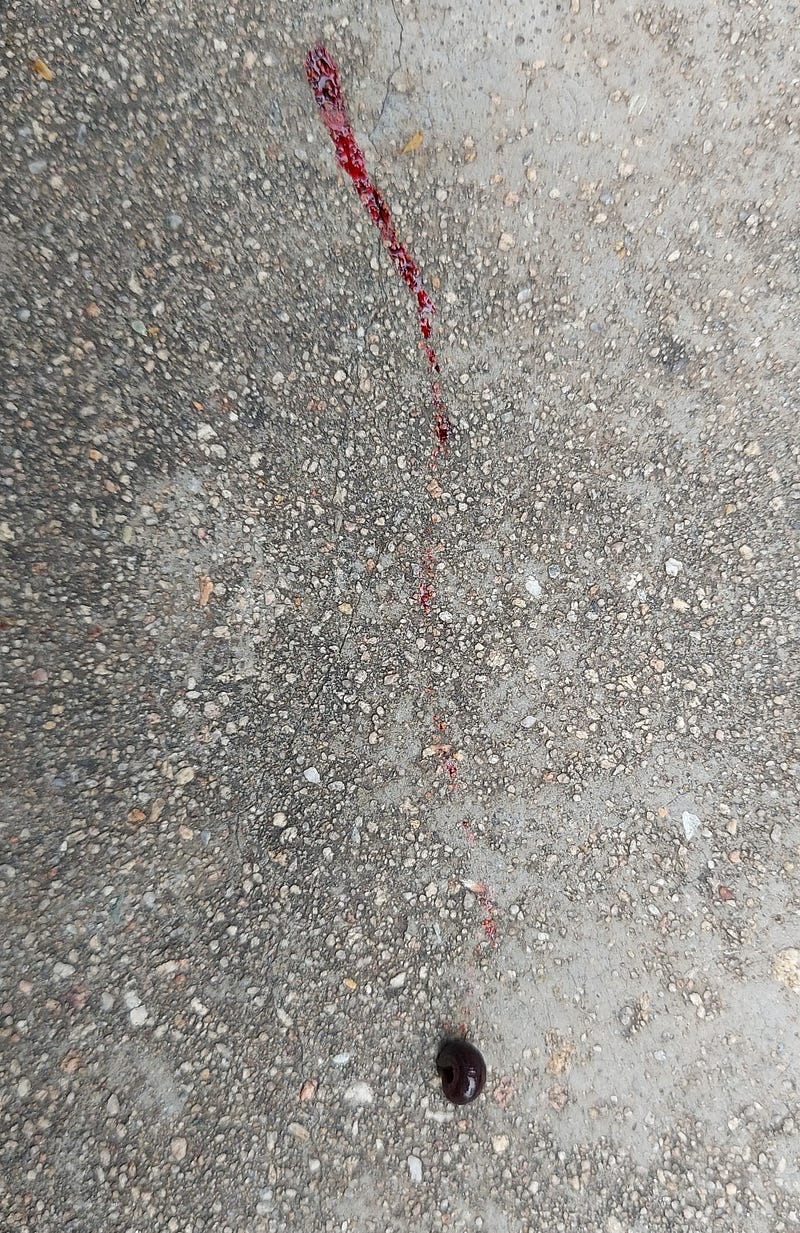
On our return journey, I could ‘feel’ leech. Down there, right foot! I started jumping like a frog and the rest laughed out loud. Vipin held my bag, took out salt and repeated the same exercise. After some time, I became calm.
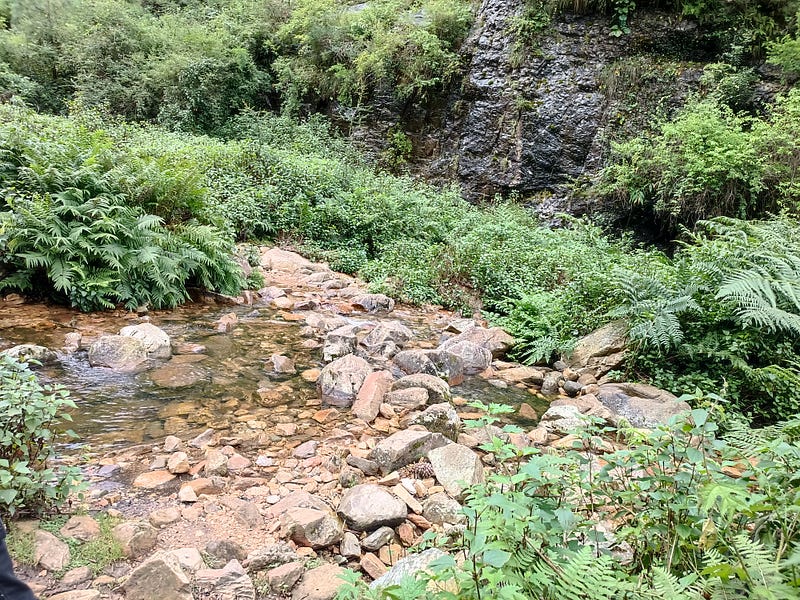
After returning to the resort ‘leech-sucked’, when I googled and talked with Ashok, I could find bloodsucking by leech was actually a therapy employed helping to improve blood flow to regions where it has slowed or stopped, thus preventing tissue death.
Modern leech therapy is used in areas such as microsurgery, plastic and reconstructive surgery, cardiovascular disease and dermatology. Leeches are worm-like organisms which are applied to the wound area where their blood sucking action is used to increase circulation, improve blood flow and speed healing.
Ancient Egyptian, Indian, Greek and Arab physicians used leeches for a wide range of diseases starting from the conventional use for bleeding to systemic ailments, such as skin diseases, nervous system abnormalities, urinary and reproductive system problems, inflammation, and dental problems.
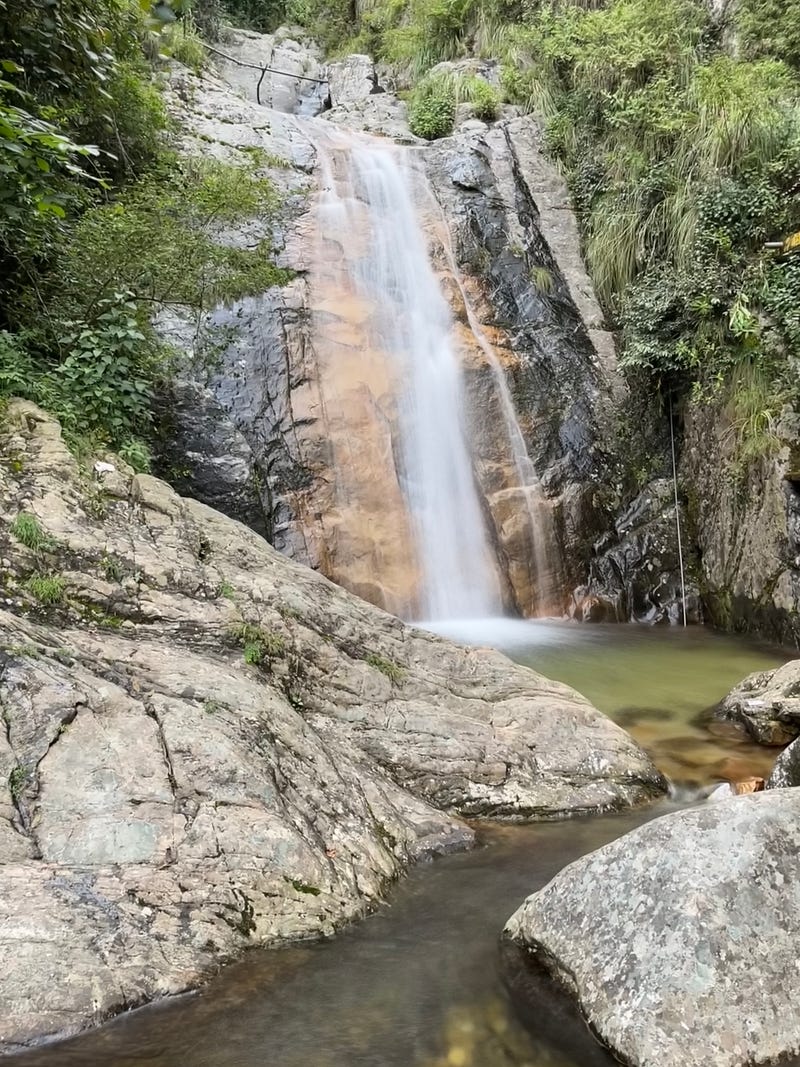
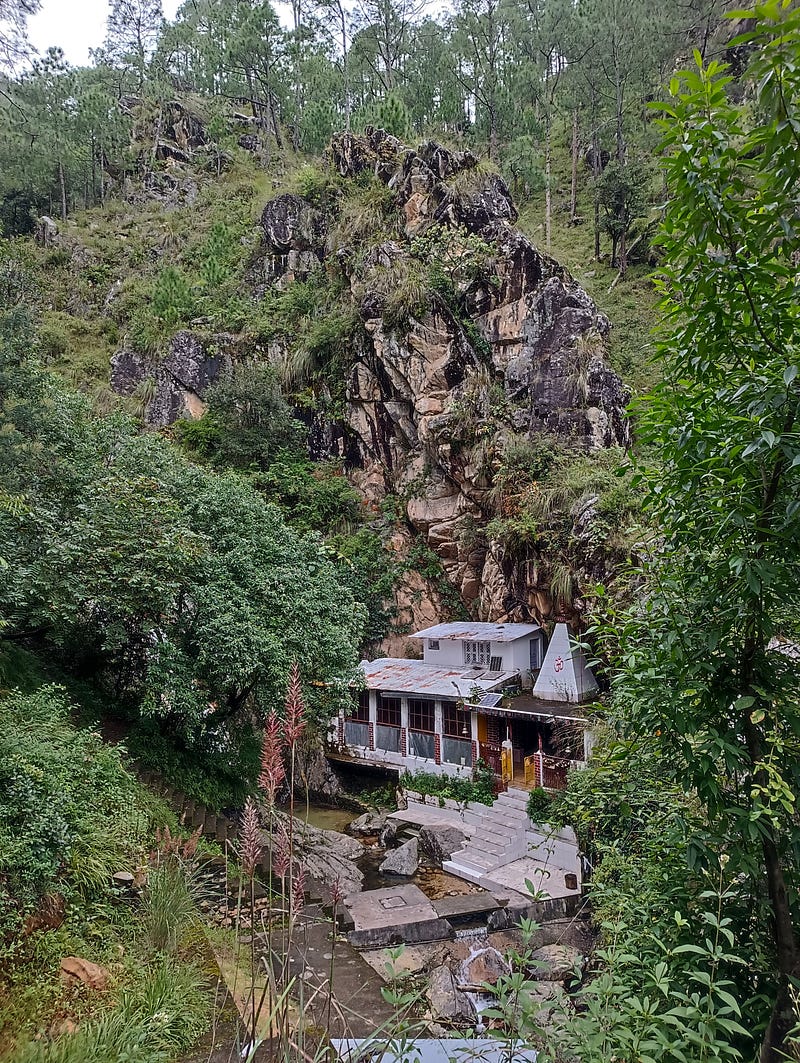
Rudradhari Waterfall & Temple
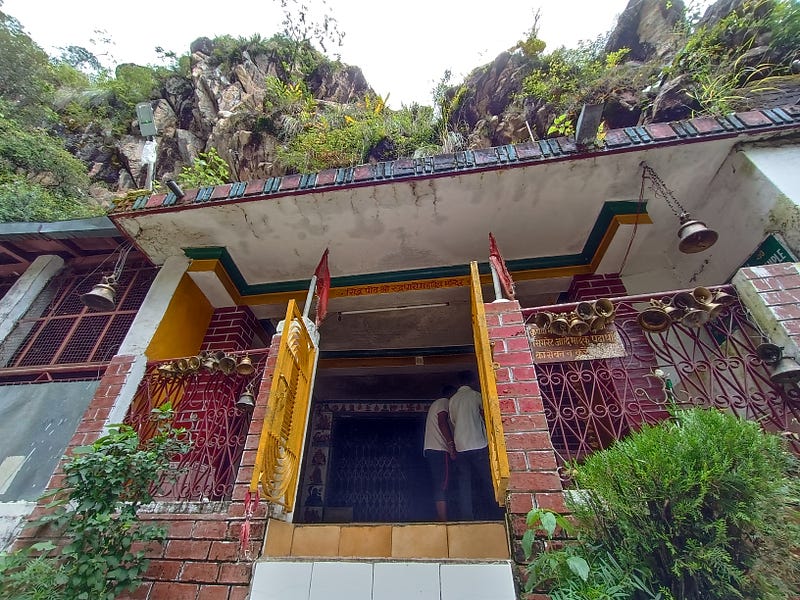
One legend and folklore have it that there appeared one pious man who cut out this cave temple from the huge protruding rocks and dedicated it to Lord Shiva (Rudra is another form of Lord Shiva) and Lord Vishnu (Hari means Vishnu). And hence the name, Rudradhari. The mystic went into deep penance for several years.
After a period of time, he disappeared only never to return.
The temple was fully solar powered and remained open from 6 am to 6 pm.
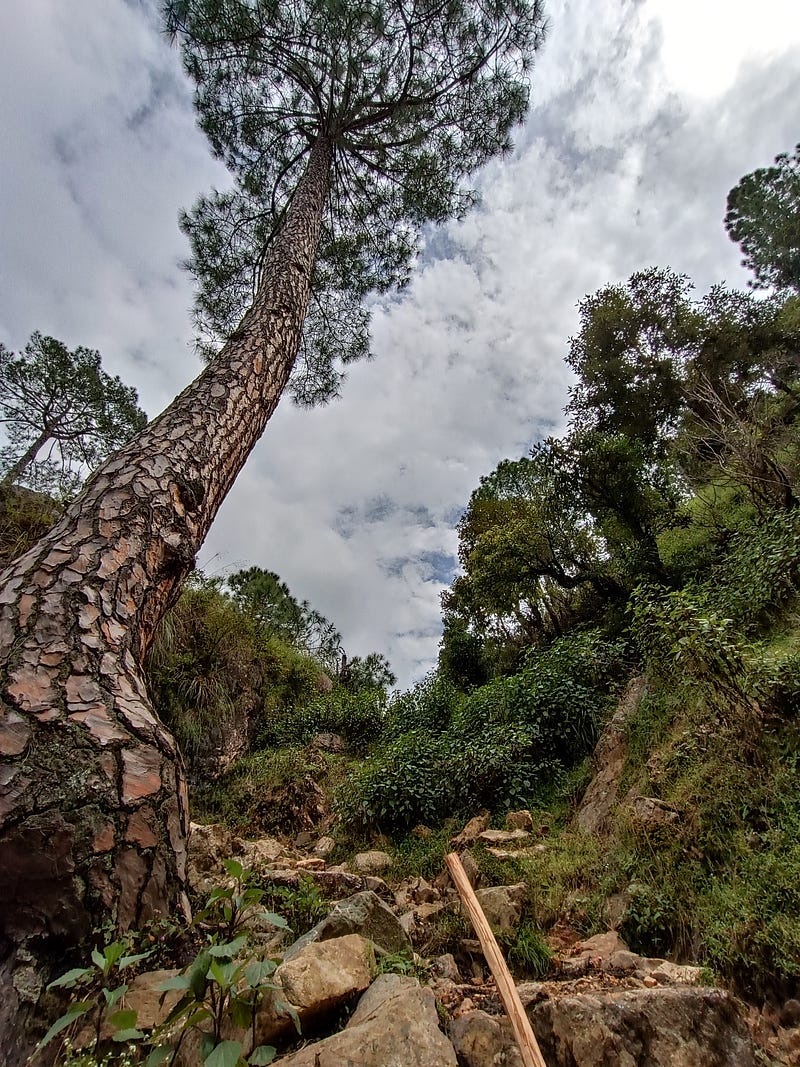
We reached our destination. The cold and crystal clear water of the waterfall literally washed away the tiredness of the trek.
We spent some time taking captures, praying to Lord Shiva and Lord Vishnu and just whiling away time in the midst of nature’s music.
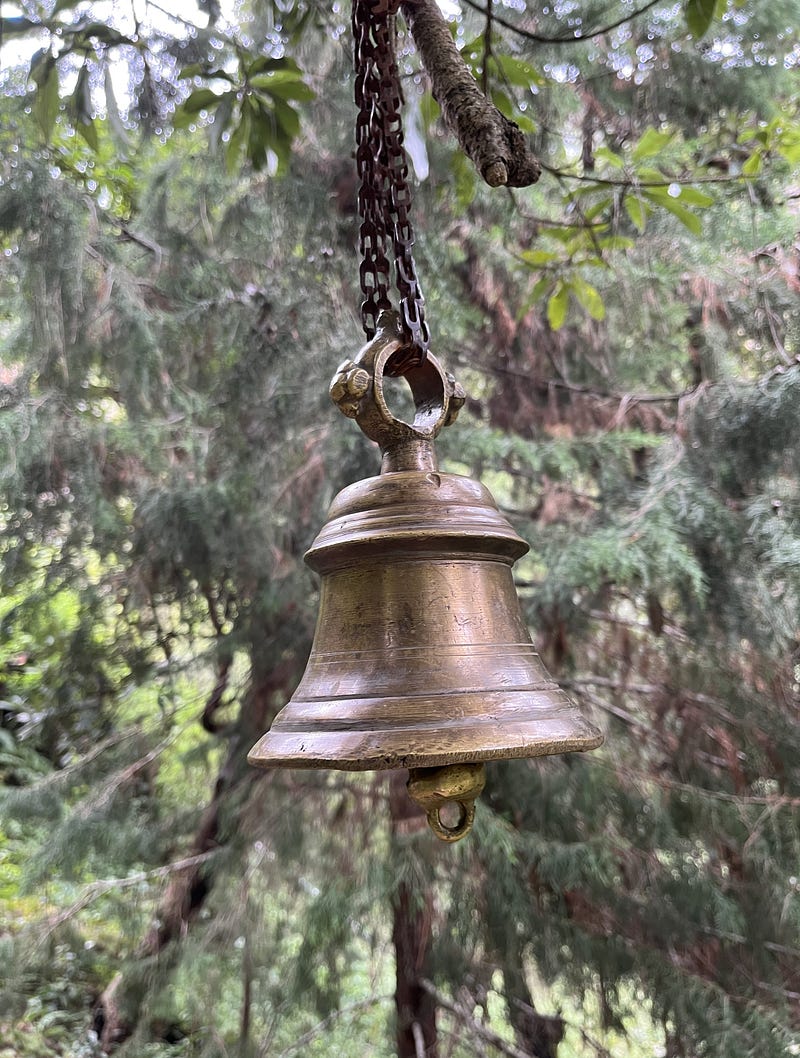
It’s the faith that makes all of us moving. We felt the sound of the bell was welcoming divinity into the surrounding. A silent prayer was offered.
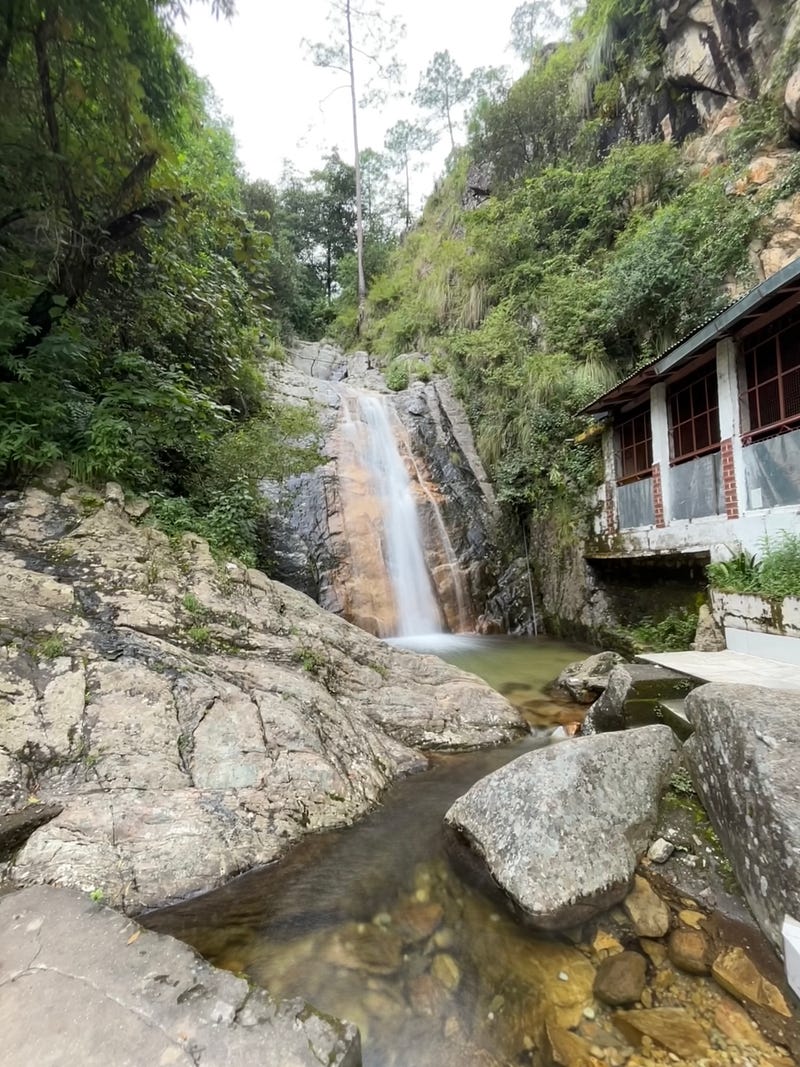
Sunlight somehow seeped in past the thick canopy of branches with renewed hopes, dreams and aspirations and with life’s mantra — never to get bored.
The Return Journey
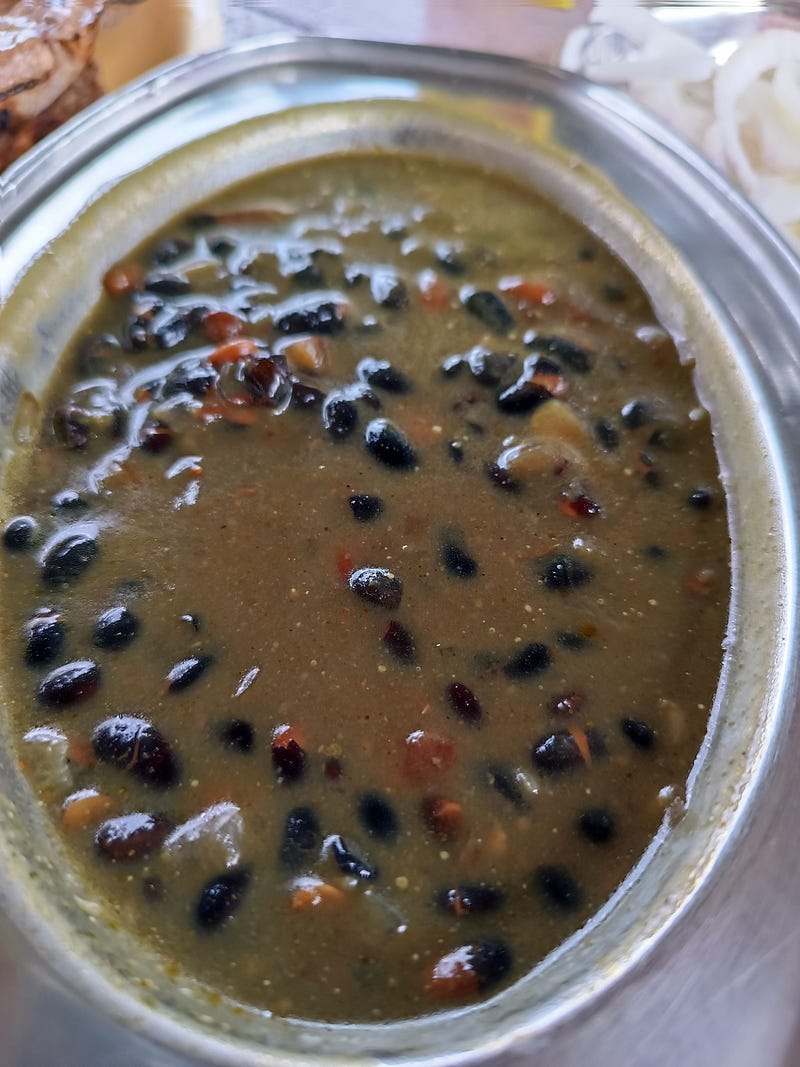
We reached back to the dhaba of the village. And there we found the piping hot lunch all ready to be savored. Our driver, Harish bhaiya was waiting and he said that we must have enjoyed the trek and he could gauge merely by looking at us.
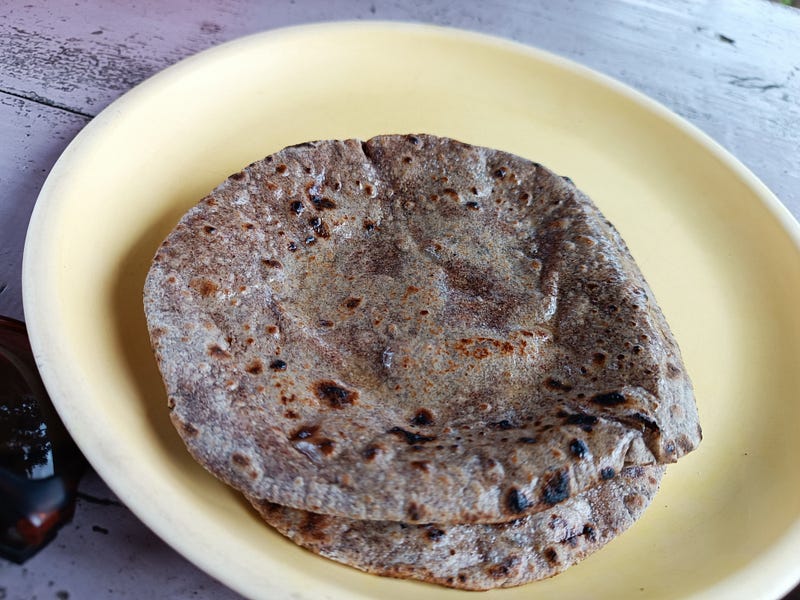
We all relished pahadi Bhat ke dubke (the delectable Kumaoni Himalayan lentil) and Maruwe ki roti (tasty and nutritious finger millet flatbreads). Vipin and my son got a few photos clicked.
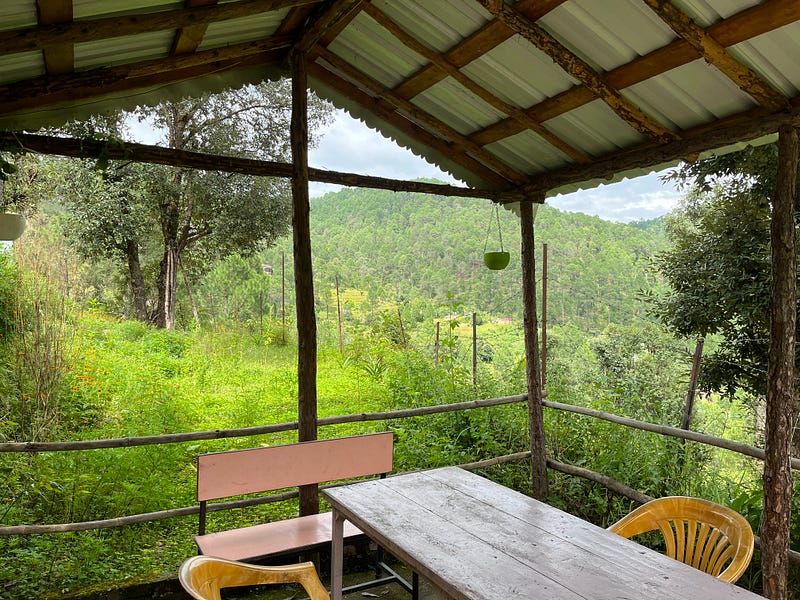
We finished our lunch with pahadi chai (tea of mountains) amidst the symphony of crickets, and the Himalayan air swaying the trees’ branches and gently kissing our cheeks…aha…bliss!
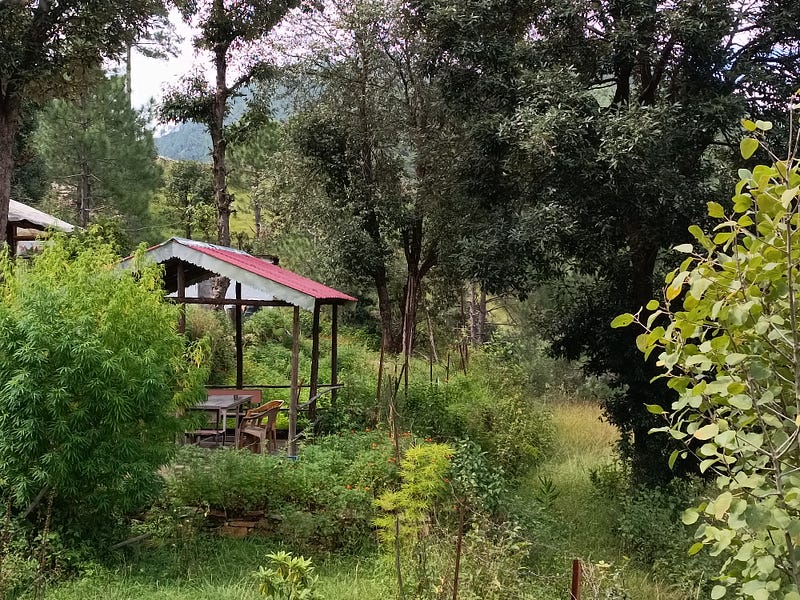
We thanked everyone around for the soul-filled trip and the food and left Kantali village to head toward Kausani.
Looking up to the glorious horizon, we could witness the spectacular 300 km-wide panoramic view of Himalayan peaks — Trisul, Nanda Devi and Panchchuli — still playing hide and seek with the orange-ish clouds.
I extend my love and gratitude to JoAnn Ryan and her stupendous team of editors, Anne Bonfert, Jillian Amatt - Artistic Voyages, Adrienne Beaumont, Michele Maize for making The Globetrotters a beautiful place to hang out with wonderful writers and of course, with voracious readers🧡🧡🧡🧡🧡.
Some amazing travel stories I have read recently🧡:
Belcairn’s
Thank you for reading. Please feel free to check out my profile. I write about Travel, Photography, Architecture, Food, Nature, Life, Mindfulness, Books and whatever interests me. I can be reached at [email protected]


