
I’ve Slow-Traveled Europe for the Last 36 Months. Here’s Everything You Need to Know About Doing It Right
This will help you travel happier and for longer
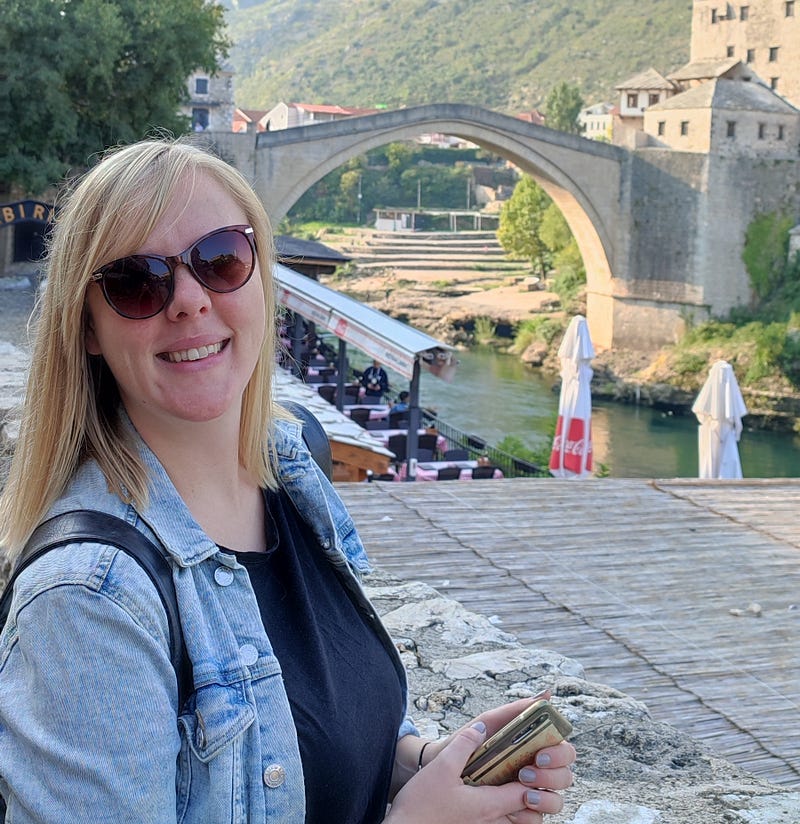
Europe is not a continent to be rushed, to be seen in just a few days. It’s somewhere that’s best enjoyed slowly.
Perhaps you’re considering a sabbatical to discover the best continent in the world (IMO). Maybe you’re thinking digital nomadism could be your bag. Maybe you’ll even do as my friend did and remote work from Europe for a few months without telling anyone.
Europe has been my home for the last 2.5 years during which I’ve slowly traveled around 10 of its countries (and have visited 17 more in my time).
If you want to learn how to successfully travel slowly around Europe — heck, around anywhere — then lend me your eyeballs for the next 7 minutes.
Everyone will have an opinion on traveling priorities. Don’t listen to them.
Apparently, I’m a crappy traveler because I rarely venture outside Mediterranean Europe. People often like to tell me so.
But there is a reason I don’t venture far.
Thanks to my background as a Somm, my traveling priorities skew toward wine. Not just because of wine itself but because I love the cultures that sprung up around it.
And that’s largely Mediterranean Europe.
I have spent thousands of dollars traveling to other places and they just don’t do it for me in the same way. And I’ve made the error of booking up months in these places, just because I think — or people tell me — I should.
Mistake.
When you slow travel, you have to know where your priorities lay because you’re not visiting somewhere for just a few days. It can be for months.
If you choose places that don’t jive with your priorities, you’re going to feel very miserable very quickly. Yes, an Italian villa in the countryside might look nice for instance, but if you’re a city-lover, are you really going to want to spend a month there?
Figuring out your priorities has nothing to do with anyone else, it’s got everything to do with you.
Don’t listen to the noise. It’s your traveling experience, your money, your life. You do you, mate.
This is the *last* thing to consider when you stay somewhere for a month or longer
Whenever we see tourists flock to a town just for a single site, my husband and I always joke:
Sure, that that palace / castle / view is pretty, but what do you do for the other 23 hours of the day?
In other words, pretty tourist sites will only sustain you for so long. Once you’ve seen it a couple of times, do you know how else you’ll fill your time?
This is especially important when you travel slowly because you’ve got more time to fill. And it’s very important if you travel throughout Europe because it’s just so darn pretty everywhere.
But if the only reason you want to visit Split is for the Diocletian’s Palace or Paris is for the Eiffel Tower or Venice is for St. Mark’s Square, you’re going to be very bored very quickly.
Instead, you’ve gotta think more practically…
This is the *first* thing you want to consider when you stay somewhere for a month or longer
How livable is that place?
If you like to walk, does it have walking routes? If you like to go out, does it have plenty of decent bars and restaurants? If you like to spend time in coffee shops, does it have them? If you like to cook, does it have a market or decent-sized supermarkets?
If you slow travel, you are essentially living in a place. So how livable is it?
It all comes back to those traveling priorities of yours. Do they fit into the place you’re planning to spend some serious time in?
Europe may not be US-expensive but it’s still expensive
Alas, the days of cheap travel around Europe are pretty much over. Since Covid, prices have exploded, from the €800 one-way ticket my friend was quoted for a 3-hour flight to the €1000+ a month accommodation even in the poorer parts of Europe.
Unless you spend your days hanging out in the likes of Albania, Bulgaria, or Romania — all fine choices by the way — you’re probably going to spend more than you think.
But here’s the upside. These price hikes are largely on travel and accommodation rather than everyday expenses (which have still risen but not in such a spectacular fashion).
If you slow travel, you will travel less. You will spend less on accommodation because most landlords offer long-stay discounts. Thus, you can mitigate some of those expenses.
Win-win.
Respect the 90-in-180 Schengen rule as if your traveling life depends on it (because it does)
A friend of mine received a two-year ban from the Schengen area for a mistaken 10-day overstay.
Seeing as the Schengen area is now 27 countries large, you do not want to fuck with it. That means counting days, ensuring every border guard stamps you in and out properly, and having evidence of your stays in case you’re asked to produce it.
If you’re not a Schengen resident, the 90–in–180–day rule will be one of your biggest European travel challenges, especially as Schengen is growing all the time (Romania and Bulgaria hope to soon enter the block).
Plan your time accordingly. Explore non-Schengen countries like Montenegro, Albania, North Macedonia, Bulgaria, Romania, and the UK, or perhaps nearby Turkey or Georgia.
Or if you plan to make your European travel a permanent thing, consider a digital nomad visa or residency permit.
Stay legal, friends. The alternative isn’t worth it.
Not everywhere is as connected in Europe as you think
This is especially true if you plan to travel around places with a checkered past like the Balkans where politics still play a role in how well-connected neighboring countries are.
Like the 8-hour bus I took last year from Belgrade in Serbia to Sarajevo in Bosnia & Herzegovina.
The bus didn’t terminate at the main Sarajevo bus station because that’s in the Bosnian part of the country. Instead, it went to a bus station on the edge of the Serbian part of the country, miles out of the actual city center.
Then there is my upcoming travel from Porto in Portugal to Split in Croatia. It’s actually easier for me to fly via my home in the UK than it is to find a more geographically direct connection.
You may think oh those countries are so close together, that’ll be easy only to find yourself on a three-day, multi-connection trip.
This is another win for slow travel — you won’t have to fuck about with annoying connections nearly as often as if you were jumping from place to place.
Forget the European stereotypes and you’ll have MUCH better experiences
If you visit Europe thinking all French are snooty, all Germans are serious and all Spaniards are lazy, I guarantee you won’t enjoy yourself.
Also related — if you travel with a US / British / Canadian / Australian-tinged mindset, you’ll not have a great time either.
Europe deserves to be traveled with an open mind. Thanks to its always-changing politics, there can be vast differences between even neighboring towns. After all, they could have been part of two different countries just one generation ago.
Europe is nuanced and that’s what makes it so fascinating to slowly travel around. You get to indulge in those differences and your experience will be all the richer for it.
So long as you keep that open mind.
You will never get the same price as a local for accommodation. Factor that in
In the most insufferable of digital nomad circles, there is an almost reverse-snobbery-like revere for cheap accommodation. If you don’t get the same price as a local, you were ripped-off mate.
Yeah, I call BS.
Yes, there are ways of making your accommodation cheaper, from Facebook groups to pet-sitting to asking local friends to house sharing.
But in this year of our Lord Airbnb, take it from me. If you’re in tourist accommodation you will not get the same price as a local apartment because you are not a local. You’re not taking on a 12-month lease for an empty apartment with separate bills. You’re taking on a fully furnished place that is run for profit.
So yeah, it’s going to cost you more. Sometimes inordinately so which sucks for you and is a massive problem locally — the nuances of which could fill a whole other post.
There are three courses of action here:
- Spend forever trying to find a “local-cheap” apartment that probably turns out to be awful because there’s a reason why it’s 30% cheaper than everything else.
- Pay through the nose but moan about it the whole time and ruin your time abroad whilst contributing to a rise in local prices.
- Do some research, try to not pay over the odds but understand that yes, your apartment is not going to be the same as locals pay. Especially if you’re like me and always leave everything to the last minute.
Take the third option. It will save you countless hours of frustrating research and discomfort.
Do yourself a favor. Take a check-in suitcase
There are people who manage to live on carry-on alone and I’m in awe of them.
But honestly, if you plan to travel for anything longer than a few weeks — and certainly if you plan to travel indefinitely — you will probably need more than a carry-on.
I like to travel with a chef’s knife for instance. I run three times a week so I require a separate pair of running sneakers from my everyday ones. I like to carry around a few bottles of wine with me (you can’t take the Somm out of the girl…). I even carry weird shit like a fitted bedsheet because, after 2 years of flat ones that ruckle the second I get in bed (a personal pet peeve), I snapped.
If taking a check-in bag means you travel for longer because you’re more comfortable, then for the love of God do it.
Europe has always been — and I suspect will always remain — my favorite continent. But it’s worth understanding some of its quirks and nuances before you take it on.
Like that 90-in-180 rule for 27 countries. Like the siren call of pretty tourist sites. Like the connections — or lack thereof — between countries.
Like the cost.
Not all of slow travel is Instagram-worthy. It can be stressful and expensive and annoying and, well, slow.
But these tips will give you at least a fighting chance of enjoying yourself whilst you do it. And if slow travel is calling to you, you should do it.
There’s nothing quite like it.
Sign up to my Substack Simple and Straightforward for thrice-weekly mailouts on living with simplicity, sustainability, and intention.


