“Vintage” Photo Essay: Ladakh, India
Time Travel to the former Himalayan Silk Route Kingdom
I hear beating drums and chanting voices issuing forth from the city above, almost as if they come from within my own mind. Nearly losing myself in steep alleyways, I stumble my way up to the palace. I crouch through small thresholds in a labyrinth of dark corridors to find the source of the music: Traditional song and dance in a palace courtyard — men in ancestral garb performing a synchronized dance while balancing metal lamps full of water on their heads. Some break into smiles as water splashed down from their burdens, all set against a vista of mighty Himalayan peaks standing in their splendor in the far distance.
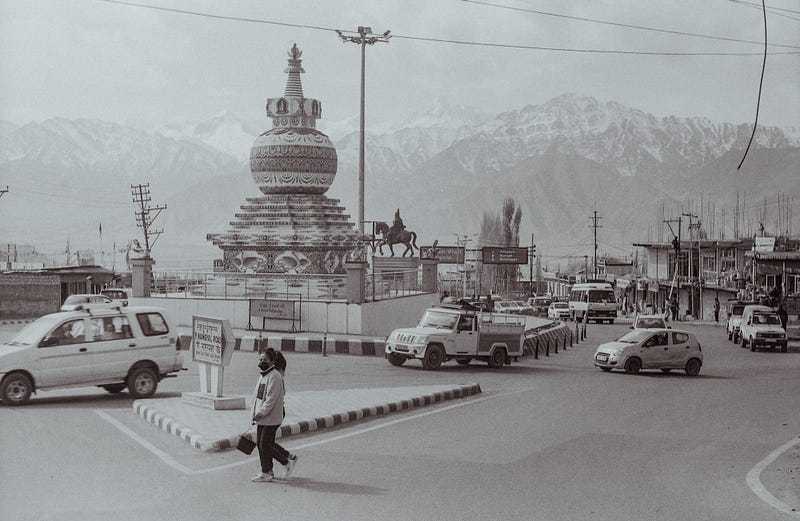
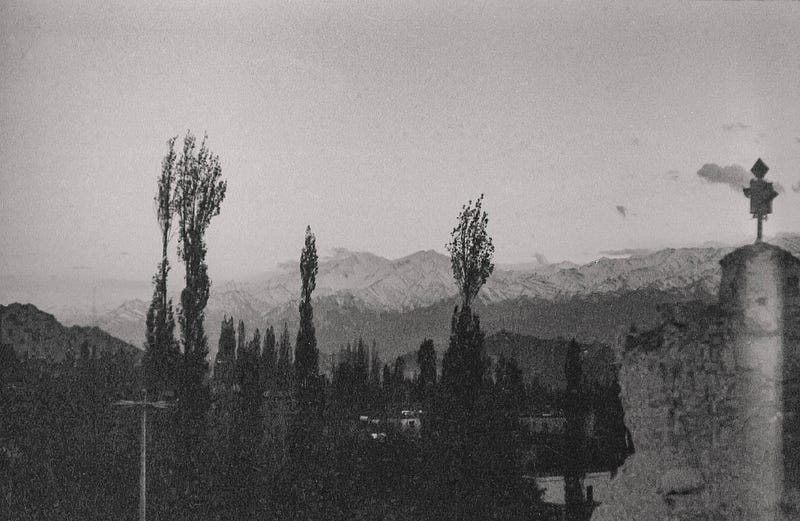
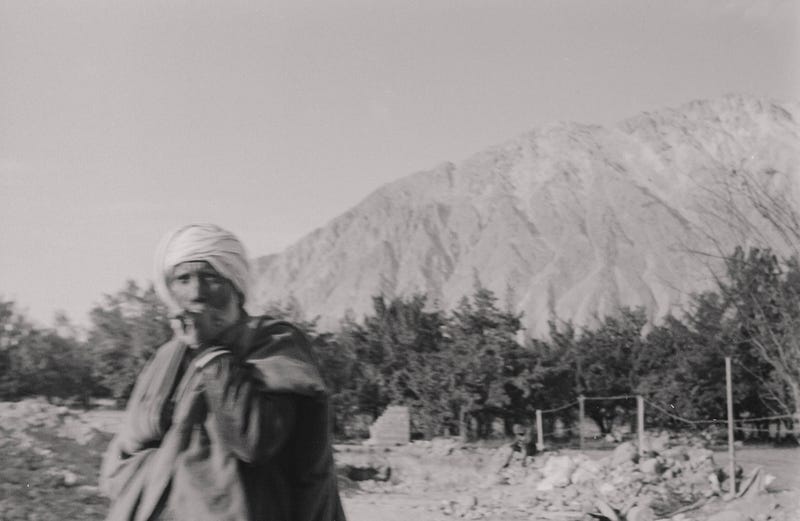
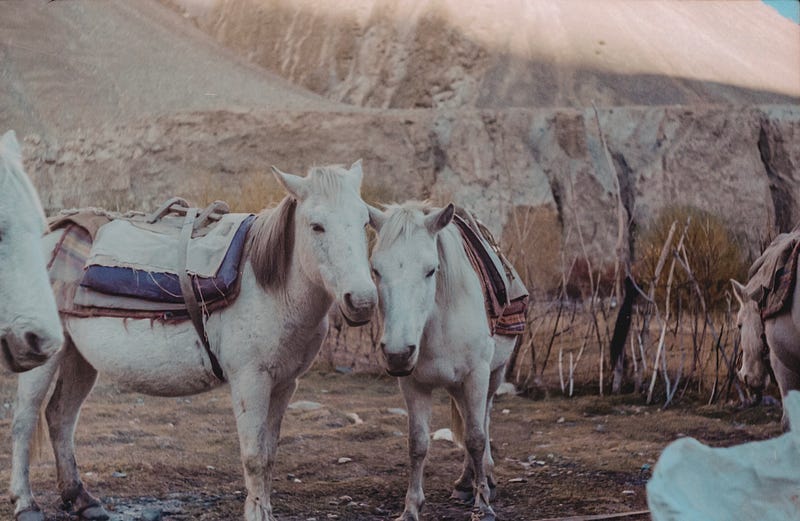
In October of 2022, I find myself in a geo-politically-charged region of India near the Chinese border. Border tensions are tight, and the Indian military presence is heavy outside the airport of Leh. I am here photographing a two-week expedition in the former silk-route kingdom of Ladakh — Supported by a small crew, plus seventeen baggage horses. Besides the digital cameras I carried for documentation for my client, I also brought a vintage film camera along for pleasure. All of these images were captured by the author on a 1960’s Soviet Fed 3 — film developed in Delhi, India, by Siddharth Photographix.
The landscape here is arid, dotted with simple villages and solitary stupas set against cracked and crumbling mountains. Under a warm winter sun, we splash our way barefoot across a brilliant blue river that carves a path through a valley rife with groves of golden poplars, cries of “jullay!”(hello) ringing out from villagers and homesteaders as we make our way.
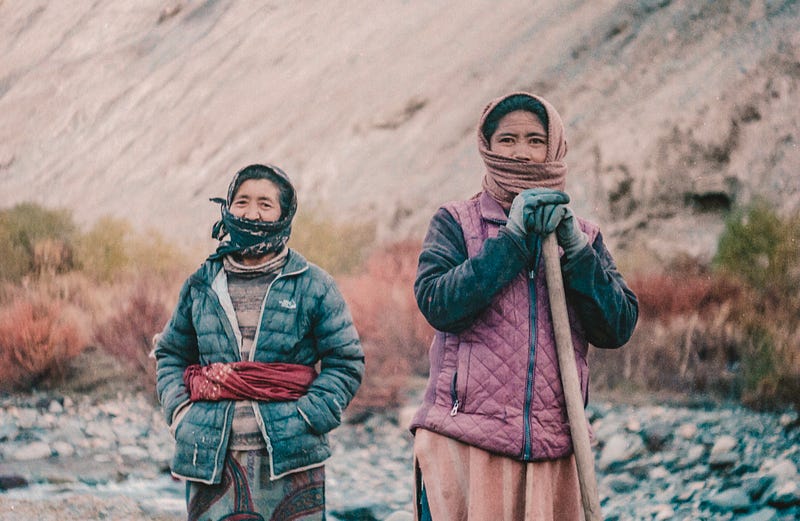
I’m unused to trekking in such luxury. Our crew organizes and breaks camp, serving tea and coffee to our tents each morning. Our Nepali cooks are surprisingly unhindered by the lack of facilities — preparing everything from pizza to carrot cake out of the magical mystery mess tent.
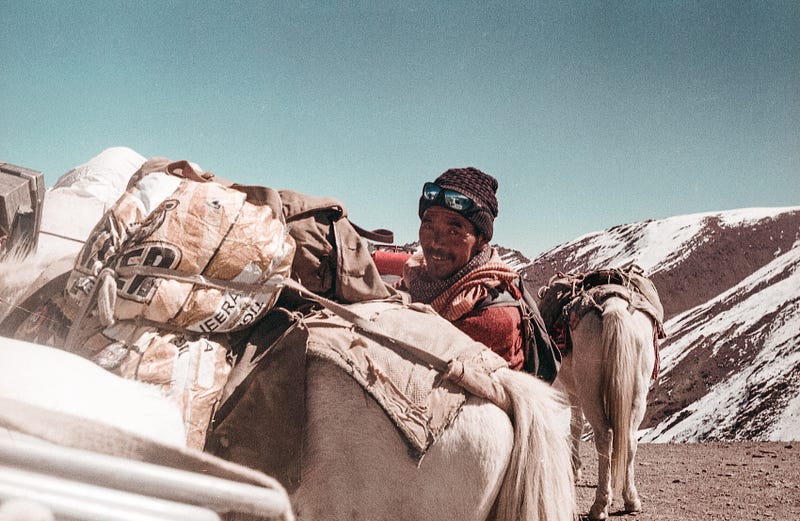
The pampering, though, is much appreciated as the trek itself is grueling. By the second day, we’re already plodding breathlessly upward to the 17,000ft Ganda ‘La’ (pass). Nothing grows at these altitudes. But we’re met by the rippling of prayer flags at stone cairns that mark the passes.
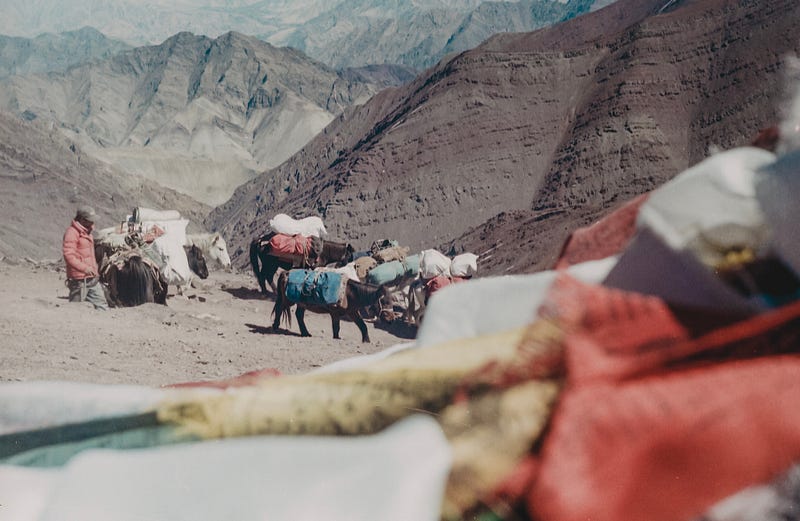
A 69-year-old Austrian trekker on our team, Horst, gratefully accepts a lift to the top on the back of one of the horses that we unanimously nickname ‘Hero’. My nickname for Horst is ‘Horizontal Horst’ due to his penchant for casting his pack on the ground at every break and lying on his side, Titanic-style, to smoke a handful of cigarettes. Not that I’m in great shape myself.
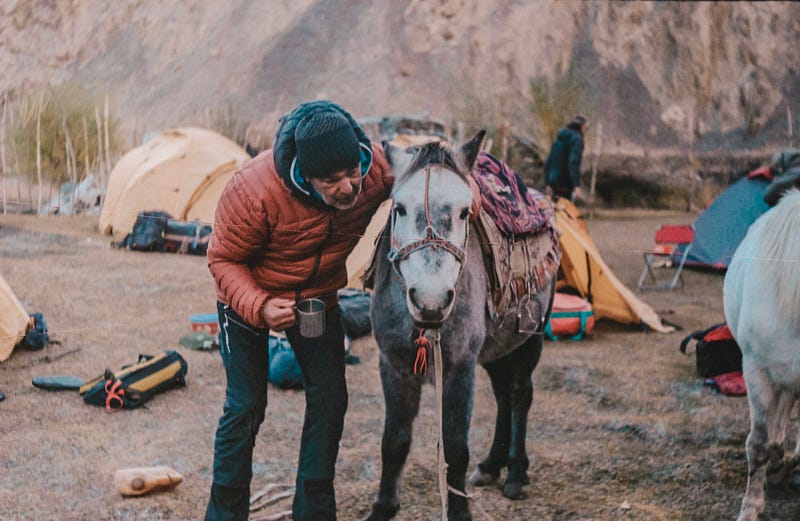
The complete lack of mobile reception is as invigorating as the lofty altitude is debilitating. Our fifth night finds us camped at 15,400 feet— the highest point I’ve ever braved in a tent — on a plateau under starlit skies. It truly feels like the edge of civilization as we know it. During the night, my tentmate Gunter Mussnig (Austria) and I struggle to exist, let alone sleep, as each breath in the rarefied air becomes a battle. Outside, a wild dog barks with ceaseless endurance.
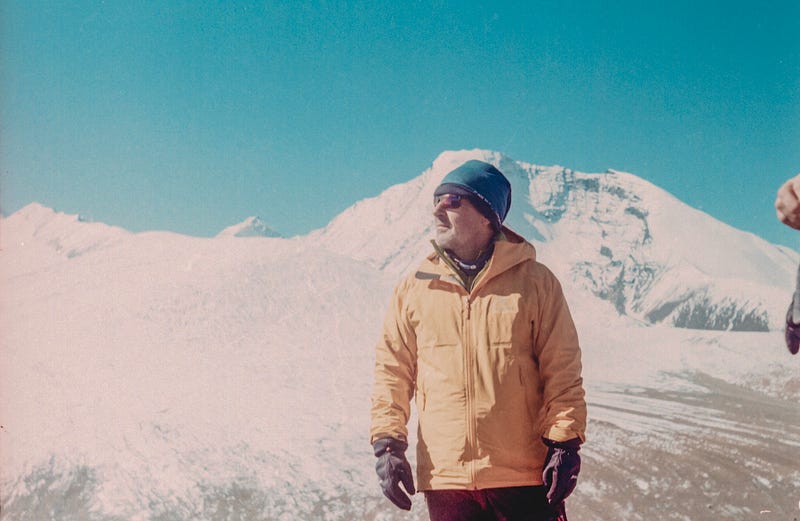
The next morning as we push onward up to Kongmaru La (17,200 ft), I reflect on what has drawn me here, to this journey. Was it an unexplainable longing for Tibet, or perhaps to answer the question of whether travel can serve a purpose outside of myself? While gasping for air at the top of the pass, prayer flags rippling in the wind around me, I remember something Gunter had said: “I would not like to live in a world without travel. That’s why we are doing this, to make travel possible in times of climate crisis”.
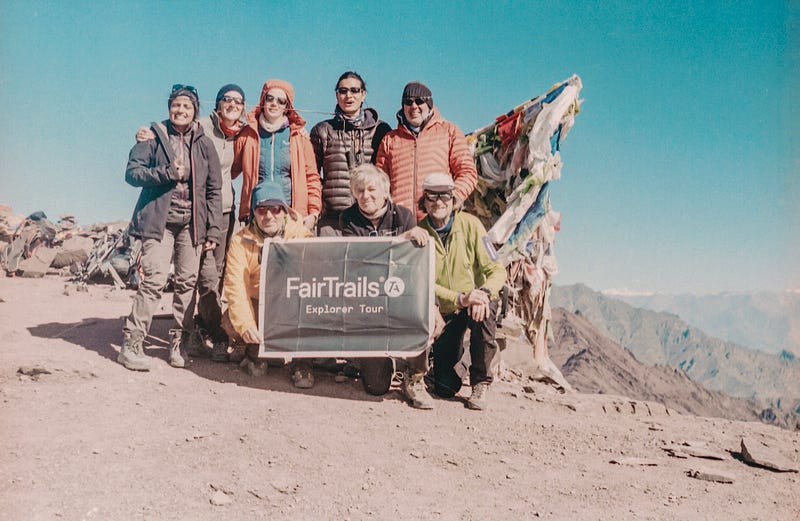
The climate impact project for our expedition is to subsidize the cost of 17 solar water heaters for Boorma, a remote village in the Nubra Valley, where the Himalayas meet the Karakorum. Each heater will not only provide hot water for bathing and cooking during the harsh Ladakhi winters but will also replace 2.3 tonnes of carbon over the course of its lifetime.
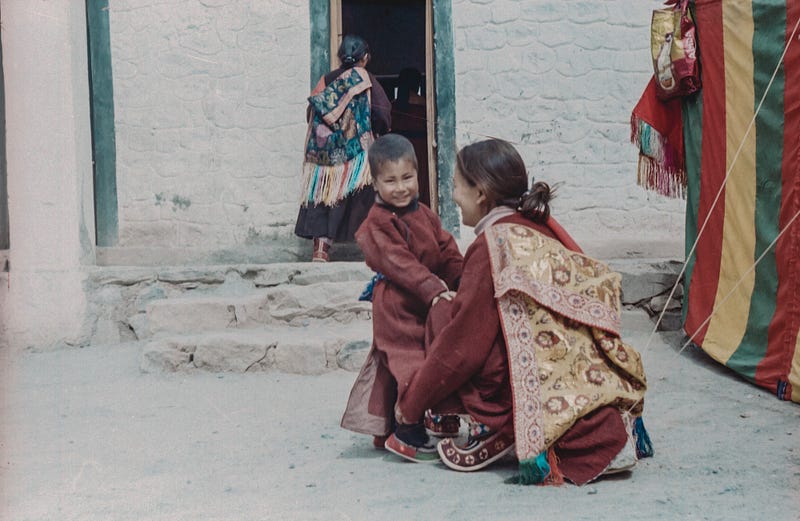
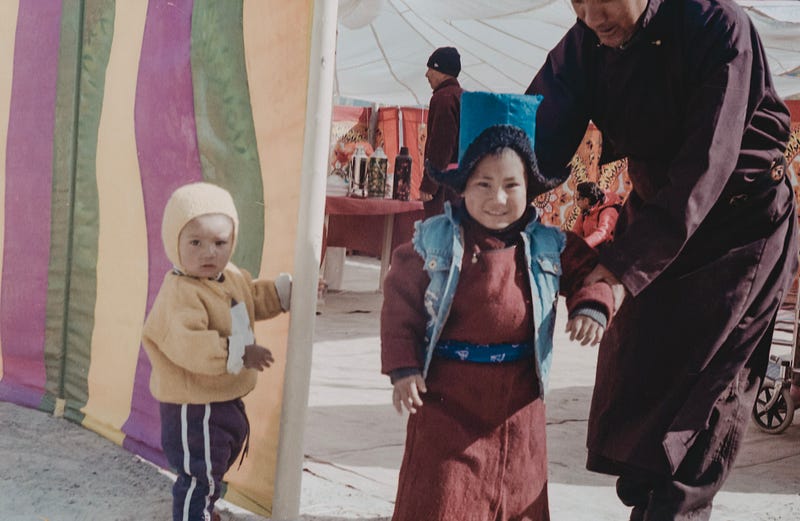
After a shared meal, coated with a light dusting from the sandstorm raging outside, we’re invited to don local garb and join the villagers in a traditional dance. We join with much laughter, followed by an exchange of gifts — school supplies and sweets for the children — who accept them with gusto. Almost in a trance, I manage to take the group’s photo before the teary goodbyes begin. As our van wheels around, the villagers climb the rock wall parallel to the road and wave goodbye as we bounce off into a dusty Karakoram haze.
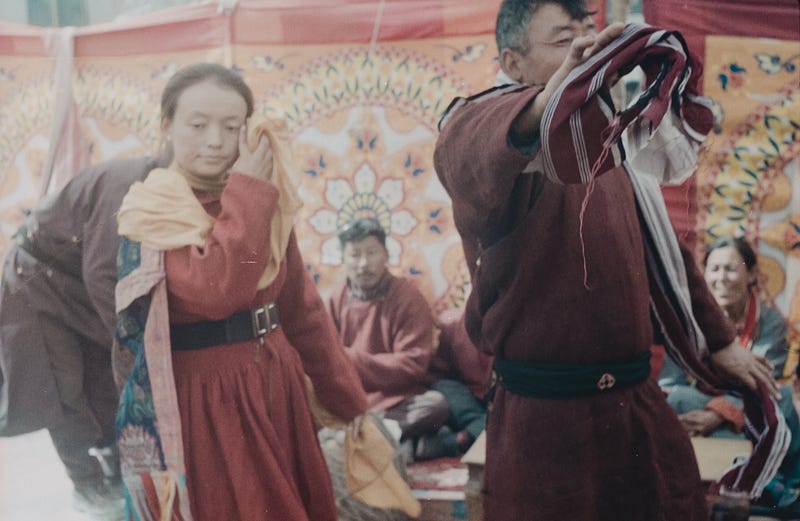
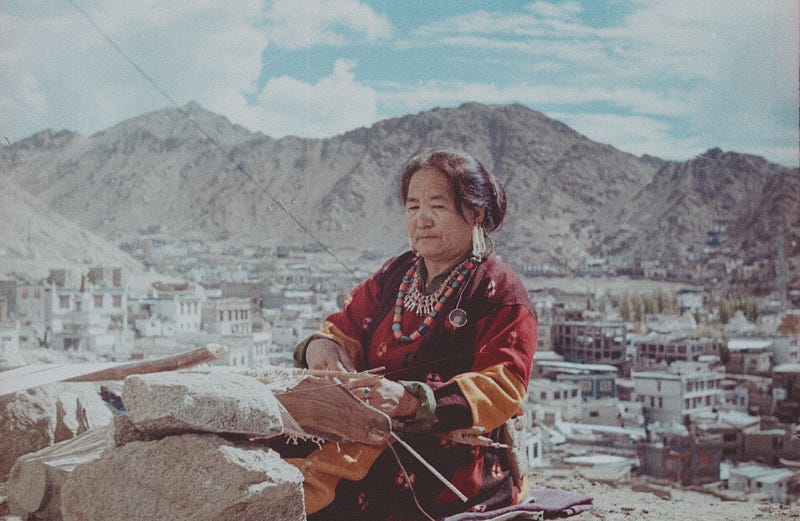
In the capital, Leh, walking the palace grounds is like walking through time. Men in traditional dress are seated in a close circle lost in their game of dice, and others are situated around a cauldron of boiling, salty Ladakhi tea on the slopes of the palace hill. Old women in woolen maroon robes and felt hats were working on handicrafts in the warm sun of a mid-October day.
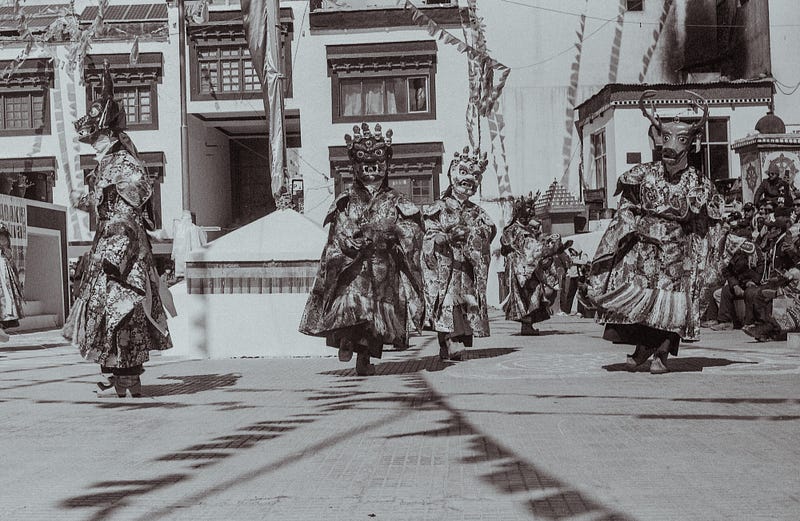
I slip into a Tibetan Buddhist Monastery and witness the performance of tantric mask dances by the monks of Thiksey monastery. These rituals help to visualize the deities that one will encounter during the transition period between incarnations. The dances are also performed for the purpose of spiritual purification of body and mind.
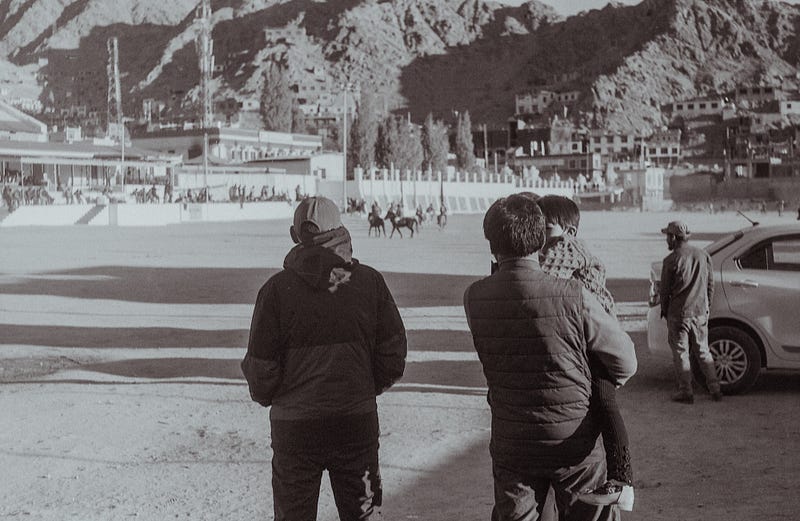
A high-altitude Polo match was something I never would have expected. The concrete stands are dusty and nowhere near full, and the teams rarely seemed to score, if at all. There is such a casual nature about the referees: leather jackets, a set of flags in one hand, scrolling their smartphone in the other. The buildup of horse dung in the goal zone — and a turd actually causing a full stop of a struck ball. The presence of dogs and even a car on the playing field, and the dust being kicked up on the dirt field as retired players spurred their tiny mounts into the clouds.
This was my third visit to the Himalayas, and my second visit to India, yet Ladakh felt as if it was on another planet entirely: so different from any place on Earth I had yet experienced. Capturing it on film was one of the best decisions I’ve ever made, and I can’t wait to go back.
Thank you for reading.
A related story about the assignment I was photographing in Ladakh:
You can see more of my work on my personal blog on transformative travel \ as well as on Instagram
Safe travels.