
Coming to Terms with not Being Great Anymore
Accepting the Seasons of Life
I’ve always been the kind of person that just jumped into something without thinking about whether or not I’d be good at it. If I were terrible… well, I’d train to get better. If I were good at it, I’d work hard to become even better. I would strive to be the best and surpass others dabbling in the same activity.
I’m inherently highly competitive, and for a significant part of my life, I have seen most activities as a competition of sorts — even when there is no real competition to speak of — no real winners or losers. When I sculpted, I had to be the best in the studio. When I surfed for fun, I had to be the best in the line-up. When I did anything, I had to be the best.
This personality trait worked for a while, but now that I’m older, there’s no way I can be the best at my former activities — not to mention the new ones I have taken up. It’s a harsh wake-up call, which has me rethinking and reevaluating my motivation behind what activities I choose to do and how I want to spend the rest of my journey.
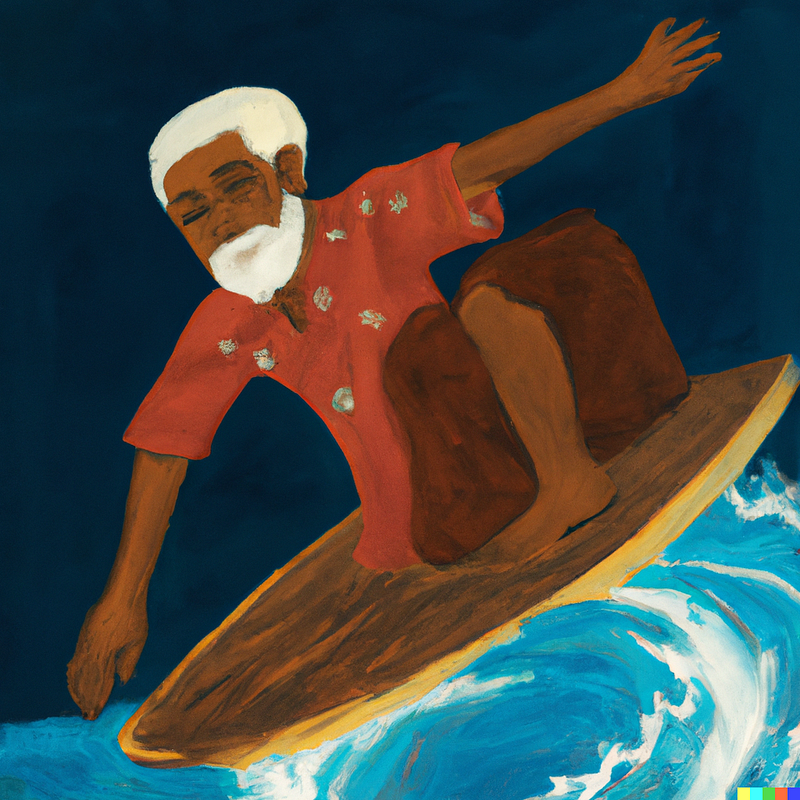
For instance, I used to be great at surfing. I competed in contests up and down the coast of California for a while. I have a quiver of seven surfboards in my garage and recently bought yet another one. I love surfing—the smell of wax, salt water, friends in the line-up — all of it. Then I lost my best surfing buddy to cancer, and I stopped. Just like that. It had been about two years since I’d been in the water, and when I got back in a few months ago, I was no longer good. I was, as they say, a Barney — a dangerous nut. I was embarrassed, and after that one day, I stopped. So why did I stop? Because I used to be great, I couldn’t fathom not being the kick-ass lady with the baseball cap I was once. I’d rather not surf than be bad at it.
So now, I took up Pickleball, and I enjoy it most days when I’m winning; when I’m losing, I’m frustrated. I wonder why I’m wasting my time hitting a plastic ball across a net to a 30-something male opponent who hits it back at me at 80 miles an hour. I can’t compete against a 30-something testosterone machine. I can’t win. Get hurt, end up with bruises up and down my leg, yes, win — no. So, do I continue?
As we get older, these are the questions we ask ourselves. Do we continue even though we have lost our edge and are now simply fodder for our opponents? Do we persevere or let go and move on? It’s a difficult question for aging type A gotta-win personalities — like me.
Do we find solace in Grantland Rice’s trite saying: It’s not whether you win or lose, it’s how you play the game.
A saying I always thought was hogwash until I ended up on the losing side of the equation. So, I’ve had to ruminate, rethink, revision where I go from here.
Perhaps instead, you, me all of us aging athletes examine what we get from our participation in a sport. What do we gain from it?
- A Physical Workout We might have lost two out of four games, but we also burned through 399 calories. We get to eat more or lose weight. Win-win here.
- Mental Workout While the world was imploding around us, for a few moments, all we cared about was hitting a plastic ball over a net or not getting slammed by a flying longboard. Global warming, what’s that?
- Determination and Perseverance So what if we sat in the water for two hours without catching a wave or lost every game we played yesterday? We were determined! We persevered! We developed our humility muscle and now get to practice the crap we teach our grandkids.
- Humility Supposedly this is a good trait — good for the soul kind of stuff.
- Community and Tribe Building Sports like Pickleball and Surfing have tight-knit communities. We aren’t as stellar as we used to be, but our presence reminds the younger generation that they too will grow old. They need us to remind them that elders don’t perform as well and that this is what aging looks like. Not to mention that without losers, there wouldn’t be winners. ( Congrats to the two high school kids who showed up at my Pickleball court yesterday and beat me and my 75-year-old partner 9–11. You studs beat your Grandmothers!)
- Coming to Terms Loss helps us to accept the what-is-ness of the moments in the seasons of our lives. We are still here. Sure, we may be slower popping up on our surfboards, slower at picking up the blasted neon ball, slower all around — but we are still here. We deserve the same participation trophies that our kids and grandkids receive(d) from losing every soccer game and baseball game of their league.
What I’m reading:


