avatarDaniel Hopper

Free AI web copilot to create summaries, insights and extended knowledge, download it at here

4955

Abstract

7">“Dietary proteins also enhance IGF-1, a factor that exerts positive activity on skeletal development and bone formation. Consequently, dietary proteins are as essential as calcium and vitamin D for bone health and osteoporosis prevention.” — Bonjour, 2005</p><h2 id="5ad4">Satiation</h2><p id="6119">Meals with a high protein content (20 plus grams a serving) are more <a href="https://academic.oup.com/ajcn/article/87/5/1558S/4650426">satiating</a> than a meal with low protein content, meaning it's more filling with a smaller portion and reduces our hunger post-meal.</p><p id="6bb6">Therefore, we don't eat as much overall and become less prone to cravings for junk food.</p><p id="d1b2" type="7">“There is convincing evidence that a higher protein intake increases thermogenesis and satiety compared to diets of lower protein content.” (Halton & Hu, 2004)</p><p id="06c2">A <a href="https://pubmed.ncbi.nlm.nih.gov/20847729/">2011 study</a> concluded that increasing protein to 25% of the total daily calorie intake reduced cravings by 60% and halved the desire to snack night.</p><h2 id="df3c">Thermic effect</h2><p id="2f45">Another benefit of protein is the <a href="https://pubmed.ncbi.nlm.nih.gov/31021710/"><b>thermic effect of food </b></a><b>(or <a href="https://www.ncbi.nlm.nih.gov/pmc/articles/PMC4258944/#:~:text=The%20thermic%20effect%20of%20food,metabolism%20and%20storage%20of%20nutrients)."></a></b><a href="https://www.ncbi.nlm.nih.gov/pmc/articles/PMC4258944/#:~:text=The%20thermic%20effect%20of%20food,metabolism%20and%20storage%20of%20nutrients).">diet-induced thermogenesis</a>)</p><p id="2550">Thermogenesis is a metabolic response to food, resulting in a short-term increase in energy expenditure. Our bodies use calories during numerous stages to process the nutrients in food, such as digestion, absorption, transportation, metabolism, and storage of nutrients.</p><p id="8aa9" type="7">“There is convincing evidence that a higher protein intake increases thermogenesis and satiety compared to diets of lower protein content.” — Halton & Hu, 2004</p><p id="914b">Protein has a higher thermic effect than either fat or carbs — according to a <a href="https://www.ncbi.nlm.nih.gov/pubmed/15466943">2004 study</a>, the percentage increase in energy expenditure over the basic metabolic rate is 20–35% compared to 5–15%.</p><figure id="8e06"><img src="https://cdn-images-1.readmedium.com/v2/resize:fit:800/1*e_mWIB_9Edimyz-vcjiPGQ.jpeg"><figcaption>Photo by <a href="https://www.pexels.com/photo/man-in-white-tank-top-lifting-weights-5327539/">Tima Miroshnichenko</a></figcaption></figure><h1 id="8297">How much protein do we need to build muscle?</h1><p id="db4f">The general rule of thumb for protein consumption to optimise building and maintaining muscle has been one gram per pound (lb) of body weight. Meaning, that if you weigh 150 pounds, you need approximately 150 grams of protein.</p><p id="6eaf">However, A <a href="https://pubmed.ncbi.nlm.nih.gov/28698222/">recent study found</a> that a protein intake over 0.7 grams per lb (1.55 grams per kg) of body weight had no additional benefit to building muscle or performance in the gym.</p><p id="6a17" type="7">“Protein intakes at amounts greater than ~1.6 g/kg/day do not further contribute RET-induced (resistance exercise) gains in FFM (Fat-free mass).” — Morton et al., 2018</p><p id="7af6">Similarly, a <a href="https://www.ncbi.nlm.nih.gov/pubmed/1400008">study of new bodybuilders</a> found no benefit for consuming more than 0.68g of protein per pound of weight. Another study on <a href="https://www.ncbi.nlm.nih.gov/pmc/articles/PMC2129168/">college athletes</a> found no added benefit above 0.8–0.9 g of protein per lb of body weight.</p><p id="a3b8">Therefore, for the vast majority of people, 1.6 grams of protein per kg of bodyweight will be enough to optimise protein synthesis to maximise muscle-building potential.</p><div id="066c" class="link-block"> <a href="https://readmedium.com/science-says-you-dont-need-as-much-protein-as-you-might-think-62cb3abea9ab"> <div> <div> <h2>How Much Protein Do We Need to Build Muscle?</h2> <div><h3>What the science says about how much protein is optimal for recovering from exercise.</h3></div> <div><p>medium.com</p></div> </div> <div> <div style="background-image: url(https://miro.readmedium.com/v2/resize:fit:320/1*L1nlz45RmuJ7Gk8NG8xDEA.jpeg)"></div> </div> </div> </a> </div><h1 id="f083">The problem with overconsuming protein</h1><p id="389f">We’ve just covered the many benefits of protein, the optimum amount required to build muscle, and that consuming more protein than this amount has no added benefits.</p><p id="f9aa">In fact, consuming more protein than you need can actually negatively impact your body.</p><p id="3

Options

e9e">Before we discuss that, I must mention that <a href="https://pubmed.ncbi.nlm.nih.gov/27807480/">science has long debunked</a> the theory that a high protein intake can negatively impact the kidneys of healthy people. So, it is not that.</p><p id="d6da">It’s the calories.</p><p id="dd1a">Protein contains calories just like carbs and fats do. Therefore, having more than we need probably means we’re overconsuming calories, and we’ll get fat…</p><p id="8343">A <a href="https://readmedium.com/what-is-a-calorie-deficit-and-why-do-we-need-one-to-lose-fat-5be5dacf5827">calorie deficit</a> is consuming fewer calories than the number required to sustain our current body weight.</p><p id="c676">Total calorie intake controls our weight.</p><p id="f7b8">Yes, muscle mass and bone density also impact our weight. But our total weight depends on how much body fat we have, dictated by our energy intake. Calories.</p><p id="cae6"><a href="https://science.jrank.org/pages/6816/Thermodynamics.html">Thermodynamics</a> dictates that energy doesn’t disappear but instead transforms from one form to another. In the case of food, the <a href="https://science.jrank.org/pages/2507/Energy-Transfer-laws-thermodynamics-energy-transfer-in-food-webs.html">energy is metabolised and transferred</a> to the person (or animal) consuming it.</p><p id="6829">Therefore, food adds energy to our bodies.</p><p id="8fea">Each person has a maintenance level of calories, governed by their current size and weight, genetics, calorie intake, and activity level.</p><p id="fd07">So, eating extra protein adds more calories to our bodies. If it has no additional muscle-building benefits, our consumption should be monitored.</p><p id="6726">Thus, extra protein becomes "empty" calories. Empty calories provide no nutritional benefit and are counterproductive to fat loss and weight management goals.</p><p id="9f96">Eating excess protein makes it harder to be in a calorie deficit. Like anything that we overconsume, protein is stored as body fat if we do not burn it off.</p><p id="4ca3">One hundred grams of protein is 400 calories. It would take most people nearly an hour of cardio to burn 400 calories!</p><p id="6831">Eating more protein than necessary can also affect our energy our bodies prefer carbs and fats for energy over protein. We get fewer carbs and fats if we’re controlling our total calorie intake and a protein shake will never be as satiating as a sandwich because your stomach feels empty.</p><p id="236c">In fact, <a href="https://www.ncbi.nlm.nih.gov/pmc/articles/PMC2129168/">one 2006 study</a> found that if athletes increase their carbs and fats instead of consuming excess protein, they further improve their strength and muscle gains.</p><h1 id="5c35">Final Thoughts</h1><p id="52ad">In conclusion, consuming protein has many benefits for our bodies, such as repairing damaged muscle cells/fibres after exercise and building them back bigger and stronger.</p><p id="0c12">Therefore, many people who do resistance training consume a high-protein diet.</p><p id="8e66">Approximately 0.7 grams of protein per pound of body weight (1.6 g per kg) is the optimum amount of protein to build muscle and there is no added benefit to consuming more.</p><p id="8070">However, many people do think that eating more protein means you build more muscle, or, that it can’t do any harm.</p><p id="9ce2">Well, just like carbs and fats, protein has calories. Overconsuming calories leads to fat gain.</p><p id="e94e">Protein might be making you fat.</p><p id="d1f0"><b>Thank you for reading.</b></p><p id="996c">If you liked the article, you may be interested in this article about fourteen fat-burning tips that will help you to transform your body.</p><div id="4d6e" class="link-block"> <a href="https://readmedium.com/14-fat-burning-tips-to-help-you-transform-your-body-31d08f40c430"> <div> <div> <h2>14 Fat Burning Tips to Help You Transform Your Body</h2> <div><h3>Burn body fat and get the results and body you desire!</h3></div> <div><p>medium.com</p></div> </div> <div> <div style="background-image: url(https://miro.readmedium.com/v2/resize:fit:320/1*PzIrOjQJ7sQagVEOqLeL2w.jpeg)"></div> </div> </div> </a> </div><h1 id="0ca3">Read More Medium Articles</h1><p id="23e3"><i>Non-Medium members can only read 3 articles a month — become a Medium Member for unlimited access.</i></p><p id="8d22"><i>If you would like to read more articles like this one, <a href="https://brand-yourself-better.medium.com/membership"><b>sign up to become a Medium member</b></a><b> </b>for only<b> $5 a month.</b></i></p><p id="6860"><a href="https://brand-yourself-better.medium.com/subscribe"><b><i>Subscribe</i></b></a><b><i> </i></b><i>to be notified when I publish new content.</i></p></article></body>

Too Much Protein Is Making You Fat

But how much protein is too much?
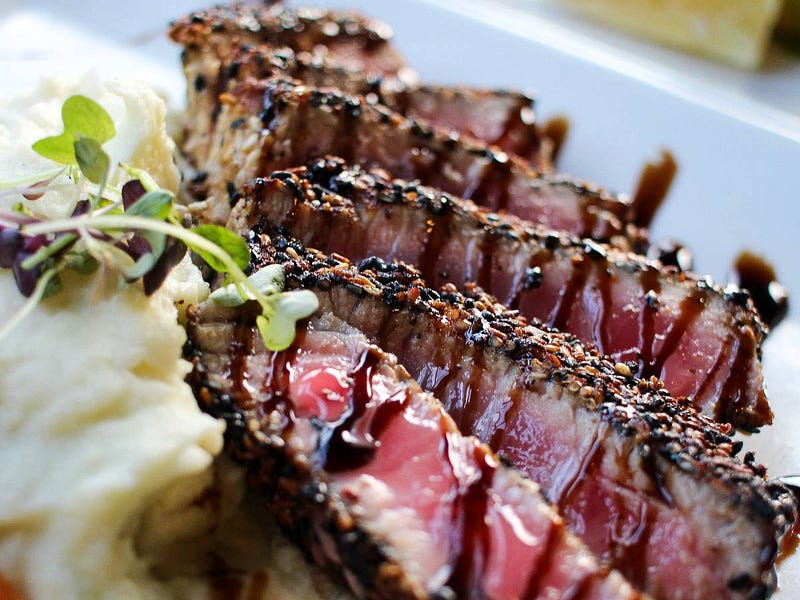
Photo by Crystal Jo on Unsplash

Bro-science folk law tells us that to maximise our ability to build muscle, then we need to consume more than one gram of protein per pound of bodyweight.

Some bodybuilders can consume two grams of protein or more per pound of bodyweight. For a 250-pound (113 kg) bodybuilder, this could be over 300, 400, or even 500 grams of protein a day!

For context, one egg has 5–8 grams of protein and a steak will have around 25–60 grams of protein. So, that’s a lot of daily eggs and steak!

So, it should be a relief that you don’t need anywhere near that, even if you’re obsessed with building muscle.

I’ve been there. When I first got into lifting heavy things, the guy at the Supplement store told me to take two servings at a time (funny that), 2–3 times a day, to “maximise my gains”. Weighing around 180-90 pounds (80-85 kg), I was consuming around 100–150 grams of protein a day just from shakes! Ridiculous.

And my results weren’t any better. In fact, one aspect of fitness became harder.

So, how much protein do you actually need and why is having more such a bad thing?

The benefits of protein

Before any “gym bro” gets too angry…yes, consuming protein has fantastic benefits for our bodies.

The most well-known benefit of consuming protein is to build muscle and it’s so crucial because nothing else can repair damaged muscle tissue.

But there are also other benefits to eating protein. But first, we’ll look at how protein repairs muscle.
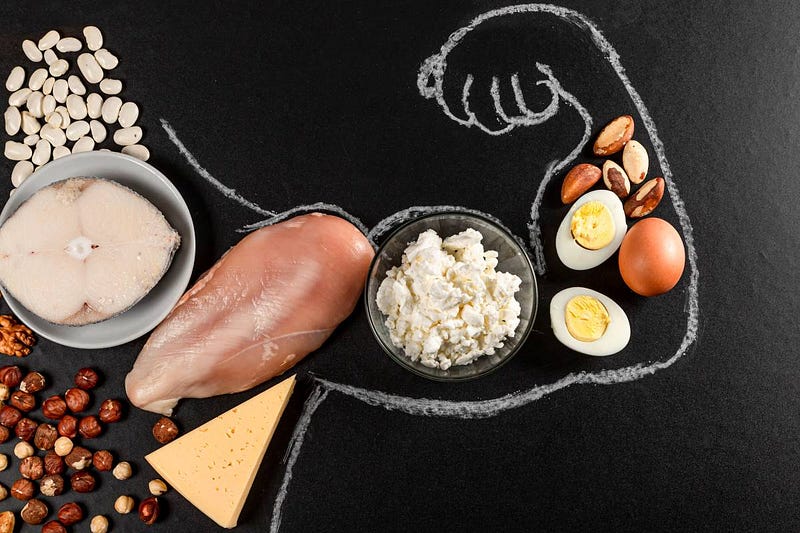
Image via Flickr

Building muscle

There is plenty of scientific evidence that protein helps us build muscle and increase strength, such as this study and this one.

Protein provides the nutritional foundation for building muscle by repairing and maintaining muscle tissue. Protein is key to recovering from resistance training — if we can’t recover, our bodies can’t build stronger muscle fibres and grow.

“An increase in dietary protein favorably effects muscle and strength during resistance training.” — Bosse & Dixon, 2012

Hundreds of amino acids occur in nature, but just 20 of those are required to make the protein found in our bodies. There are three main categories of amino acids: essential, non-essential and conditionally essential.

There are nine essential amino acids, which our bodies cannot produce naturally so must be obtained through our diets. These amino acids are critical to repairing and rebuilding damaged muscle cells/fibres after exercise.

Bodily functions

Excluding the water and fat in our bodies, the human body is almost entirely made up of protein. Thus, proteins are thought of as the “building blocks of the body

Besides repairing muscle fibres/cells, the amino acids in protein support various other functions that support the development of our bodies. These include developing our organs, tissues, muscles, and hormones in the body.

  • Vital for the generation and maintenance of every cell in our bodies.
  • Red blood cells contain a protein compound that carries oxygen throughout the body.
  • Assist our body to produce enzymes to aid in food digestion
  • Regulate hormones, especially as our cells transform and develop through puberty.
  • Enhance the strength of our immune system as antibodies are made up of proteins.
  • Improve bone health by increasing our body’s absorption of calcium and magnesium.

“Dietary proteins also enhance IGF-1, a factor that exerts positive activity on skeletal development and bone formation. Consequently, dietary proteins are as essential as calcium and vitamin D for bone health and osteoporosis prevention.” — Bonjour, 2005

Satiation

Meals with a high protein content (20 plus grams a serving) are more satiating than a meal with low protein content, meaning it's more filling with a smaller portion and reduces our hunger post-meal.

Therefore, we don't eat as much overall and become less prone to cravings for junk food.

“There is convincing evidence that a higher protein intake increases thermogenesis and satiety compared to diets of lower protein content.” (Halton & Hu, 2004)

A 2011 study concluded that increasing protein to 25% of the total daily calorie intake reduced cravings by 60% and halved the desire to snack night.

Thermic effect

Another benefit of protein is the thermic effect of food (or diet-induced thermogenesis)

Thermogenesis is a metabolic response to food, resulting in a short-term increase in energy expenditure. Our bodies use calories during numerous stages to process the nutrients in food, such as digestion, absorption, transportation, metabolism, and storage of nutrients.

“There is convincing evidence that a higher protein intake increases thermogenesis and satiety compared to diets of lower protein content.” — Halton & Hu, 2004

Protein has a higher thermic effect than either fat or carbs — according to a 2004 study, the percentage increase in energy expenditure over the basic metabolic rate is 20–35% compared to 5–15%.

Photo by Tima Miroshnichenko

How much protein do we need to build muscle?

The general rule of thumb for protein consumption to optimise building and maintaining muscle has been one gram per pound (lb) of body weight. Meaning, that if you weigh 150 pounds, you need approximately 150 grams of protein.

However, A recent study found that a protein intake over 0.7 grams per lb (1.55 grams per kg) of body weight had no additional benefit to building muscle or performance in the gym.

“Protein intakes at amounts greater than ~1.6 g/kg/day do not further contribute RET-induced (resistance exercise) gains in FFM (Fat-free mass).” — Morton et al., 2018

Similarly, a study of new bodybuilders found no benefit for consuming more than 0.68g of protein per pound of weight. Another study on college athletes found no added benefit above 0.8–0.9 g of protein per lb of body weight.

Therefore, for the vast majority of people, 1.6 grams of protein per kg of bodyweight will be enough to optimise protein synthesis to maximise muscle-building potential.

The problem with overconsuming protein

We’ve just covered the many benefits of protein, the optimum amount required to build muscle, and that consuming more protein than this amount has no added benefits.

In fact, consuming more protein than you need can actually negatively impact your body.

Before we discuss that, I must mention that science has long debunked the theory that a high protein intake can negatively impact the kidneys of healthy people. So, it is not that.

It’s the calories.

Protein contains calories just like carbs and fats do. Therefore, having more than we need probably means we’re overconsuming calories, and we’ll get fat…

A calorie deficit is consuming fewer calories than the number required to sustain our current body weight.

Total calorie intake controls our weight.

Yes, muscle mass and bone density also impact our weight. But our total weight depends on how much body fat we have, dictated by our energy intake. Calories.

Thermodynamics dictates that energy doesn’t disappear but instead transforms from one form to another. In the case of food, the energy is metabolised and transferred to the person (or animal) consuming it.

Therefore, food adds energy to our bodies.

Each person has a maintenance level of calories, governed by their current size and weight, genetics, calorie intake, and activity level.

So, eating extra protein adds more calories to our bodies. If it has no additional muscle-building benefits, our consumption should be monitored.

Thus, extra protein becomes "empty" calories. Empty calories provide no nutritional benefit and are counterproductive to fat loss and weight management goals.

Eating excess protein makes it harder to be in a calorie deficit. Like anything that we overconsume, protein is stored as body fat if we do not burn it off.

One hundred grams of protein is 400 calories. It would take most people nearly an hour of cardio to burn 400 calories!

Eating more protein than necessary can also affect our energy our bodies prefer carbs and fats for energy over protein. We get fewer carbs and fats if we’re controlling our total calorie intake and a protein shake will never be as satiating as a sandwich because your stomach feels empty.

In fact, one 2006 study found that if athletes increase their carbs and fats instead of consuming excess protein, they further improve their strength and muscle gains.

Final Thoughts

In conclusion, consuming protein has many benefits for our bodies, such as repairing damaged muscle cells/fibres after exercise and building them back bigger and stronger.

Therefore, many people who do resistance training consume a high-protein diet.

Approximately 0.7 grams of protein per pound of body weight (1.6 g per kg) is the optimum amount of protein to build muscle and there is no added benefit to consuming more.

However, many people do think that eating more protein means you build more muscle, or, that it can’t do any harm.

Well, just like carbs and fats, protein has calories. Overconsuming calories leads to fat gain.

Protein might be making you fat.

Thank you for reading.

If you liked the article, you may be interested in this article about fourteen fat-burning tips that will help you to transform your body.

Read More Medium Articles

Non-Medium members can only read 3 articles a month — become a Medium Member for unlimited access.

If you would like to read more articles like this one, sign up to become a Medium member for only $5 a month.

Subscribe to be notified when I publish new content.

Diet
Protein
Nutrition
Fitness
Health
Recommended from ReadMedium