
14 Fat Burning Tips to Help You Transform Your Body
Burn body fat and get the results and body you desire!
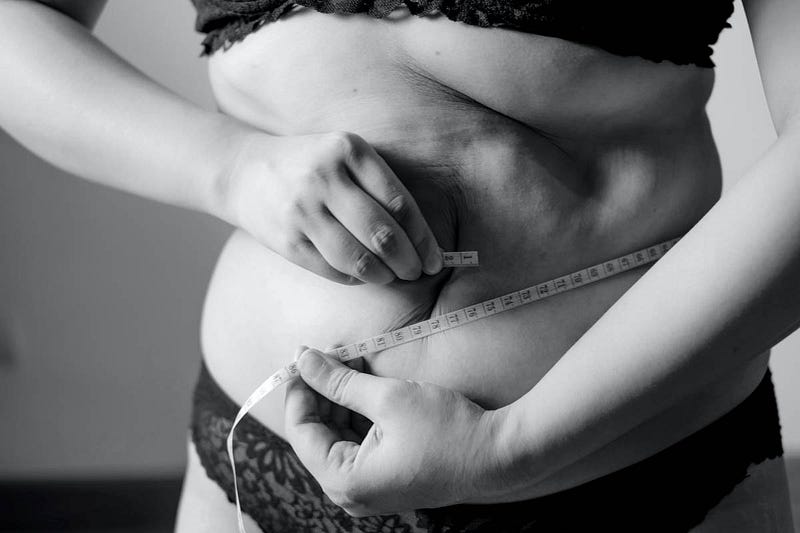
Let’s be honest.
99% of us all would like to have less body fat.
Many of us struggle to manage our weight.
Some of us aspire to have visible abs for a “beach body” physique, and others would just like to lose a little weight.
Either way, we need to burn body fat.
In a previous article titled “The key to fat loss is enjoyment”, I listed 14 tips to help people burn fat and lose weight. However, it was only a bullet point list with no explanation of these tips.
In this article, I’ll explore these tips, providing their relevance and advice on how to incorporate them into your life.
Understand Calories
The first and probably most important component of burning body fat and losing weight is understanding what calories are and how they work.
It is far easier to control your energy intake if you take the time to learn about calories and learn how calorie-dense certain foods are. This will enable you to make better choices with the foods you choose to consume.
Many people who struggle to lose weight don’t seem to understand how simple the concept of calories is. Calories are how we quantify the energy in food.
Food contains energy. If we eat more energy than our body requires, then it’s stored as energy for later use. Then, if we consume less energy than we require, our body utilises these fat stores for energy.
It’s easy to learn about the calories in different foods — it only takes a Google search such as “How many calories are in one beer” or, “How many calories in a lasagne” There are even fitness apps with databases of food nutrition that help you to calculate your calorie intake.
Replace most of your high-calorie foods with low-calorie alternatives
The calorie density of food varies greatly.
Calorie density is the number of calories in a particular food per serving or 100 grams.
Calorie density allows us to compare foods quite easily and for every high-calorie food out there, there’s a low-calorie alternative.
So, this tip is simple — replace high-calorie foods with a low-calorie alternative. For example, drink diet or sugar-free Coke instead of regular Coke.
Or, choose a low-carb beer instead of regular beer. Use low-calorie sauces over regular sauce, chicken breast instead of chicken drumsticks, shirataki noodles instead of pasta and so forth.
Switching calorie-dense foods out of meals will go a long way toward reducing your calorie intake and helping you to get into the fat-burning zone.

Read food labels
Another really simple tip to help you better understand what you’re eating and whether it will be beneficial to your fat loss gains is reading food labels.
Look at calories per 100 grams and learn how to calculate the fat, carbs and protein intake (macronutrients) to work out calorie content.
Every processed food will have its macronutrients and total calorie count listed on the label.
When you’re grocery shopping, read the labels of any products before they go into your trolley. Take 3–5 products off the shelf and compare their nutrition before choosing one, or avoid them altogether.
The more educated you are about what’s in the food you eat, the easier it is to make better choices.
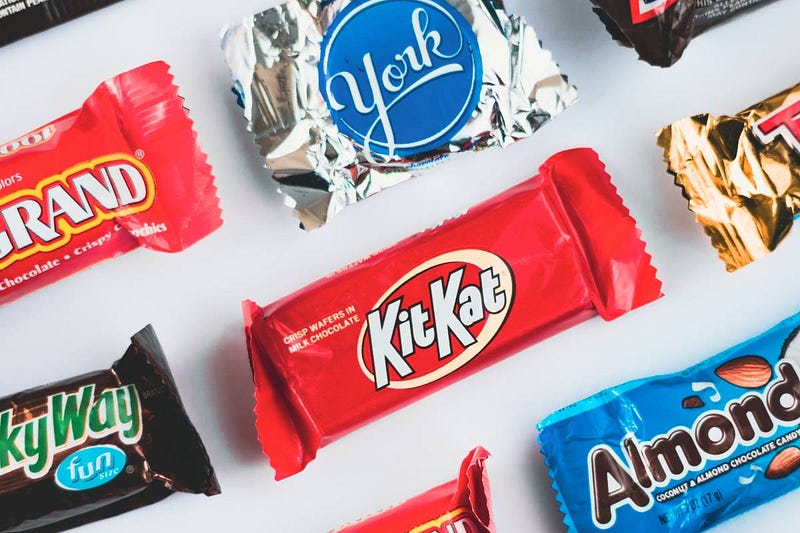
Eliminate junk foods from your pantry
Do you know a really easy way to avoid those nighttime junk food binges that many of us are prone to?
Remove junk foods from your pantry! Just don’t buy them.
If the temptation isn’t there, it’s far easier to avoid bad food choices.
It sounds really simple, right? Do you have the willpower to avoid purchasing these foods when doing shopping?
If you’re serious about getting in shape, then you should be able to avoid pilling up the shopping trolley with calorie-dense junk foods that won’t help you to reach your goals.
Don’t go to the supermarket and fill up your trolley with junk food.
If you usually have a lot of junk food for the kids, replace it with more healthy alternatives. It’s for your benefit and that of your family to teach your kids healthy habits.
Don’t buy into fad diets
Dieting is hard. Diets restrict us from eating most of the food we love.
It doesn’t have to be that way!
Fad diets are especially restrictive — it’s easy to market a diet to someone with the simple promise of “avoid these things, and your problems will be solved.”
Learning about macronutrients, making smarter food choices and controlling your portions is a much harder sell.
People end up failing these fad diets and more often than not, put the weight right back on. Why? Because these diets don’t teach us the fundamentals of weight management.
Keto is an example of a popular fad diet to avoid. Pro-tip: don’t try keto — it’s just too difficult for the vast majority of people to sustain, and it avoids many fruit and vegetables which are vital sources of micronutrients.
Focus on forming healthy habits and routines
Further to the previous point, don’t expect a diet to solve your problems. Chances are, it won’t work.
Instead, focus on forming healthy habits and routines that you will follow most days for the rest of your life.
I don't mean 4-days-a-week habits — I mean 95 days out of 100. Better yet, 100 days out of 100.
I'm not saying you have to be perfect - but the more habits you incorporate into your daily life that will empower you to reach your body goals, the better.
For example, it might be a coffee when you first wake up. It might be exercising for an hour a day before or after work. It might be spending an afternoon on the weekend prepping your meals for the week.
These positive habits that you incorporate into your routine will help you to manage your weight for the rest of your life.

Don’t crash diet — take your time
When we want to lose weight, often a person wants to do it as quickly as possible.
That’s why there’s so much clickbait marketing out there telling us we’ll lose x amount of weight in minimal time, with minimal effort.
When you tell somebody that it’s far better for their body composition to lose weight slowly and consistently over months, they usually don’t want to hear it.
It’s human nature to be impatient — so many people try and lose weight as quickly as possible.
A crash diet is defined by the Oxford Dictionary as “a weight-loss diet undertaken on an urgent, short-term basis to achieve very rapid results.”
But, if you crash diet, you’ll hate it. The food will be terrible, and the huge calorie deficit means you’ll be extremely low on energy. It will make fat loss seem like a chore.
Then, you’ll probably put the weight right back on, because you haven’t created sustainable weight management habits.
Don’t crash diet.
Take your time.
Practice portion control
It’s great to have a plate full of healthy foods. But, if your servings are too large, you can still overconsume calories.
Research suggests that when people serve themselves, they tend to eat most of the serving. Therefore, controlling the serving size can vary a person’s calorie intake massively.
One example is nuts. Nuts are great for us — but they are extremely calorie dense!
We must have small servings of nuts, or the calories will add up extremely fast. Almonds are pushed as a great fat-loss food because of their nutritional benefits, but just 100 grams of almonds contain 579 calories!
A snack should be no more than 200 calories, meaning we get around 30 grams worth of almonds.
A very small handful…
30 grams of almonds contain around six grams of protein, fifteen grams of fat, and six grams of carbs.
Here are some pointers for helping to control your portion sizes.
- Use a smaller plate.
- Divide your plate up with a quarter of protein sources like chicken breast, a quarter of complex carbs like sweet potatoes, and half vegetables and/or salad.
- Don’t upsize your fast-food combos.
- Read the packaging on processed food to see how calorie-dense foods are, then choose your serving size accordingly.
- Ask for a smaller portion of carbs when you eat out.
- Get a scale for the kitchen and use Google to work out your serving sizes of produce and meat.
Eat more fruit and vegetables
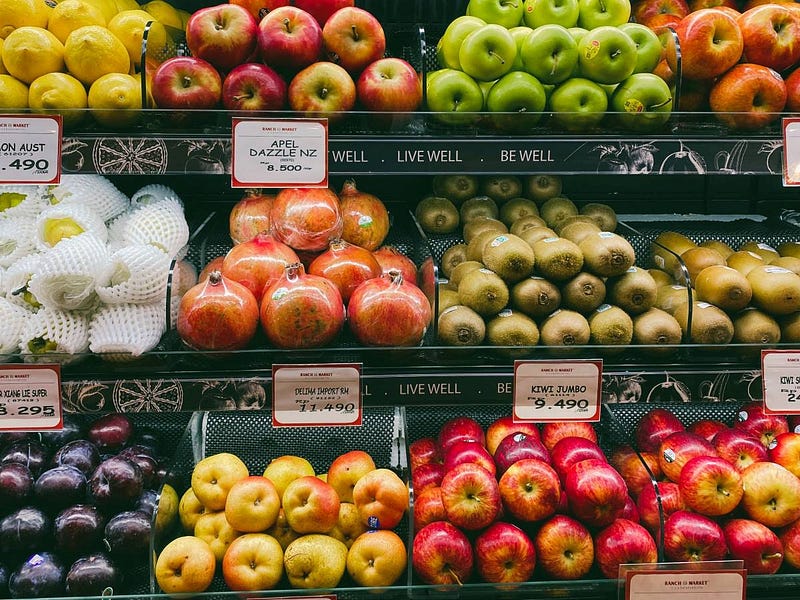
Fruit and vegetables are full of vitamins and minerals that our bodies require for good health.
Moreover, more often than not, fruit and vegetables are low in calories. Therefore, they're great additions to any meal, snack, or dessert, to improve their nutritional content.
These low-calorie foods help fill us up so we're less likely to overindulge in foods that aren't so good for us.
The New Zealand Ministry of Health recommends two servings of fruit a day and five servings of vegetables.
Did I mention how fricking tasty watermelon, peaches and strawberries are?
Eat more fruit and vegetables. The end.
Monitor your beverages
Beverages are full of calories!
This shouldn't be a revelation to anybody.
Soda, juices, alcoholic beverages, coffees, shakes, and smoothies are all examples of beverages loaded with calories.
Unless they’re sugar-free of course. But there won’t be sugar-free versions of all these beverages. So, consumption must be restricted.
Some people seem ignorant of how many calories are in a can of Coke or beer.
If we’re consuming 2–3 of these types of beverages a day, then that’s thousands of extra calories a week going into our bodies. And, this provides no nutritional value.
These added calories make it harder to be in a caloric deficit. Therefore, making a conscious effort to avoid beverages with calories will certainly increase your likelihood of being in a calorie deficit and losing weight.
Get a weight loss buddy or coach
Motivation goes a long way when trying to reach fitness goals.
It can be helpful to have a buddy going through the same thing as you to help keep you motivated. Or, for education and motivation, a coach experienced in guiding people through the process of fat to fit.
Your buddy could be a training partner you go to the gym with, or you might catch up with a friend on a similar journey once a week to catch up on your week, set goals, encourage and keep each other accountable.
A personal trainer at the gym can teach you the basics of exercise mechanics and structuring a workout. However, many personal trainers won’t be able to guide you through the whole process, including nutrition. To be honest, the bar to become a personal trainer is pretty low, sometimes just a 12-week online course. So, there are plenty of bad ones out there.
Instead, get yourself a weight-loss or bodybuilding coach. Do your research and choose somebody with the credentials and experience, not just the body.

Set realistic goals
If we want to achieve things in life, goals are critical.
Goals give us direction and encourage us to work hard to move forward toward something. But, if our goals are too hard to achieve, they will be discouraging.
Therefore, setting structured and achievable goals will help give you direction and purpose, keep you motivated, and keep you accountable.
You can set goals in many ways - fitness or strength-based, or weight loss and measurement based. You might set a combination of goals, pertaining to each.
It all depends on your end goal and the best way to track progress towards that goal.
Just don’t estimate or generalise these goals — you must be specific. Otherwise, they won’t keep you accountable to follow through and see results.
Don’t compare yourself to others
If you focus on why everyone else looks great and how you’re making shitty progress, you’ll only be discouraged.
Yes, educate yourself and talk to others about what they’re doing. But don’t compare their results to your own.
We all have individual genetics, meaning we naturally look a certain way.
Some of us have faster or slower metabolisms. It is harder for some people to lose weight, but that doesn’t mean it won’t happen.
Comparing yourself to others can also lead you to make excuses for your lack of progress.
Focus on your own goals of fat loss and body recomposition.
Don’t worry about what everyone else is doing. Instead, educate yourself on how to reach your goals and by following the right steps, the results will inevitably come.

Exercise on average for half an hour a day, even if it’s walking
Cardiovascular fitness is crucial to our overall health and will help reduce our daily calories. Thus, cardio can help us to get in the fat-burning zone.
Exercise helps offset our daily calorie intake.
However, doing cardio doesn’t automatically burn fat — we need to be in a caloric deficit for our bodies to utilise their fat stores as energy.
For example — if you eat 3000 calories and burn 300 calories exercising, your total daily calorie intake becomes 2700 calories.
If your maintenance calories are 3000 per day (the number of calories/energy required to sustain your current weight), you’ll lose weight.
If your maintenance calories are 2500 a day, then you’ll need to reduce calorie intake or increase cardio to get below 2500 daily calories.
Try to exercise 4–6 days a week, for at least 20-30 minutes at a time. If anyone tells you to do less, they’re wrong.
Final Words
Many of us struggle to manage our weight.
But it doesn’t have to be a struggle! Some people just need the right advice.
This article has explored 14 tips to help you get into the fat-burning zone and create your desired physique!
Those tips are:
- Understand Calories
- Replace most of your high-calorie foods with low-calorie alternatives
- Read food labels
- Eliminate junk foods from your pantry
- Don’t buy into fad diets
- Focus on forming healthy habits and routines
- Don’t crash diet — take your time
- Practice portion control
- Eat more fruit and vegetables
- Monitor your beverages
- Get a weight loss buddy or coach
- Set realistic goals
- Don’t compare yourself to others
A word of warning — don’t start with all of these rules.
That’s probably a bit overwhelming if your nutrition knowledge is limited.
Start with a few of these tips and then implement more of them over time to keep improving your fat loss results.
Thank you for reading.
If you enjoyed the content, you might be interested in a further read about 15 articles about food that will help you to look and feel amazing!
Read More Medium Articles
Non-Medium members can only read 3 articles a month.
Become a Medium Member for unlimited access to my content and articles from thousands of other writers for just $5 a month.
Subscribe to be notified when I publish new content.


