
The Key to Fat Loss Is Enjoyment
To stick to something long-term, you need to enjoy it. That includes managing our weight.

Why is it so hard to lose weight? It shouldn’t be — it’s a very basic process…
Eat less.
But many people struggle to control their weight.
In 2020, Government figures indicated that obesity levels in the United States had increased by over a third in the previous 20 years. It’s estimated that approximately 74% of the US are overweight or obese.
The problem is that the more overweight we are, the more of a health risk we become.
So why can’t people effectively manage their weight?
Diets Fail
We often hear that 95% of people who lose weight on a diet regain that weight.
This statistic originates from a 1959 study of 100 patients treated for obesity at a New York Hospital nutrition clinic.
However, this was a flawed study in terms of methodology, so they’re unreliable stats to quote.
Patients in the study were ‘’just given a diet and sent on their way’’, and two years after treatment, only 2% of participants had maintained a weight loss of 9.1 kg (20 lb) or more.
2017 statistics indicate that approximately 42% of people are trying to lose weight at any one time, and 23% trying to maintain their weight. This means that two-thirds of people are actively trying to control their weight.
Are they doomed to fail?
A 2013 review out of UCLA on previous research on the long-term outcomes of diets indicates that the more times you attempt a diet, the more likely you become to gain weight in the future.
On average, one to two-thirds of people regained more weight than they lost on their diets within four or five years.
People on diets typically lose 5 to 10 percent of their starting weight in the first six months, but then regain the weight if not more. Mann and colleagues concluded that,
“There is little support for the notion that diets lead to lasting weight loss or health benefits… You can initially lose 5 to 10 percent of your weight on any number of diets, but then the weight comes back.”
The researchers found that studies that followed participants for fewer than two years had 23% of participants regain more weight than they had lost. In comparison, studies that followed participants for at least two years had 83% of people gain more weight than they had lost.
Similarly, a 2005 study in The American Journal of Clinical Nutrition concluded that only around 20% of people are successful at maintaining their weight loss long-term for more than a year.
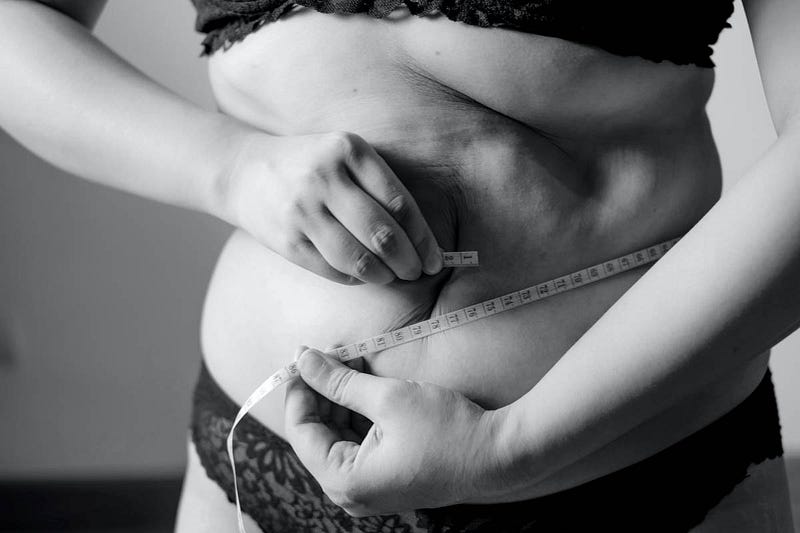
Why Do Diets Fail?
Many diets fail because they’re not enjoyable.
Dieting has become synonymous with suffering.
Food is to be enjoyed. Food shouldn’t just be treated as a means to an end — unless you’re a professional athlete.
Looking at food solely as fuel is a recipe for disaster. Food is comfort. We’re supposed to enjoy food — life is too short.
But the way diets are marketed focuses on their restrictive nature. Because we’ve been programmed to believe a diet means eliminating foods that are “bad” for us. So, we suffer through hunger and cravings on many diets.
But it doesn't have to be that way.
“The term “dieting” also requires further specification because this term could apply to a wide range of practices, from eating more fruits and vegetables to lose weight (a generally healthy practice) to repeatedly fasting for lengthy periods.” — Lowe et al., 2013
Diets fail because they ban foods
A diet usually means restrictive eating. Usually, we’re told that we can no longer eat a long list of foods we love.
Often, a particular food type or nutrient is demonised. For example — low fat, low carb, no processed foods, sugar-free, dairy-free, meat-free, gluten-free.
They’re typecast as “bad” and to be avoided.
And that’s why diets fail.
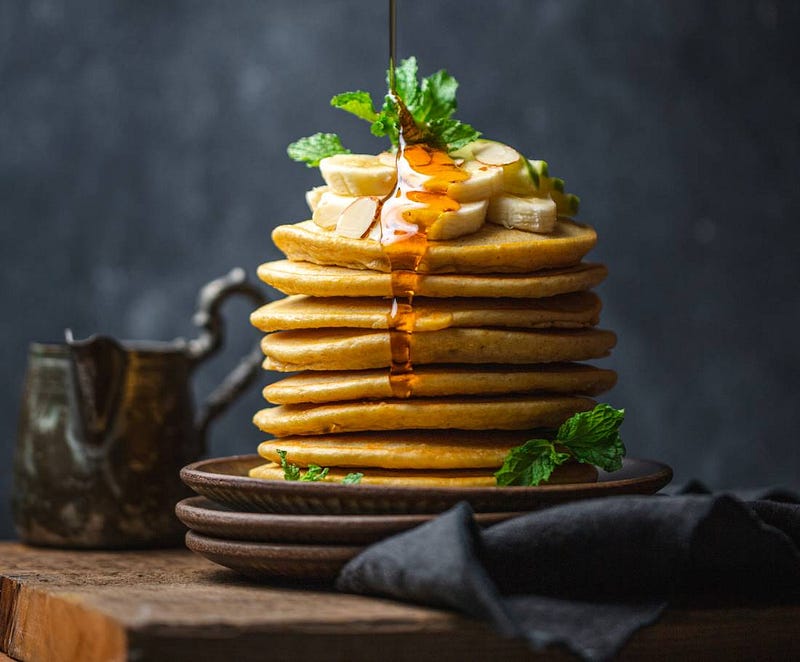
A 2008 randomised controlled trial investigated how psychologically banning junk foods such as chocolate, crisps, sweets, and biscuits, impacted a person’s tendency to overeat.
One group was exposed to a favourite snack and was instructed to abstain from it for 24 hours, while a control group wasn’t given specific instruction.
The group instructed to abstain ended up consuming around 133 percent more than the group given no instructions, suggesting that the more we’re told we can’t have a tasty snack, the more we want it.
“At any given time of the year, an astonishing 15 to 35 percent of Americans are trying to lose weight. They buy low-calorie and low-fat foods, deny themselves desserts, drink only artificially sweetened beverages, join commercial weight-loss clubs… and exercise obsessively to burn calories.” — Kassirer & Angell, 1998
We’re programmed to enjoy food. So, dieting becomes too hard and it’s just not worth it.
It’s easier to be overweight.
A diet doesn’t have to set us up for failure. It should be a combination of foods we enjoy and foods that are beneficial to reducing our calorie intake (but still foods we enjoy).
To manage our weight long-term, we need to enjoy what we eat.
Don’t ban foods — moderate them.
The Solution? Lasting Behaviour Change
Weight management is a lifestyle.
Changing our life-long habits isn’t easy… Otherwise, people wouldn’t struggle to lose weight.
We probably all know that we could eat more vegetables and that we could be more active. Making the effort is the hard thing.
But what if I told you that you don’t have to stop eating your favourite foods to lose weight? Even if it’s doughnuts.
You just have to eat less!
We also need to eat in moderation. Ultimately, what controls our weight is the total amount of calories we consume. We can also control how many calories we burn, but these are easily offset by a poor diet and over-eating.
We have a baseline level of calories that is our maintenance calories. Maintenance calories are unique to each individual, based on factors such as genetics, exercise level, and body weight.
If we consume more calories than this baseline, we gain weight. If we consume fewer calories than baseline, we use body fat as energy.
Body fat is just stored energy — if we don’t need it right now, we store it for later.
So, replace some of the doughnuts with a protein bar. You’ll consume fewer calories and you still get to eat one doughnut. Maybe two!
The Science
A recent 2022 study in the Journal of Nutrition, Obesity, and Exercise found that “Regulation of Cues” (ROC) led to sustained weight loss by targeting our response to food and satiety.
Regulation of cues did not prescribe a specific diet but instead taught the subjects to use appetitive cues to guide eating and reinforce the tolerance of cravings.
Learning to tolerate food cues seems to require less cognitive effort over time than avoiding them.
“Participants in ROC learn to tolerate food cues, not avoid them, and eating is used as a learning experience, which could promote the translation of skills outside of the clinic. These skills may be more durable as evidenced by the lack of weight regain in the ROC group.” — Boutelle, 2022
Occasionally indulging in the foods we enjoy (in moderation) helps us to stay on track.

Creating Better Weight Loss Habits
How do we improve our ability to manage our weight and burn fat?
Through better habits.
The Behavioral Susceptibility Theory suggests that responses to food and eating are shaped by environmental and individual-level factors.
We can change our behaviour.
Such as exercise — a 2005 study found that diet and exercise produced a 20% greater initial weight loss than diet alone.
The following section provides bullet point suggestions for creating better dietary habits. It could be an article by itself and will be at a later date. Hence, I won’t go into depth here.
- Replace 80% of your high-calorie foods with low-calorie alternatives
- Don’t buy into fad diets
- Eliminate most of the “bad” foods from your pantry
- Get a weight loss buddy or coach
- Understand calories
- Read labels
- Set realistic goals
- Practice portion control
- Eat more fruit and vegetables
- Don’t diet” Instead, focus on forming healthy habits and routines
- Don't crash diet — take your time
- Don’t compare yourself to others
- Exercise for half an hour a day, even if it’s walking
- Monitor your beverages
Final Words
In conclusion, to manage our weight long-term, we shouldn’t diet.
We shouldn’t cut out entire food groups. We shouldn’t ban our favourite foods.
Instead, we should create healthy habits and eat in moderation.
Learn about food.
If we look at food more rationally, controlling our beliefs and emotions around food, we can choose foods and eating habits that suit us and our lifestyle.
By controlling our total consumption of energy, or calories, we manage our weight.
We don’t have to count calories — just instinctively eat smaller portions, cut out some “treats”, eat lower calorie foods, or skip a meal if we need to lose weight.
Listen to your body.
That way you can eat cake and look good.
Thank you for reading.
If you enjoyed the content, you might enjoy this article about why Keto is stupid.
Read More Medium Articles
Non-Medium members can only read 3 articles a month — become a Medium Member for unlimited access.
If you would like to read more articles like this one, sign up to become a Medium member for only $5 a month.
Subscribe to be notified when I publish new content.


