avatarJillian Enright

Free AI web copilot to create summaries, insights and extended knowledge, download it at here

3331

Abstract

ck of coping skills, intense emotions with no ability to regulate them, and a whole heck of a lot of unprocessed trauma.</p><p id="8517">It’s no wonder I turned to a number of self-destructive behaviours in an attempt to cope, or at least escape my feelings, one of which was self-harming by cutting.</p><p id="194a">Self-harming <a href="https://doi.org/10.1038/s41386-020-00914-2">releases endorphins</a>, neurochemicals that help block pain and produce a rush of pleasure. Endorphins are released when we get hurt, but they’re also released when we have sex, or a really good workout (hence, the experience of a “runner’s high”).</p><p id="9a53">When a person’s emotions are so intense they feel they cannot endure them, they may turn to anything to relieve their pain, however temporarily. Many turn to alcohol or drugs, others engage in self-harm, and still others — like me — try all of the above.</p><h2 id="17cd">Protective Factors</h2><p id="e01c">Despite everything I had going against me, I was fortunate that I had a few things going <i>for</i> me. I was a competitive athlete, and I cared very much about succeeding in my sports. This probably kept me from total self-destruction.</p><p id="2b73">I also had my brain. Although my brain and I don’t always get along, I was identified as being intellectually gifted in high school, giving me access to enriched and gifted classes.</p><p id="28ea">My ability to read and find information on my own probably helped me understand myself better than I would have otherwise, and perhaps saved me from an even worse outcome.</p><p id="bce8">Lastly, after I was misdiagnosed with <a href="https://readmedium.com/how-my-adhd-was-misdiagnosed-as-a-personality-disorder-11fa7f2431eb">Borderline Personality Disorder</a>, I was enrolled in a Dialectical Behaviour Therapy (DBT) program. Given the diagnosis was inaccurate, it wasn’t as helpful as it could have been, but I did learn some coping skills and strategies from the experience.</p><p id="ea03"><a href="https://www.camh.ca/en/health-info/mental-illness-and-addiction-index/dialectical-behaviour-therapy">DBT</a> teaches skills like mindfulness, distress tolerance, interpersonal effectiveness, and emotional regulation, all of which were helpful for me at that time.</p><h2 id="23c0">A healthy relationship</h2><p id="31a7">After all this, for some reason, my husband still thought it was a good idea to marry me. I kid (sort of), I’m pretty awesome too, I just didn’t realize it at the time.</p><p id="aad8">Neither of us are perfect, but we have a mutually loving, caring, and respectful relationship. Despite the <a href="https://readmedium.com/adhd-is-a-significant-risk-factor-for-ptsd-b103cce4897b">c-PTSD</a> symptoms I battle on a daily basis, I never have to worry about my home or family life.</p><p id="aa35">I have a loving husband and an amazing son, who is also neurodivergent, and is a lot like me. The biggest difference is that he has two parents who will move mountains for him, who love him to the moon and back, and accept him for exactly who he is.</p><p id="3c9f">We’re not perfect parents, but our son will always know that we love and support him no matter what. So the cycle ends here, with me.</p><p id="a12c">© Jillian Enright, Neurodiversity MB</p><h1 id="c3c2">Related Stories</h1><div id="d7

Options

95" class="link-block"> <a href="https://readmedium.com/adhd-is-a-significant-risk-factor-for-ptsd-b103cce4897b"> <div> <div> <h2>ADHD Increases PTSD Risk</h2> <div><h3>And not surprisingly, ADHD + PTSD can lead to addiction</h3></div> <div><p>medium.com</p></div> </div> <div> <div style="background-image: url(https://miro.readmedium.com/v2/resize:fit:320/1*aUubi7C2jRwr1NCFUe5ExQ.png)"></div> </div> </div> </a> </div><div id="2005" class="link-block"> <a href="https://readmedium.com/how-my-adhd-was-misdiagnosed-as-a-personality-disorder-11fa7f2431eb"> <div> <div> <h2>My ADHD was Misdiagnosed as a Personality Disorder</h2> <div><h3>Why this frequently happens to women and non-binary people</h3></div> <div><p>medium.com</p></div> </div> <div> <div style="background-image: url(https://miro.readmedium.com/v2/resize:fit:320/1*AEaWyTsLWkj9jdnINZgA_w.jpeg)"></div> </div> </div> </a> </div><div id="2e38" class="link-block"> <a href="https://readmedium.com/i-survived-relentless-and-severe-bullying-at-school-2e6e235c288f"> <div> <div> <h2>I Survived Years of Relentless and Severe Bullying</h2> <div><h3>I never thought I would tell this story publicly. I am sharing so that other children can know they are not alone.</h3></div> <div><p>medium.com</p></div> </div> <div> <div style="background-image: url(https://miro.readmedium.com/v2/resize:fit:320/1*dxXgMPq6UvX_LIUcO0INuQ.jpeg)"></div> </div> </div> </a> </div><figure id="24f4"><img src="https://cdn-images-1.readmedium.com/v2/resize:fit:800/1*HwJv5Hji91F3W-fHjEEOMw.png"><figcaption></figcaption></figure><h2 id="4978">References</h2><p id="06ff">Reuben, K. E., Stanzione, C.M., & Singleton, J. L. (2021). Interpersonal Trauma and Posttraumatic Stress in Autistic Adults. <i>Autism in Adulthood, 3</i>(3), 247–256. <a href="https://doi.org/10.1089/aut.2020.0073">https://doi.org/10.1089/aut.2020.0073</a></p><p id="043e">Störkel, L.M., Karabatsiakis, A., Hepp, J. <i>et al.</i> (2021). Salivary beta-endorphin in nonsuicidal self-injury: an ambulatory assessment study. <i>Neuropsychopharmacology, 46</i><b>, </b>1357–1363 <a href="https://doi.org/10.1038/s41386-020-00914-2">https://doi.org/10.1038/s41386-020-00914-2</a></p><p id="452f">Warrier, V., Baron-Cohen, S. (2021). Childhood trauma, life-time self-harm, and suicidal behaviour and ideation are associated with polygenic scores for autism. <i>Molecular Psychiatry 26</i>, 1670–1684. <a href="https://doi.org/10.1038/s41380-019-0550-x">https://doi.org/10.1038/s41380-019-0550-x</a></p><p id="9c53">Ward, J.H. & Curran, S. (2021), Self-harm as the first presentation of attention deficit hyperactivity disorder in adolescents. <i>Child and Adolescent Mental Health, 26</i>: 303–309. <a href="https://doi.org/10.1111/camh.12471">https://doi.org/10.1111/camh.12471</a></p></article></body>

Coming Out In So Many Ways

Just this year, I’ve come out as bisexual, Autistic, and now as a recovered self-harmer
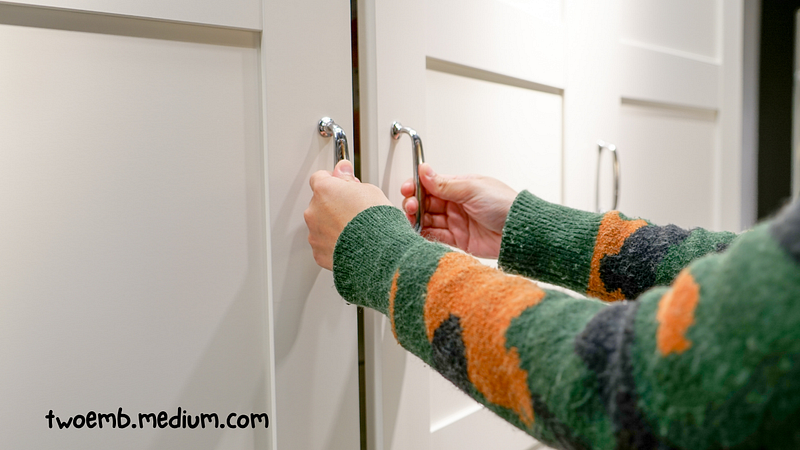
Get it? Coming out of the closet, and there’s a picture of a closet?? — (Created by author on Canva)

This has been a hell of a ride.

Less than one year ago, I came out to my husband as bisexual, then a few months later came out to my close friends. Last month I wrote and published an article on Medium about it, so it’s out there for anyone to read now.

I’ve been on Medium for six months, writing about ADHD, neurodiversity, parenting, and mental health. My son and I were both formally diagnosed with ADHD and anxiety about 2 years ago, but I’ve long since suspected that we’re both Autistic as well.

Earlier this month I finally decided to move past the imposter syndrome to embrace and celebrate all of my complex neurology.

Whew. Thinking I’d finally revealed all the skeletons that had been hiding in my closet, I wiped my brow and resumed enjoying my special interest — which, not surprisingly, is reading and writing about neurodiversity.
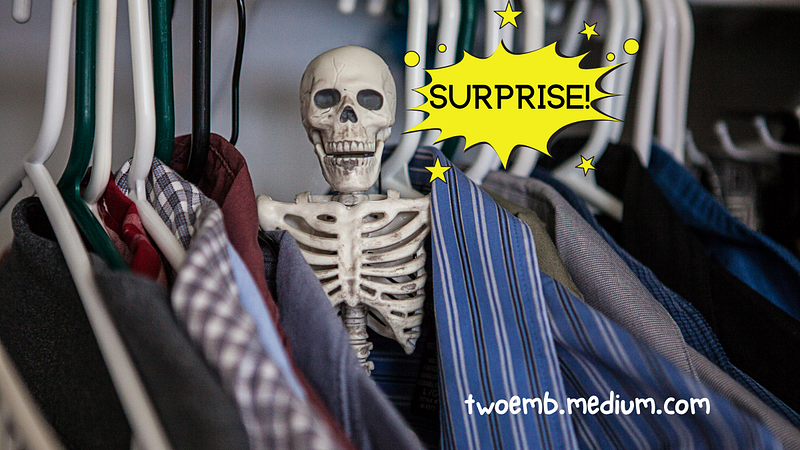
Created by author

Not so fast

But wait, there’s more!

While hyperfocusing on my research, I came across something I hadn’t before. A recent CAMH article suggested that self-harm may be one of the first presentations of ADHD in undiagnosed adolescents.

Digging deeper, I found an article indicating that Autistic individuals have elevated rates of self-harm, and down the research rabbit-hole I went.

To be honest, I hadn’t thought about self-harming behaviour in about a decade, since I was working in residential treatment (a.k.a. group homes). I knew there was a strong connection between self-harming and trauma, but I hadn’t realized there was a link between self-harm, ADHD, and Autism as well.

Given I just wrote a piece describing how ADHD increases PTSD risk, and many Autistic individuals experience trauma, this really should not have come as a surprise.

Well, that takes me back

This takes me back to a dark time in my pre-teens and adolescence. I had experienced extensive trauma growing up, and was also ruthlessly bullied throughout my elementary school years.

Being undiagnosed ADHD and Autistic certainly didn’t help.

An unhealthy home life led to a complete lack of coping skills, intense emotions with no ability to regulate them, and a whole heck of a lot of unprocessed trauma.

It’s no wonder I turned to a number of self-destructive behaviours in an attempt to cope, or at least escape my feelings, one of which was self-harming by cutting.

Self-harming releases endorphins, neurochemicals that help block pain and produce a rush of pleasure. Endorphins are released when we get hurt, but they’re also released when we have sex, or a really good workout (hence, the experience of a “runner’s high”).

When a person’s emotions are so intense they feel they cannot endure them, they may turn to anything to relieve their pain, however temporarily. Many turn to alcohol or drugs, others engage in self-harm, and still others — like me — try all of the above.

Protective Factors

Despite everything I had going against me, I was fortunate that I had a few things going for me. I was a competitive athlete, and I cared very much about succeeding in my sports. This probably kept me from total self-destruction.

I also had my brain. Although my brain and I don’t always get along, I was identified as being intellectually gifted in high school, giving me access to enriched and gifted classes.

My ability to read and find information on my own probably helped me understand myself better than I would have otherwise, and perhaps saved me from an even worse outcome.

Lastly, after I was misdiagnosed with Borderline Personality Disorder, I was enrolled in a Dialectical Behaviour Therapy (DBT) program. Given the diagnosis was inaccurate, it wasn’t as helpful as it could have been, but I did learn some coping skills and strategies from the experience.

DBT teaches skills like mindfulness, distress tolerance, interpersonal effectiveness, and emotional regulation, all of which were helpful for me at that time.

A healthy relationship

After all this, for some reason, my husband still thought it was a good idea to marry me. I kid (sort of), I’m pretty awesome too, I just didn’t realize it at the time.

Neither of us are perfect, but we have a mutually loving, caring, and respectful relationship. Despite the c-PTSD symptoms I battle on a daily basis, I never have to worry about my home or family life.

I have a loving husband and an amazing son, who is also neurodivergent, and is a lot like me. The biggest difference is that he has two parents who will move mountains for him, who love him to the moon and back, and accept him for exactly who he is.

We’re not perfect parents, but our son will always know that we love and support him no matter what. So the cycle ends here, with me.

© Jillian Enright, Neurodiversity MB

Related Stories
References

Reuben, K. E., Stanzione, C.M., & Singleton, J. L. (2021). Interpersonal Trauma and Posttraumatic Stress in Autistic Adults. Autism in Adulthood, 3(3), 247–256. https://doi.org/10.1089/aut.2020.0073

Störkel, L.M., Karabatsiakis, A., Hepp, J. et al. (2021). Salivary beta-endorphin in nonsuicidal self-injury: an ambulatory assessment study. Neuropsychopharmacology, 46, 1357–1363 https://doi.org/10.1038/s41386-020-00914-2

Warrier, V., Baron-Cohen, S. (2021). Childhood trauma, life-time self-harm, and suicidal behaviour and ideation are associated with polygenic scores for autism. Molecular Psychiatry 26, 1670–1684. https://doi.org/10.1038/s41380-019-0550-x

Ward, J.H. & Curran, S. (2021), Self-harm as the first presentation of attention deficit hyperactivity disorder in adolescents. Child and Adolescent Mental Health, 26: 303–309. https://doi.org/10.1111/camh.12471

Self Harm
Mental Health
Neurodiversity
Autism
Bisexual
Recommended from ReadMedium