
It’s My First Time…
It’s my first time neuroqueering... I guess you could say I’m a neruoqueer virgin. (Except probably don’t say that).
::ahem::
Uh, thank you all for coming.
I guess you’re wondering why I’ve gathered you all here today…
Welcome to my coming out party.
Due to ongoing covid restrictions, unfortunately we must host virtually. That aside, because I’m neurodivergent, I can promise I will be nearly as awkward at a virtual party as I would have been in person.
So, without further ado, I would like to announce…
…
…I am bisexual.
…
…Ta…-da?
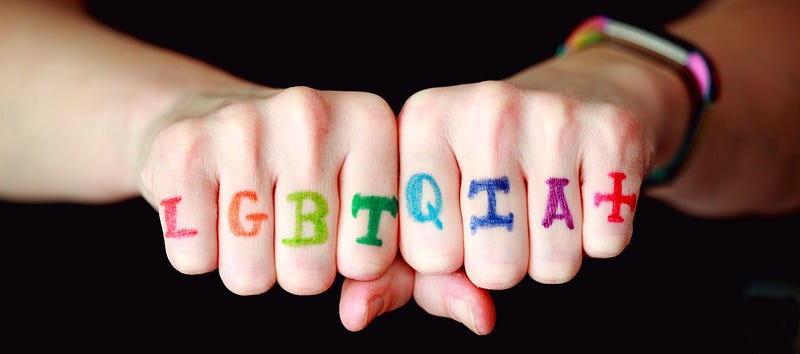
Yes, I have a son, and yes, I am still married to a man. (Hi, honey).
My pronouns are she/her or they/them… so I guess I identify as non-binary a well?
Huh. Who knew?
Apparently it’s much more common for people with ADHD to experience “gender dysphoria”, except I don’t actually experience gender dysphoria.
According to Yildirim et al. (2017), “this nonconformity is clinically associated with significant distress or impairment in social, occupational, or other important areas of functioning.”
Pfft. I have social impairment, but it has nothing to do with my gender identity or sexual orientation.
I was born biologically female and am comfortable with being female, I just don’t identify with the image of a stereotypical female. Growing up I was often called a “tomboy” and teased for dressing like a boy, playing sports like a boy, and wanting to hang out with the boys, but I am not a boy.
I also quite like the concept “demi-girl”, as this is a fairly accurate description of how I feel about my gender identity.
Although I’ve never identified with the traditional hyper-feminine expectations of women, and I’ve always preferred more “masculine” personalities and fashions, I have not experienced gender dysphoria (GD).
The American Psychiatric Association (APA) refers to GD as “psychological distress that results from an incongruence between one’s sex assigned at birth and one’s gender identity”.
The American Psychiatric Association also states:
“The presence of gender variance is not the pathology but dysphoria is from the distress caused by the body and mind not aligning and/or societal marginalization of gender-variant people.” (American Psychiatric Association, 2013)
This is an improvement over the previous label “gender identity disorder”, but experts continue to find deeply-rooted transphobia and gender bias in current psychological practice, research, and literature (Davy & Toze, 2018).
I prefer the concept gender variance, which is highly common among Autistic and ADHD individuals.
Have I mentioned I’m 38 years old and have been in a hetero marriage for 13 years?
Oh, this party just got awkward!
I am finally figuring out who I am
My son was diagnosed with ADHD in March of 2019, at the age of 6.
I’ve been hyper-focusing on, and reading about, neurodiversity ever since.
I was diagnosed with ADHD in October of 2019, at the age of 36.
Covid shut-downs began in March of 2020, and I had even more time to hyper-focus, read, and engage in self-reflection.
I came out to my husband as bisexual in December of 2020, and soon after shared this with my best friends.
I’ve recently become more comfortable with this revelation. In fact, I have begun to find it freeing. I used to feel uncomfortable around other women. I actually thought I didn’t like women. I suspected it might be jealousy because they were more feminine than I was. I always felt frumpy and plain next to women who were traditionally pretty and dressed “nice”.
I think it was because I felt uncomfortable in my own skin. I was unsure of who I was, and so I was comparing myself to who and what I thought I was “supposed” to be. Now that I have begun to accept that I am just not that person and that is okay, I don’t feel the same resentment toward others, regardless of how they present themselves.
I have since met plenty of attractive non-binary, masc-presenting, and gender non-conforming people. I have come to realize that the traditional concept of beauty doesn’t work for me, but that doesn’t mean I can’t rock whatever looks feel best for me and still look great.
Having no fucks left to give can be a good thing!
Neuroqueering
Dr. Nick Walker and colleagues coined the term neuroqueering, a very broad and complex concept.
To oversimplify for the sake of brevity, I would summarize one aspect of being neuroqueer as the exploration of, and understanding that, one’s gender identity and neurodivergence have an effect on each another. For many, they are inseparable aspects of their selves.
In other words, having a divergent, non-conforming brain has probably contributed to my being a non-conformist in other areas of my life. I think and live outside the box.
Dr. Walker explained that socially-imposed neuronormativity and socially-imposed heteronormativity are entwined with one another, and the queering of either of those two forms of normativity results in the queering of the other one.
This really resonates with me. A couple months ago, I wrote about unmasking, a process in which a neurodivergent individual stops suppressing or hiding aspects of themselves related to their neurodiversity. I’m still working on this (probably a life-long journey).
Stop is probably not the correct word, as it’s an ongoing process. We may come to a point in our lives where we realize that we’ve been trying to be someone we’re not, or working way too hard just to make others comfortable, at the expense of our own mental health and sense of identity.
For me, I finally began to uncover who I really am when I stopped worrying about what everyone else thinks of me and trying to be what others want or expect from me. Doing so left me with more mental and emotional energy to engage in self-reflection and self-discovery.
What I have found is that the more I unmask my authentic self, the more layers there are to peel back. I see how my neurodivergence is entwined with my sexual orientation and gender identity. When I began delving deeper into one, I found the others.
As a verb, one aspect of neuroqueering is described as:
“Engaging in practices intended to undo and subvert one’s own cultural conditioning and one’s ingrained habits of neuronormative and heteronormative performance, with the aim of reclaiming one’s capacity to give more full expression to one’s uniquely weird potentials and inclinations.”
In other words, when your brain bucks trends and works outside the realm of the typical, it makes sense that other aspects of your personality and identity may also follow suit.
I mean, if you’re queer, you may as well go all-in, right?
© Jillian Enright, Neurodiversity MB
Ways to support my work
You can leave a “tip” on Ko-Fi at https://Ko-Fi.com/NeurodiversityMB
Become a paid subscriber to my Substack publication
Check out my online store at https://NeurodiversityMB.ca/shop
Read and share my articles from twoemb.medium.com
Related Articles
References
American Psychiatric Association. (2013). Diagnostic and Statistical Manual of Mental Disorders (5th ed.). American Psychiatric Publishing.
Davy, Z., & Toze, M. (2018). What Is Gender Dysphoria? A Critical Systematic Narrative Review. Transgender health, 3(1), 159–169. https://doi.org/10.1089/trgh.2018.0014
Gonzalez, I., & Schott, E. (2016). The intersection of ADHD and LGBT identities. Journal of Global Research in Education and Social Science, 7(3), 135–140. https://www.ikprress.org/index.php/JOGRESS/article/view/2325
Strang, J.F., Kenworthy, L., Dominska, A. et al. (2014). Increased Gender Variance in Autism Spectrum Disorders and Attention Deficit Hyperactivity Disorder. Archives of Sexual Behaviour 43, 1525–1533. https://doi.org/10.1007/s10508-014-0285-3
Walker, N. (2021). “Neuroqueer: An Introduction.” [Online]. Neuroqueer, https://neuroqueer.com/neuroqueer-an-introduction
Yildirim, B., Fis, N. P., Akgul, G.Y., & Ayaz, B. A. (2017). Gender dysphoria and attention problems: possible clue for biological underpinnings. Psychiatry and Clinical Psychopharmacology, 27(3), 283–290, https://doi.org/10.1080/24750573.2017.1354417


