
WORK | MENTAL HEALTH
Clearing Mental Fog So You Can Have a Great Work Day
Quick and easy ways to find better focus at work

Recently, I wrote about brain fog and how you can clear up your thinking for better focus. Today, I’m addressing how mental fog can affect you on the job and providing helpful tricks you can use to think more clearly while you’re at work.
For Quick Navigation ∘ Poor Mental Clarity on the Job ∘ Work-Related Stress · Physical Distractions and Contributing Factors · Clearing Distractions at Work · Reducing Stress
Poor Mental Clarity on the Job
Everyone experiences difficulties with mental clarity from time to time, especially on the job. Often, we are doing menial tasks that we don’t really want to do, so we’re in a state of forced focus. Maintaining forced focus is difficult.
From poor sleep to underlying medical conditions, or even disinterest, there are myriad reasons for poor mental clarity affecting job performance. But what we really need to know is this:
How can I focus better at work?
Work-Related Stress
The American Institute of Stress reports that “83% of US workers suffer from work-related stress” and that “Work-related stress causes 120,000 deaths and results in $190 billion in healthcare costs yearly.” Work-related stress can come from a myriad of causes, and lack of focus on the job is certainly a stressor.
Poor focus on the job can lead to:
- Poor job performance
- Worry that you’ll make mistakes
- Write-ups or warnings
- Corrections and negative feedback from managers and coworkers
- Worry that you’ll lose your job
- Embarrassment
And, all this added stress can make it even more difficult to do the daily tasks your job requires.
You need training and resources. And it’s up to you to make this happen for yourself. The good news is that there are tons of great resources out there to help you develop better mental discipline and focus. Let’s take a look at some of the ways you can clear up your fuzzy thinking and perform your job at your peak abilities.

Physical Distractions and Contributing Factors
To improve workplace performance and focus, you must first address sources of distraction and the physical reasons for why you may be struggling.
Your brain is the hub for all your activities and thoughts. Needless to say, brain health is a critical component of your workplace performance. Any underlying condition, such as fibromyalgia, headache, mental fatigue, pain, or physical discomforts — can make it more difficult for you to keep your mind on your work.
Here are a few helpful tips for addressing the physical brain fatigue you’re experiencing and getting your mind back in the game.
- See your doctor — Your medical doctor knows your entire health profile and can address any physical or mental constructs in your physiology that are keeping you from focusing on your daily tasks.
- Prioritize your overall health — This means getting the sleep you need at night, taking any supplements your doctor recommends, eating a well-balanced diet, and getting regular exercise.
- Prioritize your mental health — This means addressing traumas that distract your thoughts, as well as getting treatment for mental health disorders that affect how your mind handles workplace stress, creates distractions, distorts your patterns of thinking, and affects your cognitive performance.
There are also some things you can do to train your brain to work more efficiently. In Limitless* by renowned brain-health writer Jim Kwik, the author addresses how technology has caused us to become, for lack of a better description, mentally lazy.

Kwik proposes that in this day and age we are suffering from several impacts from the constant bombardment of digital information:
Digital Deluge — The digital age means that we are consistently bombarded with more information than our minds could ever manage. From the regular doom-scrolling to the notifications and constant advertisements, we receive more information than we can process. “If we never let our minds wander or be bored for a moment,” Kwik says, “we pay a price — poor memory, mental fog, and fatigue.”
Reuters has researched this very idea, to which Kwik also referred to make his points on “digital deluge.”
Two out of three respondents associated information overload with tension with colleagues and loss of job satisfaction. 42% attributed ill-health to this stress. 61% said that they have to cancel social activities as a result of information overload and 60% that they are frequently too tired for leisure activities. — Reuters
With this information overload, it is imperative to job performance to identify ways in which information gathering, storage, reference, and recall can be streamlined, thus reducing the information overload that can easily overwhelm the minds of workers.
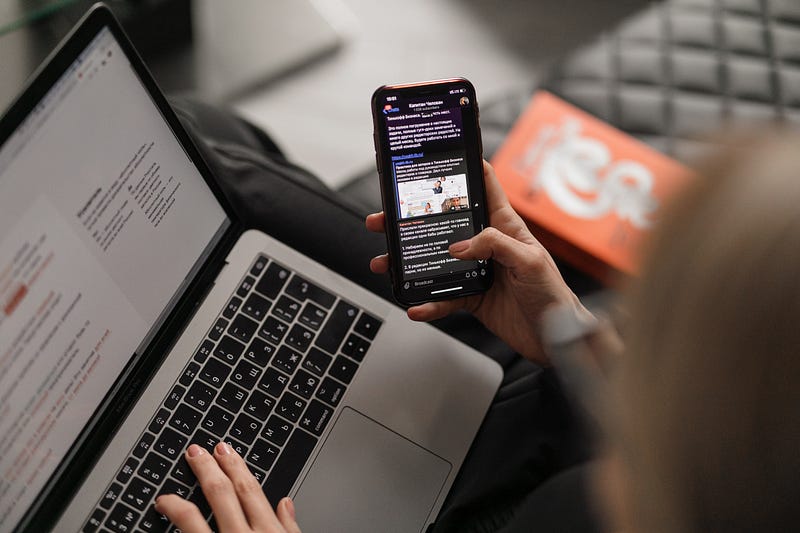
Digital Distraction — Another aspect of this digital bombardment is how distracting it can be while you are trying to work. Turn off those notifications, put your phone on silent, and close out any computer tabs that aren’t work-related so your focus can be more on your work, and less on all the digital distractions of your personal life or the “outside world.”
Instead of keeping your phone next to you so you don’t “miss anything,” try playing some light classical music and working in short high-focused intervals. Save the digital check-ins for your breaks, or better yet, for after work. Prioritize your attention to what’s most immediately important.
Digital Dementia — Kwik refers to a concept he calls “digital dementia.” Remember that animated film, Wall-e? The film depicted humans riding around on these hovering carts, of sorts, having been progressively mentally and physically lazy over the years to the point of complete dependence on technology to survive.
While a dystopian view, the film did depict something substantial to our conversation — humans are growing more and more dependent on digital information, digital tools, and computerized “aid” to our thinking, and we are becoming more and more “lazy” in our thinking as a result.
Recognize when you are using tech to keep from mentally processing things on your own. Brain games can help you to train your brain to stay diligent in thinking things through. Challenge yourself a little each day. There’s some evidence that doing brain training activities can improve your cognitive performance, and that regular exercise may also help you delay cognitive decline. Both can improve your job performance.
Digital Deduction — Kwik’s reference to what he calls “digital deduction” is similar to digital dementia, but differs in this — instead of relying on digital sources for our information, it’s worse than that. We allow them to think for us.
Humans have the greatest capacity of cognitive ability, reasoning, problem-solving, and creative thinking of all mammals. And to quote a cliché — our brain power works in a “use it or lose it” fashion. With today’s digital capabilities, what happens when we stop having our own thoughts? We just let all that digital information tell us how to think. Critical thinking and analysis, then, are important for us to be relevant on the job and valuable as an employee. To keep these skills sharp, we need to apply them daily.
Be cautious of those times when you skip thinking for yourself and rely wholly on consuming the opinions you see in print. This is especially applicable when it comes to the media.
Learn how to recognize media persuasion and underlying agendas.
Clearing Distractions at Work
Besides the onslaught of information we all experience each day, even while we are trying to stay focused on our work, are consistent distractions that peel our minds away from the tasks at hand.
Distractions are both physical and mental.
It may be the interruptions of a colleague, persistently asking you annoying questions — or worse, chewing loudly or some other habit that annoys you to tears. It may be the phone ringing or emails from your boss. It may be that your shoes are too tight or your back hurts.
Improving your response to those distractions can help you to focus better at work. And, clearing away unnecessary distractions, might just save your job.
- Make your workspace clean, efficient, and comfortable
- Make your body comfortable and adopt ergonomic practices to save strain on your body
This includes the angle of your computer, the ergonomic features of your keyboard and mouse, the comfort and height of your chair, and the flooring on which you stand (get a mat?). It also means the comfort of your shoes and the warmth/coolness of your clothing. Seek out any small distractions like the light rays from a window hitting your computer screen or the volume of your desk phone. All these tiny distractions add up over the course of your work day, and many of them can be improved.
Don’t forget to keep your eyeglasses updated so you can see well. Keep a glass of water or a water bottle nearby. Take regular small breaks, as permitted, and try to walk around to get the blood flowing, or sit and rest your legs as needed.
Eliminate as many unnecessary distractions as possible. If background sounds knock your brain out of focus, try light background music or noise-canceling headphones so you can power through high-focus-oriented tasks with efficiency.
Read more: Did you know that classical music helps you to focus?
Reducing Stress
The last component of high focus I’d like to mention is likely the most crucial factor affecting your mental work performance.
(Aside from getting ample healthy sleep, which is unquestionably important for your cognitive performance, on the job and otherwise.)
If you’re having trouble thinking clearly at work — many times it can be directly related to the stress you are feeling on the job or that creep in on your mind while you are working.
Your brain thinks, “The results of a 2020 studyTrusted Source suggested people typically have more than 6,000 thoughts per day” quotes Healthline.
🧠 That argument last night.
🧠 That thing you shouldn’t have done ten years ago.
🧠 Your ailing mother.
🧠 The overdue bills.
🧠 The boss you loathe.
All of these thoughts can become intrusive or worse, we can ruminate them in circles. (A therapist can help you train your mind to stop ruminating.) And while your mind swirls stressful thoughts, think of the impact of that ongoing stress. It can become chronic and lead to burnout.
Research shows that burnout can lead to more serious mental health issues, such as depression and anxiety.
Ask yourself: What is within my power to change so that I may be more focused at work and perform at my highest capability?
It may be unavoidable, to experience stress at work, but one thing you always have control over — is your response to that stress.

Workplace toxicity — This one is hard. When your workplace has become toxic for your physical and mental health, it may be time to save your health and part ways with your employer.
Colleague Toxicity — Sometimes it isn’t your workplace but a colleague or a manager who is making it impossible for you to stay focused on your job. (Often the Peter Principle at work.) You can choose what to ignore, what to respond to, and what is so utterly intolerable that it must be reported to management. Choose what’s worthy of your time and attention and what’s important enough for you to make a report. Also, pick your battles wisely.
treat your attention as a valuable thing — like golden arrows — because your energy flows in the direction of your attention. What you put your attention on grows and becomes a theme of your life — whether you mean for this or not. — Dragontree Apothecary Dreambook, Page 2
Your Mental Health — Your mental health directly influences how you manage day-to-day stress. When your mental health needs attention — address it with medical and mental health care. Self-care when you need it. Above all, take excellent care of your mind!
Read more: Can CBD be the answer to your workplace focus issues?
Your Attitude — It’s really hard to focus on your work if you’re harboring a poor mental attitude. I’ve often said that happiness isn’t something you find but something that you do. Find small joys throughout your day to empower you to feel better, think better, and do your job better. These small joys can make all the difference!
Mental clarity is fluid. You won’t always have the sharpest thinking during the times you really need it, but with these tips and this information, you can work to improve your mental fatigue and cognitive performance on the job. Remember that while work is important, it’s a part of your life. A well-balanced life can make you more efficient and proficient at what you do on the job.
Thank you for taking the time to read this article today. Take a moment to share it with others who may benefit from this helpful resource.
Meet your author: Christina M. Ward is a lifelong beauty and wellness enthusiast with a professional writing career in the wellness, health, and clean beauty industries. Her work has been featured in Today’s Health Science, LA Weekly, Village Voice, and OK! Magazine.
Christina’s published poetry books: Amazon. Catch Christina’s newsletter here: Fiddleheads & Floss Newsletter.
A “*” Next to any link indicates Amazon Associates affiliate linking and is only used when the author is particularly supportive of the product and has personally used it enough to want to use her platform in support.