
Childhood Trauma Teaches us What Love is: Generational Trauma and Curse-Breaking
Childhood trauma is an education on love. Whatever your parents do to you, you will call love. To the abused child, this feels like anything but love, but that is precisely the point. The traumatized child grows to give or receive trauma, for that is what they know of love.
The beaten child does not like being hit. Hence I do not say, ‘like’. The child chooses what they like; the parent chooses what is understood as love, for the parents’ behavior toward the child comprises the child’s experience of love. Hence the traumatized child comes to believe that love and trauma overlap, and may not recognize them isolated from each other.
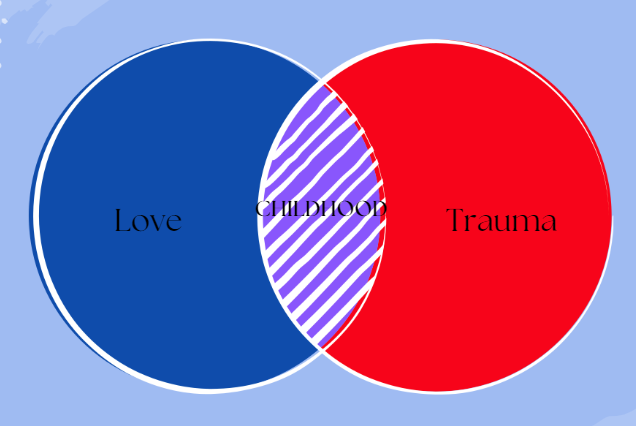
They will often grow to transact trauma in their relationships. Whether they abuse or are abused, they will believe
If this is love, someone must be feeling trauma.
This is why the hit child often grows up to hit their children, hit their partner, be hit by them, or watch as their partner hits the children. This is not an excuse but an understanding of generational trauma: People who hit their kids have the same reason for doing so that people who don’t hit their kids have for not doing so:
This is what I knew of love.
The rational mind wishes to object:
Those who are abused are the last ones who should want to pass on that abuse.
This is rational, but people don’t hit their kids because of reason, but because of the pain they called love. Whatever you do to a child, you teach them to do to their unborn children. Hence when a patient asks if such-and-such punishment constitutes abuse, I ask them if they wish to see their children do it to their grandchildren. When they object that their grandchildren are years from being born, I state,
And you are already facilitating their abuse.
Trauma gets handed down generation-to-generation similarly to the way eye color does. The difference is, of course, that the abused child grows to make choices while not having chosen to have been abused. This brings to mind the adage
Your past is not your fault, it is your responsibility.
Abuse is the fault of the abuser, not the abused. The abused child grows up and either takes responsibility for healing, or calls themselves a victim of Fate. As Jung said,
Everything we do not become conscious of, we will call our Fate.
This applies both to the abused generation as well as the abusing generation. Of course, in generational trauma, every generation gets an opportunity to be both.
The Abused Generation
These are the patients who have to deal with their parents’ having abused them. There are two potential pitfalls: bypassing and bitterness.
In bypassing, the patient won’t let themself into their pain. They do this by making sundry excuses:
- They did their best.
- At least they fed me.
- They had it worse.
- Talking to them won’t help.
- I don’t want to make them feel bad.
- They say they don’t remember.
These are all true…but not for the patient. They all boil down to: my self-esteem was literally beaten out of me, and now I cannot declare:
- I deserved better.
- My pain is real.
- You hurt me.
To the bypassing patient, therapy is about acknowledging that what happened actually happened, that it was not justified by their parents’ virtues or suffering, and that real healing is needed.
In bitterness, the patient won’t let themself out of their pai. While they make no excuse for their abusers, neither will they let themself out of their pain. While appearing to be constantly processing their pain, they are in fact a bug in amber.
To the bitter patient, I eventually discuss the possibility of forgiveness. This usually results in the undeniable resistance:
My abuser does not deserve forgiveness.
To which I reply:
Your abuser does not deserve forgiveness. It is you who deserve to let go your pain.
While the bypassing patient refuses to let themselves into their pain, the embittered patient refuses to let themselves out.
Of course, until they heal, traumatized individuals tend to have polarized experiences of shadow in which they see life and love in morbid terms (shadow saturation of the conscious) or avoid suffering by avoiding life and love (shadow saturation of the unconscious). The former show up as jaded misanthropes who believe that to love is to suffer. The latter become renunciants who avoid pain by avoiding love. Either all-or-nothing approach involves resistance at one extreme, repression at the other.
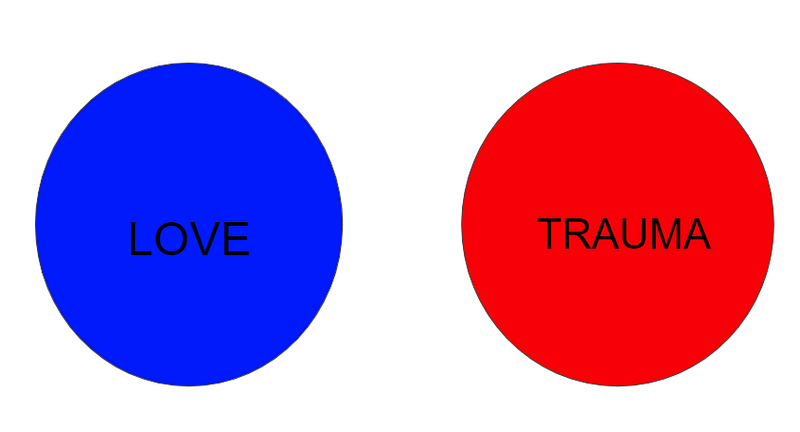
The way out is to separate that awful Venn Diagram into two discrete concepts. This is when the patient looks at love and realizes:
Love does not require trauma.
Then, they look at trauma and realize:
Trauma does not mean love.
(And these are some of my favorite moments in therapy.)
This is what it means to be a curse-breaker: to end the generational trauma by not passing along the trauma we received. This is what it means to reparent ourselves. This is what it means to learn that your journey through and beyond trauma brought you back to love.
To follow me: https://medium.com/@myartman
To subscribe to Medium: https://medium.com/@myartman/membership
Also read How Mental Illnesses Emerge: Defenses Against Love and Happiness, What are we Doing?, What we do with Our Pain, and Anxiety is the Rent you Pay for Repressing your Secrets.


