
Anxiety is the Rent you Pay for Repressing your Secrets
My patient carries a secret. I feel a distance no one can name. Even though I feel close enough to feel connected, to read her, I also feel that added space between us, the way people sat a little further apart during social distancing.
Jung: ‘He who carries a secret walks among the world as a stranger.’

The patient reports anxiety, but doesn’t know why. She reports no trauma, no family history of mental illness, no significant stressors. Idiopathy: suffering without apparent cause. Clinicians have a nice word that means: I don’t know.
In physics, this is called a hidden variable. A known particle we cannot detect or an unknown particle whose existence we have yet to prove. At least the physicists believe in causes. They don’t say, gravity just happens.
If you call a cause ‘uncaused’, you get Aristotle’s term for God: the uncaused cause. But I cannot worship my patient’s anxiety. Mental illness is a false god whose beliefs I cure. Not our beliefs in the false god — the beliefs of that false god.
Something is hiding in her. But what kind of god hides themselves? A demon. A little being governs her belief system, whispers to her her internal dialogue. When this is metaphorized, we call it neurosis. When literal, schizophrenia. When it sabotages our relationships, we call it a personality disorder. When those relationships comprise our family, a dysfunctional family. I taxonomize demons.
The demon wants to live. To do this, he must remain hidden. He thrives in the darkness of the unconscious, like some sepulchral creature that only moves at night but would turn to stone in the open light of the conscious. A therapist recognizes the darkness while living in the light. The patient recognizes the light while living in the darkness.
The demon must live where he does not belong, for he belongs nowhere: a refugee from nowhere. The patient hid him in her unconscious to avoid the pain he carries. When you hide things from others by consciously shoving taboo thoughts and feelings down into your unconscious, you suppress. When you unconsciously shove, hiding the forbidden from yourself as well as others, you repress. This kind of push goes deeper, lasts longer, costs more. What it costs is anxiety.
Anxiety is the price we pay for denying who we are, for pretending to be someone else’s version of ourselves.
Anxiety is the rent we pay for storing our secrets in our unconscious. When your authenticity is hidden and your artifice is present; when you give your demon a home he does not belong in, and mysteriously no longer feel ‘comfortable in your own skin’ — your psyche emits anxiety.
I sit with my patient and stop listening. I tune out. I have learned to go far away, so that I hear her words as though from a foreign language. I feel what’s behind her words. I feel her silence. Every silence is unique just as every sound is. And I feel it. I feel what I have been feeling but denying to myself, mirroring her own dynamics. In my ignorance, I was the mark of obedience.
I sit on this knowledge of her, like a bird on its egg, because it is not mine. It will be another year before she comes out to me. And her anxiety begins to diminish. Her homosexuality is no longer a secret: not from herself, not from the world. Her identity is her own. The anxiety no longer needs to happen because she is happening.
Freud was the first to point out that trauma can seemingly disappear into the unconscious via repression with minimal symptomatology for decades before abruptly manifesting symptoms that, due to the latency, appear to be acausal. Wait long enough to show your pain, and no one will remember why it is happening, including you.
We know repression exists, taught Freud, because it does not work. That man was a true genius. Like the Architect in The Matrix, his body of work was ‘a work of art, flawless, sublime, a triumph equaled only by its monumental failure.’
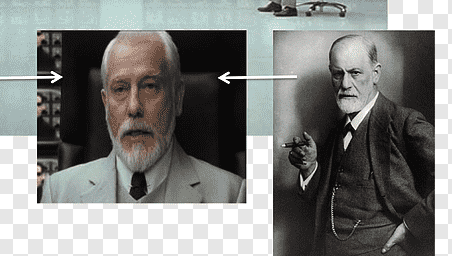
Freud believed repression was the key to socializing humans into society (macro) and family (micro), especially sexual repression. Without repression, we would not just be governed by our ids, we would be our ids. (The id is the instinctive base with which we are born: every non-human animal is an id.) Hence, Freud both bemoaned and prescribed repression. The side-effect of this medicine was anxiety.
The kind that would cause someone to wet the bed into their 50s. The kind that would keep someone smoking despite 30 cancer surgeries. The kind that stops sleeping with his wife and instead sleeps with her sister. That was Freud. He didn’t just theorize about repression and anxiety — he embodied them.
Nietzsche explains
every great philosophy up till now has consisted of…the confession of its originator, and a species of involuntary and unconscious autobiography.
Freud would have interpreted my patient’s coming out in terms of her having a mother complex; a century ago, homosexuality was a pathology the way schizophrenia is now. Once he had engaged what we now call conversion therapy, he would have noted her cured if she continued sleeping with men.
That’s not what happened. My patient came out to me and eventually to everyone. She is living. Her anxiety isn’t.
To follow me: https://medium.com/@myartman
To subscribe: https://medium.com/@myartman/membership


