
Chapter 4: The White Elephant in the Room
Does having a white wife disqualify you from being a black man?
“I was born a poor black child.”
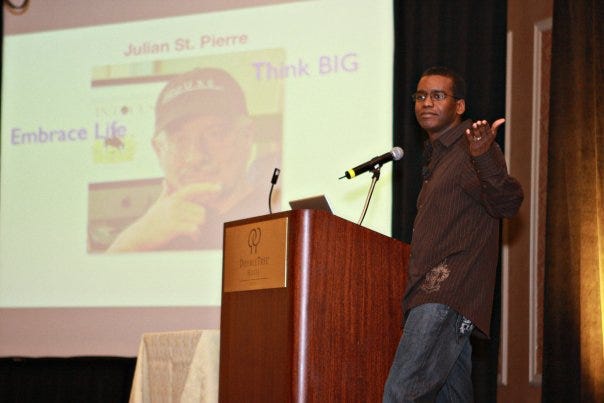
I used to crack myself up using that as the opening line whenever I gave a speech or lecture at a videographer, photography, or filmmaker’s conference. As someone who had a modicum level of success as a freelance video producer and industry blogger, I often had the opportunity to speak at such events and local film colleges.
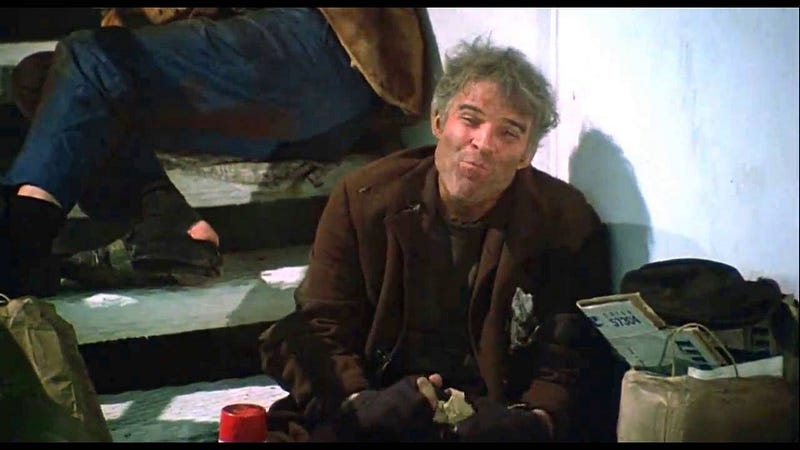
And as a lover of cinema, what better way to start a talk about filmmaking, or to introduce myself, than with an out of the blue reference to a classic 1970s comedy.
The joke, of course, was that in The Jerk, Steve Martin is white, so him saying he’s black was funny.
Since I really am black, making an off-handed nod to a white character was funny: if you were old enough, or versed in cinematic classics enough to actually get the joke. Otherwise, you just thought for some odd reason, I needed to 1) tell you the obvious and 2) let you know that I was of humble means as a child (which, considering my father was a doctor, I probably wasn’t all that poor when I was born).
I tell you that story to establish and fully embrace that other aspect of me germane to the telling of my story. I’m a nerd, or if you like, “blerd” (i.e. black + nerd).
I’m that guy who loves to make movie and sitcom references ad nauseam. I can find a Seinfeld and Star Trek: TNG reference in all kinds of life situations. I do it so much, there are times I don’t even realize I’m doing it. I’m sure it drove my wife crazy.
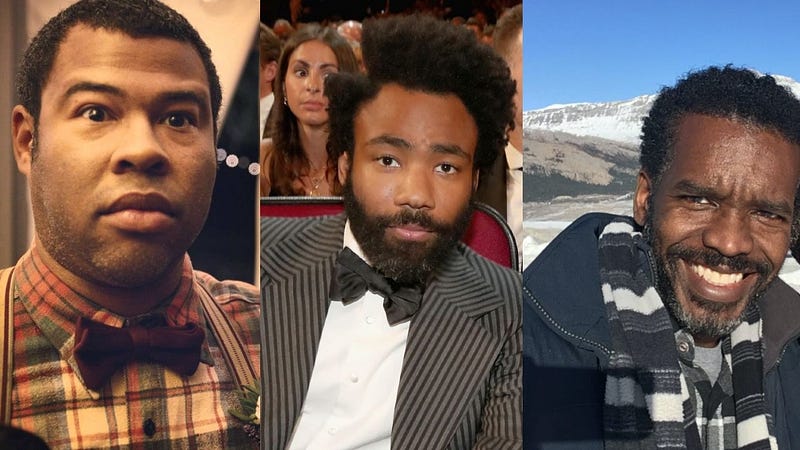
Oh, speaking of which, let’s address the elephant in the room right off the bat. I a̶m̶ was married to a white woman. I know what you’re thinking—there seems to be no shortage of “woke” black artists who create racially provocative and compelling works of art that address racial disharmony and discord in America, who also happen to be married to or dating white/non-black women. Jordan Peele, Paul Mooney, and Donald Glover come to mind.
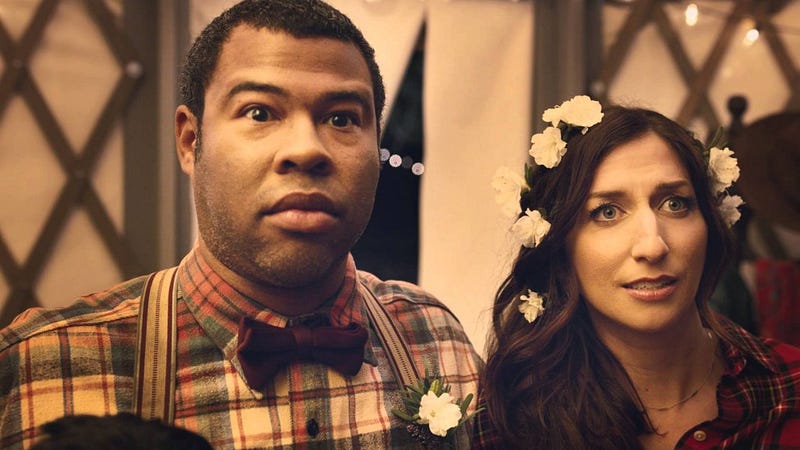
And whether or not those three artistic geniuses are relevant to the zeitgeist by the time you read this book—or even if they’re still married to/in relationships with their respective white partners—I’m certain it won’t be hard for you to find your modern-day equivalent. (I wonder what Barack Obama’s reception by people of color would’ve been had Michelle been a blonde, green-eyed white woman.)
I can’t help but recall that In Living Color sketch of the really down black man who wore dashikis and African headgear, screamed about the atrocities and oppressiveness of the white man, and then later in the sketch, out comes his very white wife and white kids. ( I actually don’t recall if it was In Living Color or Mad TV. But I know for a fact I’ve seen that sketch.)
Trust me. I get the irony. There seems to be a certain level of hypocrisy in a black man so proud and steeped in his blackness, but then goes and has what many consider the paragon of selling out. The cardinal sin for any black man who wishes to be taken seriously by his people: a white woman on his arm.
“Ay, there’s the rub,” as the good bard did say. No doubt, there will be some of you reading this who will always have this fact in the back of your mind. Perhaps I have even disqualified my right to address the issues and plights of the black man because of my ex-wife. This is important because I have no doubt that some of what I’m going to write will challenge both blacks and whites alike.
On one hand, the stories I have to tell hold a mirror up to the black community to look at what I think has been one of the saddest aspects of what is an otherwise rich, vibrant, and beautiful culture: how we treat those of us who don’t act, look, talk, or dress a certain way.
On the other hand, I have a word or two for the whites as well. (I love saying “the whites.” I don’t know why. It’s just funny to me. I’m chuckling now even as I’m writing it.)
So, my fellow African-American brothers and sisters may discount what I have to say because of who I just happened to have fallen in love with. And the whites may discount what I have to say because they may think (quoting W.S. again), that me “doth protest too much.”
Speaking of which: What is it that I have to say? Why this book and why now? For that, you need to look no further back than the summer of 2016. But not necessarily for the reasons you think.
Yes, that is the summer that the sub-eponymous U.S. president shook up the campaign trail with his racist and chauvinistic rhetoric. And to be certain, the bat-shit insane trajectory this country has been on is absolutely related to why I ultimately decided to write this book.
But I think the seed was planted somewhere else. In a podcast.
The Scales Begin to Fall
In June of 2016, I was about one year into the production of a filmmaking podcast I produced and hosted called Radio Film School. It was kind of like a “This American Life” for filmmakers. I guess that would make me the black Ira Glass. Every now and then I would produce a multi-part mini-series throughout the season that focused on one specific topic.
One such series was “Breaking the Glass.” It was born out of a conversation I had on one of the regular episodes on the show with two recurring guests, who also happen to be my closest friends: JD and Yolanda Cochran. They actually play a significant role in my story which I’ll get to later. They are kinda like my version of the Greatest American Hero aliens, giving me my super-powered suit, but not always giving me instructions on how to use it. Suffice to say that for the purposes of this current point, know that JD is an indie filmmaker and Yolanda is a producer in Hollywood.
The conversation we had centered on how women are treated in the movie business. Yolanda had taken exception to a comment I made about women needing to “act like a man” in order to get ahead in the business, and the discussion around that comment led to the idea to structure a whole podcast mini-series around it. And it was during the making of that series when I started my journey on becoming woke.
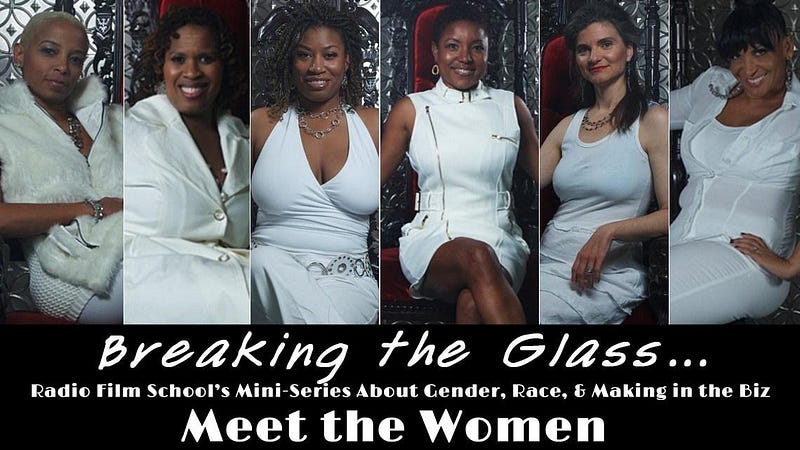
Most of the discussions with guests I had during the making of this mini-series centered around gender disparity, although racial issues were also a frequent topic. And during these discussions, I found myself challenged—challenged to think about things I had said and done that would be off-putting or even offensive to women.
But, as I had more and more discussions with women and people of color about issues of disparity and disenfranchisement, I began to empathize more. As more and more scales began to fall from my eyes, I could see that something wasn’t quite right.
As I simultaneously engaged in these discussions, I began to see comments and posts from people online—people I thought I knew—that caught me totally by surprise. It was like a floodgate of ignorance, insensitivity, and in many cases, straight-up racism, was being thrown open into my various social media feeds. But I’m sure you have no idea what I’m talking about.
Be sure to follow this publication to be notified when the next chapter goes online. Visit Dungeons-n-Durags.com to learn more about the book.
Previous chapter


