
Chapter 2: Blackness is My Super Suit
The evolution of a black man.
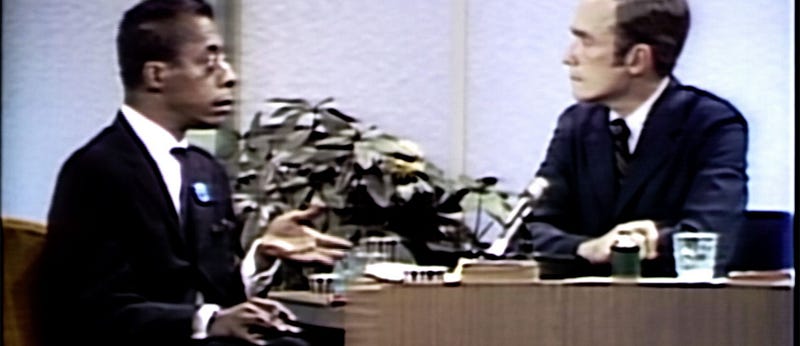
When any white man in the world says “give me liberty, or give me death,” the entire white world applauds. When a black man says exactly the same thing, word for word, he is judged a criminal and treated like one and everything possible is done to make an example of this bad nigger so there won’t be any more like him.
James Baldwin
How the hell did I get here? What path did I go down that led me to sitting for hours on end typing angrily away on my computer, debating with dumbasses on Facebook? This isn’t me. Or, at least, it didn’t used to be me.
I am not an “angry black man.” Although, I am angry and I am, well, black. Don’t think the irony of the nuanced distinction isn’t lost on me. But I am somewhat of an anomaly-at once both one of the “whitest” black men you’ll meet, but also a proud, “woke,” black-fist-emoji-sharing black man with a mission to stomp out racial prejudice and help white America recognize their privilege.
In a lot of ways, I feel like The Greatest American Hero of blackness. That was a 1980s TV show about a mild-mannered, curly-haired teacher who is visited by an alien race and gifted a suit with superpowers, but he loses the instructions. What ensues was 2.5 seasons of kitschy humor and bad writing. An ongoing joke was that he couldn’t fly straight and was constantly crashing into things and landing badly as he tried to figure the suit out.
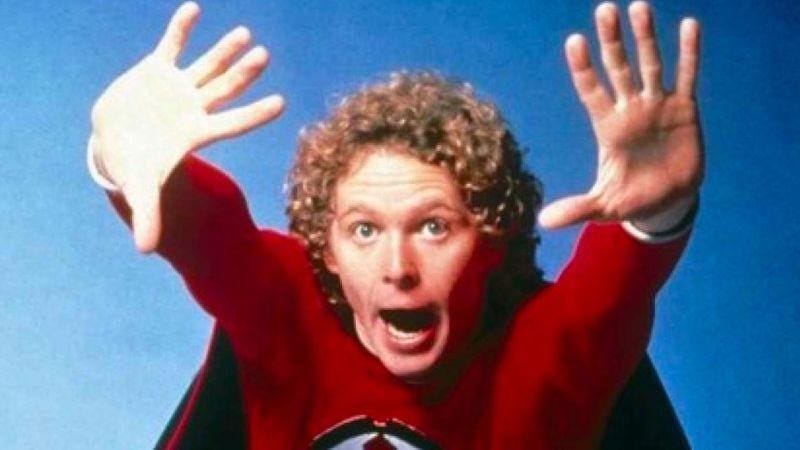
My “super suit” is my blackness and my black voice. And like the aforementioned superhero, I’m still figuring out how the suit works. I never attended an HBCU (historically black college or university) or joined any black fraternities where I would have gotten proper “training.” And, except for a short stint of my life when I attended an African-American private school, and a few years of public school in the 5th and 6th grades, for the overwhelming majority of my life, I’ve always been one of the few black people in my circle of friends and co-workers.
So, I’m still kinda figuring this stuff out. Or rather, I mean, I’m still kinda figuring this sh*t out.
See, I inherently want to say “stuff.” It’s that first part of me that doesn’t want to perpetuate stereotypes of how black folk talk.
But, I feel like there’s this little itty, bitty version of Samuel L. Jackson sitting on my shoulder like the proverbial “devil” who starts saying, “Just say sh*t muthafucka!” And for other reasons which will become apparent later, I have a deeply ingrained issue with profanity that dates back to my childhood (my counselor would be so proud!)
You see my quandary?
Anyway, so why am I angry? Well, I’m angry this particular day because I recently finished a rather unproductive (albeit extremely cathartic) 5-day (yes, FIVE FRAKKING DAYS), back-and-forth senseless debate on Facebook (shocker) with a white man from the south who had all manner of notions as to the ailments of the black community that he was all too willing to share. This Dufus Asshole had the audacity, the unmitigated gall, to call me a racist-all because I shared a video of black conservative commentator and right-wing propagandist Deneen Borelli and called her a modern-day “house negro.” (And trust me, she is! I mean, if you look up the definition, her picture is right there! Look. See for yourself.)

House Negro: a term used by African-Americans to describe another African-American who, in their quest to gain favor with the white majority, is all too quick to criticize and demean African-Americans fighting for racial justice. The phrase was made popular by civil rights leader Malcolm X. It’s a historical reference to the days of slavery in America and the “class” distinction between field negroes and house negroes. Field negroes, the ones who worked in the hot sun picking cotton all day, had it terrible. House negroes were butlers and babysitters who usually found favor with their white masters. Because their life was so much easier, they were less inclined to fight for their freedom, and would often defend their white masters. A great example of a modern-day house negro would be Deneen Borelli (see photo).
The inane comments that vomited out of this dude’s psyche will forever go down in Facebook lore as some of the most incomprehensible, circular logic and tone-deaf drivel ever to come from the mind of a privileged white man in the south. It wasn’t just tone-deaf. It was tone-deaf, blind, and dumb! (But more on that whole ordeal later.)
A little over two years ago, I was clean-shaven and wore my hair super short-like Will Smith and Jamie Foxx short. Today, I have a beard and mustache and my hair is more like Donald Glover in “Atlanta” (on a bad hair day, it’s more like Childish Gambino in “This is America.”)
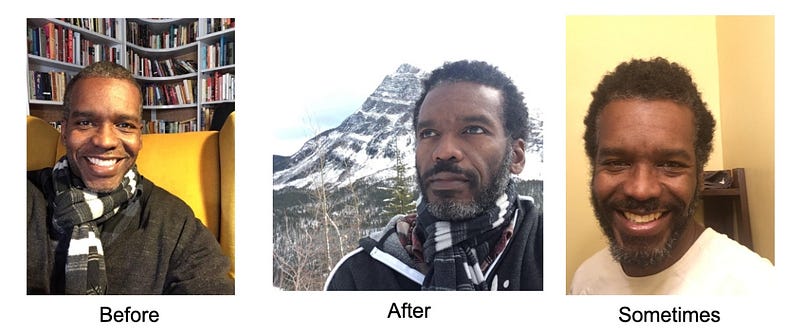
But my hirsute hygiene practices just scratch the surface of my racial evolution.
So how did I get here? How did I become “That guy”? That pissed off black man cussin’ out stupid-ass wypipo on social media and using it (and now this book) to fight the good fight?
How did I go from mild-mannered, “white-people safe,” conservative black Christian raising my hands on Sunday morning to the tunes of Chris Tomlin and Hillsong, to spiritually conflicted, liberal-minded “follower of Jesus” (yet kinda diggin’ Buddha too), Tommie Smith-fist-pumping “nigga,” dropping f-bombs like it’s nobody’s bizness?
What caused me to give up my fear of offending my white friends and say what’s been on my mind-and be damned if Becky and Buford unfriend me.
You could say it’s that orange-skinned disgrace of a POTUS living at 1600 Pennsylvania Avenue. But he was probably more a catalyst. It is too easy to blame it all on “He who shall not be named.” (Actually, he gets named a LOT in this book. I just like comparing him to Voldemort.)

So how did it all happen? Well, as Guy Pearce’s character Fernand said to Jim Caviezel’s Desmond in 2002’s Count of Monte Cristo, “It’s complicated.”
What you are about to read is the true story of how it happened. (Well, it’s mostly true. But I have little doubt you’ll have any trouble separating truth from, shall we say, creative license.)
And actually, what is “truth” anyway. As iconic filmmaker Akira Kurosawa so deftly illustrated in his film Rashomon, there are many sides to the same story. Despite my conservative, Christian upbringing, “truth” in some cases, can be very much relative.
But, before we get to all of that, there are a few things you need to know, and about 3 or 4 warnings I have to share with you.
White people, proceed with caution.
Black folk, go easy on a brutha who’s just comin’ ‘round.
Everybody else, pick a side ‘cuz I have no doubt you’ll relate too.
Be sure to follow this publication to be notified when the next chapter goes online. Visit Dungeons-n-Durags.com to learn more about the book.