
Chapter 22— Security and Microservices
The following list is the previous chapters of this series:
- Chapter 1 — Introduction to Microservices
- Chapter 2 — Introduction to Microservices (Part 2)
- Chapter-3 Domain-driven design and microservices
- Chapter -4 Advantages of using Go for web development
- Chapter — 5 Understanding HTTP Protocols and REST APIs
- Chapter-6 HTTP Package in Golang
- Chapter 7 — Step-by-step guide on building a simple web service using Go
- Chapter 8 “ Documenting our APIs — Introduction to OpenAPI”
- Chapter 9 -Building a Microservice with Go (Defining the technologies )
- Chapter 10-Structuring our project
- Chapter 11- Coding our Microservice (Part 1)
- Chapter 12 — Coding our Microservice (Part 2)
- Chapter 13 — Coding our Microservice (Part 3)
- Chapter 14 — Coding our Microservice (Part 4)
- Chapter 15 — Coding our Microservices (Part 5)
- Chapter 16 — Coding our Microservices (Part 6)
- Chapter 17 — Coding our Microservices (Part 7)
- Chapter 18 — Microservice Communication (Part 1)
- Chapter 19 — Microservice Communication (Part 2)
- Chapter 20 — Microservice Communication(Part 3)
- Chapter 21 — Microservice Communication(Part 4)
Structure
- Security in the microservice communication
- Why security is important
- Security Layers in our microservice
- Data Sanity and Data Validation
- Security best practices
Security in the microservice communication

Microservices architecture has gained significant popularity in recent years due to its ability to break down complex applications into smaller, manageable components. While microservices offer numerous benefits, including scalability and flexibility, they also present unique security challenges, especially when it comes to communication between these distributed services.
Securing communication in microservices is a multifaceted endeavor that involves authentication, authorization, encryption, and various best practices. Microservices offer agility and scalability, but these benefits should not come at the expense of security. By implementing the strategies and practices outlined in this article, organizations can ensure that their microservices architecture remains both flexible and secure.
In this article, we will delve into the critical aspects of security in microservices, with a specific focus on securing their communication.
Why security is important?

Security in microservices is of paramount importance for several reasons, as it addresses specific challenges associated with microservices’ distributed architectures. It is essential to protect data, applications, and systems in a distributed architecture. The lack of security can have severe consequences in terms of privacy, legal compliance, and user trust. Therefore, security should be a central consideration in the design, development, and operation of microservices.
Here are the reasons why security in microservices is crucial:
- Expanded Attack Surface: In a microservices architecture, there are multiple components in constant communication. This expands the attack surface as each microservice can be a potential entry point for attackers. Security is necessary to protect each of these access points.
- Network Communication: Microservices communicate over the network, meaning that data is transmitted between them. Without adequate security measures, data can be intercepted, altered, or compromised during transmission.
- Authentication and Authorization: Authentication and authorization are fundamental to ensure that microservices only respond to legitimate requests from authorized users or services. Without these measures, any entity could access and modify critical data or functionality.
- Protection of Sensitive Data: Microservices may handle sensitive data such as user information or business data. Security is needed to protect this data against unauthorized access or leaks.
- Prevention of Attacks: Microservices can be vulnerable to various attacks, such as SQL injection, denial of service attacks (DDoS), and cross-site scripting (XSS). Proper security is required to prevent these attacks.
- Compliance and Regulations: In many industries, there are specific security and privacy regulations that must be adhered to. Lacking security in microservices can lead to regulatory breaches and legal penalties.
- Maintaining User Trust: The lack of security can undermine user trust in an application or service. Security breaches can lead to customer loss and damage an organization’s reputation.
- Business Continuity and Resilience: Security is fundamental to ensure the resilience of microservices. The ability to withstand attacks and continue functioning is essential for business continuity.
- Protection Against Internal and External Threats: Threats can come from both internal and external sources. Security in microservices is crucial to protect against both sources of threats.
- Scalability and Flexibility: Security should not be an impediment to the scalability and flexibility of microservices. Security approaches should be implemented that allow for agile growth and architectural changes.
Strategies for Secure Communication

Securing communication between microservices is a critical aspect of maintaining a robust and reliable microservices architecture. By securing communication between microservices is paramount for maintaining the integrity, confidentiality, and reliability of your microservices architecture. By implementing strategies such as mutual TLS authentication, service mesh, API security, token-based authentication, and gRPC, you can ensure that data remains secure during transit and that only authorized entities can interact with your microservices. These strategies contribute to the overall robustness of your microservices ecosystem.
To achieve secure communication, several strategies and best practices can be employed:
Mutual TLS Authentication Mutual Transport Layer Security (mTLS), often referred to as two-way TLS, is a security protocol that allows both the client and the server to authenticate each other. In the context of microservices, this means that not only does the client (e.g., one microservice) authenticate the server it’s connecting to, but the server also authenticates the client. Here’s a closer look at mTLS:
- Client Authentication: The client presents its digital certificate to the server, proving its identity. The server verifies the client’s certificate, ensuring that it’s a trusted entity.
- Server Authentication: Similarly, the server provides its digital certificate to the client, demonstrating its identity. The client verifies the server’s certificate to ensure that it’s a trusted service.
The use of mutual TLS authentication adds an extra layer of security to microservices communication, making it challenging for unauthorized entities to impersonate either the client or the server.
Service Mesh A service mesh is a dedicated infrastructure layer that handles service-to-service communication within a microservices architecture. It acts as a transparent intermediary between microservices, providing a range of services, including:
- Load Balancing: Distributes traffic evenly across multiple instances of a service to ensure efficient resource utilization and high availability.
- mTLS: Implements mutual TLS authentication to encrypt and secure data in transit between microservices. This ensures that communication remains confidential and tamper-proof.
- Fine-Grained Traffic Control: Allows for detailed control over how traffic flows between microservices. This is essential for implementing routing policies and traffic management.
Service mesh solutions like Istio and Linkerd are popular choices for managing and securing communication between microservices. They simplify the implementation of mTLS, load balancing, and observability, ensuring that communication remains secure and efficient.
API Security When designing APIs for microservices, it’s essential to consider security from the ground up. Here are some best practices for ensuring API security:
- Rate Limiting: Implement rate limiting to control the number of requests a client can make within a specified time frame. This helps prevent abuse or overloading of services.
- Input Validation: Validate and sanitize input data to protect against common vulnerabilities like SQL injection and cross-site scripting (XSS). Input validation ensures that malicious data cannot compromise your microservices.
- Proper Error Handling: When handling errors, avoid exposing sensitive information. Provide generic error messages to clients, and log detailed errors internally for debugging purposes.
Token-based Authentication Token-based authentication, such as JSON Web Tokens (JWT), is a commonly used method for managing authentication and authorization in microservices. Here’s how it works:
- Authentication: When a user or service logs in, they receive a JWT, which is a compact, self-contained token that contains claims about the user or service’s identity.
- Authorization: The JWT can also carry claims about the permissions and roles of the user or service. This makes it easier to manage authorization at a granular level.
Token-based authentication simplifies the management of authentication and authorization, as services can validate tokens quickly, and it reduces the need for constantly re-authenticating with a central authority.
Service-to-Service Communication For secure inter-service communication, consider using protocols like gRPC. gRPC is an open-source RPC (Remote Procedure Call) framework developed by Google. Here’s how it enhances security:
- Strong Typing: gRPC defines a contract between the client and server using Protocol Buffers (protobufs), which enforces strong typing. This ensures that data sent between services adheres to a well-defined structure, reducing the risk of data format vulnerabilities.
- Efficient Serialization: gRPC uses Protocol Buffers for serialization, which is more efficient and faster than other serialization formats. This reduces the processing overhead and enhances performance.
- mTLS Support: gRPC supports mutual TLS authentication, adding an extra layer of security to service-to-service communication.
By utilizing gRPC, you can establish secure and efficient communication between microservices while benefiting from well-defined contracts and strong typing.
Monitoring and Logging for Microservices Security
Robust monitoring and logging practices play a crucial role in ensuring the security of microservices. These two components provide essential visibility into the behavior and performance of the microservices architecture while also serving as powerful tools for detecting and responding to security threats.
Monitoring and logging are integral to a proactive security posture in microservices. They not only aid in identifying security incidents but also assist in continuous improvement of security measures. By analyzing logs and monitoring metrics, organizations can fine-tune their security policies and practices, helping to safeguard their microservices architecture from both known and emerging threats. Additionally, these practices contribute to regulatory compliance and foster a culture of accountability and transparency within the organization.
Let’s delve into this aspect in more detail:
Logging
- Centralized Logging: In a microservices environment, multiple services are working together. Centralized logging involves aggregating logs from all microservices into a centralized repository or system, such as the ELK Stack (Elasticsearch, Logstash, Kibana) or Splunk. Centralized logging simplifies log management and analysis.
- Security-Related Events: Log entries related to security should be clearly defined and categorized. This includes authentication and authorization events, access control violations, security policy violations, and any other security-critical actions.
- Anomaly Detection: Centralized logging allows for the real-time analysis of log data. Security teams can set up alerts and automated responses to detect and respond to suspicious or unexpected activities. For example, a sudden increase in failed authentication attempts could be a sign of a brute-force attack, triggering an immediate response.
- Forensics and Auditing: Detailed logs serve as a valuable resource during forensic investigations and auditing. When a security incident occurs, logs can help trace the sequence of events, identify the root cause, and assess the extent of the breach.
- Retention and Compliance: Logs should be retained for an appropriate duration to meet legal and compliance requirements. Some regulations mandate log retention for a specific period, and organizations must adhere to these rules.
Monitoring
- Application Performance Monitoring (APM): APM tools are indispensable for tracking the performance and security of microservices. They provide insights into the health and behavior of microservices, including response times, resource usage, and transaction volumes.
- Security Metrics: In addition to performance metrics, APM tools should also capture security metrics. These metrics include the number of failed authentication attempts, the volume of encrypted traffic, and the presence of unexpected or unauthorized data access patterns.
- Alerting and Automation: APM tools can be configured to trigger alerts based on predefined conditions. For instance, if a microservice experiences a sudden surge in incoming traffic or a significant increase in errors, alerts can be generated and sent to the appropriate personnel for investigation.
- Behavioral Analytics: Advanced APM solutions can use behavioral analytics to establish a baseline for expected microservices behavior. Any deviation from this baseline can trigger alerts. For instance, a sudden spike in database queries from a service that typically doesn’t interact with the database might indicate a security breach.
- Incident Response: APM tools can integrate with incident response systems, enabling automated actions in response to detected threats. For example, upon detecting a DDoS attack, the tool can automatically trigger rate limiting or traffic redirection measures.
Continuous Security in Microservices
Maintaining security in microservices is an ongoing process that requires vigilance and proactive measures.
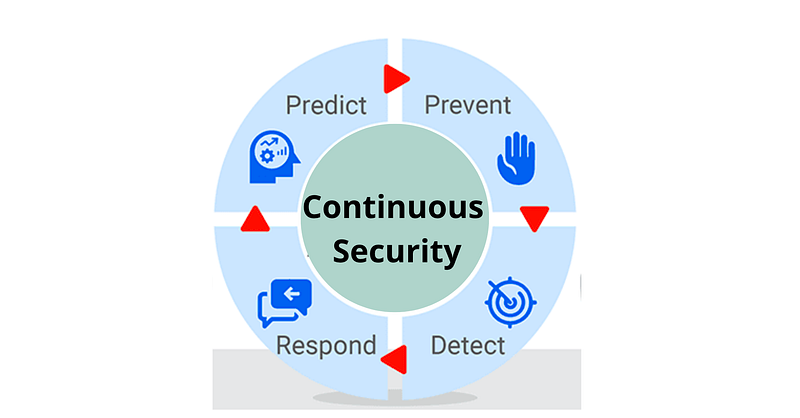
Continuous security in microservices is a proactive and iterative approach to maintaining the integrity and resilience of your architecture. By regularly auditing your systems, investing in security training, and staying on top of security patch management, you can significantly reduce the risk of security incidents and strengthen your overall security posture. Continuous security practices help keep your microservices ecosystem secure and up-to-date with the evolving threat landscape.
Here’s a more detailed exploration of the aspects of continuous security:
Security Training
- Development and Operations Teams: Security is a collective responsibility and should be ingrained in the culture of your development and operations teams. Training and awareness programs should be conducted to educate team members about secure coding practices, threat awareness, and best practices for microservices security.
- Secure Coding Practices: Training should emphasize secure coding practices, such as input validation, output encoding, and escaping, to prevent common vulnerabilities like SQL injection, cross-site scripting (XSS), and security misconfigurations.
- Threat Modeling: Introducing threat modeling into your development process helps teams identify potential security threats and vulnerabilities early in the design phase. This allows for proactive mitigation strategies.
- Secure Development Lifecycle: Implementing a secure software development lifecycle (SDLC) ensures that security is an integral part of the development process. This includes incorporating security requirements, code reviews, and security testing at various stages of development.
Regular Auditing
- Security Audits: Conducting regular security audits is essential to identify vulnerabilities, weaknesses, and potential threats within your microservices architecture. These audits involve comprehensive assessments of your systems, examining code, configurations, access controls, and compliance with security best practices and policies.
- Penetration Testing: Penetration testing, also known as ethical hacking, involves simulating real-world cyberattacks to evaluate the effectiveness of your security controls. Penetration testers attempt to exploit vulnerabilities and provide insights into areas that require improvement.
- Vulnerability Scanning: Automated vulnerability scanning tools can be employed to scan your microservices for known security vulnerabilities. These tools can detect weaknesses in code, configurations, and dependencies.
- Code Review: Regular code reviews are integral to identifying security issues in the development phase. Peer reviews and automated code analysis tools can help detect vulnerabilities early in the software development life cycle.
Security Patch Management:
- Dependency Management: Microservices rely on various dependencies, including third-party libraries and frameworks. These dependencies may have their security vulnerabilities. Staying updated with security patches for these dependencies is crucial to address known vulnerabilities.
- Microservices Frameworks: If you use specific microservices frameworks, they may receive updates and patches. Keeping these frameworks up to date is essential to ensure that your microservices remain secure.
- Timely Patching: When security patches are released for any component of your microservices architecture, apply them promptly. Delaying patching can leave your system exposed to known vulnerabilities.
- Change Management: Implement change management processes to track and manage updates and patches. Ensure that changes are properly tested and do not introduce new issues.
The Security Challenge in Microservices

Microservices architecture, with its small, independently functioning units, offers great flexibility and scalability. However, the very nature of these distributed systems brings about unique security challenges, particularly in the realm of communication.
Addressing the security challenges in microservices is vital to ensuring the confidentiality, integrity, and availability of data and services. Implementing robust authentication and authorization mechanisms, securing communication with TLS/SSL, and leveraging an API gateway for centralized security management are essential steps in fortifying microservices against security threats. These security measures help safeguard the distributed architecture and maintain the trust of users and clients.
Let’s delve deeper into the security challenges inherent to microservices:
Authentication
Each microservice must rigorously verify the identities of the entities with which it communicates. This includes services and users. Achieving this is usually done through robust authentication mechanisms. Common methods include:
- API Tokens: These are short-lived, unique tokens issued to entities (services or users) upon successful authentication. They are used as proof of identity when making requests to microservices.
- JWT (JSON Web Tokens): JWTs are compact, self-contained tokens that carry information about the entity they represent, such as user information or permissions. They’re commonly used for authentication in microservices.
- Client Certificates: In the case of services authenticating with each other, digital certificates can be used for mutual authentication.
Authorization
Once an entity is authenticated, it’s essential to determine what actions it’s permitted to perform. This is where authorization comes into play. Common authorization models in microservices include:
- Role-Based Access Control (RBAC): In RBAC, permissions are associated with roles, and roles are assigned to entities. This model simplifies authorization management by grouping users or services based on their responsibilities.
- Attribute-Based Access Control (ABAC): ABAC is a more dynamic model that evaluates authorization decisions based on attributes of the entities involved, the environment, and the requested action. It allows for fine-grained control.
Transport Layer Security (TLS/SSL)
- Data Encryption: All communication between microservices must be encrypted to ensure data privacy and prevent eavesdropping. Data encryption is achieved through cryptographic protocols like Transport Layer Security (TLS) or its predecessor, Secure Sockets Layer (SSL).
- Securing Communication Channels: TLS/SSL protocols provide end-to-end encryption, ensuring that data exchanged between microservices is secure. These protocols also help in the authentication of the communicating parties, thus reducing the risk of man-in-the-middle attacks.
- Certificates Management: For successful TLS/SSL implementation, you’ll need to manage digital certificates for both clients and servers, ensuring their validity and timely renewal.
API Gateway
- Centralized Security Concerns: Implementing an API gateway can centralize various security-related concerns, simplifying the security management of microservices. It acts as a reverse proxy, serving as a single entry point for external requests.
- Authentication and Rate Limiting: An API gateway can handle authentication, ensuring that only authenticated and authorized requests pass through to the microservices. It can also manage rate limiting to prevent abuse or excessive traffic.
- Logging and Monitoring: An API gateway often provides logging and monitoring capabilities, helping to keep track of incoming requests and their outcomes. This can aid in auditing and detecting unusual patterns or potential security breaches.
- API Composition: The API gateway can simplify the microservices ecosystem for external clients by aggregating multiple microservices into a unified API. This reduces the exposure of individual microservices and enhances security.
Security Layers in our microservice
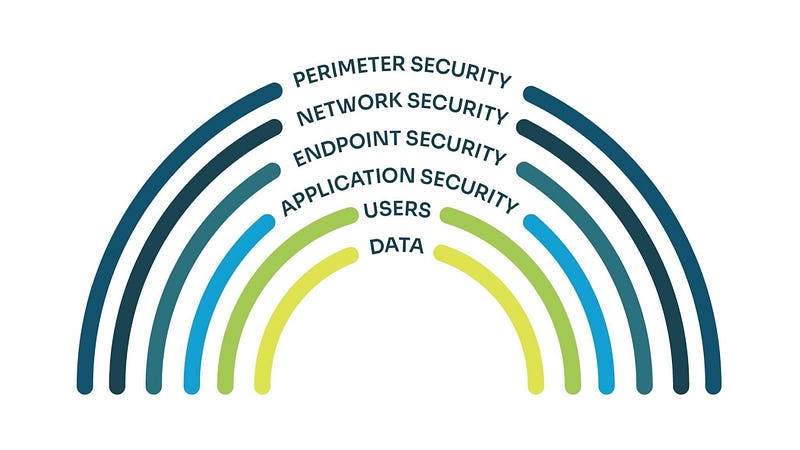
Security layers in a microservices architecture are critical for protecting the various components of the system and ensuring the overall security of the application. These layers act as defensive barriers against different types of threats and vulnerabilities.
Implementing the security layers in a microservices architecture helps protect your application from various security threats and vulnerabilities. The combination of perimeter security, authentication and authorization, communication security, API security, code and data security, logging and monitoring, patch management, and incident response creates a comprehensive security strategy to ensure the resilience of your microservices ecosystem.
Incident Response Layer
Develop an incident response plan that outlines how to respond to security incidents. This plan should include steps for identifying, containing, eradicating, and recovering from security breaches.
Layer of Authentication and Authorization
- Authentication: Implement a dedicated service responsible for user and service authentication. It verifies the identity of clients, issuing tokens or certificates upon successful authentication.
- Authorization: Once authenticated, a dedicated authorization service can determine what actions are permitted for authenticated entities. It enforces access control policies, such as RBAC or ABAC.
Perimeter security layer
- API Gateway: The API gateway serves as the entry point for external requests to the microservices ecosystem. It can enforce authentication, rate limiting, and API composition, acting as the first line of defense against unauthorized access and potential threats.
- Firewalls: Network firewalls, whether they are hardware or software-based, filter incoming and outgoing traffic to and from the microservices, preventing malicious traffic from reaching the internal components.
- Ingress Controllers: These components help manage and secure incoming traffic to the microservices. Ingress controllers can enforce SSL/TLS termination, routing rules, and authentication at the network level.
Code and Data Security
- Secure Coding Practices: Train development teams in secure coding practices to prevent common vulnerabilities like SQL injection, XSS, and security misconfigurations.
- Data Encryption: Encrypt sensitive data at rest and in transit. Implement encryption mechanisms to protect data from unauthorized access.
API Security Layer
- API Token Management: Secure your APIs by using API tokens or JWTs to authenticate clients and services. Tokens can carry claims about the client or service identity.
- Rate Limiting: Implement rate limiting to control the number of requests a client can make within a specified time frame. This prevents abuse and overloading of services.
Communication Security Layer:
- Transport Layer Security (TLS/SSL): Enable TLS/SSL encryption for all communication between microservices. This ensures that data exchanged is confidential and protected from eavesdropping.
- Service Mesh: A service mesh like Istio or Linkerd can provide mTLS, secure service-to-service communication, and fine-grained control over traffic. It acts as a security layer for inter-service communication.
Logging and Monitoring:
- Centralized Logging: Aggregating logs from microservices into a centralized system allows for the analysis of security-related events. It helps detect unusual patterns and potential security breaches.
- Application Performance Monitoring (APM): APM tools track the performance and security of microservices. They can monitor for anomalies, such as a sudden increase in failed authentication attempts, and provide insights into system health.
Security Updates and Patch Management layer
- Dependency Management: Stay updated with security patches for dependencies used in your microservices. Regularly review and update third-party libraries and frameworks to address known vulnerabilities.
- Microservices Frameworks: Ensure that the microservices frameworks you use are kept up to date with security patches and updates. Timely patch management is vital for addressing potential vulnerabilities.
Why to use those security layers
The implementation of various security layers in a microservices architecture is essential to ensure comprehensive protection for the application and its components. Each layer plays a specific role in defending against different types of threats and vulnerabilities, for example:
- Defense in Depth: The layered security strategy follows the “defense in depth” principle, which means that multiple security barriers are established at different levels of the architecture. This ensures that even if one security layer is compromised, there are other layers that continue to protect the application.
- Perimeter Protection: Perimeter security layers, such as API gateways and firewalls, serve as the first line of defense, safeguarding against unauthorized access from the outside.
- Identification and Authentication: Strong authentication and authorization are essential to verify the identity of clients and services, ensuring that only authorized entities have access to resources.
- Communication Security: Implementing encryption with TLS/SSL and the use of a service mesh ensure that communication between microservices is secure and confidential.
- API Control: API token management and rate limiting prevent abuse and excessive traffic, protecting application resources.
- Secure Development Practices: Training development teams in secure coding practices is crucial to prevent vulnerabilities in microservices code.
- Monitoring and Threat Detection: Centralized monitoring and logging enable the early identification of suspicious activities and a rapid response to threats.
- Update and Patch Management: Keeping dependencies and microservices frameworks up to date is critical for addressing known vulnerabilities.
- Incident Response: Having an incident response plan helps the organization respond effectively in the event of a security breach.
To conclude, by combining these security layers, a comprehensive strategy is created that addresses threats at all stages of the application, ensuring the ongoing protection of microservices. Layered security adapts a proactive and resilient approach, essential for maintaining the confidentiality, integrity, and availability of systems in an increasingly complex and distributed microservices environment.
Data Sanity and Data Validation
Data sanity and data validation are essential components of microservices security that help ensure the consistency and integrity of data. They protect against common security threats, such as injection attacks and cross-site scripting, by validating data at various entry points and stages within microservices. By implementing robust data validation practices and leveraging validation libraries and frameworks, you can significantly reduce the risk of data-related security vulnerabilities and help maintain the confidentiality and integrity of your microservices.
Some of the principal contributions of data sanity are the following:
Data Consistency and Integrity
- Data Sanity: Data sanity refers to the concept of ensuring that the data processed and stored by microservices is consistent and free from anomalies. This consistency ensures that the data remains reliable and valid throughout its lifecycle.
- Data Validation: Data validation involves checking incoming and outgoing data to ensure that it adheres to the expected format and constraints. For example, input validation ensures that data is free from malicious input that could lead to security vulnerabilities like SQL injection or cross-site scripting (XSS).
- Threat Mitigation: By validating data at various entry points and stages within microservices, you can prevent potentially harmful data from entering your system. This proactive approach reduces the risk of data-based attacks, which often target vulnerabilities in data processing and storage.
Protection Against Injection Attacks
- SQL Injection: Proper data validation can prevent SQL injection attacks by ensuring that data entered by users or external systems is correctly sanitized and does not include malicious SQL code. This validation reduces the risk of unauthorized access to databases and data manipulation.
- NoSQL Injection: In microservices architectures that use NoSQL databases, data validation helps protect against NoSQL injection attacks by validating data structures and queries to ensure they conform to expected patterns.
Preventing Cross-Site Scripting (XSS)
Microservices often generate dynamic content for web applications. Data validation ensures that data presented to users is sanitized and free from malicious scripts. This reduces the risk of XSS attacks, where attackers inject scripts that execute within a user’s web browser.
Mitigating Security Misconfigurations
Microservices often rely on configuration data. By validating this data, you can ensure that it adheres to predefined settings and security policies, reducing the risk of misconfigurations that could expose sensitive information or vulnerabilities.
Protection Against Data Poisoning
Attackers may attempt to manipulate data input to disrupt the functionality of a microservice or exploit vulnerabilities. Data validation helps identify and reject poisoned data, preventing these attacks from causing harm.
Maintaining Data Privacy
Microservices often deal with sensitive data, such as user information and credentials. Data validation is crucial in ensuring that this data is protected and not inadvertently exposed.
Data Validation Libraries and Frameworks
Many programming languages and frameworks provide data validation libraries or built-in functions to simplify data validation. These libraries allow developers to easily validate data against predefined rules, reducing the risk of implementation errors.
Security best practices

Microservices architecture offers flexibility, scalability, and agility, but it also presents unique security challenges due to its distributed nature. Implementing microservices security best practices is essential to protect your application and its data.
Microservices security best practices helps protect your microservices architecture from a wide range of security threats, ensures data privacy, and maintains the integrity of your application. By following these practices, you can build a secure, resilient, and trustworthy microservices ecosystem.
Let’s explore these practices in detail:
- API Gateway for Perimeter Security: Implementing an API gateway provides a central entry point for external requests. It can enforce security measures such as authentication, rate limiting, and API composition, acting as the initial layer of defense against unauthorized access from external sources.
- Network Firewalls for Traffic Filtering: Network firewalls act as a protective barrier, filtering incoming and outgoing traffic to and from microservices. They prevent malicious traffic from reaching the internal components, enhancing network security.
- Authentication Service for Identity Verification: An authentication service is a dedicated component responsible for verifying the identity of users and services. It issues tokens or certificates upon successful authentication, ensuring that entities are who they claim to be.
- Authorization Service for Access Control: After authentication, an authorization service determines what actions are permitted for authenticated entities. Access control policies, such as Role-Based Access Control (RBAC) or Attribute-Based Access Control (ABAC), are commonly used for fine-grained control.
- Transport Layer Security (TLS/SSL) for Secure Communication: Enabling TLS/SSL encryption ensures that all data transmitted between microservices remains confidential and secure. It prevents eavesdropping and data interception during communication.
- Service Mesh for Fine-Grained Control: A service mesh, such as Istio or Linkerd, provides features like mutual TLS (mTLS) and fine-grained control over service-to-service communication. It enhances the security of interactions within the microservices ecosystem.
- Secure APIs with Tokens for Authentication: Secure your APIs using tokens, like JSON Web Tokens (JWT), for client and service authentication. These tokens carry claims about the identity and permissions of the entities, simplifying access control.
- Implement Rate Limiting for API Protection: Rate limiting restricts the number of requests a client can make within a specified time frame. It helps prevent abuse, overloading of services, and Distributed Denial of Service (DDoS) attacks.
- Train Development Teams in Secure Coding Practices: Security training for development teams is essential to instill secure coding practices. It helps prevent common vulnerabilities like SQL injection, cross-site scripting (XSS), and misconfigurations.
- Incorporate Threat Modeling into Development: Threat modeling involves identifying potential security threats early in the development process. It helps in designing security controls and addressing vulnerabilities at an early stage.
- Centralize Logging for Security Event Analysis: Centralized logging aggregates logs from microservices into a single system. It facilitates the analysis of security-related events, aiding in the detection of unusual patterns and potential security breaches.
- Utilize Application Performance Monitoring (APM): APM tools track the performance and security of microservices, monitoring for anomalies such as a sudden increase in failed authentication attempts. They offer insights into system health and security.
- Stay Updated with Security Patches for Dependencies: Staying current with security patches for third-party dependencies used in microservices is crucial. Regular updates help address known vulnerabilities and weaknesses.
- Ensure Microservices Frameworks Are Patched: Keep microservices frameworks up to date with security patches and updates. Timely patch management is vital for addressing potential vulnerabilities in the core of your microservices.
- Develop an Incident Response Plan: An incident response plan outlines how your organization will respond to security incidents. It includes steps for identifying, containing, eradicating, and recovering from security breaches.
- Implement Data Sanity and Validation: Data sanity and validation ensure that incoming and outgoing data adheres to expected formats and constraints. This proactive approach prevents data-based vulnerabilities and attacks, such as injection attacks and data poisoning.
- Secure Container Images and Orchestration Platforms: For containerized microservices, ensure that container images are scanned for vulnerabilities. Follow security best practices for container orchestration platforms like Kubernetes to maintain container security.
- Enforce Access Control and Least Privilege: Adhere to the principle of least privilege, granting entities the minimum access and permissions required to perform their tasks. Strong access control mechanisms are essential for maintaining security.
- Conduct Security Audits, Penetration Testing, and Scanning: Regular security audits, penetration testing, and vulnerability scanning are crucial for identifying weaknesses and addressing them proactively. These practices help discover and mitigate potential security threats.
- Embrace Continuous Security Practices: Security is an ongoing process that requires continuous monitoring, auditing, and updates to adapt to evolving threats and vulnerabilities. Continuously assess and improve your security posture.
- Document Security Best Practices and Guidelines: Documentation is essential to outline security best practices, guidelines, and incident response procedures. It ensures that the entire team is aware of and follows security practices.
- Ensure Compliance with Regulatory Requirements: To maintain the trust of users and protect sensitive data, understand and comply with industry-specific regulations and data protection laws relevant to your application and data. Compliance is essential for data security and privacy.
To conclude, the microservices security best practices are a fundamental component of your microservices architecture. By implementing these practices collectively, you establish a robust security foundation that guards against a wide range of security threats and vulnerabilities. Secure microservices ensure the integrity, privacy, and resilience of your applications in an ever-evolving and dynamic digital landscape.
Next readings …
Wait for Chapter 23 “Security and Microservices — Part 2 (Implementing Security with Golang)”, which will be published in the coming days.


