
Chapter 18 -Microservice Communication
Introduction to Microservices communication

The following list is the previous chapters of this series:
- Chapter 1 — Introduction to Microservices
- Chapter 2 — Introduction to Microservices (Part 2)
- Chapter-3 Domain-driven design and microservices
- Chapter -4 Advantages of using Go for web development
- Chapter — 5 Understanding HTTP Protocols and REST APIs
- Chapter-6 HTTP Package in Golang
- Chapter 7 — Step-by-step guide on building a simple web service using Go
- Chapter 8 “ Documenting our APIs — Introduction to OpenAPI”
- Chapter 9 -Building a Microservice with Go (Defining the technologies )
- Chapter 10-Structuring our project
- Chapter 11- Coding our Microservice (Part 1)
- Chapter 12 — Coding our Microservice (Part 2)
- Chapter 13 — Coding our Microservice (Part 3)
- Chapter 14 — Coding our Microservice (Part 4)
- Chapter 15 — Coding our Microservices (Part 5)
- Chapter 16 — Coding our Microservices (Part 6)
- Chapter 17 — Coding our Microservices (Part 7)
Structure
- Introduction to Microservices communication
- Importance of communication between microservices
- Challenges and considerations of communication between microservices.
Introduction
In the realm of microservices architecture, where applications are dissected into smaller, independently deployable components, efficient communication emerges as the vital foundation of the system. Welcome to the world of “Microservices Communication”, an essential aspect of microservices development in Go (Golang). Within this chapter, we will explore the core principles governing how microservices collaborate to create a unified, adaptable, and highly responsive ecosystem.
In the interconnected universe of microservices, communication is not simply a technical necessity; it is the cornerstone of functionality and reliability. We’ll start by unraveling the importance of communication between microservices, shedding light on why it’s critical to the health and robustness of the entire system. This understanding will lay the foundation for our exploration of communication patterns and protocols.
In this and the following chapters, we will also delve into the unique challenges and considerations that arise when microservices collaborate. From network latency to data consistency, we’ll discuss the complexities that demand careful navigation in the world of microservices communication.
Our journey then takes us into the realm of synchronous communication, where we’ll explore the complexities of real-time interactions between microservices. We’ll look at the characteristics of synchronous communication and examine scenarios where this approach shines as the ideal choice for specific microservice interactions.
On the other hand, we will also study asynchronous communication, characterized by message queues, publish-subscribe patterns, and its non-blocking nature, which plays a fundamental role. We’ll discover the inner workings of asynchronous communication and explore scenarios where you add resiliency and scalability to your microservices architecture.
Throughout this chapter, topics related to communication protocols such as gRPC, REST, and AMQP will also be touched on. Each protocol brings its unique strengths, and we’ll explore when and where to employ them in your microservices ecosystem.
In the ever-evolving world of microservices, things can and do go wrong. That’s where fault tolerance comes into play. We’ll dive into strategies and best practices for gracefully handling failures, ensuring your microservices system remains robust and resilient.
Finally, we will put theory into practice. A step-by-step implementation implementing communication between two microservices of our e-commerce system will help solidify your understanding.
By the end of this chapter, you’ll be able to design, implement, and optimize the communication channels that tie your microservices together, creating a dynamic and responsive ecosystem.
Introduction to Microservices communication
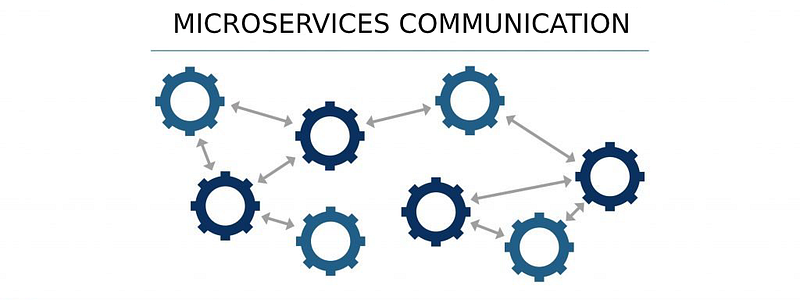
The communication among microservices is a cornerstone within the microservices architecture, serving as a vital mechanism for maintaining synchronized data across these individual components. In the following sections, our exploration will delve into the intricate dynamics of microservices interaction, elucidating how they collaboratively construct applications marked by both cohesion and extraordinary scalability. We will emphasize the criticality of establishing robust communication solutions for microservices, all while tackling the formidable challenges inherent in determining the optimal communication strategy for our system.
Importance of communication between microservices

Communication among microservices transcends mere technicality; it constitutes the very essence of a microservices-based architecture. It is a linchpin for realizing the numerous advantages associated with this architectural paradigm, including scalability, flexibility, and responsiveness. In its absence, the synergy among microservices falters, jeopardizing the overall system’s integrity and performance.
Next, we will delve into the main reasons why the communication between microservices is indispensable for the overall functionality and reliability of the system. We will accomplish this by enumerating and thoroughly examining key aspects.
Coordination and Collaboration
As previously explored, microservices represent autonomous components designed for specific tasks. Consequently, robust communication among these entities facilitates the vital coordination and collaboration required for an application to operate seamlessly as an integrated whole, thereby enhancing the overall system’s functionality.

Scalability
One of the paramount advantages of microservices architecture is its ability to scale individual components independently. Effective intercommunication among these microservices empowers the application to adapt and expand with remarkable efficiency. This means you can scale those microservices requiring additional resources without any adverse impact on the others, ensuring a finely tuned and responsive system.

Flexibility and Maintainability
Well-defined communication between microservices makes it easy to update, maintain, and expand your application. But not only enhances flexibility but also simplifies the task of updating, maintaining, and expanding your application. You have the liberty to modify or replace a single microservice without causing disruptions to others, as long as you uphold the integrity of the communication interface. This agility ensures your system remains adaptable and easy to manage.

Failure Resistance
Communication among microservices also contributes significantly to resilience in the face of failures. In the event that one microservice experiences an outage, those that are suitably designed can continue to operate and manage the situation seamlessly. This robust communication framework ensures that the system maintains its reliability and availability, even in challenging circumstances.

Different technology to build microservices
Microservices offers the flexibility to employ various technologies, enabling you to select the most suitable tool for each specific task. In light of this versatility, the implementation of effective communication becomes paramount, ensuring that these heterogeneous components seamlessly integrate and operate cohesively within the system.

Agile Evolution
The adaptable communication framework among microservices paves the way for agile software evolution. It grants you the freedom to seamlessly introduce, adapt, or retire microservices as necessary, all without necessitating a comprehensive overhaul of the entire application. This agility ensures your system can evolve continuously in response to changing requirements and demands.
When considered collectively, these facets accentuate the significance of communication among microservices as a vital cornerstone in constructing resilient and exceedingly malleable applications tailored for the contemporary business landscape. In an era where adaptability and responsiveness are quintessential for triumph, the comprehension and proficient deployment of microservices communication has evolved into a pivotal determinant in shaping avant-garde technological systems.
Challenges and considerations of communication between microservices

Within the interesting word of microservices architecture, where applications are meticulously dissected into modular and autonomous components, the art of effective communication emerges as both a formidable challenge and a linchpin. While the advantages of microservices, such as scalability and maintainability, enjoy widespread recognition, the intricacies and orchestration required to ensure seamless interaction among these decentralized entities demand our full attention and respect.
Here we are faced with the multifaceted obstacles and strategic considerations that arise when designing the interaction between the different microservices of a system. Delving into these complexities is essential, as it not only exposes potential roadblocks, but also sheds light on best practices and innovative solutions that pave the way for robust, efficient, and resilient microservices communication.
Creating effective communication within a microservices architecture presents a myriad of challenges that demand effective handling to yield a harmonious and robust solution. Below, we outline some of the most prevalent issues to be tackled:
Network latency
communication between microservices typically involves requests over the network. Network latency can be an issue, especially in distributed systems, and must be managed to ensure acceptable performance.
Network latency refers to the time it takes for a message or request to travel from a sending microservice to a receiving microservice over the network. This is a significant challenge in microservices architectures, as frequent communications between distributed components can lead to delays if not managed properly.

Next are listed some of the possible implementations to handle this challenge:
- Local Cache Microservices can cache data or frequent query results to avoid unnecessary requests to other microservices. However, it is important to maintain the consistency of the cached data.
- Network optimization Optimizing the network and reducing physical latency is a technical solution. Using high-performance networks, content accelerators, CDNs (Content Delivery Networks) and locating microservices in geographic regions close to users can help reduce latency.
- Asynchronous Communication Instead of synchronous communication, where a microservice waits for a response before continuing, asynchronous communication can be implemented. This is useful for tasks that don’t require an immediate response.
- Light Protocols Using lightweight communication protocols, such as gRPC or custom binary protocols, instead of heavier protocols such as HTTP/REST, can reduce communication overhead and associated latency.
- Containerization and Orchestration Using containers and orchestrators like Kubernetes can enable microservices to be deployed closer to end users, reducing latency.
- Monitoring and Continuous Optimization Use monitoring tools to identify and resolve performance and latency bottlenecks.
Security
Security is paramount when it comes to safeguarding the integrity of communication within a microservices architecture. This encompasses a range of critical aspects, including robust authentication, precise authorization mechanisms, rigorous encryption protocols, and vigilant safeguards against threats such as malicious code injection.

Next are listed some of the possible implementations to handle this challenge:
- Authentication Implement strong authentication to verify identity. You can use authentication tokens, SSL/TLS certificates, or API key-based authentication to ensure that only authorized services can communicate with each other.
- Authorization Along with authentication, set authorization policies to determine which microservices can access others. It uses access control systems and role-based policies to define who can perform what actions.
- Encryption Use encryption to protect data in transit between microservices. SSL/TLS is a common option to guarantee the confidentiality of the information transmitted.
- Key management By Implementing strong key management to protect the encryption keys used in communication. Key management solutions like HashiCorp Vault or AWS Key Management Service (KMS) can help ensure key security.
Error Handling
Error handling is a critical aspect of communication within a microservices architecture, as errors can manifest at various stages of the flow. It is imperative to establish resilient error management protocols, which encompass proficient retry mechanisms, comprehensive error logging, and appropriate notification systems. It is of paramount importance to establish robust error-handling mechanisms, as they are indispensable for upholding system reliability and guaranteeing a seamless user experience.

Next are listed some of the possible implementations to handle this challenge:
- Retries Incorporate automated retransmission and retry mechanisms within microservices communication protocols. These mechanisms are instrumental in mitigating the impact of transient or intermittent errors, such as brief network disruptions or unexpected overloads.
- Status Codes and Clear Responses Establish status codes and clear responses for communications between microservices. This practice simplifies the process of error identification and diagnosis, benefiting both microservices themselves and the development and operations teams responsible for them.
- Error Logs Implementing a centralized error logging system is essential for comprehensive error and exception tracking during communication. This systematic approach greatly streamlines troubleshooting processes and enables the tracking of emerging bug trends with ease.
- Backup Strategies Implement backup and redundancy strategies. This may include failover to another service or recovery from a backup in the event of a failure.
- Failure Tests Perform deliberate failure tests to assess the resilience of the system. This can include taking microservices offline or simulating network failures to verify how the system behaves in such situations.
Data Consistency
Sustaining data consistency within a distributed ecosystem can prove to be a complex undertaking. It necessitates a meticulous approach to synchronization strategies and transaction management.
Achieving data consistency within a distributed microservices environment stands as one of the foremost challenges. Given that microservices frequently operate with independent data stores, the task of upholding data integrity and consistency becomes notably intricate.

Next are listed some of the possible implementations to handle this challenge:
- Event Sourcing Pattern Instead of storing the current state in a database, some systems use the event source pattern, where all state changes are logged as events. This allows the current state to be reconstructed at any time and ensures consistency.
- Distributed transactions In some cases, distributed transactions can be used to ensure data consistency between microservices. However, this can increase complexity and affect performance as the need to request the API of another microservice is seen.
- Compensation and Reversal Implement compensation and reversal strategies in case a transaction is not completed successfully. This may include reverting changes to other affected microservices during the flow.
- Events and queues Use event systems and queues to transmit data changes between microservices asynchronously. This can help maintain consistency and allow data replication.
- Final consistency In some cases, eventual consistency may be accepted instead of immediate consistency. This means that the data may be temporarily out of sync between the microservices, but it will eventually be resolved.
- Data monitoring Implement data monitoring systems to proactively detect and correct discrepancies in data in the storage system of a microservice.
Contract design
Defining and maintaining clear contracts between microservices is essential to ensure the parties understand each other and avoid integration issues.
Contract design, often referred to as an API contract, plays a pivotal role in defining the guidelines and expectations governing communication between microservices. A meticulously crafted API contract is the linchpin that guarantees seamless interactions among microservices while shielding against potential pitfalls arising from updates or alterations that might otherwise lead to compatibility issues.
In addition, rigorous validation of contracts must be implemented during development and testing to ensure strict compliance. At the same time, establish a version-controlled system that will allow for controlled upgrades while maintaining backward compatibility to avoid disruption to existing services. It is also crucial to carry out specialized tests dedicated to contract verification to identify any deviations from the specified API specifications, thus preserving consistency.
To make the task easier, you can use automated code generation and documentation tools, such as Swagger or OpenAPI, which speed up the creation of API contracts from contract definitions. Finally, it is essential to perform regular reviews of API contracts to keep them current and in line with changing system requirements and to maintain strict version control to track changes and ensure backward compatibility over time. Taken together, these practices ensure robust and adaptable contract management in microservice-based systems.
Testing increases its complexity

Testing communication between microservices can be complex and requires appropriate strategies such as end-to-end testing and service simulation.
Conducting comprehensive testing of communication between microservices is imperative to establish a reliable, resilient, and high-performing system within the intricacies of a distributed environment. The integration of diverse testing methodologies and the integration of automation are fundamental strategies to guarantee the quality and steadfastness of microservices communication. This multifaceted approach not only bolsters the system’s overall reliability but also enhances its adaptability and efficiency in the dynamic realm of microservices architecture.
Testing within the microservices architecture encompasses a multifaceted approach, spanning various dimensions to ensure a robust and dependable system. Integration tests are employed to scrutinize how microservices interact, including end-to-end evaluations of feature workflows. Load and stress testing reveal system behaviors under heavy loads, pinpointing bottlenecks and performance glitches.
Furthermore, tests simulate network and service failures to gauge system resiliency and recovery capabilities, while fault tolerance tests ascertain how microservices respond to failure scenarios. Security assessments, like penetration testing, bolster communication security, and scalability tests assess the system’s capacity to handle workload surges. Updates and interference testing scrutinize seamless service updates and resource contention scenarios.
Network performance evaluations encompass latency, bandwidth, and reliability, and disaster recovery testing safeguards data and service restoration in severe outages. Complex scenario tests mirror real-world intricacies, fostering adaptability. Automation streamlines repetitive tests, and continuous monitoring during testing identifies issues early. Finally, meticulous result recording and analysis form the basis for improvement initiatives.
Next readings …
Wait for Chapter 19 “Microservice Communication — Synchronous Communication”.


