
Calypso’s Cabin
Short Fiction
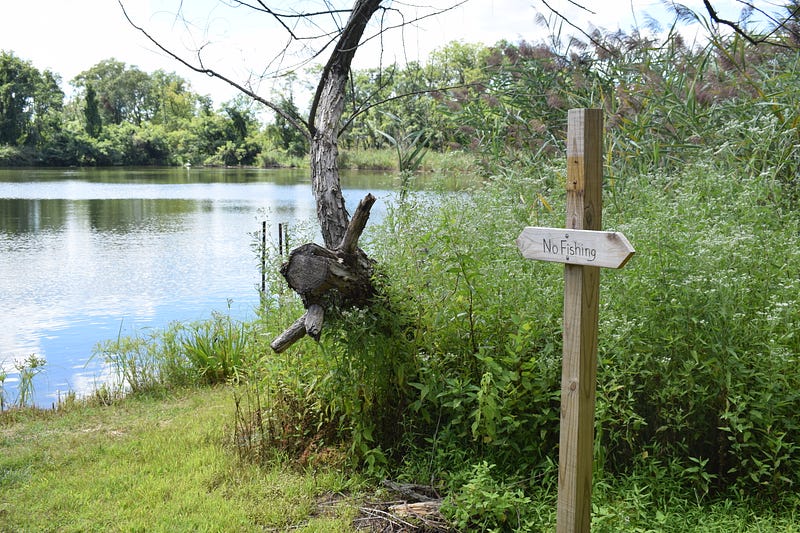
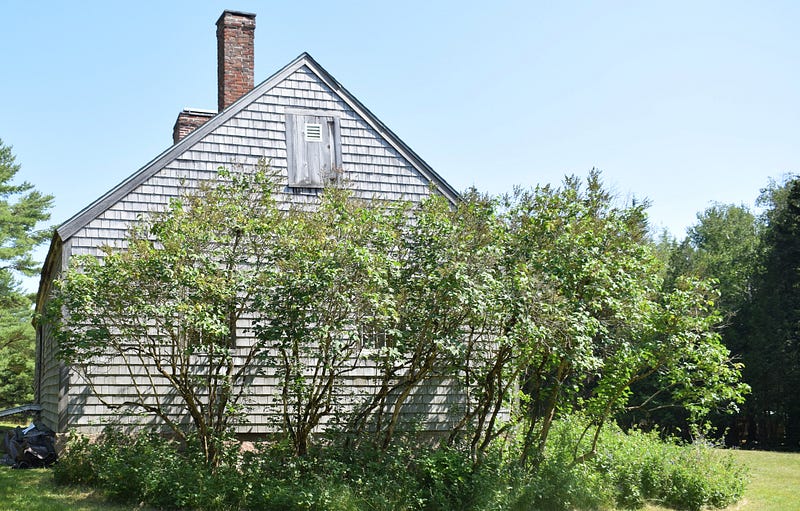
The sky was high and cloudless. The sun seemed resistant to bid adieu to the morning dew. A strong breeze descended from Canada, granting an unseasonable reprieve from the Jersey humidity. The change of weather showed no sign of ebbing. An old house — a shack, really, was located in a remote section of a county park. Surrounded by pine trees and shrubbery, the shack commanded the high ground and, on three sides, overlooked the lake.
Beside the lake, a wooden sign read: No Fishing.
For many years, the shack had remained a shell. It showed signs of wear — teenage mistreatment, black marker graffiti of obscenities, and bottles with faded labels of beer brands that no longer existed. But it was dry and solid and private.
Spread across the uneven wooden floor, thirty-year-old Sarah Dearicott had been waiting on an orange-floral blanket. Peter Dellords had just appeared, holding a see-through pastry bag. “You stare at me, as for the first time,” she said.
Peter smiled. Lovers should always look at each other like that — eyes washed and refreshed with each visit. Or something like that. Did she really wear that same yellow blouse one year ago? Such a memory startled her.
Peter walked towards the cracked window. Fenced farm fields grew increasingly visible. The cold front shocked a few trees. Those poor leaves! They didn’t feel the joy of a different color before falling dead brown. She tremored at those two states — green and then dead.
Something was different this Wednesday. Why not the usual smile? Was he anxious about the separation — his trip? No — it was stupid to call a move a trip. Rather than speak, Peter sought the window. This man concealed nothing — this boy in this man.
So in love with his voice, humming his own lullabies, he could rock himself to sleep. His mind was adrift with stories. Could he live with just his own motion pictures? No. Peter needed company — an audience — a stage — and millions of hands clapping. Sarah, while she had friends and family — loved the time alone in the shack. Sometimes, she came by herself.
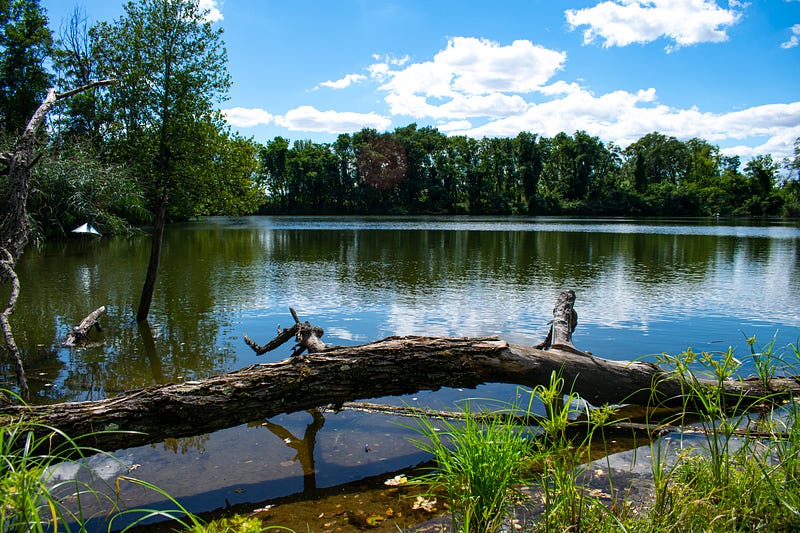
In the late morning, the cows in the green fields would often seek the lake. The lake was close to a river, but her lake was a freshwater lake and landlocked. His would be the river. The park was only five miles inland from the Atlantic Ocean. When the wind was right, the salt air was refreshing. Peter handed her a chocolate-filled croissant — a decadence she never knew existed. Peter devoured a vanilla frosted giant snowball of a thing that trickled flakes. He used his fingers to finish any flavors.
“How many cows today?” she asked.
Peter counted, ate, wiped his white frosted fingers on his black jeans, and then recounted. Eleven. One is missing, I guess.
“She must be tired,” she said. Then laughed. “Or giving birth. She deserves that day off, you know, for birthing a calf.”
A large yellow crane craned its long neck above the farm and the pine trees, pricking the blue sky through a solo cloud — like a finger in a pastry.
When did that monstrosity arrive?
“Last week, when I had my kids here,” she said. “Johnny said it looked like a brontosaurus.”
Peter tore into a five-minute monologue about how they’re always building something and it’s getting too crowded and —
Would it have hurt to ask what she thought about the crane? What would be her message? About progress? How Johnny and Ashley — her kids — were doing? Maybe it would be a daycare center. Maybe it would be a warehouse or some other type of business that employed people and needed taxes. Could she have a forum?
His passions often controlled him. This used to scare her. Used to? His intensity still froze her, like the dead-eye stare of her father — and that slap. But Peter would never be violent, never — only in the super-charged pitch of his tone. Slowly, he would start to believe in the legitimacy of her impressions. Yes, I am really here — thinking. Men who fashion themselves as feminists are frequently horrible when championing female voices. Theory and practice. Still, she swore she would grow braver in sharing her ideas.
Peter floated over to her. His repeated ‘I love yous’ were full of insecurities, but he did not await a response — knowing full well she hated parroting that simply deceptive word. Why be Echo? he once said, at work, chuckling. She had to wait to check that reference in her children’s World Book Encyclopedia for fear of being judged as uneducated.
What’s wrong? Is that what he said?
She lied and said nothing. “I just like watching you,” she said.
Was he convinced? Was there actually “something” concealed in her “nothing?” She loved when he would ask, So how is Sarah doing? rather than, What are you thinking? Or the accusatory, Is something wrong? Wrong — no — no — what could possibly be wrong with any of this?
You had your kids here at the shack?
“No,” she said.
So not here — at the shack?
“No, Peter — really? Really? And don’t call it a shack! It’s not a Love Shack. Call it our cabin! No, no at the playground — you know where kids slide down slides and swing on swings and laugh and have fun and chase each other and stomp in puddles and make mud cakes and smear their pants with powdered sugar!”
Aren’t you hungry? He devoured his. Shouldn’t he learn to take his time?
Peter would hold her hand, as an apology, and then kiss her on the back of the neck. He would move slowly towards the front, pulling her brown hair to the side, and staring down at her breasts, heavy in her yellow blouse. Could she resist the rush of warmth and momentary security? Upon her shoulder, he would rest his head as if his head contained no weight and play with her hair like the wind. The warmth would always return — like it did every time. After all, she caught him — like one of those large-mouth basses in the lake. Peter never wore cologne or deodorant. He washed his hair with soap with no artificial scents. Even his clothes he washed with no perfumes.
It was for security. He smelled like a man — as if his pores poured forth its own poetry. His heart thumped through his fingertips. She brought this pulse to her neck.
That word ‘whore’ was so 18th century — something out of a dusty novel written by men, but Peter objected, giving a small lecture on champion writers — mostly all men — like Daniel Defoe — who saw marriage as a prison — and being a woman with lovers and independent wealth was liberating, as long as one could pretend to be respectable and avoid having children.
Okay, Peter — ask me how I feel? About being a mistress? It’s easy for you, simple, young lover — as you’re cheating on no one. How would it feel being my husband? Or if my children — find out — later in life? Such judgment weighed heavily on her— and she was finding it difficult to justify the scales.
Could Peter ever write about me? Peter claimed no man could ever write accurately about women. Some get close — but it gets lost in translation and testosterone. And translations always lie — like how I could read Cervantes in English, but that’s a poor substitute to Spanish. Wasn’t that what he said one night while at work when it was slow, and he stood by the hostess station — flirting as usual? And that’s why his account of her life — or any woman’s life — would be the mere translation — a true counterfeit, even though maybe close to the soul. Then this strange request: Could you write about me?
“What makes you think I’d make a good writer?” she asked.
You observe so well. I surf and skate around so fast —and I affect this literary pretense — but you would, I think, just write straight for the people. There’s an honesty and an earnestness in you. And a depth of empathy I’ve never experienced. And no sense of entitlement or snobbery. I miss what you catch — and guess who has the greater bounty? Was that really true or just words?
Over the year, Peter had matured — in looks. He kept himself fit and healthy — and well-groomed, for her sake, laughing. She hated whiskers — small daggers that made marks on her delicate skin. How could she explain those marks?
Would men resort to the primal state without the sensibilities of women to keep us civilized?
She was a hostess when they met at the Holiday Inn. He was a waiter — working on weekends in graduate school. But did he really need to work? Was he just collecting characters for a future novel? They came from different backgrounds. College — graduate school —for Peter, this was all guaranteed at birth.
Her high school was only five miles away, but it was solidly blue-collar, not well-funded, and teachers had few expectations for their students. A diploma, and then — good luck. Her parents worked hard, and she worked hard — but still had so little after so many hours of joyless labor. For Peter, work was fun. It was social time. At the hotel, he was the Master of Ceremonies.
By the hostess stand, the flirtation began almost immediately. She would check the schedule and see when Peter was working. Sarah married young — far too young — and her husband was her first lover. A few of her friends had been with her athletic husband, as they all went to the same high school — and a former girlfriend told Sarah that he was a “cold lay.”
What did she mean? That man — her soon-to-be-husband — had no interest in “heating up a woman.”
In the beginning, she wondered, is that why it hurts? Was she even from 1990? Or was it 1821 for Sarah? Then later, when she knew Saturday night meant steak and baked potatoes and six-packs and sex, she wandered into her bathroom to “warm herself up.” She held her looking glass underneath her and explored what Peter joked were all woman’s wonderful nooks and crannies.
He laughed, but was she an English muffin? Men and their food-sex stuff. It wasn’t until later, after her first time with Peter in the backseat of his car, she actually tasted what Peter had claimed to love.
Could love — could such passion, too, have that many flavors?
Magazine after magazine she read about getting more out of your sex life — more out of your marriage — but her husband would not have any of that —even if such secrets she dare share. Once, she asked him if he wouldn’t mind, “kissing down here” — just a little. His face conveyed a combination of shock and disgust. A few times she had to grab his hand and say, “There! There! But gentle! Gentle like a feather!”
For how long?
“For as long as I like.”
Sarah was channeling her love there — her captured lover. That was bold. Who did Peter say that one night captured Odysseus? He always talked about things she didn’t know. Her husband wasn’t that bold. “What trash have you been reading?” her husband asked.
What he didn’t understand he called trash. Did she even feel different? After her bathroom warm-up? She felt better herself — and sometimes the moment came for her there — or sometimes after — when he was sleeping. And sometimes even when he was on top of her — filling for a moment what she had been missing — when she wasn’t with Peter who filled so many vacant shelves, but Sarah, like any human, especially a woman, needed more than a few moments.
Oh, it was either Circe or Calypso, right? Who was she? Both women needed more than a few moments.
Early marriage was like thinking the walls of womanhood were bare. They were better white and simple and pragmatic and orderly and routine — a sanitized version of heaven. Then appear these shelves — all of these shelves and then windows and doors and new people — and corridors with more shelves and then colors appear and flavors develop— like her love now of saffron and ginger and basil. Sarah was like, What have I been missing?
So Peter was a temporary catch. Was it like a diet, knowing full well a diet was not long-term? Or was he a pet, her orphan-lover on a quick holiday away from motherhood and home, especially the way her legs trembled and thighs vibrated — and that rush of blood that flowed through — that build up after build-up, and then down, and then up — up — up — And that wild, intense release — a woman she didn’t recognize — gripped Peter with arms and legs like a vice? Would she hurt him? Crack him? Oh — no!
Her first time with Peter was after work after a few drinks in the hotel bar. Even fully-clothed, meeting with Peter in the backseat — buzzed but not drunk at all — he seemed to know where and when and how to touch. Sarah was his first— and he only dreamed about such a woman. Did he really say she was like a dream? Said he read many books. Reading is power, he said. But practice is everything.
Was he lying? Peter the Virgin at 23? In the beginning, she thought he was — but he wasn’t. For someone like Peter, his first should have been his last. She wanted him to be that rare breed of man who yearns to mate for life. Was he the one who was truly naive? Have I been using this poor man against his will? What was I thinking? Everything — could she leave — her whole life behind?
Was she really that potent? Was she worth sacrificing so much? Who was she, after all, but a silly girl from South Jersey who barely took an interest in school and education and learning and life — until this cabin — this island oasis. That’s what he said, right? This cabin of ours. This cabin where I brought him.

“When are you leaving?” Sarah asked.
The program started in two weeks. And then —
What were the names he mentioned at the hostess stand? Rhodes Scholar? Oxford? Christchurch?
She had never been to England. She never really traveled much — once to Florida on the school trip. He told her all about Europe and London. Such places animated him — the names of museums and cafes and even squid in its own ink — a dish he tried in Northern Spain. Could she — this mere girl — ever be so adventurous?
She knew what she had to do — but the courage — would she have that?
“Don’t look at me so,” she said.
Excuse me?
“You look like you’re inspecting a piece of fruit — and you may find . . . ”
Don’t all humans have blemishes?
Such comments infuriated her— like backhanded criticism. Why dismiss my blemishes? My bruises? I’ve earned these battle scars! At least acknowledge them — mine — rather than in the universal sense, right? And stop saying how amazing I am — and how wonderful. I can be damaged fruit, okay? Why elevate me to one of your Greek goddesses?
“For once, I wish you would just listen to me,” she said.
Peter would echo with his mouth ‘for once’ with a look of surprise and contempt. Don’t I always listen? No. Sarah knew Peter was aroused or had been, and such talk was not the talk he wanted. It wasn’t even the talk he liked afterward. He liked to talk — and sometimes he would never shut up. After love-making, he was like her husband watching the post-game report of the football game. It was all analysis. And Sarah told him many times, “Why can’t you just hold me and not talk — or analyze. Why does silence scare you so much?”
What he said made sense. In her mind, it went something like this:
Silence to me sounds like the end of the world — like space — when we’re all nothing but atoms — scattered again — waiting to form something else — or attach to someone else — like you with me — and you with your children — and that we may not have a tongue or a pen and a memory. And that scares me.
Oh, it’s so easy for a man! How much had really changed in all these thousands of years? Men — with so much luxury! So much time! Men may even have time for a mid-life crisis or two, right? Why not three? Or take all the time needed on the front 9 while two diapers needed changing.
Peter drifted to the far corner of the shack.
He plucked up a rusted shovel from the wreckage of tools in the corner. Remember that bottle of wine we had our first night here? He removed a portion of the floorboards — or as she imagined, the ocean floor.
“Yes,” she said. “Of course, Peter.”
He cleared away the loose boards and the seaweed and sand. He had buried a second bottle — for a future celebration.
This did not surprise Sarah. She turned away from Peter. Was it Malbec? Yes. She once hated reds.
His keychain corkscrew came in handy. He sniffed the cork and handed it to her. Back then, it made her smile. Did she know what good wine smelled like?
It was strange. When she took the first sip from the bottle— it was a shared goodbye — an adios — an adieu —a cheerio — when he took a long sip, wiping his lips, it was like Bon Voyage!
She loved and hated him — giving her a view of a denied world — all that talk by the hostess station. Why know about Malbecs? And Parisian cafes? And d’Orsay?
“This is such good wine,” she said.
Argentina. Was that the country?
“But the taste never lasts, though, especially on a family budget.”
It was her job to sense things — to translate facial expressions and tone in order to protect herself from abuse. It was her defense. One look from her father or husband or mother would send her away to the outside, on an errand, or even under the bed. If she could sense what bothered her husband, she could insert a solution, or allay a fear — and not get scolded like a child or get smacked.
But if you’re always negotiating other people’s emotional whirlpools, how could she navigate her own needs? When did people ask her? When did people listen to her? Why care what she thought about the finances — and the way her husband spent the money for things she thought were wasteful — the golf and his boat and his gambling and his drinking.
Why did Peter think he was any different?
What was the word Peter used the other week— she wrote it down in her secret journal that she kept under key and lock — sullen — yes — sullen — and now it was Peter who was Mr. Sullen as he peered through the window, across the lake, to the new construction site. He was a work under construction, shape-shifting all the time, but she knew all she could hope for would be a family room addition if her husband got that promotion. Her house was complete — full with her children, who she loved, but could forget when in Peter’s embrace or in his intoxicating stories and romance.
At the window, he kept drinking, slowly, longing to escape to that nearby river that led to the sea opening before him. It’s been nice, here, but now — And why be anchored to me? It was lovely to harbor here. Peter quoted lines at work from some woman poet about ‘rowing in Eden — and mooring in thee.’
“You knew what you were getting into with me — as I said that on the first night — “
So this is — it?
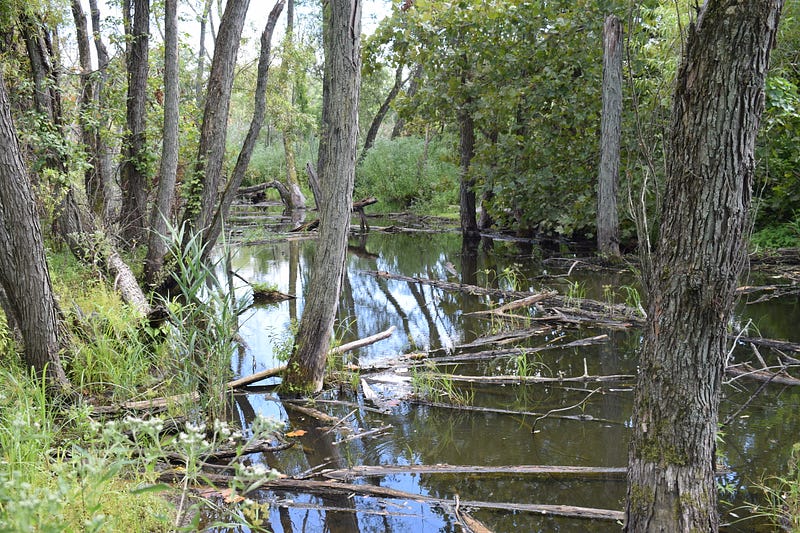
He drank and swayed back and forth, concealing tears. Oh, there had to be tears! The wine brought out the boy in him — and the tears — and all of his vulnerabilities. The wind rustled through the pine trees and the broadleaf trees. This was hard — these riptides. The work of the construction crew banged its softened thuds along the walls. The outside world was calling, crashing waves against reality, Sarah thought. We have been found out. Peter sought the window. That she always framed. Always that hole — the crevice in the rock the fish swam through in her fishbowl. How many more months will those cows still be there, drinking in the lake before the bulldozers push them off?
Each time she thought about the end of the affair, she felt how each meeting was so tender. Such unreality became a temporary reality — medicine to alleviate a headache for an hour or two. Such spells were hard to disarm — even with potent magic, and Peter was magic. But Peter was also an illusion — here, but not here.
And soon— away in England — yes, Oxford is still in England! No more talks by the hostess stand and rendezvous on this island's oasis. A million lines ran through her mind — lines that she framed and created that she thought were clever. For once, Peter was silent. Was he, without her, floating in soundless space, adrift?
With self-imposed confidence, Sarah took the bottle from Peter. Finish our last bottle, and then bury it. You never know! There may be such a thing as resurrection! A second coming — perhaps. Are such things possible?
Would she write a letter and place it in the bottle? And return in thirty years if the dinosaurs stayed away? But why cry again?
Peter would kiss her, lightly, and kiss her hair, taking in her essence with a deep inhale. Sarah waited for the exhale. His hot breath smelled rich and warm and foreign like the land that produced the grape.
You know you taught me so much about love and passion and friendship and compassion. You were so patient. I’m sorry that your feelings for me are mixed with pain, and the regret I have caused — for you — and your family. That’s what she wrote in her diary — and could she believe him?
“I had a choice,” Sarah said. “I needed you — I still need you — but I need to let you go — you know that!”
Knowing and accepting — are quite — quite different. He would clasp her face with both hands and stare into her brown eyes. In those eyes did he see his own reflection? Or did he appreciate the large abyss forming in her soul? What would he find diving into her wreck?
He kissed her one more time, leaving the half-empty bottle by her side. He shimmied through the crevice. Just passed by the fake green ferns in her fishbowl. He would always turn and force a smile. Some jackhammer echoed through the woods — disturbing the waters. When I smell the wind — the wind will smell like you.
“Yes, Peter — but time — you know — in time, you and I will evaporate like dew. As if we have never been here.”
That’s what scares me. He looked at the pastry bag. Don’t forget that croissant. Something so delicious should never be allowed to grow stale.
And with that line, he swam off. She wanted that, too — what Peter wanted — the first to be the last. Like mallards. What mother mallard would cheat — and sneak away from the home nest? She didn’t want this last supper to go stale either. It had all been delicious. She heard the crunching of branches and the rustling of leaves. She smelled the Malbec — holding it up to her nose for what seemed like an hour — remembering the taste of the wine on his lips, on his tongue. The way her nipples would turn purple and hard in his mouth — and she just couldn’t taste the wine now — even though she needed to escape and crawl into that bottle.
In the hole where the bottle was buried, she poured the wine like blood. It pooled for a second, reddening — like a metallic brown. And then it too would evaporate — disappear — into the sandy, New Jersey soil. After an hour's lunch break, the construction noise increased. A new dinosaur with a different sound would soon arrive. Johnny would like that. Ashley too. She glanced at her watch. Was it already time to pick up the kids?
Could she convince herself of the lie that the affair made her better? Mother? Wife? Woman? In time — could she leave her husband? How so? On hostess pay? What would her husband say about community college? Would he see through my plan for him to pay for me to leave — and have that independence? It seemed dishonest, but what options did she really have?
In a marriage, it takes two, but what happens when it’s only really one?
But like Peter, who left the Holiday Inn, she had to start living as well, and the cabin, this safe way-station — this alcove in the wild — with currents racing west and other currents headed east —
And what shall I make for dinner?
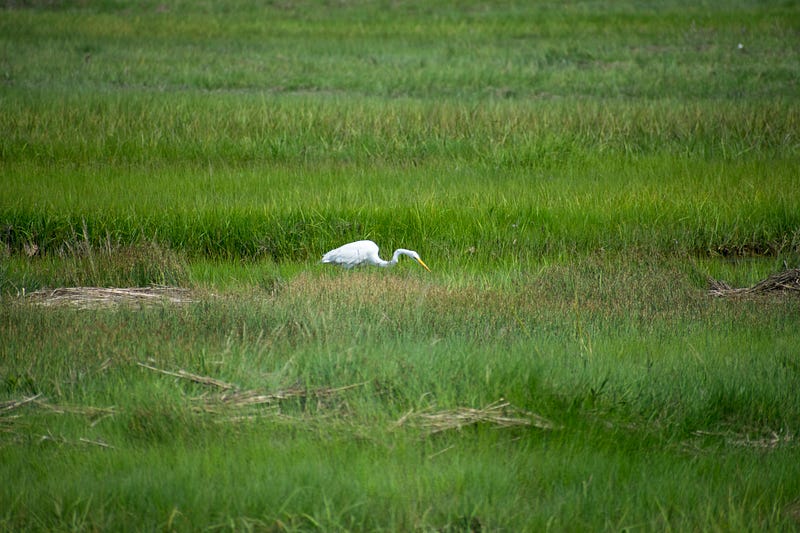
She placed the transparent bag in her purse. After dinner, she would devour the pastry — alone on the patio. Or in her locked bathroom. She hoped the weather would remain cool and for no moon to reveal her location. She could be that egret, that long-necked bird they often saw in the lake.
It usually had to be potatoes. Something with potatoes. Always the pressing question of the day. What type of potatoes? How about something French for a change? French fries are not French. Would her husband like it? Oh hell! Tell him to make himself a sandwich — and microwave a frozen potato from Swanson or something. Resistance — that’s all that’s needed — women need more resistance — and the ability to say, No!
She laid back on the blanket full of faded sunflowers and stared at the chipped beams in the ceiling. The blanket would stay there. And the cabin would remain her sanctuary — a place to recharge and to remind herself of the power she could harness — if she only had faith to make the make-believe a reality. Would she have the faith in herself and in her voice?
It was then she heard that bird. As she had been hearing Peter, over and over and over there, in her head on that floral blanket. Such an imagination! Such a distinctive sound. What a voice! And I’ll be damned to fall dead brown before I have a chance to find my colors!
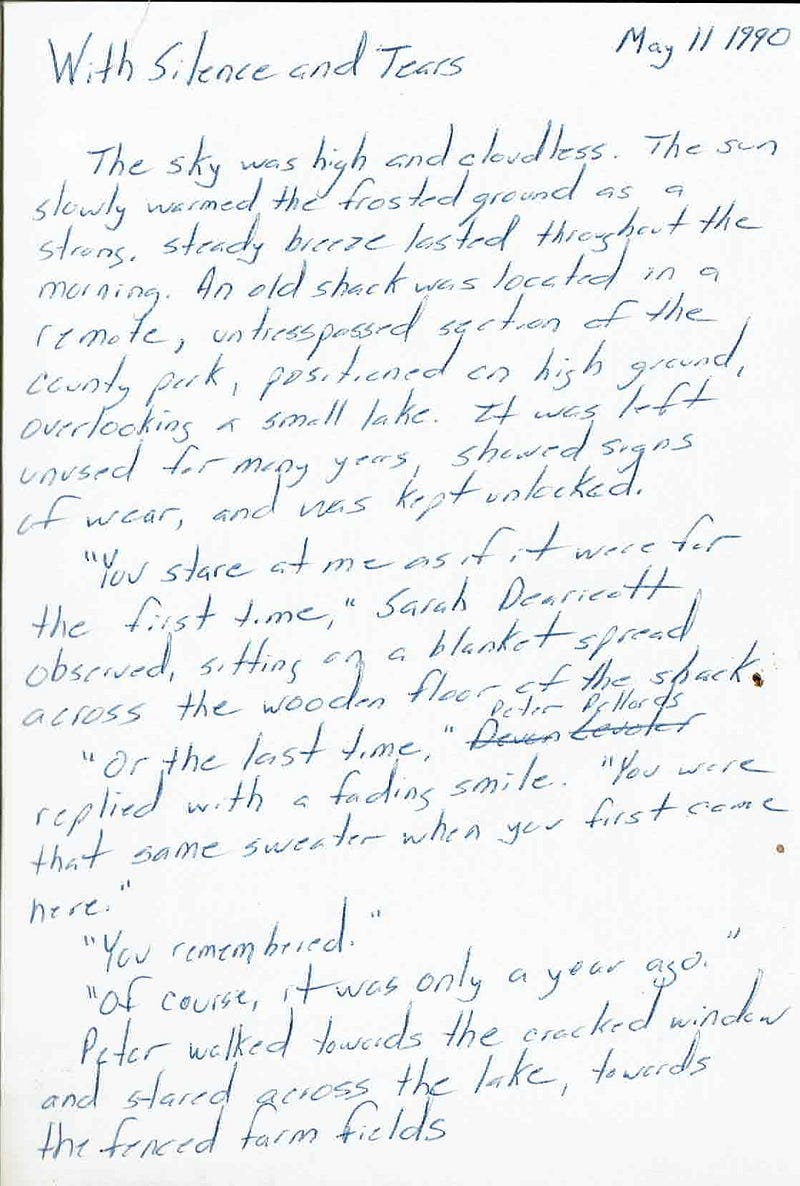
This story, although updated and edited in 2021, was originally composed in the Summer of 1990. I just turned 21. It was called “With Silence and Tears” after the Lord Byron poem. But a better passage comes from Byron’s “Childe Harold’s Pilgrimage” (below).
We once have loved, though love is at an end: The heart, lone mourner of its baffled zeal. Though friendless now, will dream it had a friend. Who with the weight of years would wish to bend, When Youth itself survives young Love and Joy? Alas! when mingling souls forget to blend, Death hath but little left to destroy! Oh, happy years! once more who would not be a boy?
“Childe Harold’s Pilgrimage” — Lord Byron (1812–1818). Canto II, XXII