
Business Analyst Mindset: Twelve Principles (Part C)
Be part of the solution

Successful solutions are delivered by teams that work well together. From the initial idea to the analysis, requirements and design, to building and testing of the final product — each phase must be executed with quality, alignment to the objective, and dedication to the final result. Business analysts play a key role at each stage of product development and delivery.
And this concluding article on the BA mindset will review how business analysts contribute to the success of the change — following the principles of the BA mindset.
Principle #9: Accept and embrace business change
Business analysts help organizations implement changes. Requirements define what needs to change to achieve a desired future state.
Inevitably, as the analysis process results in captured business requirements, and teams start working on the solution design and implementation, business systems will continue to change. The external environment, competitive landscape, legislative changes, and internal politics all create minor or major ripples that require organizations to adjust.
A business analyst can’t afford to get flustered by change and should never take it personally.
Learn to expect change and master strategies for handling it.
How could business analysts manage requirements changes during projects to maximize long-term value for the business?
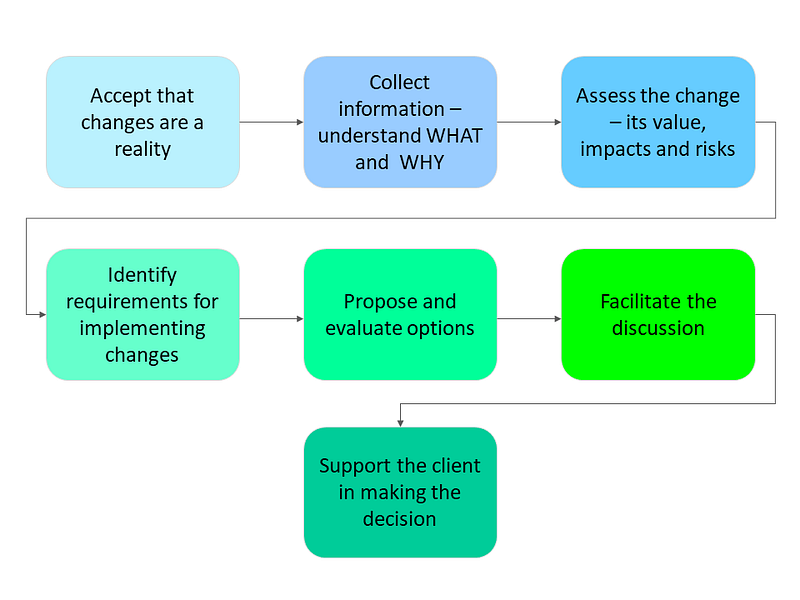
While business analysts are often facilitators in this process, they collaborate with many players to come up with solutions. To manage change effectively, they will work with clients, architects, and designers to find the best solutions that allow the company to adapt to current and future changes.
Principle #10: Be part of the solution
What’s the role of a business analyst once business requirements have been analyzed and captured? Is that it? Can they move on to the next project? While agile methodology explicitly expects everyone to work as part of the team through all sprint activities, in waterfall it’s not always as clear.
Even with waterfall approach, business analysts play a key role in the development and roll-out of the product through the whole product life cycle:
- Clarify and explain requirements to everyone involved in the development and implementation
- Recognize, analyze and manage requirements changes
- Ensure that a solution design supports business needs
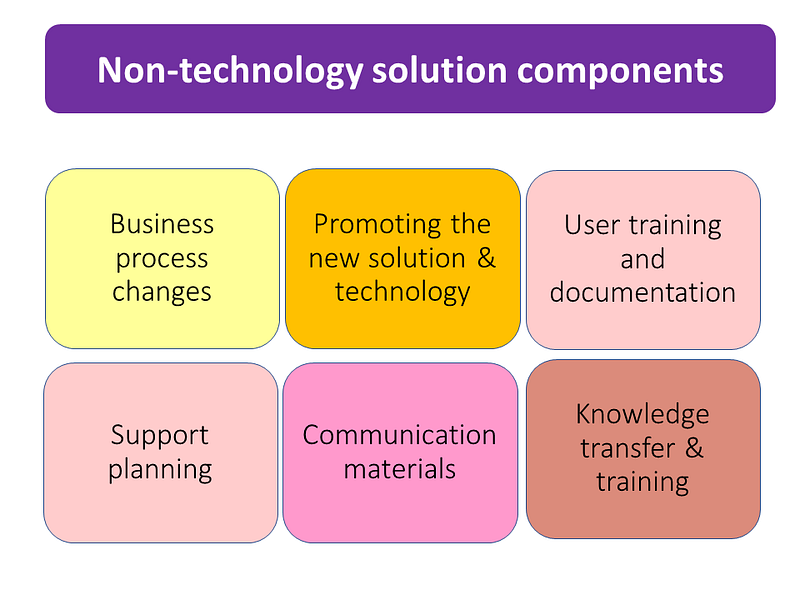
- Oversee the design of non-technology components of the solution
- Support user acceptance testing, training, and adoption efforts
- Capture and transfer the knowledge
While many of these activities are related to communicating and clarifying requirements, one point deserves additional emphasis. The development of the non-technology solution components sometimes falls through the cracks without clear ownership. It is up to a business analyst with their understanding of the business processes, roles and expected outcomes, to ensure that the solution is supported and enabled by:
The real measure of a business analyst’s success comes from stakeholder satisfaction with the implemented solution.
Principle #11: Expect human behavior from human beings
While the business analysis profession is closely associated with information technology, it is based on a lot of social activities and interactions.
As a business analyst, you work with people to help solve problems created by people to build solutions that will be used by people.
People are not always predictable. Dealing with them will have an element of uncertainty. They have fears, biases, and emotions. They will have their good days and bad days, and sometimes they will go back on their word or change their mind when it’s most inconvenient.
Business analysts may need to deal with difficult situations and difficult people. It will require perception, empathy, intuition, and the ability to look beyond petty and trivial. It will require a business analyst mindset.
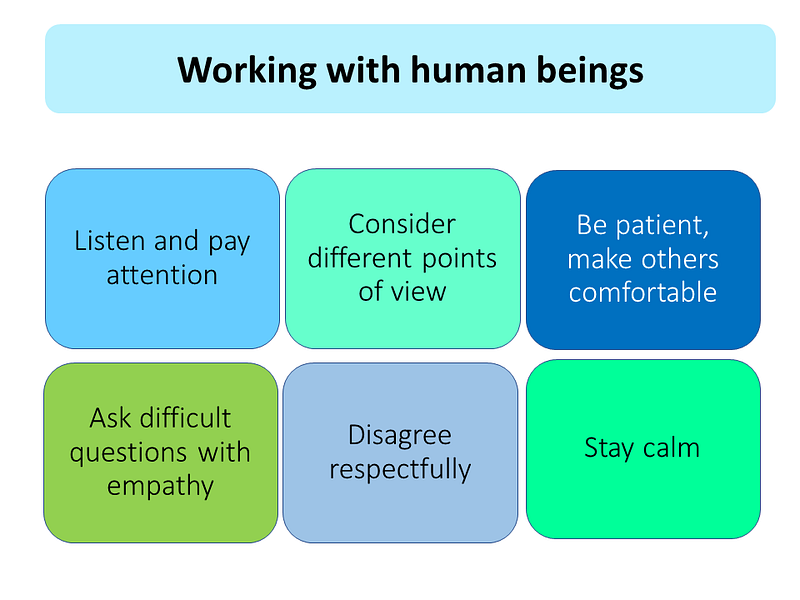
These skills come easy to some and not so easy to others, and lots of practice helps. The important part is to realize that diplomacy, tact and a bit of psychology are part of the job and an important component of the business analyst mindset.
Principle #12: Learn, adapt and thrive
Business analysts have to learn all the time. It is part of the job, part of the challenge, and a big part of the attraction.
Every project, every change, brings something new and unique to the business. To be successful, business analysts must be able to enjoy and welcome the new and the unknown, be ready to learn and adapt.
Throughout their career, they will be able to expand their professional knowledge in many directions:
- New industries
- Business disciplines (finance, human resources, marketing, or operations management)
- Technologies and software products
- Data management, analytics and business intelligence
- Product development methodologies
- Architecture frameworks and modelling
- Software design principles and quality assurance methods
- Leadership, negotiation, and conflict resolution
- Business analysis tools & techniques
- Project management, communications, and training skills
The breadth of new skills and domain expertise that a business analyst can acquire on the job will generously open a wide selection of further career choices for them. And thus, the principles of the BA mindset will support business analysts in their professional development and finding true job satisfaction in this rewarding career.
Explore the BA mindset more in my books and courses, or subscribe to the Why Change Newsletter to stay in touch and hear about upcoming events and webinars.
Website | Contact | Training | Mentorship | Courses | Job Interview Clinic | Books | Downloads | LinkedIn | YouTube | Instagram | Twitter


