Bibliotherapy, CBT & Journaling
Write your garbage. Trust me, there is a lot of it.

I am a big fan of Journaling. It helps me go through a phase where destiny tests my rock bottom now and then. But how does it work?
Journal writing helps in getting rid of the garbage inside our heads. I wrote on this point by talking about an experiment called DES (Descriptive Experience Sampling), invented by Russel Hulburt. I take pride in being curious and mindful of things around me. Hence it didn’t surprise me when a cursory look at the concepts of Bibliotherapy prompted me to experiment with my practice of Journaling.
What is Bibliotherapy?
Bibliotherapy uses book reading to treat patients with mental health issues. These books should relate closely to the problem at hand & can do wonders with other therapies like Cognitive Behavioral Therapy, Schema Therapy & Psychodynamic Psychotherapy.
According to the world’s most extensive study on Rest, i.e., The Rest Test, most people rated ‘Book Reading’ as the most relaxing activity.
Bibliotherapy & Cognitive Behavioural Therapy
CBT, i.e., Cognitive Behavioural Therapy, is one of the most common therapy to treat mental health issues like Depression & Anxiety. CBT can treat psychological problems resulting from faulty thinking patterns formed during childhood or traumatic life experiences.
CBT teaches a better coping method by breaking the cycle of negative thoughts (Rumination). The therapist trains their patients to break an overwhelming situation into minor problems. They will then work with their patients and their thought processes to tackle these minor problems one step at a time.
Bibliotherapy & Journaling
I have been in therapy for over five years. It started when I was in an abusive relationship and helped me to move on. It began with one session a week. Today, I attend a session every 3–4 months to ensure I don’t go back to old habits. I use a combination of book reading and journaling in between sessions to work on mental health.
In this section, I want to demonstrate the process with some of my favorite books.
Thinking fast and Slow — Dan Kahneman
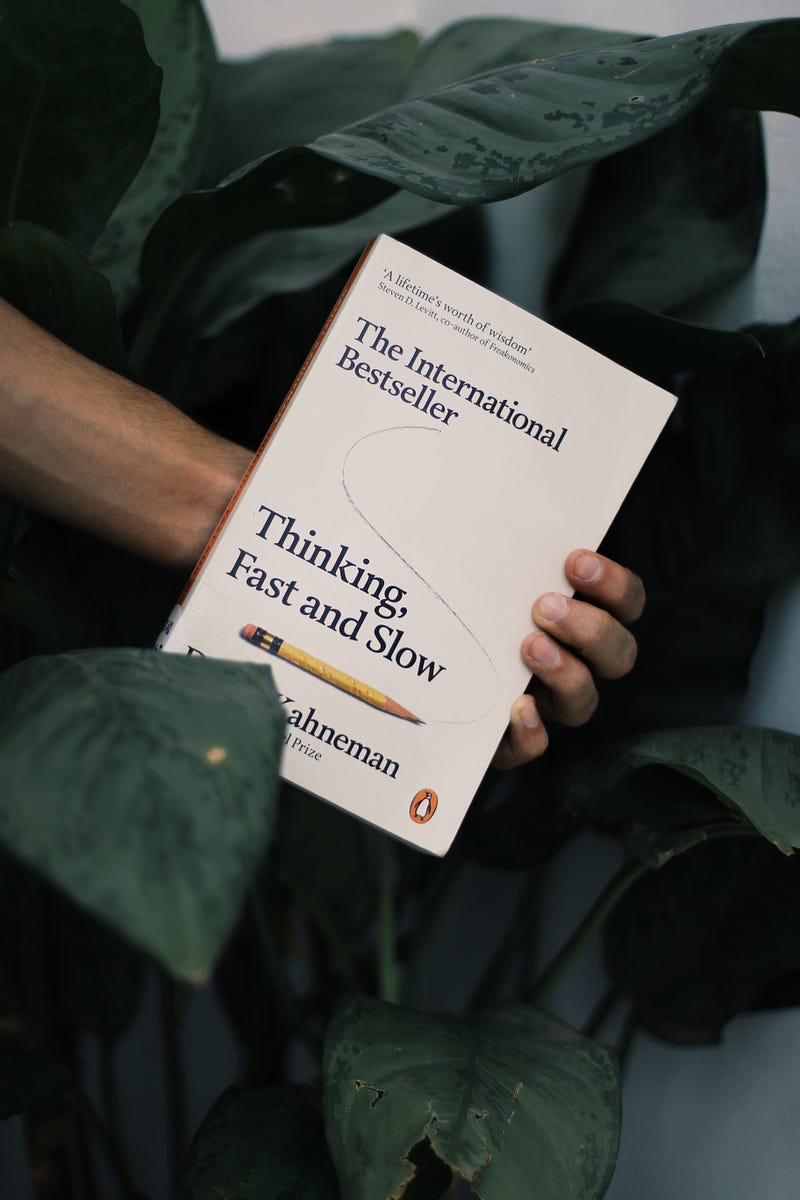
In this book, Nobel laureate Daniel Kahneman has published details of his research focusing on two thinking systems — Fast and slow brain.
Fast and Slow brains are not disparate parts of the brain and in no way should be confused as hemispheres. These systems are like agents who work with each other to help us finish any task.
This book helps me battle through bouts of fear fighting a legal battle in India. I will write down each emotion during a 15-minute window and associate it with Slow and Fast Brain. This way, I could visualize and gain clarity over the problem.
Mark Manson extended the concept of a Fast and Slow brain in his book Everything is F*cked: A Book About Hope. Mark used Dan’s theory to talk about our helplessness over Self-Control.
Over time, I used my learnings from these journals to write on Fear, Addictions, and Self-Control.
The Art of Rest — Claudia Hammond
The Rest Test was a survey completed by 18000 people in 135 countries. Claudia, in her book, detailed the results of the test. She has written extensively on the top ten methods for Rest with research and citations from the field of human psychology. Surprisingly & pleasingly, daydreaming was at number eight.
I decided to bring an element of awareness to daydreaming. During 15-minute sessions, I will write whatever comes into my head now and then. I will let the brain flow in any direction of its choice but write down each emotion as they come without any guilt, remorse, or judgment.
The girl with the suitcase — Angela Hart
Being inept at holding onto a relationship has given me immense grief over the years. The most painful is being unable to experience fatherhood.
Motivation came from the writings of Angela Hart. She is a bestselling writer who, along with her husband Jonathan, has dedicated her entire life to fostering. Reading her books motivated me to start visualizing the process of adoption. While reading the book “The Girl With The Suitcase.”, I will write about my feelings about adoption and fostering.
Journaling enabled me to walk through difficult emotions and visualize. What difference would I like to create in a child’s life? How would I educate them or play with them? Will I be strict or lenient?
I am very close to adoption today, and the feeling is fantastic.
Conclusion
Mental health is my biggest priority. Be it mediation, therapy sessions, journaling, reading, exercising, or anything else. Knowing yourself is the most daring adventure I have been on in the last decade. It’s a journey away from the more-more-more mindset and brings gratitude and peace.
I often write about topics as means to document my learnings and use them as reminders to live a peaceful life, and I hope I have been able to do justice to this topic.
P.S — Medium is an excellent platform to read, write and learn from fellow authors. If you want to be a part of this journey, Join medium today.