A Recipe for Relaxation: Day Dreaming + Journal Writing
Let the brain do what it wants, and it will give you peace in return.

For a long time, I have considered daydreaming as a sign of laziness. I will always beat myself for doing it. I feel it’s counterproductive. I have always believed in the phrase — “You snooze, you lose,” even though I would snooze the morning alarm a million times before dragging myself off the bed.
After reading about the “Rest Test” in the book “The Art of Rest — By Claudia Hammond,” my perception about daydreaming changed for the better.
The Rest Test was a survey completed by 18000 people in 135 countries. In this book, Claudia has given a detailed analysis of the ten most famous activities concluded by the Rest Test. Surprisingly & pleasingly, daydreaming was at number eight. It was a time for celebration.
My worst habit suddenly changed to a topic of research. I went ahead and thoroughly investigated some studies to come up with a personal recipe for relaxation. I am breaking this article into four parts to summarize my observations.
Brain is never at rest.
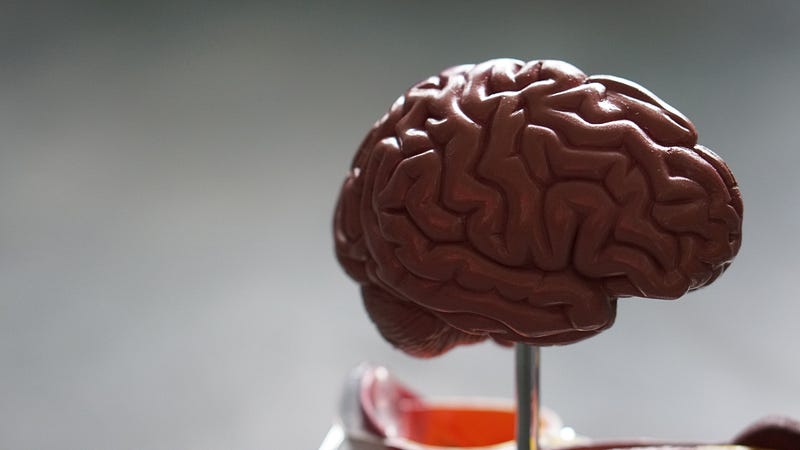
“The brain only really rest when you are dead” — Mark Lauckner, a neuroscientist at Max Planc Institute.
As part of a research, Bharat Biswal at the medical college of Wisconsin in Milwaukee observed that the so-called resting brain is never at rest. Different regions of the brain were active without the presence of an explicit task.
In 2001, neuroscientist Marcus Raichle commented on this research by saying that “The brain is not sitting waiting for someone in a white coat to come along and tell you what to do.”
Gordon Shulman combined studies from PET scans and discovered something similar. The brain network is at life when doing nothing. He stated that the brain is always in a default activity state even when it’s not working on a specific task.
Why is daydreaming relaxing?
After reading through researches, Claudia, in her book “The Art of Rest,” could identify two main reasons:
- An idle brain is allowed to move in whichever direction it wants. It makes the brain happy as no one tries to control it.
- When we leave the brain unattended, it thinks and plans about the future. In this state, the brain prepares the body to face future situations, feeling safe.
Unless and until daydreaming does not make your life miserable as in the state of anhedonia, it’s a relaxing activity and reports a higher level of creativity. The next part will explain a way to deal with the state of Anhedonia with the help of Journal writing.
DES (Descriptive Experience Sampling) & journal writing.

After reading through these researches, I wanted to experiment on a study known as DES (Descriptive Experience Sampling), invented by Russel Hulburt. In this research, Russel places a small black box on the volunteer’s belt. The volunteer writes down the thoughts when the box delivers a series of sharp beeps in the ears. After enough documentation is in place, Russel will follow this with an intense interview with the volunteer to study these thoughts.
I am aware that a nerdy software engineer like me might never become a part of such research. Hence, I followed Edward De Bono’s concept of provocation to experiment that Journal writing for 15 to 30 minutes could be a perfect recipe for relaxation.
Provocation entices us to make a statement that may not make sense, might contradict known experience, or may seem illogical — then use that statement as a stepping stone to a new idea (a process de Bono calls the movement.
I realized that with the help of Journal Writing, I achieved the same state as I experienced with Mindfulness Meditation. FYI, mindfulness was at number ten in the ten most famous activities for Rest in Claudia’s book.
In moments of extreme stress, I will write all thoughts as they come. I won’t worry about grammar, sentence formation, or logic. I will write. I will use a pen which makes the writing pleasurable, and I will try to write in my best handwriting. I will choose a fancy and pleasing diary or notepad, making the complete experience of writing look like a festival.
I will not judge my thoughts but write. The writing should be so clear that every word should shine like a jewel. It should consist of my thoughts in a pure state. In short, I wrote my garbage and decorated it on a piece of paper.
Observations
In moments of stress, our brain generally goes into a state of Rumination. It’s a state when negative thoughts come one after another and become a never-ending cycle of negative feelings. It’s similar to daydreaming but makes us feel miserable.
Writing down the negative thoughts as they come without any judgments allows the brain to be in control. It creates the same benefits as Claudia mentioned in her book.
Since we can’t write at the same speed as we think, it slows down the cycle of negative thoughts. After 5–10 minutes of writing, I will break the state of Rumination.
When I look back at the beautiful words, it relieves the impact of those negative feelings allowing me to relax. Meditation does something similar. In Meditation, we allow our thoughts to flow in without any judgments. We watch each view from its inception to its conclusion.
Writing over Meditation benefits that my legs won’t hurt sitting in a cross-legged position for hours. Jokes apart, Meditation has other advantages, and I have written some articles on a Buddhist form of Meditation to highlight those benefits. I will provide the links at the end of the article to satisfy the curiosity of my readers.
Conclusion
I don’t have data to back this theory of writing down daydreams as I am not a professional researcher. It demands time and money, and I have neither. Maybe one day, I will gather enough courage to take a leap of faith and invest more time in being part of some of these researches and writing about them.
Even though I don’t have enough data, it’s still worth trying; there is a lot of evidence to prove the benefits of Journal writing. I have just tried to give a different spin to it. I would love to hear some positive feedback.
Thanks, Tarun
Links to the articles I promised to share on the Buddhist form of Meditation are below:
P.S — Medium is an excellent platform to read, write and learn from fellow authors. If you want to be a part of this journey, Join medium today.


