
Ben Shapiro Defends Slavery in the Bible
His arguments are shared by Christian apologists, but are they valid?

Recently, Ben Shapiro had a debate with Alex O’Connor about whether religion is good or bad for society. In the debate, they discussed the topic of slavery in the Old Testament of the Bible.
Surprisingly, Ben Shapiro admitted that owning people as property in ancient Israel was immoral, a position not shared by many Christians and Jews.
Nevertheless, Ben put forth two arguments to explain why God did not inspire more morally advanced laws in the Old Testament era. Let’s take a closer look at these arguments.
God woos people away from slave ownership with incremental reforms
Ben spends the most time on this argument. The following are some of the quotes:
“The Bible attempts to woo people away from the tradition of slavery or to humanize slaves.”
“There is no mandate to hold slaves in the Bible.“
“The Bible is liberalizing the Hammurabi Code.”
“If you believe, as I do, in a God who spoke to human beings in some form or fashion and has to speak to them on a level that they can understand, in ways they can understand, then that immediately is going to discount the ability to do a lot of very radical things that would have appeared radical in 1,200 BC but now appear to be commonplace for us.” (1:22 forward)
But the Bible does not stipulate better slavery codes than other cultures
Many Christians often believe that the legal codes about slavery in the Bible are more compassionate than those of ancient Sumerians, Babylonians, and Hittites. However, this is far from accurate.
In reality, when we examine various legal codes related to slavery across different cultures, we discover a range of harshness. Some rules in one culture may be more compassionate than their equivalents in another culture, but the opposite could also be true for different aspects of these codes.
The Bible is no exception to this pattern. While some of its provisions may seem more compassionate than those of other cultures in the same period, there are also parts that appear to be harsher in comparison.
Take, for instance, the case of a free Israelite man who might choose to sell himself into slavery, likely because of debts. In this situation, the Bible states that he would serve his master for six years, after which his debt would be forgiven, and he would regain his freedom (Exodus 21:2–6.) This is often cited by many Christian apologists as an example of humane treatment of slaves.
However, what they may not be aware of is that there exists comparable rules in other cultures that provide similar arrangements. The Code of Hammurabi that Ben mentioned mandates only three years of service to settle debts.


If any one fail to meet a claim for debt, and sell himself, his wife, his son, and daughter for money or give them away to forced labor: they shall work for three years in the house of the man who bought them, or the proprietor, and in the fourth year they shall be set free. (Code 117).
In my research, most of the regulations in the Bible are comparable to those found in other cultures, indicating no significant advancements in human rights. Like the Bible, the majority of legal codes in various cultures offer some level of protection for slaves. Therefore, it is not accurate to claim that only the Bible grants certain basic human rights to slaves, while other cultures allow masters unrestricted authority over their slaves.
Here is another example of the protection of slaves’ or debtors’ rights.
In the Code of Hammurabi, if someone owes money and can’t pay, the creditor can lock them up and even physically harm them. But here’s the catch: if the debtor dies because of this beating, what happens next depends on the debtor’s social status. If the debtor was a slave, the creditor would have to pay a fine. If the debtor was a free man, the creditor’s own son would be put to death (Code 116).
In the Middle Assyrian Palace Decrees (MAPD), it’s stated that when a slave does something wrong for the first time, they can be punished with up to 30 strikes using a rod. But if the slave does the same thing again, it’s up to the king to decide what to do with them. Importantly, if the master beats the slave so badly that the slave dies, the king can punish the master for it (MAPD 18; Iland Peled, Law and Gender in the Ancient Near East and the Hebrew Bible, p. 202).


In terms of how slaves were treated, the Bible has similar regulations. In the Bible, a slave owner is permitted to physically discipline their slaves. If, after being beaten, a slave dies right away, the master is held accountable and faces consequences. However, if the slave dies a day or two later, the master is not held responsible and goes unpunished (Exodus 21:20–21.)
If there is any progress in the treatment of slaves in the Bible, I fail to see it.
The Bible DOES command radical changes in other matters
Ben’s argument is that it would have been unrealistic for God to expect ancient people to immediately embrace moral codes as advanced as our modern standards. However, this perspective isn’t derived from the Bible itself. The Bible does not assert that the allowance of owning people as property is due to the hardness of people’s hearts.
Interestingly, Jesus did mention that Moses allowed divorce for this very reason, but neither he nor anyone else in the Bible attempts to justify slavery using the same argument, whether in the Old Testament or the New Testament.
Moreover, the Bible does contain some regulations that may seem impractical. A notable example is the rules regarding the Sabbath Year.
For six years sow your fields, and for six years prune your vineyards and gather their crops. But in the seventh year the land is to have a year of sabbath rest, a sabbath to the Lord. Do not sow your fields or prune your vineyards. Do not reap what grows of itself or harvest the grapes of your untended vines. The land is to have a year of rest. (Leviticus 25:3–5)
If Christians think that the Bible may not have taught the abolition of slavery due to economic constraints at the time, what about the directive to cease all labor for an entire year after every six years? This law is so challenging to implement that we cannot be certain if it was ever followed in ancient Israel’s history. Furthermore, applying this law in today’s context is almost inconceivable. Nevertheless, it is what the Bible commands from God.
If God felt free to give impractical commands like rules regarding the Sabbath Year, there is no reason why He couldn’t tell ancient Israelites that they were not allowed to own people as property.
Let’s take a look at Ben’s other argument.
Old Testament laws are timebound.
Here are a couple of quotes from Ben Shapiro.
“Some scripture is timebound; some scripture is not.” (6:41)
“[God] is not permitting me. He is permitting my great great …. grandfather to do something that was not immoral at the time.” (7:59)
This argument has a more detrimental impact on the Judeo-Christian faith than the previous one. Essentially, Ben is suggesting that God’s teachings and moral principles can change based on the societal norms and culture of a particular era.
If God allowed slavery because it was accepted during that era, what about other moral teachings found in the New Testament? (It’s important to note that Ben is Jewish and doesn’t believe in the New Testament, but Christians do.) Are those teachings also dependent on the cultural and historical context of the first-century Roman world and not applicable today?
If Ben’s argument holds, it means that Christians cannot assert that the Bible teaches absolute moral standards. Instead, they would need to acknowledge that the Bible provides relative moral guidance, tailored to the needs of the society and times in which it was written.
The necessary implications
There are a couple of ways to escape the dilemma that Ben creates for Judeo-Christian faith.
The first approach is to argue that slavery was not just considered moral in the eyes of ancient people but was also morally acceptable in God’s timeless judgment. This would resolve the issue of “God giving laws to His people that are actually immoral in His eyes.”
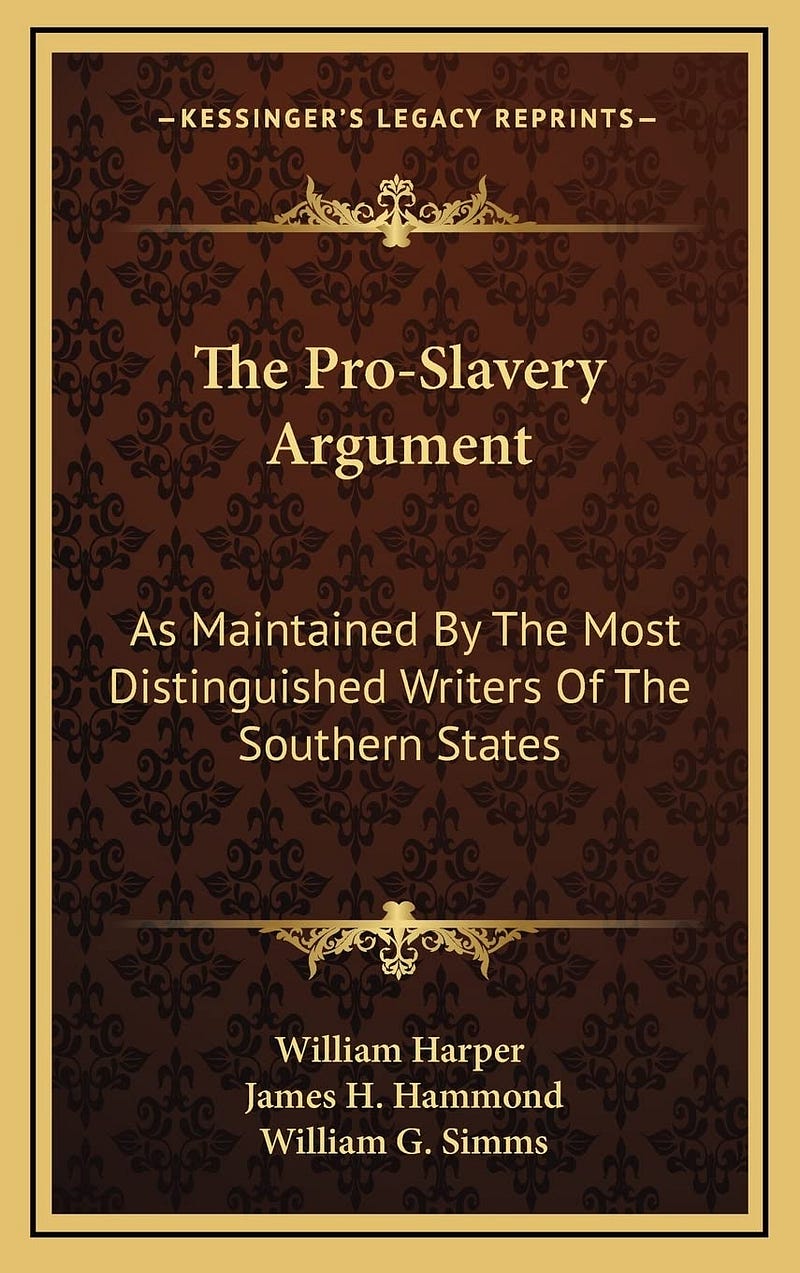
However, taking this stance comes with a significant consequence. It would require asserting that Ben was incorrect in asserting that slavery in ancient Israel was immoral.
In doing so, Christians would relinquish their claim to a moral high ground in the contemporary world. They would no longer be able to attribute the abolition of slavery in 19th-century Europe to the influence of Christian morals.
Moreover, to maintain consistency, Christians would need to advocate for the reinstatement of slavery today. After all, if slavery was mandated by their God and deemed morally acceptable, they would need to acknowledge that the ancient societal system of slavery aligns more closely with their biblical beliefs than the modern prohibition of slavery.
Doesn’t sound appealing? How about the second way?
If you wish to assert that the ownership of humans as property is morally wrong in every situation, then it leads to the conclusion that the teachings on this subject in the Bible might not originate from the true God.
Considering your perspective that slavery devalues human beings, and the belief that the real God would never support such a practice, it follows that you should consider the Bible to be incorrect in these particular aspects. It was probably the ancient Israelites, rather than God, who endorsed the idea of enslaving people.
This viewpoint would characterize the Bible as a profoundly human document, recording what people of that time believed to be God’s will, without necessarily representing God’s actual intentions.
Either you find slavery regulations in the Bible morally objectionable and reject them as the Word of God, or you accept them as morally acceptable and refrain from crediting Christianity for the abolition of slavery. You cannot simultaneously hold both positions.