
Christians, I Believe You Are Better than This
Your rationality, humanity, and mental strength are more capable than what you are told.

Over the years, I have known a few respectable Christian professionals who are highly skilled, kind, and intelligent. But when it comes to religion, it seems they can turn into completely different people. It feels like something is blocking them from expressing their fullest potential. Fortunately or unfortunately, I do have a good idea of what is going on, because I used to be a Christian as well.
Regrettably, a Christian’s life is often compromised by their religion. The more religious they are, the more their life is compromised. In this article, I address three areas of their life that are affected the most.
1. Christians are not free to exercise their rationality to the fullest extent.
Christians can be very intelligent in other areas, but when it comes to their faith, they are taught not to use their cognitive reasoning, but to employ faith and trust in God. Proverbs 3:5–6 reads, “Trust in the LORD with all your heart and lean not on your own understanding; in all your ways submit to him, and he will make your paths straight.” (NIV) Because of this teaching, they generally feel restrained to use their intellectual ability on matters of faith; it would feel like an exhibition of pride and unbelief when they do. Over time, they are conditioned to switch off their rationality when practicing their faith.
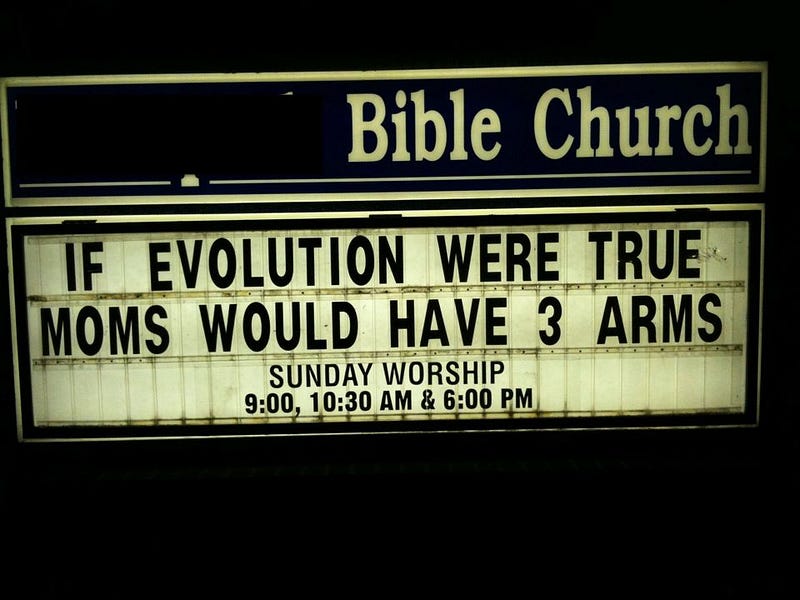
Interestingly, their intellect usually functions fully well when evaluating claims of other religions. Dalai Lama is said to be a reincarnation of the Avalokiteśvara, an embodiment of compassion of all Buddhas. Christians, like other non-religious people, are skeptical of such claims, and rightly so. But when it comes to the Bible, they are ready to accept the weirdest stuff in it.
We know that donkeys generally don’t talk, but since the Bible says a particular donkey converses with a prophet (Numbers 22:28–30), Christians are inclined to believe that donkey talked at least once in history. “God made it happen, so nothing is wrong with believing the story to be true,” they say.

Well, how about an army of zombies coming out from the tomb?
[A]nd the tombs broke open. The bodies of many holy people who had died were raised to life. They came out of the tombs after Jesus’ resurrection and went into the holy city and appeared to many people. (Matthew 27:52–53; NIV)
Apparently many Christian Bible scholars do take it literally. It makes me wonder, how much more absurd does the Bible have to get in order for Christians to start doubting that maybe part of the Bible is just fictitious? I believe that Christians can do better than this, and rise above it.
It’s hard to imagine that the Creator, if He exists, would find it unacceptable for us to utilize the intellectual ability He has gifted us. It is my personal opinion, of course, but I invite Christians to think about this question: does suspending rational ability make us more human or less?
2. While upholding the sovereignty of God, Christians inadvertently belittle the value of humanity.
It’s ironic. Christians profess that human beings bear the image of God, making them so precious that God is willing to send His only Son to die for them. From this doctrine, it follows that Christians should be more compassionate to other people. But from my observation, I am sad to say that it’s not true.
I think the key lies in the stark contrast between God and humans that Christianity emphasizes. Since God is the creator and owner of human beings, He could do anything to them, regardless of how much innate value they possess. His sovereignty trumps it. This is basically how Christians defend the story of Noah and the flood, in which God kills everyone on the Earth, including women, children, and the elderly, except Noah’s family.
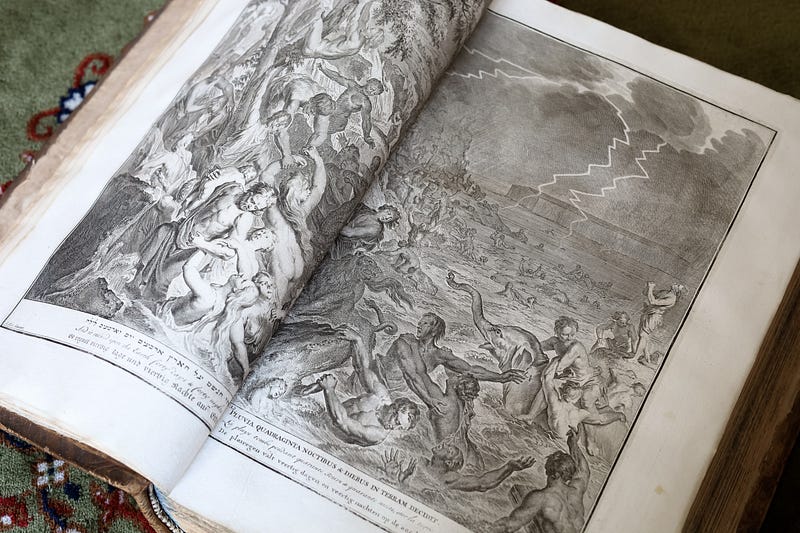
“People sinned at that time, so God was justified to wipe them out,” Christians say.
Some Christians argue that Genesis 1–11 is Primeval History, meaning that these accounts are more or less legendary, not literally true. But what difference does it make in terms of conveying the value of humanity? I don’t see any. Fiction or non-fiction, the narrative portrays a God who almost wipes out the entire human race.
If Christians insist that Noah’s story is not historical, so I should not take it too seriously, what about the genocide of Canaanites in the Old Testament?
… [I[n the cities of the nations the Lord your God is giving you as an inheritance, do not leave alive anything that breathes. Completely destroy them — the Hittites, Amorites, Canaanites, Perizzites, Hivites and Jebusites — as the Lord your God has commanded you. (Deuteronomy 20:16–17, NIV)
Or Amalekites, where children and infants are explicitly included in the item list to be slaughtered, in case Israelites have any doubts?
Now go, attack the Amalekites and totally destroy all that belongs to them. Do not spare them; put to death men and women, children and infants, cattle and sheep, camels and donkeys. (1 Samuel 15:3, NIV)
Christians may say that Canaanites were horrible people; they would sacrifice their children to their false gods.
So God’s punishment for Canaanites who sometimes sacrifice children is to kill all of them, including all of their children? The way to save their innocent children from being killed is … kill them all?
That’s absurd, to say the least.
“Well, God will take care of the children by taking them to heaven,” Christians say.
So it’s ok to kill children if they go to heaven afterward?
Given such horrible precedents in the Bible and Christians’ justification for them, it is not surprising that countless people throughout church history had been brutally treated because the Church in power thought God was offended by them. Since God is sovereign over His creation, the Church felt it was ok, and sometimes necessary, to torture or kill those sinners (pagans, witches, heretics, etc.). After all, it is better to shush them permanently than give them chance to entice innocent believers to go astray from their faith. It does not matter if human beings bear the image of God, when the order to kill comes from God, it is justified.
This is the main reason why I shake my head when Christians confidently tell me that they have absolute moral values and atheists do not. They might sincerely believe that they have high moral standards, but to me, their humanness or humanity (the way they view or treat other human beings) has been compromised by their faith, with or without their knowledge.
Personally, it’s only after I left my faith that I could genuinely see non-believers as fellow human beings, worthy of love and respect just as they are, NOT some lost souls who are heading to somewhere unpleasant unless they are converted by the Holy Spirit through my and other Christians’ efforts of evangelization. I now realize how pretentious and presumptuous I was.
But why? Why would Christians willingly surrender their own intellect and moral sense, in exchange for crude, bizarre, and sometimes downright inhumane ways of thinking? That brings me to the third point.
3. Christians are crippled by the fear of losing salvation if they don’t go along with the doctrines of Christianity.
I believe that no sane person would agree that torturing or killing children is morally justified, unless they have something big to lose. We are all too familiar with politicians who betray their constituents in exchange for large sums of shady money. Similarly, many Christians suppress their moral sense and rationality in order to maintain their salvation status.
To put it differently, let’s suppose that there is no gain whatsoever in being a Christian. Suppose God does not care whether you believe in Him or not, and your chance of going to heaven (or just some nice place if you don’t like using the word “heaven”) is not affected by you endorsing or rejecting biblical teachings. Now, would Christians still claim that genocide is sometimes justified, killing children can be a moral thing to do, and people deserve eternal torment simply because they are not convinced that God exists?
Probably not.
The key lies in Christian’s mental strength, whether they are strong enough to see through this fear tactic, reject the “bribe” of salvation, and be confident in expressing and utilizing their own intellect, inner moral campuses, and independence.

Most Christians did not get converted to Christianity because they were touched by the Canaanite genocide in the Bible. They were most likely moved by a hymn, by prayers being answered, by the witnesses of other Christians, or by some ecstatic “spiritual” experiences they had. They only learned about the more intriguing side of the Christian faith after subscribing to it. But it’s too late. They had fallen for the foot-in-the-door trick, and feel they are now obligated to justify whatever is written in the Bible.
But they don’t have to.
I believe that most people have the mental capability to look at what has happened to them with a cool head and find strength within themselves to break free from it.
That’s what I did. After 25 years of “not fully functioning”, I can tell you how exhilarating it is to be able to explore and exercise my full potential and be wholly human.
Christians, you don’t have to do what I did, of course, but please at least think through the three issues I raise in this article, and ask yourself if that is what’s happening to you.
Further Reading
If you are not a Medium member yet, please consider signing up using my referral link. I will get a small commission at no extra cost to you.


