
Does the Bible Support Slavery?
An exploration of the teachings regarding slave ownership in the Christian Scripture
.jpg)
Even though it’s been two thousand years since the last book of the Bible was written, there is still a lot of debate among people about whether the Bible supports slavery or not. Many Christians believe that their holy book doesn’t approve of slavery, and they often point to figures like William Wilberforce, who was a dedicated Christian who fought hard to end slavery.
However, when we look at the relevant passages in the Bible, it seems like this debate should have been settled a long time ago. The Bible contains clear passages that condone and even legislate the practice of owning people as property. Moreover, none of its authors express disapproval of slavery.
In this article, we’re going to dig into the Bible’s passages about slavery and take a closer look at different interpretations that try to make the Bible seem less supportive of slavery and more against it. By the time we finish discussing these passages, my goal is for you to see that both the Old Testament and the New Testament actually endorse slavery.
Old Testament passages

The Laws of Moses in the Bible make a distinction between Israelite male indentured servants, Israelites female slaves, and foreign slaves. Israelite male servants could serve for up to six years, and then they had to be set free without any payment required.
If you buy a Hebrew servant, he is to serve you for six years. But in the seventh year, he shall go free, without paying anything. (Exodus 21:2)
When it came to Israelite daughters being sold to a master, the laws were different. In this case, they were not set free after six years like male servants. Their master had the right to keep them indefinitely, as long as he provided for their needs. The only other protection for their rights was that they couldn’t be sold to foreigners.
If a man sells his daughter as a servant, she is not to go free as male servants do. (Exodus 21:7)
Foreign slaves were considered as property and could even be inherited by the slaveowner’s children. This type of slavery is often referred to as chattel slavery.
Your male and female slaves are to come from the nations around you; from them you may buy slaves. You may also buy some of the temporary residents living among you and members of their clans born in your country, and they will become your property. You can bequeath them to your children as inherited property and can make them slaves for life … (Leviticus 25:44–46)
Some Christians argue that the Bible doesn’t explicitly command believers to own slaves. But the absence of such commands doesn’t make slavery right. In other ancient cultures and even during the colonial period in Europe, there were no laws forcing people to own slaves. Yet, slavery existed nonetheless, and it was immoral and inhumane.
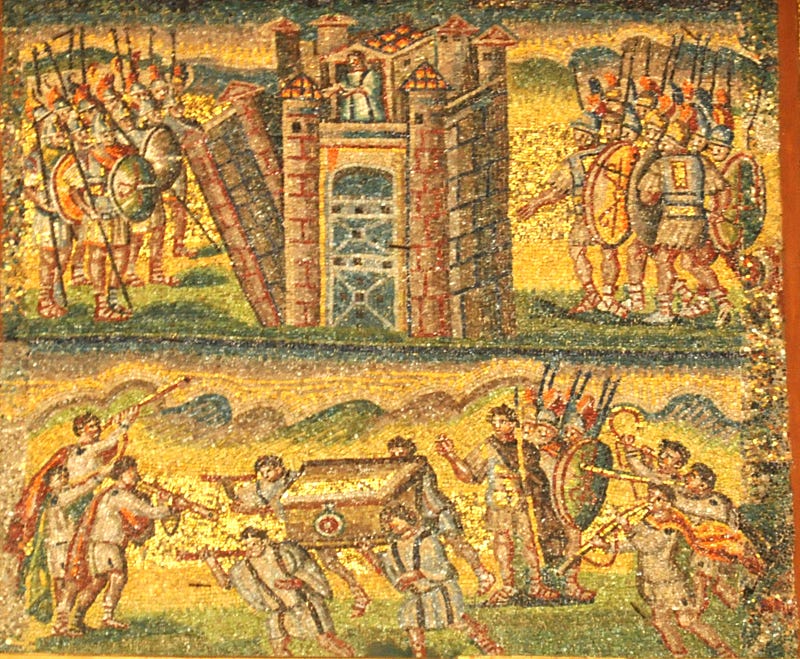

Moreover, if we examine the Old Testament closely, we can find instances where God instructs the Israelites to take slaves under certain conditions. Deuteronomy is an example.
When you march up to attack a city, make its people an offer of peace. If they accept and open their gates, all the people in it shall be subject to forced labor and shall work for you. (Deuteronomy 20:10–11)
Now, the word “slave” isn’t explicitly used here, but it’s pretty clear from the description that this order entails enslaving the people of the conquered city.
What’s interesting is that this is framed as an offer of peace, but it’s highly doubtful that the residents of the invaded city would see it that way. (To clarify, this passage is not about dealing with the Canaanites, as Verse 15 makes it clear.)
New Testament passages
Even though there was a span of over a thousand years between the time of Moses and the New Testament, we still don’t find any passages in the New Testament that clearly condemn or express disapproval of slavery.
Passages that endorse slave-master relationship
In fact, Christian slaves are advised to obey their masters because it is believed to be a way for them to bring glory to God.
All who are under the yoke of slavery should consider their masters worthy of full respect, so that God’s name and our teaching may not be slandered. Those who have believing masters should not show them disrespect just because they are fellow believers. Instead, they should serve them even better because their masters are dear to them as fellow believers and are devoted to the welfare of their slaves. (1 Timothy 6:1–2)
Slaves, obey your earthly masters in everything; and do it, not only when their eye is on you and to curry their favor, but with sincerity of heart and reverence for the Lord. (Colossians 3:22)
There’s even a passage that encourages slaves to obey their masters in the same way they would obey Christ.
Slaves, obey your earthly masters with respect and fear, and with sincerity of heart, just as you would obey Christ. Obey them not only to win their favor when their eye is on you, but as slaves of Christ, doing the will of God from your heart. Serve wholeheartedly, as if you were serving the Lord, not people, because you know that the Lord will reward each one for whatever good they do, whether they are slave or free. (Ephesians 6:5–8)
Even if the master treats them harshly, they are still encouraged to remain obedient.
Slaves, in reverent fear of God, submit yourselves to your masters, not only to those who are good and considerate, but also to those who are harsh. (1 Peter 2:18)

Passages that teach masters to treat their slaves well
It’s worth noting that masters are also reminded that they should treat their slaves fairly.
Masters, provide your slaves with what is right and fair, because you know that you also have a Master in heaven. (Colossians 4:1)
However, this kind of teaching was not unusual during the Greco-Roman period. For instance, some ancient Roman philosophers recognized the moral value of showing empathy and fairness to their slaves.
Seneca the Younger, a Stoic philosopher from ancient Rome (4 BC—AD 65), had these thoughts on how masters should treat their slaves.
Kindly remember that he whom you call your slave sprang from the same stock, is smiled upon by the same skies, and on equal terms with yourself breathes, lives, and dies.
Treat your inferiors as you would be treated by your betters. And as often as you reflect how much power you have over a slave, remember that your master has just as much power over you.
Associate with your slave on kindly, even on affable, terms; let him talk with you, plan with you, live with you. (Moral letters to Lucilius/Letter 47)
Some Christians point to the book of Philemon, suggesting it as anti-slavery. However, that’s not entirely accurate. In the letter, Paul respects the rights of the slave owner, Philemon, and requests his permission to have his slave, Onesimus, serve him.
I am sending him (the slave)… back to you … I did not want to do anything without your consent, so that any favor you do would not seem forced but would be voluntary. (Philemon 12, 14)
To be fair, Paul does ask Philemon to treat Onesimus as if he were a free man:
Perhaps the reason he was separated from you for a little while was that you might have him back forever — no longer as a slave, but better than a slave, as a dear brother. He is very dear to me but even dearer to you, both as a fellow man and as a brother in the Lord. (Philemon 15–16)
But this doesn’t necessarily mean that Paul condemns the entire system of slavery as against God’s will. It’s more likely that Paul had a personal fondness for Onesimus and regretted that he lacked freedom. Wishing a specific slave to be free doesn’t necessarily imply a rejection of the entire system.
It’s worth noting that Paul still wanted Onesimus to serve him, so one could argue that Paul’s intention to ask a favor from Philemon may not have been entirely selfless.
Christians’ reinterpretation
Numerous Christians attempt to reinterpret biblical teachings to make them seem less supportive of slavery. However, these efforts generally do not withstand close scrutiny.
Slavery was normal, even necessary, during ancient times
Some Christians argue that slavery was just a regular part of the ancient world’s social system, and we shouldn’t blame people from that time for not realizing how inhumane it was.
Ben Shapiro made a similar argument when he debated Alex O’Connor recently, which I’ve addressed in another article you can find at the end of this one.
Contrary to what these believers claim, the Old Testament itself acknowledges that slavery is harmful to those who are enslaved. There are several passages that celebrate God’s deliverance of the Israelites from the bondage of slavery in Egypt. Given this background, fellow Israelites were not meant to be subjected to the harsh reality of chattel slavery.
Because the Israelites are my servants, whom I brought out of Egypt, they must not be sold as slaves. (Leviticus 25:42)
As good as this prohibition may sound, it only applies to fellow Israelites, unfortunately. Israelites were still allowed to buy slaves from foreigners, and these acquired slaves could be passed down as inherited property, as discussed earlier.
If the system of slavery was beneficial or necessary during that time, it raises the question of why it was forbidden among Israelites themselves. This suggests that it wasn’t deemed essential for economic or other reasons within the community.
Certain Christians argue that being a slave in ancient times guaranteed food and shelter, as slave owners were responsible for providing these necessities. However, they miss the fact that slavery wasn’t the only means of survival during challenging times.
What real advantages did slaves have compared to regular employees? Slaves didn’t have better job security because there were no laws stopping slave owners from letting them go whenever they pleased. Free individuals could offer their services for hire, and employers were obligated to pay them for their work. In stark contrast, slaves, by definition, had no freedom or control over their own lives, and it’s highly likely that they weren’t paid at all.
In reality, it’s difficult to envision anyone willingly choosing to become a slave. In ancient times, people typically ended up as slaves as a result of war or financial difficulties. It was generally a situation forced upon them, not something they willingly embraced. The Bible itself provides an example of the consequences when individuals couldn’t repay their debts.
The wife of a man from the company of the prophets cried out to Elisha, “Your servant my husband is dead, and you know that he revered the Lord. But now his creditor is coming to take my two boys as his slaves.” (2 Kings 4:1)
Does that give the impression that becoming a slave was a voluntary decision?
Israelite slaves were treated better.
Some Christians argue that the Mosaic laws provided better protections for slaves than other cultures did, but this claim doesn’t hold true. Legal codes from various other cultures also included provisions to safeguard the rights of slaves. In this regard, the Bible is not unique. (You can find examples of this in the attached article at the end of this piece.)
However, even if it were true that the Bible offered better protections, it wouldn’t justify the act of treating other human beings as property. It’s hardly a valid argument.
If Christians were to discover that the Code of Hammurabi, for instance, treated slaves or people more fairly than the Old Testament, it wouldn’t mean that slavery legislated by the Code of Hammurabi was morally acceptable or a revelation from the true God.
You can’t complain about slavery because atheists don’t have objective moral values
Some Christians attempt to challenge atheists by asking them to justify their moral stance against slavery, arguing that without absolute moral values, atheists cannot claim slavery is objectively wrong.
I’ve encountered this argument on multiple occasions, and often when I ask Christians to clarify their position by posing the question, “Does the Bible teach that slavery is objectively moral or objectively immoral?” they tend to evade answering directly.
As a matter of fact, my personal judgment regarding slavery is secondary in this discussion. My primary goal is to reach a common understanding that the Bible indeed supports and even provides stipulations for slavery. When Christians avoid addressing what their Scripture says about slavery, it raises the question of whether there is an internal conflict between their moral intuition and the explicit biblical values on this issue.
Conclusion
Based on my observations, the central concern revolves around whether Christians are open to an honest examination of the book they hold as the Word of God. While they may attempt to reinterpret and twist its clear teachings and legal guidelines, what does this suggest about their beliefs? It indicates that they possess a conscience that doesn’t align comfortably with the Bible’s endorsement of slavery.
I implore Christians to listen to their conscience and reconsider their stance.