avatarAllison Wiltz

Free AI web copilot to create summaries, insights and extended knowledge, download it at here

2644

Abstract

he AAFA, poverty, air quality, and poor health care are variables that have contributed to an increase in deaths due to asthma.</p><p id="33a5"><b>Personal Story:</b></p><p id="1c06">I was diagnosed with asthma as an adult and I understand first hand that it can be a very dangerous illness. Six years ago, I felt pain in my chest but I thought this was due to a sinus infection. My co-worker recommended that I go to the hospital. Although I didn’t want to miss work, the pain was significant. It affected my ability to stand up straight, and feel comfortable in my skin. I struggled to breathe. In the past, I was diagnosed with a case of bronchitis on two separate occasions. As a pre-teen, I was diagnosed with a case of pneumonia. However, these conditions were not chronic.</p><p id="20ba">When I went to the hospital, I didn’t go to the University hospital that usually offers services to low-income individuals with no health care. I remembered going to Tulane Hospital when I was in the eighth grade and was diagnosed with pneumonia. After leaving work, I walked to the hospital and was very tired upon arrival. They helped me get into a bed and administered a breathing treatment. The pain was still pervasive but I felt better being under the care of experienced doctors.</p><p id="304d">They asked me a peculiar question, “Why did you come to this hospital?”</p><p id="5bf2">At the time, I didn’t think of this as something odd. I thought they were just checking off a box. I responded, “I know that Tulane has a good University. My mother went to law school there and I assumed that the doctors here would be very good”. They did not say anything to make me feel unwanted. However, the question indicated that me showing up there was peculiar. When I went through the emergency room. I didn’t realize that there was a stigma of only going to certain emergency centers. Now, I am more conscious of that.</p><p id="6e42">I was in pain and I wanted to get help so I went to the closest hospital. The doctors assured me that I would feel better and asked to keep me over night for observation. My doctor prescribed me a medicine called, “Advair,” which was a steroid to help fight the inflammatory response that my lungs had experienced. I was diagnosed with asthma and instructed to take this drug twice a day to minimize my asthma attacks. The drug was free for me to use for one year. However, after that year I was disappointed to find out the medicine was extremely expensive. It costs over $400 each month even with insurance and there was no generic version available. Needless to say, I stopped taking the drug. Now I use rescu

Options

e inhalers and albuterol to treat my asthma when I have flare-ups. During this pandemic, I am afraid of catching COVID-19. As an asthmatic woman, I want scientists to discover a vaccine or effective treatment.</p><p id="d5f7">Still, my fear won’t keep me from expressing myself and venturing outdoors. I will wear a mask, inform others of the racial disparities related to pulmonary disorders, and cross my fingers.</p><p id="edb2">Reference:</p><p id="0a2d">AAFA. (2015). Retrieved July 14, 2020, from <a href="https://www.aafa.org/asthma-facts/">https://www.aafa.org/asthma-facts/</a></p><p id="cb7d">Articles About Race, Equality, and Justice:</p><div id="2d2b" class="link-block"> <a href="https://readmedium.com/justice-cant-wait-our-fight-for-black-liberation-79441d77ad20"> <div> <div> <h2>Justice Can’t Wait — Our Fight for Black Liberation</h2> <div><h3>Weekly Newsletter: July 13, 2020 - July 19, 2020 (1)</h3></div> <div><p>medium.com</p></div> </div> <div> <div style="background-image: url(https://miro.readmedium.com/v2/resize:fit:320/1*m_8WU59dlihYmE-LUNOPeQ.jpeg)"></div> </div> </div> </a> </div><div id="8bcd" class="link-block"> <a href="https://readmedium.com/white-people-who-oppose-social-programs-the-silent-dagger-1bac87afb056"> <div> <div> <h2>White People Who Oppose Social Programs: The Silent Dagger</h2> <div><h3>The Dangers of Individualism in the Struggle for Black Liberation</h3></div> <div><p>medium.com</p></div> </div> <div> <div style="background-image: url(https://miro.readmedium.com/v2/resize:fit:320/1*7RC1NstpW_86Lk1t-OVcQw.jpeg)"></div> </div> </div> </a> </div><div id="39b7" class="link-block"> <a href="https://readmedium.com/excessive-bail-violates-the-8th-amendment-2ea007939135"> <div> <div> <h2>Excessive Bail Violates the 8th Amendment</h2> <div><h3>Within the criminal justice system, black people have been treated like partial citizens. Their rights have been…</h3></div> <div><p>medium.com</p></div> </div> <div> <div style="background-image: url(https://miro.readmedium.com/v2/resize:fit:320/1*2sPTIEO7yCxRS99puP3VNw.jpeg)"></div> </div> </div> </a> </div></article></body>

Being Black and Asthmatic During COVID-19

We’re more likely to die and here’s why:

Asthma can be a debilitating illness for many people. However, everyone does not recognize it as such. They may view asthma as a slight inconvenience or a childhood ailment. During the COVID-19 epidemic, having asthma has been labeled a “pre-existing condition,” increasingly poor outcomes. Many people do not realize that your race can affect your likelihood of developing respiratory disorders.

“African-Americans in the U.S. die from asthma at a higher rate than people of other races or ethnicities” (AAFA, 2015).
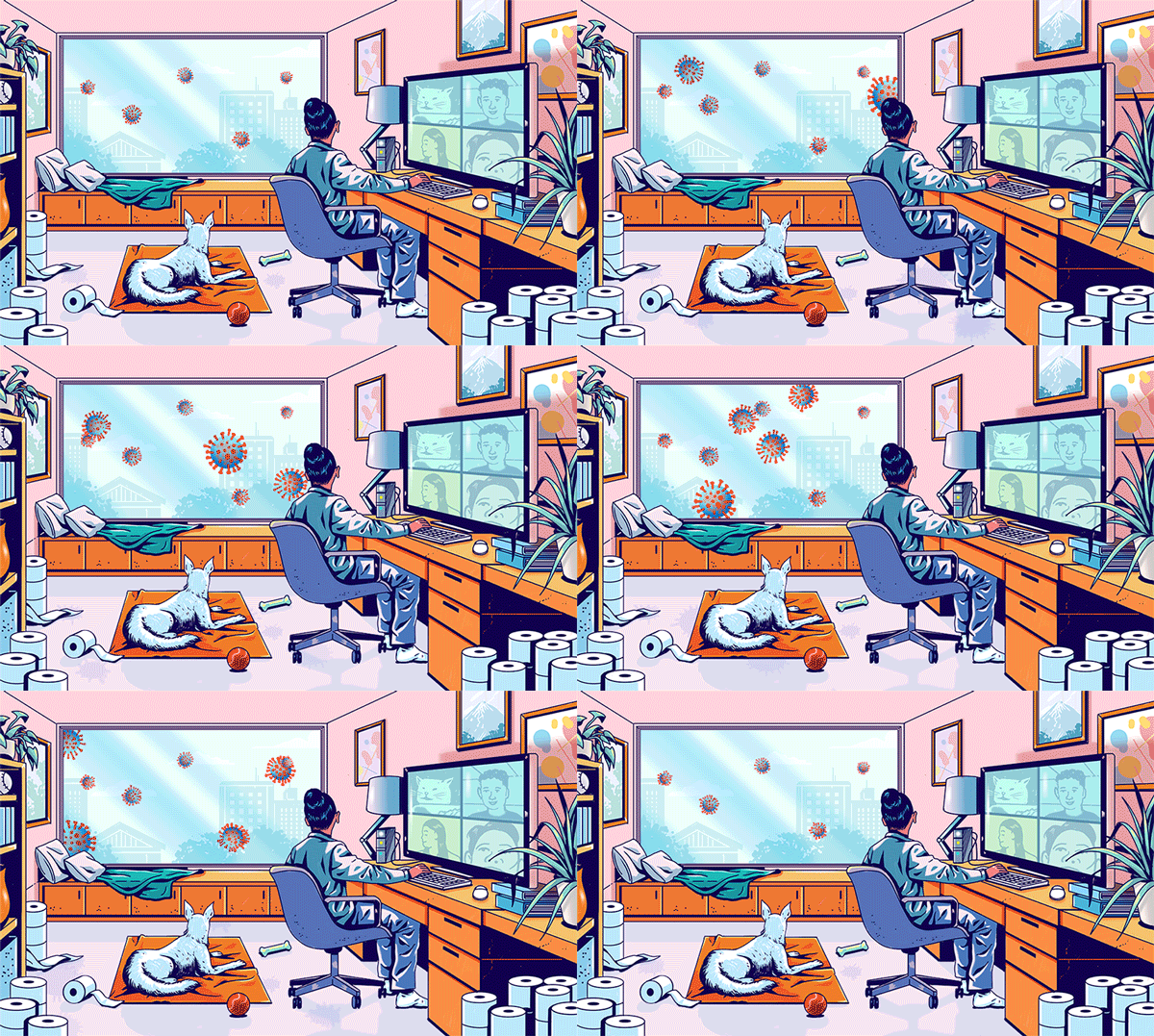
Photo Credit | Glenn Harvey

“What Ethnic Groups Have Higher Asthma Rates?

See AAFA’s groundbreaking research report on Disparities in Asthma Care. It was published with the National Pharmaceutical Council.

Racial/ethnic differences in asthma frequency, illness and death are highly connected with poverty, city air quality, indoor allergens, not enough patient education and poor health care.

The rate of asthma and the prevalence of asthma episodes is highest among Puerto Ricans compared to all ethnic groups.

African-American children have the highest prevalence of asthma.

African-Americans in the U.S. die from asthma at a higher rate than people of other races or ethnicities.

African-Americans are three times more likely to die from asthma, especially African-American women, than any other group.

African-Americans are three times more likely to stay in the hospital from asthma.

About 13.4 percent of African-American children have asthma, compared to about 7.4 percent of white children with asthma."(AAFA, 2015).

While it is true that an illness cannot be inherently racist, these numbers tell an interesting story about the prevalence of asthma in African American communities. Community and home environments can have an influence on case-numbers. As noted by the AAFA, poverty, air quality, and poor health care are variables that have contributed to an increase in deaths due to asthma.

Personal Story:

I was diagnosed with asthma as an adult and I understand first hand that it can be a very dangerous illness. Six years ago, I felt pain in my chest but I thought this was due to a sinus infection. My co-worker recommended that I go to the hospital. Although I didn’t want to miss work, the pain was significant. It affected my ability to stand up straight, and feel comfortable in my skin. I struggled to breathe. In the past, I was diagnosed with a case of bronchitis on two separate occasions. As a pre-teen, I was diagnosed with a case of pneumonia. However, these conditions were not chronic.

When I went to the hospital, I didn’t go to the University hospital that usually offers services to low-income individuals with no health care. I remembered going to Tulane Hospital when I was in the eighth grade and was diagnosed with pneumonia. After leaving work, I walked to the hospital and was very tired upon arrival. They helped me get into a bed and administered a breathing treatment. The pain was still pervasive but I felt better being under the care of experienced doctors.

They asked me a peculiar question, “Why did you come to this hospital?”

At the time, I didn’t think of this as something odd. I thought they were just checking off a box. I responded, “I know that Tulane has a good University. My mother went to law school there and I assumed that the doctors here would be very good”. They did not say anything to make me feel unwanted. However, the question indicated that me showing up there was peculiar. When I went through the emergency room. I didn’t realize that there was a stigma of only going to certain emergency centers. Now, I am more conscious of that.

I was in pain and I wanted to get help so I went to the closest hospital. The doctors assured me that I would feel better and asked to keep me over night for observation. My doctor prescribed me a medicine called, “Advair,” which was a steroid to help fight the inflammatory response that my lungs had experienced. I was diagnosed with asthma and instructed to take this drug twice a day to minimize my asthma attacks. The drug was free for me to use for one year. However, after that year I was disappointed to find out the medicine was extremely expensive. It costs over $400 each month even with insurance and there was no generic version available. Needless to say, I stopped taking the drug. Now I use rescue inhalers and albuterol to treat my asthma when I have flare-ups. During this pandemic, I am afraid of catching COVID-19. As an asthmatic woman, I want scientists to discover a vaccine or effective treatment.

Still, my fear won’t keep me from expressing myself and venturing outdoors. I will wear a mask, inform others of the racial disparities related to pulmonary disorders, and cross my fingers.

Reference:

AAFA. (2015). Retrieved July 14, 2020, from https://www.aafa.org/asthma-facts/

Articles About Race, Equality, and Justice:

Covid-19
BlackLivesMatter
Race
Equality
Health
Recommended from ReadMedium