
White People Who Oppose Social Programs: The Silent Dagger
The Dangers of Individualism in the Struggle for Black Liberation

Too often, this capitalist society has encouraged rugged individualism as a means of solving every social problem from homelessness to drug addiction. There has always been an underlying assumption that if someone is doing poorly, they have bad luck or worse, are responsible for their position in life. This has been a current theme for opponents of social programs. While it’s important to note that many people do make decisions that negatively impact their lives, social problems are not only the product of individual action. Human behavior is influenced by an individual’s understanding of history, relationships with other people, environment, and socioeconomic status. Specifically, the present-day wealth gap between black and white families is directly related to the history of this country. Conservatives have opposed the development and in some instances, the expansion of social programs. Believing that everyone can solve their problem with individual grit and tenacity, they do not find it necessary for the government to use its power to help people. This excuse has been used to deny the descendants of slaves reparations, asserting that all the perpetrators are dead. They have also done this against the will of the people who largely support the expansion of social programs.
“We find evidence that welfare backlash among white Americans is driven in part by feelings that the status of whites in America is under threat,” Wetts told NPR.
Despite those perceptions, other research has found that white people are the biggest beneficiaries of the government safety net. According to the Center on Budget and Policy Priorities, white people made up the largest share — at 52 percent — of people lifted from poverty by safety-net programs, while black people made up less than a quarter of that share. When it comes to receiving Medicaid, white people make up about 43 percent of recipients, Hispanics about 30 percent, African-Americans 18 percent, with 9 percent identified as other, according to Wetts” (Chow, 2018).
Racism has motivated negative feelings about social programs, which many have stereotyped as services over-used by black people. However, the numbers do not support this perspective. While it is true that black communities benefit from social programs, they are not the majority of individuals who benefit from these programs. Yet, they largely oppose these programs even though they help those in white communities. In the past, phrases like “Welfare Queen,” has been used to stereotype black women who use social services to provide for their families. They have claimed that black people in general, and black women specifically have abused the system, labeling them as lazy. This couldn’t be farther from the truth. In many black families, women are the bread winners.
We cannot separate someone from their experiences, personal history, and environment. Women who are black, growing up in disadvantaged communities may be more likely to need social services. However, there is no reason to taunt them for this because the same can be said about poor white women who also use social services to provide for their families. Somehow, the wealthy in the country have the poorest people fighting each other instead of attempting to solve the problems they face, expanding these much-needed programs.
Rugged individualism destroys black communities. While many activists within the black community encourage black people to spend money with black entrepreneurs, they are doing so without discernment. Many wealthy black families move away from disadvantaged communities as opposed to uplifting them. As a result, black neighborhoods stay impoverished. It is important for black entrepreneurs to invest back into the community, making group economics go full circle. Working together, black entrepreneurs can be a great force for change. Rugged individualism within black businesses creates a dynamic of competition without collaboration. People have to be willing to work together and not open a barbershop across the street but instead, attempt to work to strengthen existing black businesses and only create a new one when there is a need to be fulfilled.
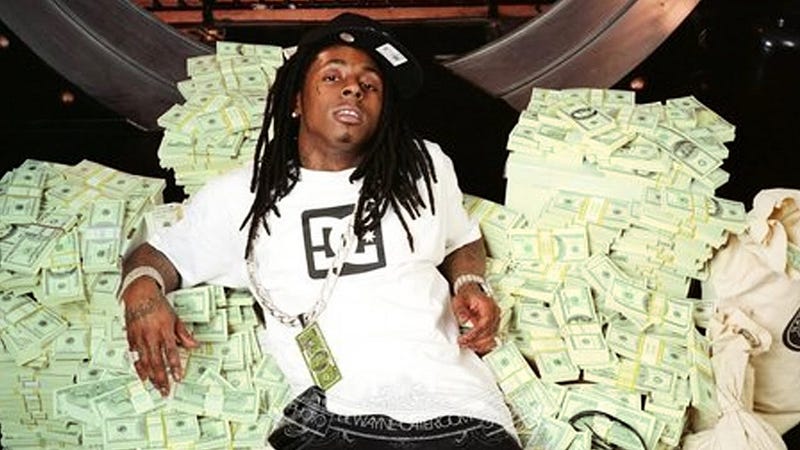
This individualism can also be found in modern rap music which involves bragging about having money while others struggle in the neighborhoods they are from, get cycled through the criminal justice system, and lose family members and friends to gun violence. I’m not saying that rappers never give back to the community. Many of them do. Bird Man, from New Orleans, has often given out Thanksgiving Turkeys and given money to local charities. However, they have not participated in the level of group economics that would truly change the neighborhoods that they came from. They have always used simple platitudes, while rarely using a more focused, collaborative approach.
As long as black people compete with one another, facing white supremacy in all its’ forms is an uphill battle. Group economics can be a powerful force for good, but only if it is used properly and with coordination to maximize the effects. We have to stop blaming people for being poor and understand that many people are impoverished because they lack generational wealth and have been deprived of opportunities that change these outcomes. Once we stop blaming poor black people for their socioeconomic circumstances, we can have constructive conversations about addressing social problems that help every American. White people who oppose the expansion of these programs act as a silent dagger in the heart of struggling families.
Reference:
Chow, K. (2018, June 08). Why More White Americans Are Opposing Government Welfare Programs. Retrieved July 08, 2020, from https://www.npr.org/sections/codeswitch/2018/06/08/616684259/why-more-white-americans-are-opposing-government-welfare-programs