avatarCarl Westerby

Free AI web copilot to create summaries, insights and extended knowledge, download it at here

3851

Abstract

across time for META.</p><figure id="519a"><img src="https://cdn-images-1.readmedium.com/v2/resize:fit:800/1*j6GmO6KYP1DM9ThO4GhRog.png"><figcaption>Image Source: Author</figcaption></figure><h2 id="1880">How do you know the value of a company?</h2><p id="9960">If the BSM is so bad at valuing companies, what’s a better approach? The author spends a significant amount of time devoted to the valuation process of a company. I won’t go into the gory details here, but he uses a <a href="https://www.investopedia.com/terms/d/dcf.asp">discounted cash flow</a> methodology.</p><div id="9a7c" class="link-block"> <a href="https://readmedium.com/how-to-value-a-company-eb2b0aaad4ba"> <div> <div> <h2>How to Value a Company</h2> <div><h3>Overview of Discounted Cash Flow and a Dashboard for Facilitating Analysis</h3></div> <div><p>medium.com</p></div> </div> <div> <div style="background-image: url(https://miro.readmedium.com/v2/resize:fit:320/0*Wzb_Fkr6rpJYD4lm)"></div> </div> </div> </a> </div><p id="19a1">It’s important to vary your underlying assumptions that drive value (growth rate, discount rates, and profit margins) to create a range of valuations for the company. This is a good way to acknowledge the lack of precision in our estimates and prevent us from cutting things too close.</p><p id="f545">An interesting idea from the valuation section was to segment your valuation process by layers. At the top you have fast growers, then medium growers, no growers, and eventually just cash on hand. If you can find a company that you think is valued at a higher layer but priced at a lower layer, then it can indicate a wide margin of safety.</p><figure id="8be9"><img src="https://cdn-images-1.readmedium.com/v2/resize:fit:800/1*aVsb_OHziyOA2DVn0Q5X4Q.png"><figcaption>Image Source: Author</figcaption></figure><h2 id="8814">Putting it all together</h2><p id="fa62">Combining the market price forecast range (implied volatility) with our range of intrinsic values, lets us identify undervalued stocks. You could stop right here, just purchase undervalued stocks without options, and you could be quite successful. To take things further, the author walked through a multitude of options and strategies. I’ll walk through the two I found most important.</p><p id="cffb">The benefit of these option strategies is that you can boost your returns by lowering your total committed capital. With a call option, you own the right to all the upside of 100 shares, but your premium is usually a fraction of the total cost to own the 100 shares.</p><figure id="b1d8"><img src="https://cdn-images-1.readmedium.com/v2/resize:fit:800/1*C6tOiblmgWnv_iAuBROkKw.png"><figcaption>Image Source: Author</figcaption></figure><h2 id="fdc4">Long Call Option Strategy</h2><figure id="bd78"><img src="https://cdn-images-1.readmedium.com/v2/resize:fit:800/1*M0V8KjdWz8XOOzXz9DXhFA.png"><figcaption>Image Source: Author</figcaption></figure><p id="c913">This strategy works best when the upside of the stock is being underpriced. To execute this you purchase a long-term call option. You are risking the upfront premium paid if the stock price falls below the strike price at expiration.</p><p id="a3c0">The author recommends buying the longest tenor available to maximize the time the stock has to run up into your expected value range. Typically you can get long-term call options out at 2 years. He also recommends a strike price that is “in the money” (ITM). This is a fancy way of saying that the stock price is above the strike price.</p><h2 id="4d4e">Short Put Option Strategy</h2><figure id="3174"><img src="https://cdn-images-1.readmedium.com/v2/resize:fit:800/1*0jWYlYF1DLYBUdZBQOaQFg.png

Options

"><figcaption>Image Source: Author</figcaption></figure><p id="4719">This one works best when the market is overpricing a stock’s downside potential. You can take advantage by selling a put contract. Your broker will require cash to be set aside in your brokerage account equal to the strike price times 100 shares. The upside on this is limited by the initial premium you collect. Your downside is the difference between the strike price and how low the stock falls.</p><p id="721d">The author recommends strike prices that are nearest the current price of the stock, but just under. The reason for being just out of money is that the option has no intrinsic value (if it closed today it would be worthless). The author also recommends going for shorter terms (3–6 months) because the time decay on the value of the put accelerates as you approach the expiry date. For instance, you can generally make more premium selling two back-to-back 6-month tenor puts versus a single put with a 12-month length.</p><p id="347e">I use this strategy when I can get the strike price below the lower end of my estimate for intrinsic value. If the stock price stays high, then I earn the yield of the premium (premium/100*strike price). If the price falls, then I end up owning shares in a company I like, at a favorable price. The trick is to set a hurdle rate on the premium return % and to make sure you are certain you will be happy to purchase the company at the strike price.</p><p id="d999">I detailed the method for creating the <a href="https://readmedium.com/beat-the-market-using-option-prices-85758eb36aae">BSM cone and share the Streamlit dashboard</a> for the plots throughout this article. If you enjoyed this article, feel free to “applaud”, and you can follow me on Medium or sign up for emails to be notified of more stories like this:</p><div id="d932" class="link-block"> <a href="https://medium.datadriveninvestor.com/beat-the-market-with-expectations-investing-3cec6f1e1873"> <div> <div> <h2>Beat the Market with Expectations Investing</h2> <div><h3>Expectations investing uses stock prices to determine the market’s expectations about growth.</h3></div> <div><p>medium.datadriveninvestor.com</p></div> </div> <div> <div style="background-image: url(https://miro.readmedium.com/v2/resize:fit:320/0*kxQTDqtnXSjcGdao)"></div> </div> </div> </a> </div><div id="9da8" class="link-block"> <a href="https://medium.datadriveninvestor.com/how-expensive-is-the-stock-market-b2a40d2bdcd1"> <div> <div> <h2>How Expensive is the Stock Market?</h2> <div><h3>Using PE ratios and GDP data to asses where the current market price is relative to value.</h3></div> <div><p>medium.datadriveninvestor.com</p></div> </div> <div> <div style="background-image: url(https://miro.readmedium.com/v2/resize:fit:320/0*owEGianKKh2j9Yuk)"></div> </div> </div> </a> </div><p id="206e"><i>Note that this article does not provide personal investment advice and I am not a qualified licensed investment advisor. All information found here is for entertainment or educational purposes only and should not be construed as personal investment advice.</i></p><p id="6139">Subscribe to DDIntel <a href="https://ddintel.datadriveninvestor.com/">Here</a>.</p><p id="23c6">Visit our website here: <a href="https://www.datadriveninvestor.com/">https://www.datadriveninvestor.com</a></p><p id="91d6">Join our network here: <a href="https://datadriveninvestor.com/collaborate">https://datadriveninvestor.com/collaborate</a></p></article></body>

Beat the Market with Options Intelligence

Image Source: DALL-E 2

Have you ever wondered what stock option prices say about the market’s forecast for the future? If so, The Intelligent Option Investor is right up your alley. The author takes a value investing framework and combines it with option market price forecasts to find undervalued companies.

What are Stock Options?

Stock options allow investors to profit from the price movements of a stock. They give the buyer the right to buy (for a call option) or sell (in the case of a put option) the stock at a specified “strike” price within a specified time (tenor).

An easy way to conceptualize the put option is an insurance contract on the stock. With homeowners insurance, you can sell your house back to the insurance company, at the price you paid for it, in the event of something catastrophic. It is the same with a put. You can sell that stock back, should its price fall below the strike price. Similar to your homeowner’s insurance, you pay an upfront premium for this right.

Call options are more like selling the mineral rights on your property. If oil is discovered, the purchaser owns the rights to all that upside in the value of the property. Same for the call option. If the stock goes above the strike price, then you get to buy it and can pocket the difference between the current price and the strike price.

What is the Black-Scholes Model (BSM)?

The BSM is an equation for pricing options using the risk-free interest rate, the current price of the stock, the volatility of its price movement, and the duration of the contract. The risk-free rate is a measure of the general upward trend you would expect of most stocks. The contract duration matters because a longer contract gives the stock more time to move and therefore makes the option more valuable.

It’s outside the scope of this article to debunk all the faulty assumptions that are necessary for the BSM to work (efficient markets, normal distribution for the %change in stock prices, etc). It is worth our time to discuss because most market participants are using a version of it for pricing options transitions.

Given we have all the variables except future volatility, we can use the BSM to reverse engineer the implied volatility based on the options price. This implied volatility then lets us forecast the future range of stock prices. The range grows over time because the stock has more of a chance to “run” in either direction. Below is an example of how the BSM projects the future range of stock prices across time for META.
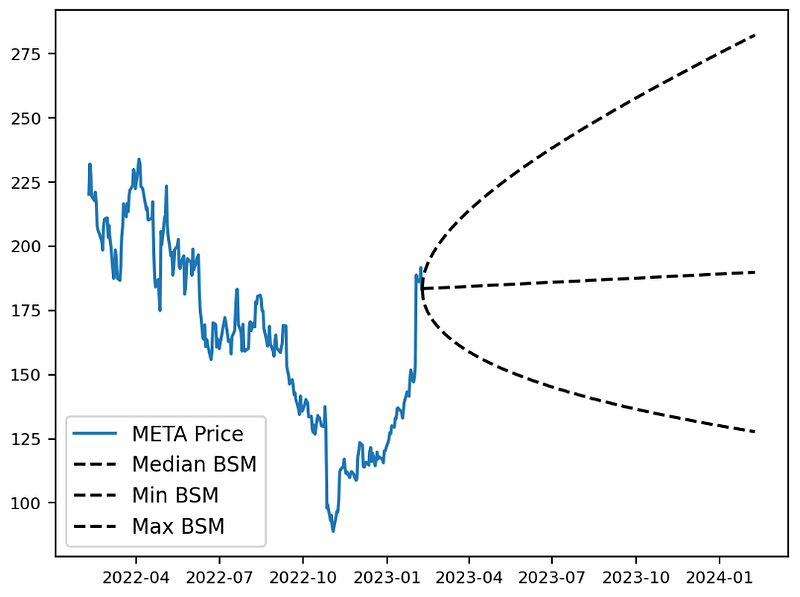
Image Source: Author

How do you know the value of a company?

If the BSM is so bad at valuing companies, what’s a better approach? The author spends a significant amount of time devoted to the valuation process of a company. I won’t go into the gory details here, but he uses a discounted cash flow methodology.

It’s important to vary your underlying assumptions that drive value (growth rate, discount rates, and profit margins) to create a range of valuations for the company. This is a good way to acknowledge the lack of precision in our estimates and prevent us from cutting things too close.

An interesting idea from the valuation section was to segment your valuation process by layers. At the top you have fast growers, then medium growers, no growers, and eventually just cash on hand. If you can find a company that you think is valued at a higher layer but priced at a lower layer, then it can indicate a wide margin of safety.
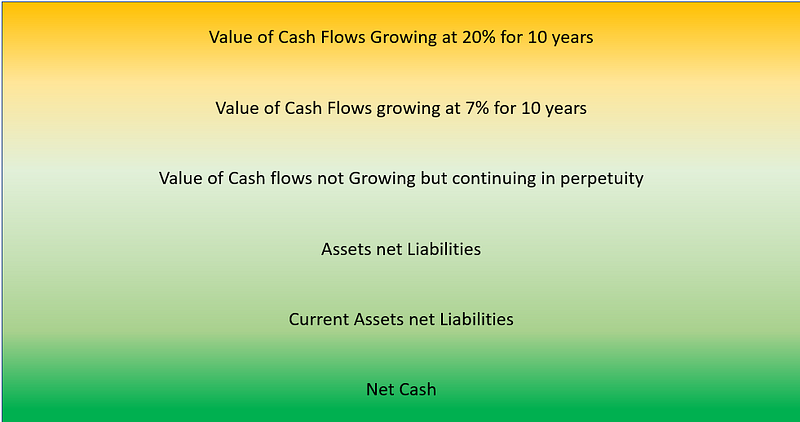
Image Source: Author

Putting it all together

Combining the market price forecast range (implied volatility) with our range of intrinsic values, lets us identify undervalued stocks. You could stop right here, just purchase undervalued stocks without options, and you could be quite successful. To take things further, the author walked through a multitude of options and strategies. I’ll walk through the two I found most important.

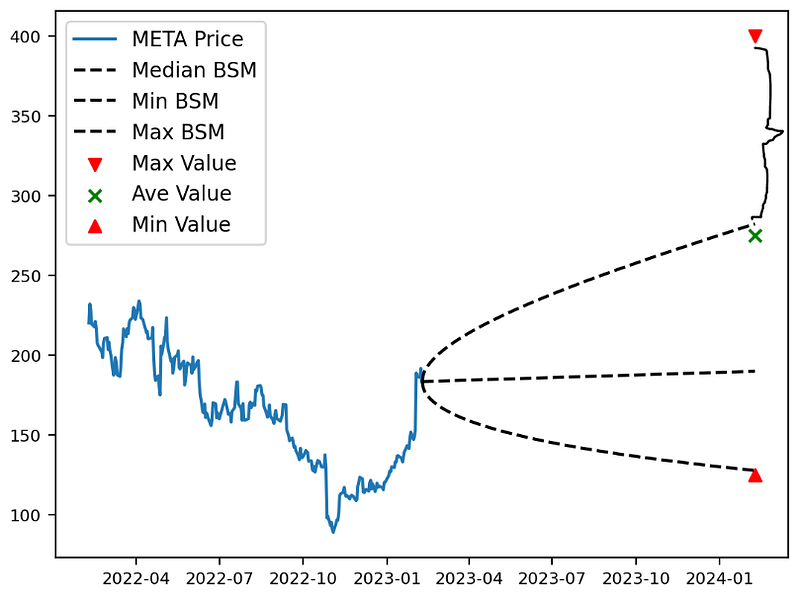
The benefit of these option strategies is that you can boost your returns by lowering your total committed capital. With a call option, you own the right to all the upside of 100 shares, but your premium is usually a fraction of the total cost to own the 100 shares.

Image Source: Author

Long Call Option Strategy

Image Source: Author

This strategy works best when the upside of the stock is being underpriced. To execute this you purchase a long-term call option. You are risking the upfront premium paid if the stock price falls below the strike price at expiration.

The author recommends buying the longest tenor available to maximize the time the stock has to run up into your expected value range. Typically you can get long-term call options out at 2 years. He also recommends a strike price that is “in the money” (ITM). This is a fancy way of saying that the stock price is above the strike price.

Short Put Option Strategy
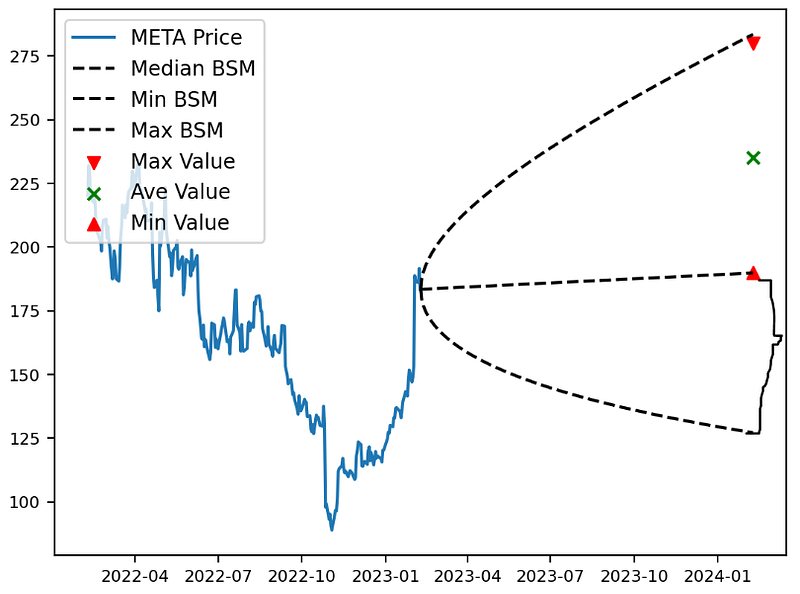
Image Source: Author

This one works best when the market is overpricing a stock’s downside potential. You can take advantage by selling a put contract. Your broker will require cash to be set aside in your brokerage account equal to the strike price times 100 shares. The upside on this is limited by the initial premium you collect. Your downside is the difference between the strike price and how low the stock falls.

The author recommends strike prices that are nearest the current price of the stock, but just under. The reason for being just out of money is that the option has no intrinsic value (if it closed today it would be worthless). The author also recommends going for shorter terms (3–6 months) because the time decay on the value of the put accelerates as you approach the expiry date. For instance, you can generally make more premium selling two back-to-back 6-month tenor puts versus a single put with a 12-month length.

I use this strategy when I can get the strike price below the lower end of my estimate for intrinsic value. If the stock price stays high, then I earn the yield of the premium (premium/100*strike price). If the price falls, then I end up owning shares in a company I like, at a favorable price. The trick is to set a hurdle rate on the premium return % and to make sure you are certain you will be happy to purchase the company at the strike price.

I detailed the method for creating the BSM cone and share the Streamlit dashboard for the plots throughout this article. If you enjoyed this article, feel free to “applaud”, and you can follow me on Medium or sign up for emails to be notified of more stories like this:

Note that this article does not provide personal investment advice and I am not a qualified licensed investment advisor. All information found here is for entertainment or educational purposes only and should not be construed as personal investment advice.

Subscribe to DDIntel Here.

Visit our website here: https://www.datadriveninvestor.com

Join our network here: https://datadriveninvestor.com/collaborate

Investing
Stocks
Stock Market
Finance
Money
Recommended from ReadMedium