
Backspin: Nas — Illmatic (1994)
Nas’s iconic debut is a testament to inspiration, determination, and the transformational power of hip-hop. (97/100)
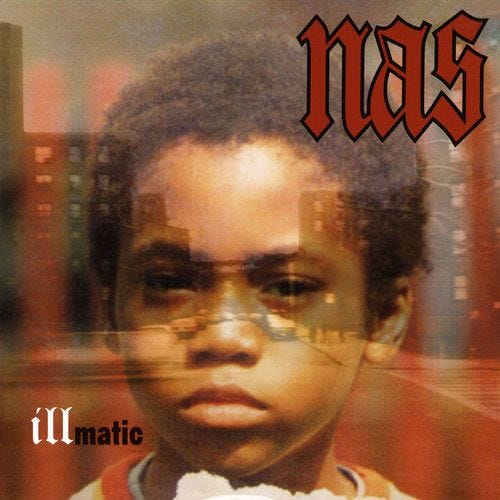
You don’t need me to sell you on the greatness of Illmatic. For a generation of hip-hop fans born in the ’80s and coming of age during rap’s mid-90s Renaissance, Nas’s debut is the holy grail; the perfect storm of ruggedly hypnotic boom bap beats and raw, poetic lyricism. It was a creatively explosive time period that produced many of hip-hop’s greatest albums. A lot met with much greater commercial success upon release. Yet, Illmatic is lionized with a special reverence, perhaps only matched by the previous generation’s affection for Eric B. & Rakim’s seminal Paid In Full.
In re-visiting Illmatic I wasn’t looking to confirm the obvious, but to identify the magic ingredient that elevates it to that most rarified of air. What I found was quite simple: inspiration. Underlying nearly every disquieting depiction of urban nihilism and bracing brutality is an irrepressible hopefulness. It’s the empowering brand of hope drawn from clarity of purpose. For a young Nas, that clarity was derived from his art form. At its core, Illmatic shines as a beacon of hip-hop because it lives and breathes as a paean to hip-hop and its transcendent power.
While largely lauded for its vivid portrayals of a dog eat dog urban landscape mercilessly devouring its own, it’s notable that the opener, “NY State of Mind,” actually begins with Nas proclaiming his prowess as an MC:
Rappers I monkey flip ’em with the funky rhythm I be kickin’ Musician, inflictin’ compositions of pain I’m like Scarface sniffin’ cocaine Holdin’ an M16, see with the pen I’m extreme
Off the rip, Nas has established his artistic identity. At the height of gangsta rap’s dominance, he leans into the aesthetic, but not in the literal. It’s a means to convey his relentless lyrical approach. His pen is an automatic weapon. His murderous Tony Montana inspired ambitions are directed toward the execution of his craft. From there, he goes on to paint a brutally evocative picture of the world that informs his lyrical assaults; a world in which corner dice games are abruptly dispersed by gun blasts.
The second verse opens with a foray of fleeting escapism, providing an early glimpse of the poignant introspection that would later become Nas’s calling card:
Be havin’ dreams that I’m a gangsta, drinkin’ Moëts, holdin’ TEC’s Makin’ sure the cash came correct, then I stepped
Reality returns right along with DJ Premier’s brooding bassline and jagged piano loop as Nas quickly grounds himself in the fact that, despite the superficial trappings, he’s “just a n***a walkin’ with my finger on the trigger.” (Though, for a fully realized rendering of the gangsta dream, look no further than Nas’s sophomore opus, It Was Written.)
After another barrage of harrowing bars, Nas brings the song full circle, choosing to define himself as neither “gangta” nor “just a n***a”, but as an artist.
It’s only right that I was born to use mics And the stuff that I write is even tougher than d***s I’m takin’ rappers to a new plateau, through rap slow My rhymin’ is a vitamin held without a capsule
It’s a fitting metaphor that recurs throughout the album. Nas isn’t content to simply use his words to lift himself above his circumstances. He burns to dispense those words, unfiltered, for the nourishment of others. As an album opener, “NY State of Mind” echoes Eric B. & Rakim’s “Follow the Leader,” in that it approaches familiar subject matter in a completely new way. Where Rakim took listeners to the farthest reaches of the solar system to demonstrate his earthly supremacy, Nas takes us into the deepest crevices of his mind to expose the glimmers of light amid the darkness of his Queensbridge streets.
The journey grows even more introspective on “Life’s a Bitch.” The hook, delivered with plaintive resignation by AZ, belies the persistent resilience conveyed with poetic precision by the two MCs. AZ sets it off with a tale of hope turned to despair (“We were beginners in the hood as Five-percenters/But something must’ve got in us, cause all of us turned to sinners,”), before returning to a mantra of personal perseverance.
But it’s Nas who ultimately re-imagines the track as a celebration of the “bitch,” wearing his survival and emergence into manhood as a badge of honor. He once again references his lyrical acumen as a driving force (“Got rhymes 365 days annual plus some/load up the mic and bust one/cuss while I puss from my skull”). The verse introduces the concept of purpose as the engine powering triumph over adversity, and the balm to sooth the pain of the struggle.
Nas expounds on the theme in the album’s second single, “The World Is Yours.” The Pete Rock produced affirmation begins with the most evocative vignette of one man’s kismetic connection with his microphone since Rakim confessed to having been a fiend before he became a teen:
I sip the Dom P, watching “Gandhi” ’til I’m charged Then writing in my book of rhymes, all the words past the margin To hold the mic I’m throbbin’, mechanical movement Understandable smooth s*** that murderers move with The thief’s theme: play me at night, they won’t act right The fiend of hip-hop, it’s got me stuck like a crack pipe The mind activation, react like I’m facin’ time Like Pappy Mason, with pens I’m embracin’ Wipe the sweat off my dome, spit the phlegm on the streets Suede Timbs on my feets makes my cipher complete Whether cruising in a Sikh’s cab, or Montero Jeep I can’t call it, the beats make me fallin’ asleep I keep falling, but never falling six feet deep I’m out for presidents to represent me (say what?) I’m out for presidents to represent me (say what?) I’m out for dead presidents to represent me
In the midst of all the chaos, brutality, and despair lamented throughout the album, music offers Nas meaning, clarity, and direction. In turn, he uses his music to pass that same inspiration along to others. Pete Rock’s track forgoes the legendary producer’s signature horn samples and filtered basslines in favor of deceptive simplicity. The drums are subtly persistent, propelling Nas’s relaxed flow forward. A pensive piano sample strikes a perfect balance between the oppressive weight of the inescapable and the liberating lightness of possibility.
It speaks to the esteem in which the era’s most revered beat makers held Nas that, nearly to a man, they eagerly tweaked their signature sounds to highlight his unique vocal tone and delivery. The slight flutter of the rising and falling keys as Nas intones “I need a new n***a for this black cloud to follow/cause while its over me its too dark to see tomorrow,” is the sonic representation of the oneness of man and music articulated in the first verse.
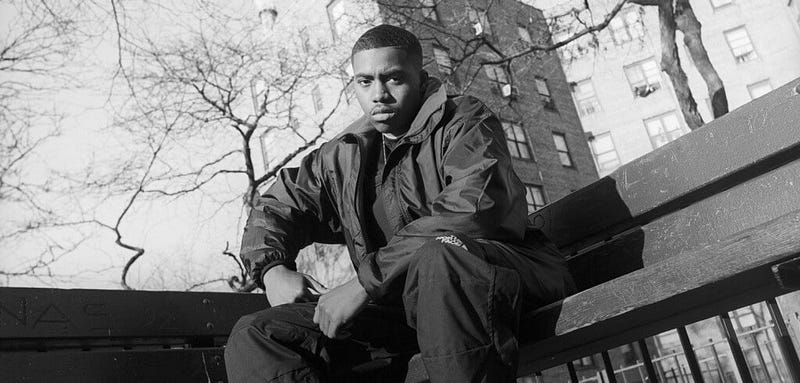
At the time of Illmatic’s release, the inclusion of “Halftime” was a frequent topic of debate. It had originally appeared on the Zebrahead soundtrack in 1992 and bore the sonic earmarks of its time. On an album with only 9 proper songs, many fans felt a little cheated that one of the centerpieces was two years old. But revisiting the album with the benefit of distance, it feels right at home, even necessary. After three show stopping tracks of Nas waxing poetic on his inspiration for rhyming and drawn from it, “Halftime” delivers a well timed dose of Nas simply spitting clever braggadocio with effortless swagger over a barebones Large Professor track. His flow is so effortless that it’s easy to overlook the intricacy of his rhyme schemes and precision of his cadences, which as he boasts, switch like something we no longer say in 2020.
Pallet sufficiently cleansed, we’re ready to return to the introspective poetics of arguably the album’s strongest 1–2 punch. Like Pete Rock previously, DJ Premier deviates from his trademark grime to highlight a slide sitar sample atop a breezy beat on “Memory Lane (Sittin’ In Da Park)”. While the vignettes of urban decay depicted are markedly similar to “NY State of Mind” in substance, the tone is more wistful. The song’s nostalgic bent highlights the beauty and vitality of lives lived in the moment. Weaving deftly towards the conclusion of the closing verse, Nas casts himself in the role of martyr, his suffering begetting salvation through rhyme:
My intellect prevails from a hangin’ cross with nails I reinforce the frail, with lyrics that’s real Word to Christ, a disciple of streets, trifle on beats I decipher prophecies through a mic and say ‘peace’
The buoyant track immediately gives way to the darkly dense “One Love.” Produced by Q-Tip, it feels like the beat the Tribe Called Quest mastermind had been jonsing to make his entire career, but was holding for the right MC. Nas matches the production’s jazzy abstraction with vivid realism. The first two verses are delivered as letters to incarcerated friends, conveying narratives of frustration, isolation, and ultimately hope on both the streets and the cellblock. “When incarcerated your mind dies,” he rhymes on the second verse, synthesizing the theme of the track and one of the recurring messages of the album.
The third verse grounds the idea in a cinematically rendered vignette, with Nas riding a cannabis cloud into the sanctuary of his own thoughts, and returning with insights to inject into the malleable mind of to a younger man in a chance encounter on a project bench (“put some jewels in his skull that he could sell if he chose”). The excursions that inspire his words are his escape from mental incarceration. With the end product, he aims to give others the resources to achieve freedom as well. The verse is every bit the spiritual heir to Eric B. and Rakim’s overlooked masterpiece “In the Ghetto” as “The World Is Yours” opening is to “Microphone Fiend.”
If Illmatic has a weak link, it’s “One Time 4 Your Mind.” It’s not a bad song. It simply lacks lyrical and musical purpose on an album defined by precisely that. Perhaps the impulse was to give listeners a few minutes to decompress from the weight of “One Love,” but a direct transition to the celebratory abandon of “Represent” would have offered catharsis without sacrificing momentum. With its simple shouted chorus (“represent, represent!”) the latter track offers a fist pumping, chest thumping anthem of pride in the life “represented” throughout the album. Simple survival, it demonstrates, is a triumph.
The lead single, “It Ain’t Hard to Tell,” provides Illmatic with its closing victory lap. For the past 37 minutes, we’ve been on a guided tour through Nas’s world and mind. We’ve seen every obstacle that could have kept the album out of existence. We’ve felt the power of purpose imbued into a resilient young wordsmith by hip-hop, or perhaps through hip-hop from something greater (though Nas makes clear on “Represent” that he doesn’t “believe in God or none of that s***”). For the final 3 minutes, we simply get to hear him do what he was born to, effortlessly flipping flows and slapping syllables atop an ethereal Michael Jackson sample courtesy of Large Professor.
Is Illmatic the greatest hip-hop album of all time? That ultimately comes down to matters of personal taste. I tend gravitate to albums that create their own sonic landscapes, like It Takes a Nation of Millions to Hold Us Back and Enter the Wu-Tang: 36 Chambers.
However, there is no more definitive hip-hop album. Approaching his 21st birthday when Illmatic dropped, Nas represented the first generation of rappers born at roughly the moment of hip-hop’s origin in New York City park jams. He was coming of age along with the genre, and the album reflects the inspiration and influence the culture had in shaping that generation, imbuing its members with an eloquence and evocativeness belying their youth.
KRS-One once defined hip-hop as “victory over the streets.” That concept is embodied in Illmatic’s vivid imagery of urban desolation ultimately rendered into modern day scripture through the redemptive power of one of popular culture’s most transformational art forms.
By the Numbers
Production: 10 Lyrics (how the words are put together): 10 Delivery & Flow: 10 Content (Substance): 10 Cohesiveness: 9.5 Consistency: 9.5 Originality: 8.5 Listenability: 9.5 Impact/Influence: 10 Longevity: 10
Total — 97
Next
Previous
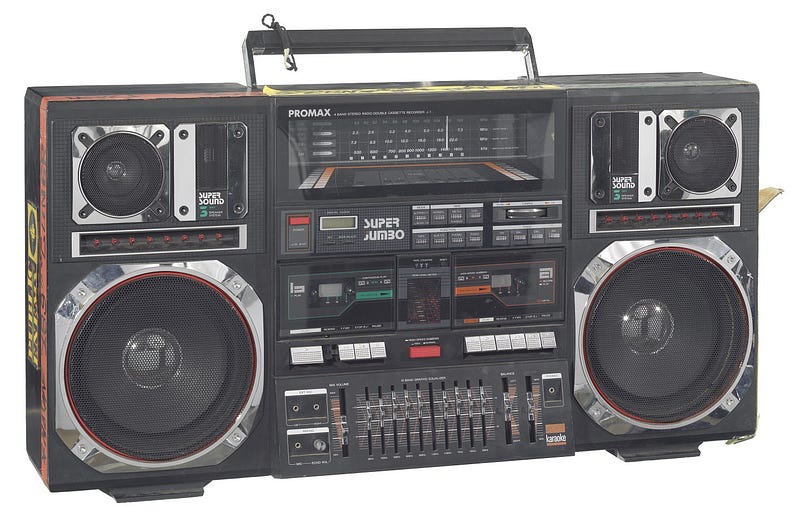
Backspin is a look back at the albums that shaped and defined hip-hop. It explores what made them resonate, the impact they had on the culture, and where they fit in today’s ever-expanding hip-hop canon.


