
Backspin: LL Cool J — Mama Said Knock You Out (1990)
LL Cool J regained hip-hop’s heavyweight title with a masterclass in artistic evolution. Just don’t call it a comeback. (91/100)
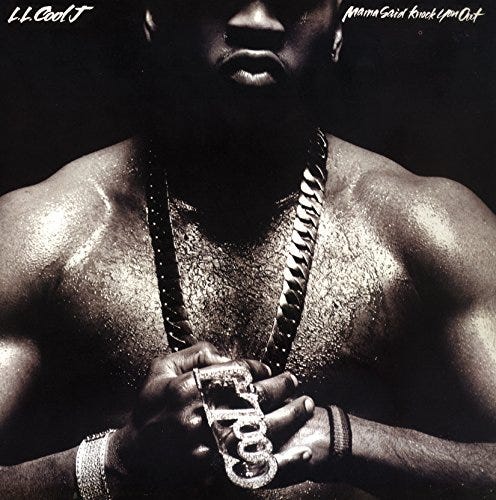
“Don’t call it a comeback,” LL Cool J commanded at the top of the iconic title track from 1990’s Mama Said Knock You Out. For LL, his triumphant fourth album achieved that and so much more, but in deference to an icon, let’s call it an evolution.
As the ’80s drew to a close, LL may not have been down for the count, but he was certainly on the ropes and taking serious body blows from all sides. In the two years separating his king-making 1987 sophomore classic, Bigger and Deffer, and its ill-fated follow-up, Walking with a Panther, hip-hop underwent a seismic shift. The cocksure braggadocio that catapulted him to superstardom as a Kangol-clad teen in the mid ’80s suddenly felt tone deaf beside the socially conscious missives of Public Enemy and Boogie Down Productions. His boasts of microphone mastery seemed trite compared to N.W.A’s gangsta bromides. His high speed, high volume delivery suddenly sounded primitive next to the carefully modulated multi-syllabic lyricism of Rakim and Big Daddy Kane. Hip-hop had entered its Cenozoic era. With his fellow kings from Queens, Run-DMC, having taken a tumble the previous year, LL Cool J was looking like the last of the rap dinosaurs, stumbling awkwardly through an unfamiliar landscape that could no longer sustain him.
But LL had a couple of aces up his sleeve that his extinct predecessors didn’t. First, as denoted by the initials in his name, ladies loved him. Female fans were still hard to come by for rappers, but more loyal than the trend chasing young males that most rappers relied on. Women may not have melted for the lasciviousness of Panther’s “Big Ole Butt” the way they did for the romanticism of Bigger and Deffer’s “I Need Love,” but they still loved Cool James. Secondly, he was a big f’ing star; hip-hop’s first legitimate solo superstar, with a name that rung, err, rocked bells well outside the graffiti tagged walls of the rap world. That meant any move he made would still command a certain level of attention, for better or worse. With legendary producer Marley Marl in his corner, LL played his cards just right on Mama Said Knock You Out.
I distinctly remember the first time I heard “The Boomin’ System” on a radio mix show. Blended seamlessly out of an EPMD record, the rumbling bassline atop crisp midtempo percussion felt right at home in the modern moment, while the judicious deployment of James Brown’s oft-sampled “Funky Drummer” break was a deft nod to classics from the previous era. The verses built on the track’s hypnotic balance of the fresh and the familiar, with LL relaxing his flow to a conversational cadence, falling easily into the pockets of the beat. The vintage Cool J phrasing and swagger reared their heads periodically, but the presentation was newly nuanced. Unlike on past classics, he didn’t drop his name until the final bar, leaving listeners to wonder throughout the song’s four mesmerizing minutes who exactly this is. It’s not just the delivery that’s dialed back. The over the top persona that defined ’80s LL moves to the backseat, thrusting the focus onto hip-hop itself, and the universal experience of blasting the latest beats while riding around town.
Whether it was an acknowledgement that he no longer sat atop the throne, or an intuitive sense that as the ’90s unfolded, rap fans would increasingly value relatability over grandiosity, this subtle deconstruction of his larger-than-life image is instrumental to the success of Mama Said Knock You Out. “Around the Way Girl” succeeds where Panther’s “girl” songs failed by positioning LL as neither hip-hop’s preeminent playboy nor a love sick romantic, but as a regular guy paying homage to the everyday women “standing at the bus stop” in every city across the world. Atop an airy track accentuated by an accelerated Mary Jane Girls sample, LL uses his newly matured song writing prowess to paint a vivid picture of the type of lady that women want to be and men want to be with.
I want a girl with extensions in her hair Bamboo earrings, at least two pair A Fendi bag and a bad attitude That’s all I need to get me in a good mood She can walk with a switch and talk with street slang I love it when a woman ain’t scared to do her thing Standing at the bus stop sucking on a lollipop Once she gets pumping it’s hard to make the hottie stop She likes to dance to the rap jams She sweet as brown sugar with the candied yams Honey coated complexion, using Camay Let’s hear it for the girl, she’s from around the way
If “The Boomin’ System” got him back in the tape decks of the hip-hop tastemakers, “Around the Way Girl” got LL back on the radio, and perhaps more importantly, MTV, where his easy charisma and high wattage screen presence made him a natural. Yet, in an era where calls of “sell out” could instantly derail a rap career, Mama Said Knock You Out straddles the line between “accessible” and “commercial” with tightrope precision.
Having eased the audience back into his corner, “Eat ’Em Up, L Chill” ratchets up the braggadocio, placing “the king of crowd rockers” firmly in his element of lyrical bloodsport. While the track falls right in line with canonical boast-fests like “Rock the Bells” and “I’m Bad,” LL delivers his lyrical barbs with measured precision as opposed to the unharnessed explosiveness of the earlier tracks. It’s a sign of maturation, and indeed, the track finds LL embracing his newfound veteran status in a genre driven by youth and novelty. “I remember when you was an amateur/writin’ your rhymes, starin’ at my signature,” he chides in aline of attack reminiscent of the tone Kool Moe Dee took with him just a few years prior. “Bought the album analyzed the style/Tsk, Tsk… God bless you, child.”
“Murdergram” is vintage LL Cool J; four minutes of rapid fire bars over a frenetic beat. His long ago offer to “battle anybody, I don’t care who tells” apparently still stood, and the dashikis and medallions did not prove sufficient shields for the conscious rappers who had shunned him the previous year. Tellingly, the version of “Murdergram” included on Mama Said Knock You Out was recorded live at the historic Rapmania concert at which LL was booed by a hometown crowed earlier in the year. Not only, is the use of the recording a subtle reminder of his MC prowess (he rides the 116 BPM track with near flawless breath control, sans hype man), it also feels like an embrace of his “rock bottom” moment.
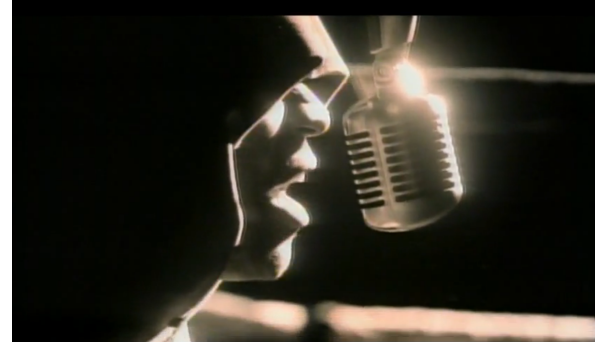
In a brilliant sequencing choice, its followed by “Cheesy Rat Blues,” in which LL mercilessly demolishes his rap superhero image with a self-deprecating account of his ignominious fall. Beneath the dry humor, it’s a cautionary tale about the dangers of ego and materialism, and possibly the prototype for what would become known as “struggle rap” in the 2000s. From there, he regroups by going home, quite literally, with the posse cut, “Farmer’s Blvd (Our Anthem).” It’s the first time LL shared the mic on one of his albums, and in an act of uncharacteristic magnanimousness, he’s content to play ringmaster, shining the spotlight on three of his unsigned homeboys.
In boxing terminology, LL Cool J has just set us up. Our defenses having been opened up by the unexpected honesty and humbleness, the ferocious title track is the overhand right that knocked the entire world to the canvas. Once the pounding drums and defiant harmonies looped from Sly & the Family Stone’s “Trip to Your Heart” kick in, we know we’ve been snookered. Still, the raw power of the knockout punch is even greater than we could have anticipated. With Marley expertly layering “Funky Drummer” atop the Sly sample, LL summons all of the ego that powered his glory years, fuels it with the frustrations of his recent struggles, and unleashes one of music’s most visceral moments.
Don’t call it a comeback I’ve been here for years I’m rocking my peers Puttin’ suckers in fear Makin’ the tears rain down like a monsoon Listen to the bass go BOOM! Explosions, overpowerin’ Over the competition I’m towerin’ Wrecking shop when I drop these lyrics That’ll make you call the cops Don’t you dare stare, you better move Don’t ever compare Me to the rest that’ll all get sliced and diced Competition’s payin’ the price
If the bulk of the album is LL adapting his signature style to contemporary trends, “Mama Said Knock You Out” is LL flexing his massive biceps and bending 1990 hip-hop to fit him — fast, intense, aggressive, loud, and unapologetically self-aggrandizing.
The remainder of the album’s B-Side is an exercise in eclecticism, with LL showing off his proficiency in a sprawling range of styles and subject matter. “Milky Cereal” is a flight of fancy worthy of Slick Rick, with LL imagining his conquests as sugary breakfast cereals. “6 Minutes of Pleasure” turns the tables on his loverman persona, finding the rap warrior deep in his feelings over a scandalous partner he knows is using him. “Illegal Search” even veers into the sort of social commentary that he had judiciously avoided, with LL cleverly addressing racial profiling and police harassment. By 1990, the subject matter was well trodden, but by tackling it with humor over a bouncy beat, it likely reached ears that might have been put off by the abrasiveness of N.W.A or Ice-T. And speaking of Ice-T, if you think LL let the shots thrown his way on “I’m Your Pusher” go unparried, kindly go straight to verse 3 on the surgical score settling track, “To Da Break of Dawn.”
“The Power of God” closes the album out on a grateful note, with LL speaking to his faith for the first time on record. It feels very much like a victorious pugilist thanking God after bludgeoning his opponent into submission, because with Mama Said Knock You Out, LL Cool J had unequivocally regained hip-hop’s heavyweight title.
As in life, evolution is the key to survival in the delicately fickle hip-hop ecosystem. With Mama Said Knock You Out, James Todd Smith not only created the blueprint to which he would return to maneuver multiple crossroads over a quarter century career, but also upon which countless MCs from future generations would model their success.
It’s the quintessential “rap star” album, balancing accessibility with authenticity, bravado with vulnerability, legacy with innovation. It’s a smorgasbord of topical and tonal variety that achieves its eclecticism without sacrificing clarity of persona. It’s a masterclass in artistic self-awareness; understanding the artist’s core strengths and adapting them to fit the moment, while addressing perceived weaknesses head on. Most of all, it’s a testament to the power of good music to transcend generations and rise above trends, even in the face of the longest odds.
By the Numbers
Production: 9 Lyrics (how the words are put together): 9 Delivery & Flow: 9.5 Content (Substance): 9.5 Cohesiveness: 9.5 Consistency: 9 Originality: 8.5 Listenability: 9.5 Impact/Influence: 9 Longevity: 8.5
Total — 91
Next
Previous
Backspin is a look back at the albums that shaped and defined hip-hop. It explores what made them resonate, the impact they had on the culture, and where they fit in today’s ever-expanding hip-hop canon.