
Backspin: Fugees — The Score (1996)
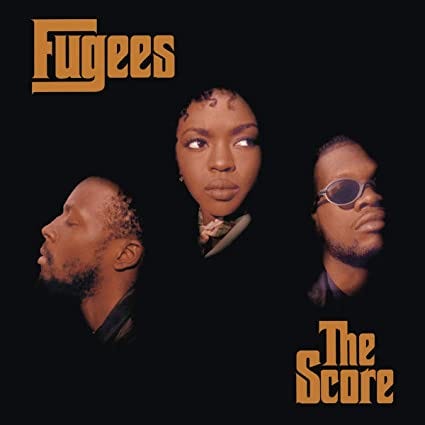
The commercial success of the Fugees’ sophomore album obscures its revolutionary intensity. (89.5/100)
“Everybody wear the mask, how long will it last?”
Perhaps no question better captures our current moment. In 2020, masks dot desolate city scapes, obscuring faces ravaged by fear of an unseeable adversary and weariness at an uncertain future. It was posed by the Fugees two and a half decades ago on their groundbreaking 1996 sophomore album, The Score. On an album catapulted to pop ubiquity by a trifecta of the ’90s most recognizable hits, “The Mask” went largely unnoticed. Instead, it’s the proverbial Spook Who Sat by the Door. It’s the track that best encapsulates the record’s bold, subversive, and often overlooked modus operandi, while ensconced inconspicuously towards the end of a hook-heavy, seemingly mass market major label rap release.
“The Mask” is built on the heady premise that negotiating a world awash in chaos and corruption requires multiple faces. Each MC presents a unique perspective. Wyclef Jean tackles the layers of double dealing driving the business of America. Lauryn Hill explores the obstacle that our “masks” pose to human connection in romantic relationships.Pras Michel lifts the veil of public servitude behind which police mask predatory predilections. The elastic bassline and and eerie xylophone atop stuttering drums create a disorienting soundscape that surfaces the dystopian undertones bubbling beneath the infectious melodies and hooks that propelled the album to a mind boggling 18 million in global sales.
But those melodies and hooks were themselves a mask, leveraging the sonic acumen of Jean and his production partner Jerry “Wonder” Duplessis and Hill’s generational vocal charisma to provide just enough pop sheen to draw the masses into the heart of darkness that gives The Score it’s edge. Take the lead single, “Fu-Gee-La,” which took radio and MTV by storm thanks to a body rocking beat and Hill’s spirited Teena Marie-inspired chorus. In the club, the relentless percussion is a call to move. In the shadows of a corroding world frantically papering over its growing iniquities, it’s a call to arms; a cacophony of war drums by which to hogtie the landlord and topple confederate statues.
That uneasy tension between mass market and massacre is even more apparent in “Ready Or Not.” The ubiquity of Enya’s “Boadicea,” which “The Score’s foreboding third single samples, exploits the power of familiarity to lighten the track’s menacing aura. It’s just enough of a sonic slight of hand to land the brooding battle cry into heavy radio rotation despite the apocalyptic scene set by Wyclef:
Now that I escape, sleepwalk awake Those who could relate know the world ain’t cake Jail bars ain’t golden gates Those who fake, they break When they meet their 400-pound mate If I could rule the world Everyone would have a gun, in the ghetto of course When giddyuping on their horse I kick a rhyme drinking moonshine I pour a sip on the concrete, for the deceased But no don’t weep, Wyclef’s in a state of sleep Thinking ‘bout the robbery that I did last week Money in the bag, banker looked like a drag I want to play with pelicans from here to Baghdad Gun blast, think fast, I think I’m hit My girl pinched my hips to see if I still exist I think not, I’ll send a letter to my friends A born again hooligan only to be king again
The chip on the group’s collective shoulder weighs even heavier on “Zealots,’ which flips the airy doo-wop of The Flamingo’s “I Only Have Eyes For You,” into an ominous backdrop over which the Fugees take to task the rap purists who scoffed at the carefree catchiness of their earlier hits. While Pras’s shot across the bow of Jeru Tha Damaja (“No matter who you damage, you’re still a false prophet”) sparked the most barbershop chatter, it’s Lauryn who steals the show, effortlessly flexing her lyrical superiority. “Even after all my logic and my theory,” she offers with mock magnanimousness, “I’ll add a motherf***er so you ig’nant n****s hear me.”
Even when battling other MCs, the Fugees infuse their rhymes with overtones of spiritual, philosophical, and societal reckoning. So, when the mask starts to peel back on the album’s deep cuts, explicitly taking on the injustice and brutality of the urban landscape, the results are doubly potent. “The Beast” is a strident rebuke of police brutality that positions law enforcement corruption within a broader power structure, fortified through politics and media, that intentionally stokes chaos as a control mechanism. “Family Business” portrays an apocalyptic world of greed and betrayal in which a tight circle of trusted compatriots is the only means of survival. It’s perhaps The Score’s most fatalistic track, and for me, it has always been the most mesmerizing. The song reaches its zenith with Lauryn unfurling one of her most strident missives:
My circle, it can’t be broken Open; cut-throatin’, provokin’ Record promotin’ tokens chokin’ on their words like smoke and Cause we soft spoken, doesn’t mean that we’ve forgotten Your booty smells rotten and one day you will be gotten See jokers is scatter-brained, their focus is unrestrained My army is trained, you’ll never find us beefin’ in vain Cause I’ve seen fire and I’ve seen rain You claim fame, while modest n****s remain I can judge a character like Ito judge a verdict And if you bringin’ threats, I’ll give you sex if I ain’t heard it See poppin’ s***’s about your attitude and how you word it I’ve seen the biggest n****s on the block get murdered And they deserved it Or so the beast said when they served it That s*** is nervous So what’s my purpose? Family, we must preserve it Your number’s retired I hope you like the hell fires You’ll be screamin’ “Murder She Wrote” like Chaka Demus and Pliars
On paper, Lauryn’s solo remake of Roberta Flack’s quiet storm classic “Killing Me Softly” looks wildly out of place sandwiched between the dark tension of “Family Business” and the bass heavy battle hum of the Diamond D produced title track. It’s a testament to the acumen of Jean and Wonder as executive producers, that, thanks to the strategic placement of a transitional skit and a brief vocal intro from Hill evoking the underground dubplate tradition of Jamaican street music (“killing a sound boy with this sound”), Hill’s hood chanteuse turn feels right at home. In fact, it provides a much needed pallet cleanser, allowing us to luxuriate in a brief moment of earnest intimacy amid the swirling chaos and claustrophobic paranoia that have driven the album thus far.
Wyclef’s later reimagining of Bob Marley’s “No Woman No Cry” isn’t as successful. Its breezy tropical bounce and guitar driven production stand in jarring contrast to the brooding, low end centered soundscapes to which the previous 11 tracks have accustomed us. Not that it hurt the album’s reception. Released at the height of the CD era, The Score, unlike earlier hip-hop classics, was largely consumed in bite sized pieces.
Given the crossover success of its singles, I’ve always wondered how many of the 18 million people who had the CD on their shelves, often as the only hip-hop release, never actually listened to it in its entirety. What percentage of Fugees fans were more than content to see only the most superficial contours of the mask, without ever having to grapple with the the more difficult issues of race, class, economics, and politics at the heart of an album they claim to love? Conversely, how many of the “zealots,” the backpackers and hardcore heads who may have connected with the less heralded tracks as an extension of the conscious hip-hop that awakened their minds and militance in the early part of the decade, were repelled by the commercial saturation of the singles?
As tends to be the case, the mask was a double edged sword for the Fugees, allowing them to amass one of hip-hop’s broadest fanbases, but not necessarily one of its deepest. A lot of people liked the Fugees, or some element of them, but few speak on them with the adulation often heaped upon Wu-Tang Clan or A Tribe Called Quest. As a result, The Score holds the rare distinction of being both one of hip-hop’s most over exposed albums, and one of its more underrated.
By the Numbers
Production: 9.5 Lyrics (how the words are put together): 8 Delivery & Flow: 8 Content (Substance): 9 Cohesiveness: 9.5 Consistency: 9.5 Originality: 10 Listenability: 9.5 Impact/Influence: 8 Longevity: 8.5
Total — 89.5
Next
Previous
Backspin is a look back at the albums that shaped and defined hip-hop. It explores what made them resonate, the impact they had on the culture, and where they fit in today’s ever-expanding hip-hop canon.


