
Backspin: Black Star — Mos Def & Talib Kweli are Black Star (1998)
With hip-hop reaching new heights, Mos Def and Talib Kweli took it back to its essence. (85/100)
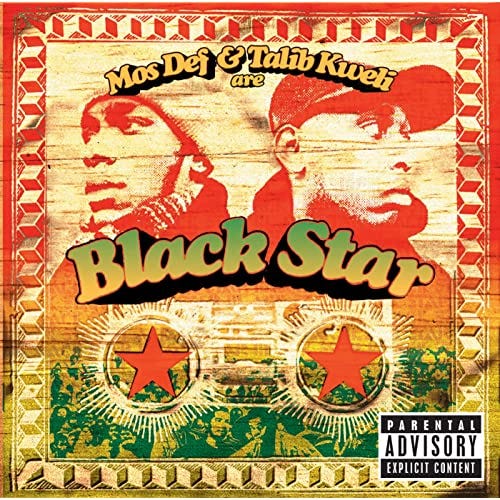
September 29, 1998 is as close to an official changing of the guard as hip-hop has seen.
On that faithful fall day, A Tribe Called Quest released their final album (until their 2016 reunion), The Love Movement, symbolizing an official end to the era of cerebral, jazz inflected hip-hop of which Tribe had been the standard bearer for nearly a decade.
Mere feet over, record store shelves were being stocked to the gills with Jay-Z’s Vol. 2… Hard Knock Life, the album that would quickly emerge as the blueprint for the east coast iteration of the “bling” era. With it, pristine digital production and a hustler’s prosperity gospel would replace the organic beats and everyman rhymes of Tribe and their brethren.
Rounding out the day’s trifecta of superstar releases was Outkast’s iconoclastic masterpiece, Aquemini, which signaled that hip-hop’s vanguard of groundbreaking creativity, grown stagnant up north, had found sustenance in the south.
Against that backdrop, the understated 9/29 arrival of Mos Def & Talib Kweli are Black Star felt like salvation to a particular subset of hip-hop heads. It was an audience steeped in New York traditionalism, shaped by the earthy eclecticism of Tribe’s Native Tongue collective, and awakened by the fervent Black consciousness of contemporaries like Brand Nubian (also dropping their momentary swan song that day) and Poor Righteous Teachers.
The pairing of two of Brooklyn’s sharpest wordsmiths over jazz inspired production felt like the beacon that would lead us out of the wilderness of corporate sponsored materialism, murder, and malaise in which we suddenly found ourselves. If we simply listened hard enough, believed strongly enough, and proselytized with the fervor of the newly evangelized about the Black Star we were following, we could be the genesis for the rebirth of hip-hop.
To be sure, Mos Def & Talib Kweli are Black Star lent itself to this sort of devotion, even invited it. Borrowing their name from the Black Star Line — the steamship company created by Marcus Garvey to facilitate the development of a global Pan-African economy — Mos and Kweli use the opening track, “Astronomy (8th Light)” to add layers to its already weighty symbolism. Using a series of similes, the MCs position the album at the epicenter of Blackness, as exemplified by Mos Def as he rhymes:
Black like the planet that they fear, why they scared? Black like the slave ship belly that brought us here Black like the cheeks that are roadways for tears That leave Black faces well traveled with years Black like assassin cross hairs Blacker than my granddaddy armchair He never really got no time to chill there Cause his life was warfare
The bass heavy mid-tempo production of Da Beatminerz’s Mr. Walt and Evil Dee, with jazz legend Weldon Irvine providing otherworldly keys, creates an intimate backdrop that makes it feel like Mos and Kweli are speaking directly to us. So when Mos implores “everybody hop on the one, the sound of the two,” disaffected fans displaced by the changes embodied by 9/28/98 suddenly felt like we had a home.
“Definition” and “Re: Definition” play like a mission statement in two parts. Built upon a pair of Boogie Down Productions classics,”Definition” positions Mos and Kweli as the heirs to the mantle of golden era consciousness. Both MCs attack the track with machine gun paced staccato flows. Their verses espouse artistic integrity and decry the violence that had recently claimed 2Pac and the Notorious B.I.G. “Re: Definition” jettisons its predecessor’s raggamuffin energy for a brooding mid-tempo dirge. The “back to the essence” message remains the same. But here they choose to be about it rather than speak about, unleashing a fierce display of wordplay.
Black Star differentiated themselves from many of their underground compatriots by delivering more than just heady bars and righteous indignation. Warm strings bring a leisurely sensuality to “Brown Skin Lady,” a heartfelt love letter to women of color, offering a much needed deviation from the casual objectification so prevalent in mainstream hip-hop of the late ’90s. Mos deploys his disarmingly intimate singing voice for one of the first times on the effortlessly catchy hook, before cranking up the playful charisma that would soon turn him to a screen star for a flirtatious verse. But it’s Kweli who anchors the song, laying bare his insecurities and passionately waxing poetic on the comfort that comes from sharing himself with a like minded partner.
Young Talib Kweli possessed a rare combination of intelligence and authenticity that made him every bit as engaging as his more playful group mate. The soulful “K.O.S. (Determination)” lands him squarely in his wheelhouse. With Mos stepping back to provide accompanying Fender Rhodes keys, Kweli more than ably rocks the mic solo, delivering a thesis on black consciousness heading into the 21st Century:
Knowledge of self is like life after death With that you never worry about your last breath Death comes, that’s how I’m livin’, it’s the next days The flesh goes underground, the book of life, flip the page Yo they askin’ me how old, we livin’ the same age I feel the rage of a million n****s locked inside a cage At exactly which point do you start to realize That life without knowledge is death in disguise? That’s why, knowledge of self is like life after death Apply it, to your life, let destiny manifest
The track places itself squarely in the Native Tongue lineage, referencing A Tribe Called Quest both in its sampling of Minnie Riperton’s meditative “Baby, This Love I Have,” which powered “Check the Rhime,” and deploying Vinia Mojica, immortalized on “Verses from the Abstract”, to croon the hook. Kweli’s lyrics also foreshadow the existential and literary qualities that elevate the album’s two best tracks, “Respiration” and “Thieves in the Night.”
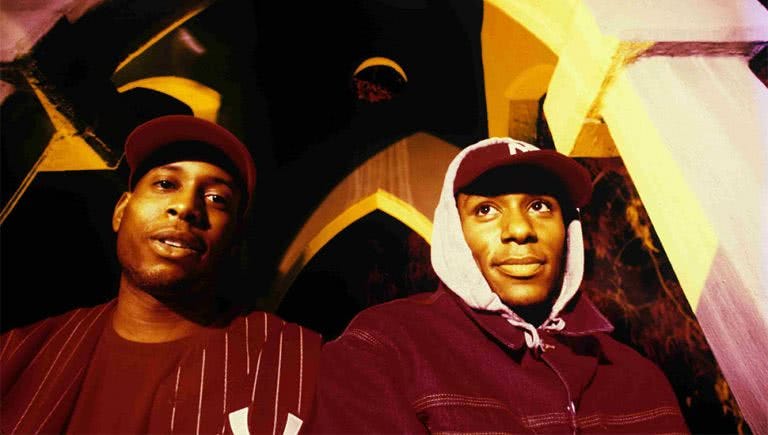
“Respiration” is perhaps hip-hop’s greatest use of extended metaphor this side of Common’s “I Used to Love H.E.R.”, personifying the city as a living, breathing life force. Fittingly enough, the artist formerly known as Sense delivers the track’s closing verse, marking the album’s only high profile guest appearance. Each of the three MCs approaches the heady theme from a unique perspective over Hi-Tek’s hypnotic track.
Mos Def paints atmospheric vignettes that vacillate between the picaresque and the gothic. Kweli ups the ante, using the city as a microcosm of all the ills facing a society careening into nihilism in “a paradox we call reality.” But it’s Common who elevates the song into truly rarified air with his poetically rendered meditation on loss, love, and limitation.
“Thieves in the Night” borrows its concept and hook from a passage in Toni Morrison’s novel The Bluest Eye, expanding upon its source material’s meditation on the nebulous status of Black life in America. 88 Keys’ production sets a pensive tone without sacrificing the organic beauty of the somber keys. After Kweli lays out the concept with unaffected precision, Mos spells out the specifics with one of the best verses of his career:
I find it’s distressing, there’s never no in-between We either n****s or Kings, we either b****es or Queens The deadly ritual seems immersed in the perverse Full of short attention spans, short tempers, and short skirts Long barrel automatics released in short bursts The length of Black life is treated with short worth Get yours first, them other n****s secondary That type of illin’ that be fillin’ up the cemetery This life is temporary but the soul is eternal Separate the real from the lie, let me learn you Not strong, only aggressive cause the power ain’t directed That’s why we are subjected to the will of the oppressive Not free, we only licensed Not live, we just exciting Cause the captors own the masters to what we writing Not compassionate, only polite, we well trained Our sincerity’s rehearsed and staged, it’s just a game Not good, but well behaved cause the camera survey Most of the things that we think, do, or say We chasing after death just to call ourselves brave But everyday, next man meet with the grave I give a damn if any fan recall my legacy I’m trying to live life in the sight of God’s memory
Black Star’s high points are so high that they tend to obscure the album’s stumbles, particularly when viewed through the rose colored glasses of nostalgia. Re-visiting it in full, I was reminded of why I never quite loved the album as much as I loved what it represented. The realer-than-thou pretense that would ultimately short circuit the backpack renaissance that Black Star and their Rawkus Records cohorts briefly sparked becomes tiresome over the course of 50 minutes. The moments that lean into it most explicitly are often where they stumble hardest.
Mos Def’s solo re-imagining of Slick Rick’s “Children’s Story” lacks the wit and whimsey of the original, and the plodding track flattens his normally infectious energy. It’s also impossible to ignore the irony of Mos using the track to sanctimoniously deride other MCs for jacking beats while jacking an entire song.
“B Boys Will Be Boys” is a nondescript homage to early 80s b-boy anthems that serves little purpose other than flexing hip-hop cred. Its placement between “Brown Skin Lady” and “K.O.S.” obliterates the continuity in what should have been the album’s soulful center. “Hater Players” is a conceptually clever inversion of the “player hater” label bling era stars often hurled to deride their purist critics. Unfortunately, the awkward beat and preachy lyrics end up embodying every stereotype of those very purists.
Ultimately Mos Def & Talib Kweli are Black Star is a fitting embodiment of the short lived backpack renaissance - both its return to fundamentals and artistic ambition that offered a breath of fresh air, and the self-consciousness and sanctimony that ultimately stunted it.
It encapsulates a moment that crystalized on September 29, 1998. The moment still stands as confirmation that no matter how high hip-hop rises into the pop culture stratosphere, the vintage elements will continue to inspire new generations of young griots to express their truth in rhyme, even as SoundClouds have long since replaced Jansports.
By the Numbers
Production: 8 Lyrics (how the words are put together): 9.5 Delivery & Flow: 9 Content (Substance): 9.5 Cohesiveness: 8 Consistency: 8 Originality: 9 Listenability: 8 Impact/Influence: 9 Longevity: 7
Total — 85
Next
Previous
SEE ALL..

Backspin is a look back at the albums that shaped and defined hip-hop. It explores what made them resonate, the impact they had on the culture, and where they fit in today’s ever-expanding hip-hop canon.