Are Electric Cars Really Sustainable?
For the 21st century, the answer is a definite “no.” They can be sustainable in a 22nd-century circular economy, but we may well have better alternatives by then.
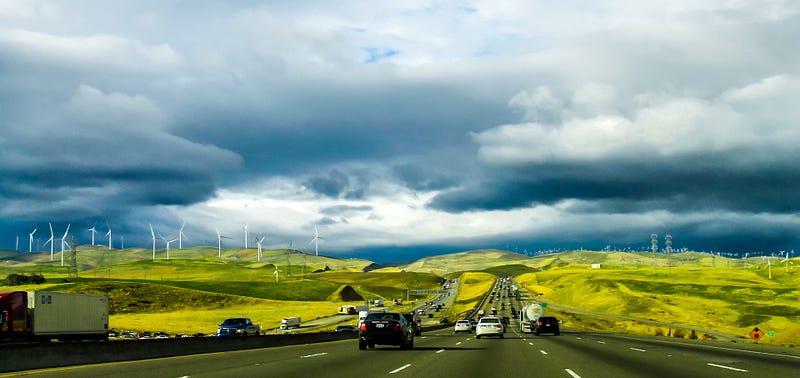
Three previous articles in this series have outlined why electric cars offer no clear climate benefits, how the materials required in their batteries cause grave environmental damage, and why they will create strategic supply dependencies substantially worse than oil. But surely, EVs must be far more sustainable than gasoline cars, right? After all, they can be charged by wind and solar energy that will never run out.
Unfortunately, this is not the case either. As this article will demonstrate, the wind/solar/EV strategy is far less sustainable than advertised and, in the long run, hydrocarbon fuel can be just as sustainable as batteries.
The Fossil Fuel Dependence of Green Technologies
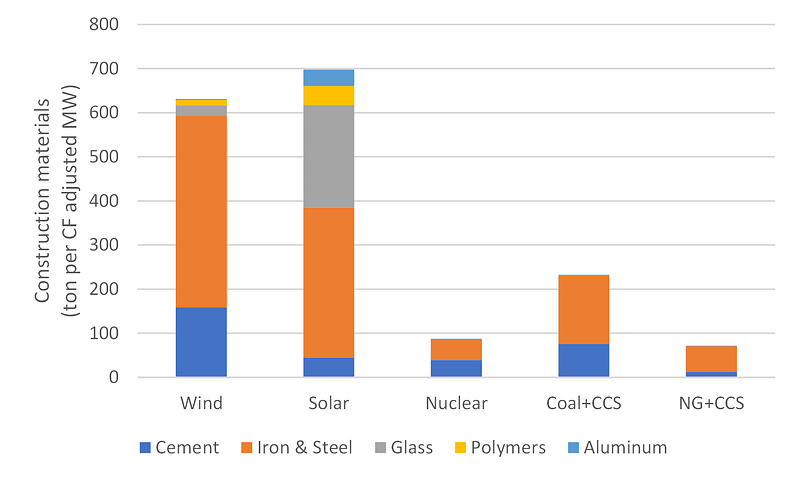
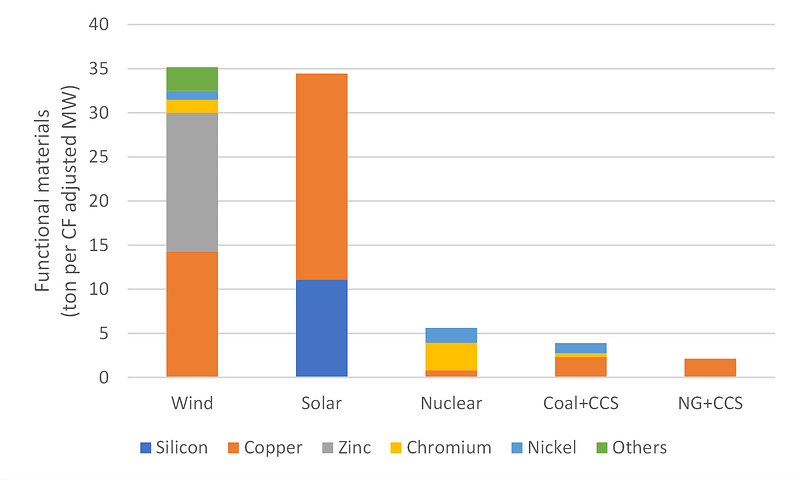
Wind turbines, solar panels, and EVs are just as dependent on fossil fuels as the rest of the economy. First of all, since the inherently diffuse nature of wind and solar energy demands such vast blade and panel areas, their construction requires large amounts of primary materials from “hard-to-abate” fossil-dependent industries. To make matters worse, the vast grid expansions required by wind and solar will roughly double their material demands (not included in the graph below).
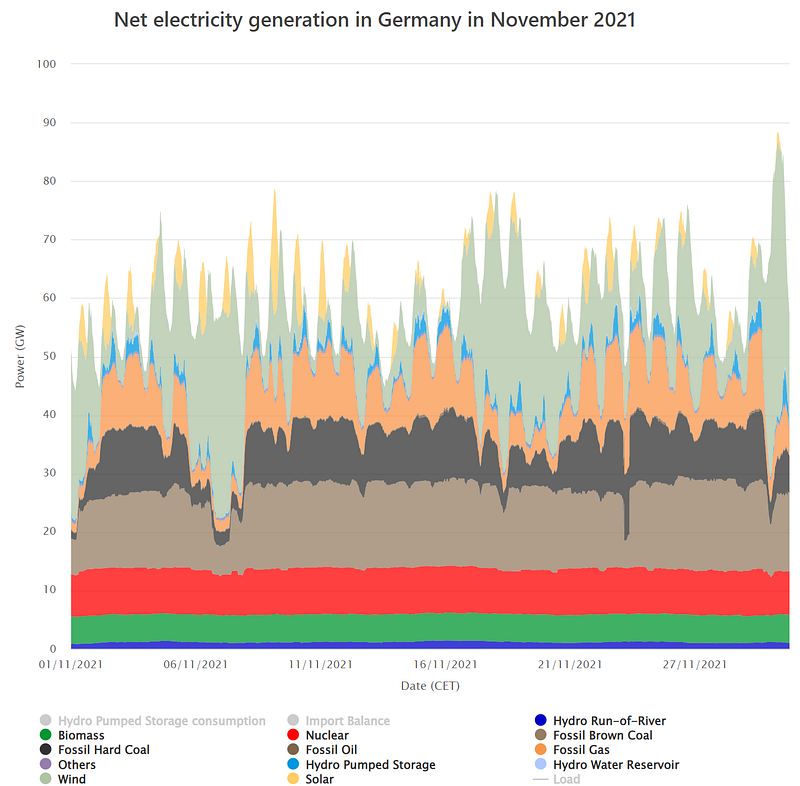
Second, fossil fuels will be required for decades to ensure reliable power during long periods of low wind and sun. Without such firm capacity, a modern economy simply cannot function and variable renewables would have essentially no value.
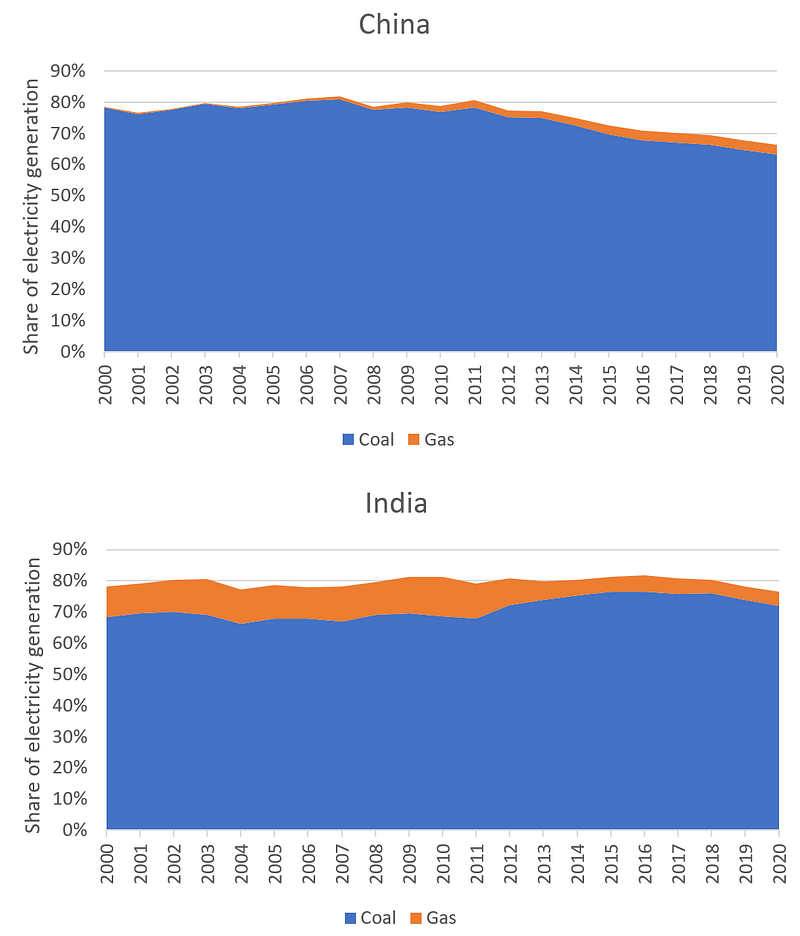
Furthermore, most of the world’s EVs still drive on a high share of fossil-derived electricity and this will remain the case in the largest developing car markets for decades to come.
Yes, these issues can eventually be addressed. There are technical solutions for building (e.g., green steel) and backing up (e.g., long-term green hydrogen storage) wind and solar in a more sustainable manner, but these are in the long-term future (and likely to be quite expensive). Given the long timeframes required to demonstrate and deploy these capital-intensive solutions on a global scale (especially if they are uneconomical), variable renewables and electric cars will remain highly dependent on fossil fuels well beyond mid-century.
Unsustainable Extraction of Critical Materials
Aside from the vast primary material demands mentioned earlier, wind, solar, and electric cars depend on a range of other critical minerals. As outlined in the previous two articles, exploitation of these minerals brings serious environmental and supply security problems. Well, we can now add sustainability challenges to the list.
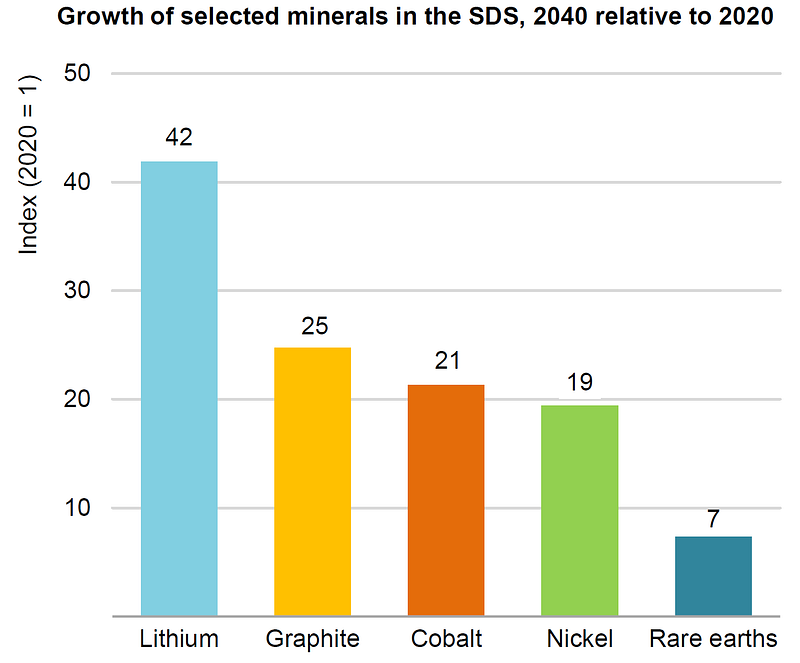
Current reserves to production (R/P) ratios of critical minerals are not much higher than those of fossil fuels, and popular decarbonization pathways demand that the rate of production of several of these minerals must be increased by more than an order of magnitude and maintained at such levels for most of this century. If material-intensive green technologies are scaled at a rate that reduces fossil fuel demand, R/P ratios of these minerals will quickly shrink, whereas those of fossil fuels will grow, giving a very different picture of which option is the least sustainable.
Many environmentalists want us to leave highly profitable fossil fuels in the ground, but they conveniently ignore all the critical minerals that need to be dug up and refined from low (and ever-declining) ore grades instead. This “green” ideal is no more sustainable than the current status quo.
Circular Batteries vs. Circular Hydrocarbons
In the long term, most of these critical minerals can be recycled. Of course, we would have to have dug up about 1000x more material than we have to date, but this is a possible scenario sometime in the 22nd century.
However, we can also make new hydrocarbons that function just like fossil fuels in the economy today, either via biological or electrochemical routes. It’s by no means clear that a circular economy based on critical minerals will be any more scalable, clean, practical, or cost-effective than a circular economy based on hydrocarbons.
Sustainable hydrocarbons
Biomass is a well-known source of sustainable hydrocarbons. Of course, we’re limited by how much we can sustainably produce, but the global technical potential is quite large. In the long term, technologies like algae farming on land and sea could greatly increase this potential and reductions in fuel use will allow a fixed amount of sustainable biofuels to occupy a higher share in gasoline blends. Also, from a climate perspective, hydrogen produced from biomass with CCS can deliver a negative-emission transportation fuel.
The other alternative is to combine electrolytic hydrogen with CO2 from the air or from biomass conversion processes to make synthetic liquid fuels. Methanol is the simplest alternative and engines and fuel cells for this promising liquid fuel are already available. In fact, methanol can significantly increase internal combustion engine efficiencies by enabling higher compression ratios and using waste heat for reforming methanol to a mixture of H2 and CO with a higher energy content than the original fuel.
Green methanol engines vs. battery electric vehicles
Electric car advocates quickly point out that synthetic liquid fuels are a much less efficient use of green electricity than electric cars. This is true, but not to the extent generally assumed.
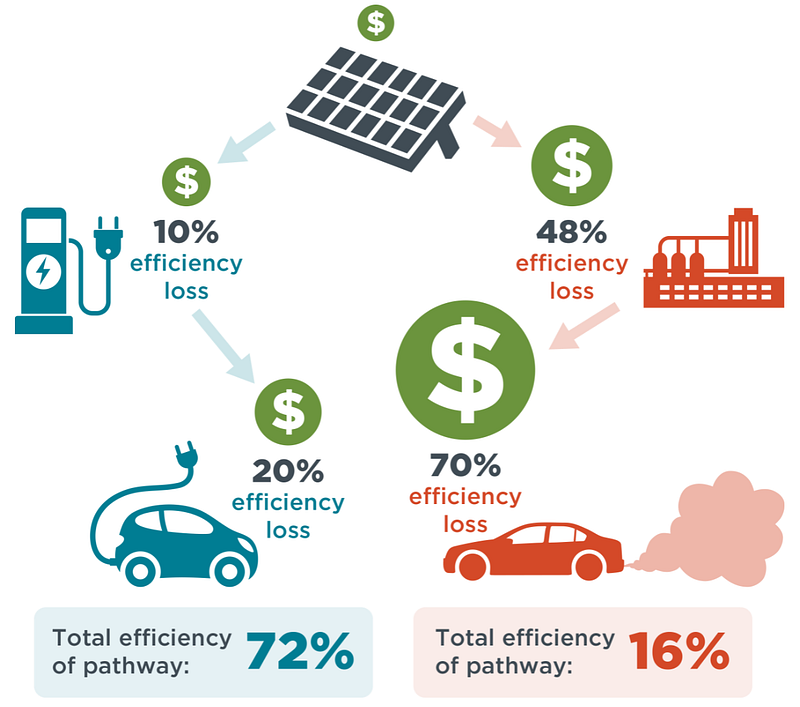
When EV advocates make such a comparison, they generally assume engine efficiencies of around 30%. However, Nissan has already cracked 50%, and there are many possibilities to push efficiency further, including the inherent benefits of methanol fuel mentioned earlier. In the long run, 60% should be achievable. Furthermore, the conversion efficiency of electricity to methanol is about 60% with a 70% efficient electrolyzer. Multiply these two factors, and the long-term efficiency of green methanol is about 36%.
So, the overall efficiency is still only half that of the EV pathway, but the inherent transportability of liquid fuels quickly makes up for this inherent disadvantage. Indeed, these fuels can be produced in regions with the very best renewable energy resources (and the most available space) and exported internationally at near-negligible costs. For example, the same solar panel can produce twice as much output when installed in Chile as it can in Europe, halving the levelized cost of solar energy and sharply reducing the cost of intermittency and the problem of public resistance. This advantage by itself is more than enough to wipe out the efficiency disadvantage of liquid synfuels in many markets.

Furthermore, liquid synfuels also circumvent the large added costs of electricity transmission and distribution capacity and a vast network of slow and fast chargers. As outlined earlier, charging electric cars with intermittent wind and solar power is problematic. Wind is simply too unreliable with variations over too long timescales, whereas solar is inherently misaligned with the ideal electric car charging pattern. These fundamental challenges will introduce large additional costs to a system striving to charge a large fleet of electric cars with wind and solar power, shifting the balance more toward synthetic hydrocarbons.
Nuclear energy
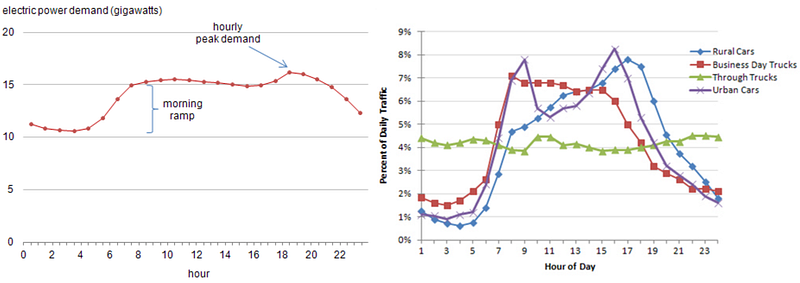
The one case where electric cars can be more attractive is if we come up with affordable and publicly accepted nuclear technology. Steady production of nuclear power aligns nicely with electric car use patterns as the cars can charge at night when demand is lower, allowing the nuclear plants to operate at a higher capacity factor and avoiding any need for grid expansions. Of course, such a scenario still faces the large material challenges of electric cars, but plug-in hybrids with much smaller batteries could combine synergies with nuclear power and a smaller amount of synthetic hydrocarbons for quite an efficient and sustainable transportation system.
In a scenario where nuclear continues to be hampered by public resistance, large-scale liquid synfuel production from nuclear plants constructed in isolated regions where excessive regulation does not inflate costs offers another promising pathway.
With timeframes stretching to the 22nd century, we might even discover some fantastical new technology for powering our vehicles. Who knows, we might even get the long overdue nuclear cars that never need to be fuelled!
True Sustainability is a Long-Term Goal
In the end, all these sustainability-oriented options are inherently inferior to the limited fossil fuel bounty that transformed human civilization over the last century. No EV strategy or synfuel can ever compete with oil that costs only $23/barrel (0.5 $/gallon) to produce.
Development priorities
And here’s the thing: Our great societal transformation remains far from complete. In fact, most of the world is yet to be built. As shown below, 86% of the population still lives below what Westerners would consider decent living standards. Furthermore, the entire 3 billion souls worth of population growth over this century will take place in developing regions.

There’s no point in trying to build a truly sustainable global society before we’ve brought most of the world to decent living standards. In fact, pressuring the developing world to phase down fossil fuels via green technology-forcing policies is downright irresponsible. The average developing world citizen consumes 20x less than the average rich-world citizen and they have every right to copy our use of fossil fuels to better their lives.
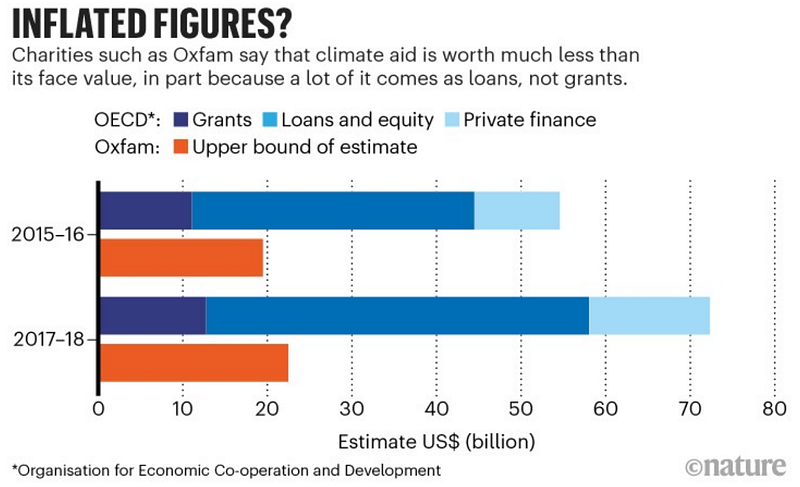
If we want these nations to grow without large expansions of fossil fuel consumption, we need to cough up the $1.3 trillion per year they (rightfully) demand. Sadly, since we could not even meet our pledge of $0.1 trillion (not by a long shot if we only count genuine climate aid), the chance of that happening is next to nothing.
Oil still has an important role to play
Luckily, we still have loads of oil to help us complete this transformation: over 50 years of proven reserves (available at attractively low production costs) and triple that amount in potentially recoverable resources.
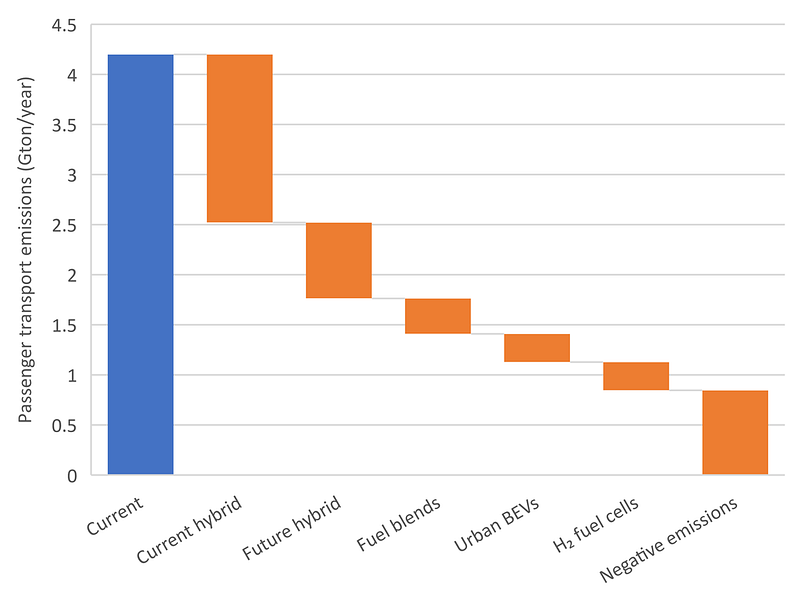
However, it’s essential that we use our remaining oil reserves far more intelligently than we have been doing to date. For example, if we manage to freeze automobile demand at current levels by, among others, constructing more human-oriented cities, oil requirements (and CO2 emissions) in this segment can profitably be reduced by 80% by 2050.
The role of the rich world
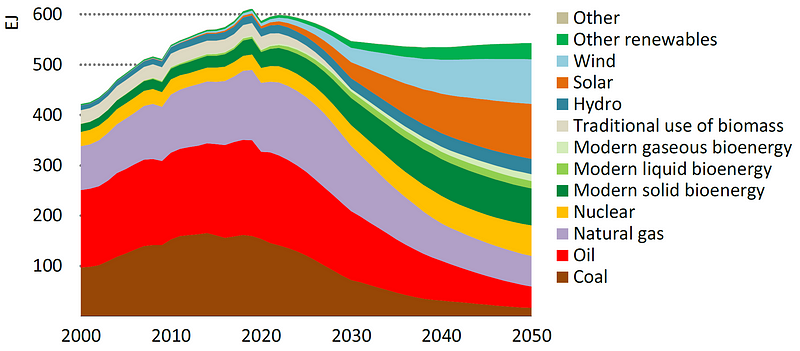
Our mission in the West is not to force the developing world into “net-zero by 2050.” No, our mission is to set a very different example for the developing world to emulate — a societal model that would fit within planetary boundaries when scaled to the whole world. In the case of passenger transportation, it might look something like the graph above.
What it most certainly does not look like is the exploitation of developing countries for environmentally destructive mining of battery materials to power our huge electric SUVs. Neither does it look like the car-centered society of the US that consumes an incredible 4x more oil per capita for personal transportation than Europe. We can do so much better.
Long term thinking
Imagine for a moment you were one of the 5 billion people worldwide having to make do with less than 10 $/day. When you need to figure out how to keep yourself and your family alive and happy on $10, $5, or even $2 per person per day, how much would you care about sustainability?
If we want a sustainable society, we first need a much more equitable society where almost everyone has their basic material and developmental needs met. Pushing for sustainability too soon by forcing technologies like electric cars that are not naturally deployed by the market will only delay this goal.
Thus, while sustainability is a reasonable objective for developed nations today, it makes no sense for the vast majority of world citizens. Global sustainability is a long-term goal, and we would do well to remember that.