
Three Little-Known Climate Change Impacts of Electric Cars
Here’s what happens when we add the effects of structural materials, the Jevons paradox, and the time-value of energy to EV battery and grid emissions.
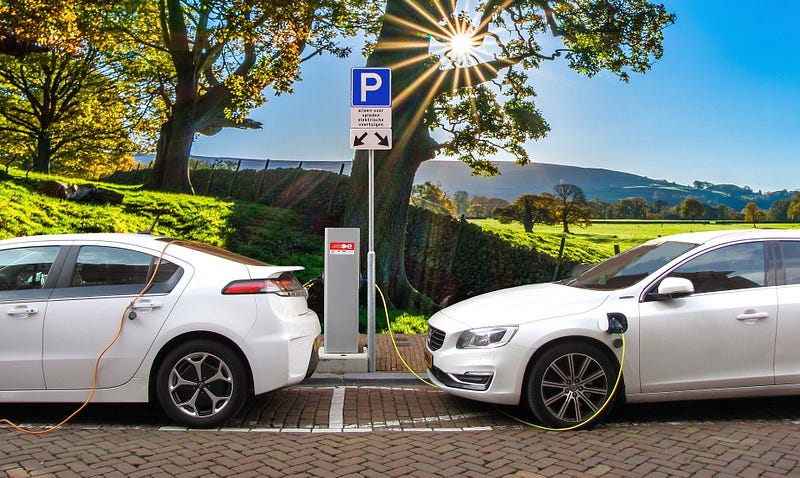
Electric cars are heavily marketed as “zero-emission” vehicles. While it’s true that they don’t have a tailpipe that emits various gases into the atmosphere, the full story is much more nuanced.
The most obvious additional impact of electric cars comes from emissions produced by generating the electricity they consume. In the most important global car markets in developing Asia, these emissions are very large and likely to remain so for decades.
Next, we have all the emissions involved in producing the large battery needed to give an electric car a decent range. As a rule of thumb, each 12 kWh of battery capacity emits about 1 ton of CO2 before the electric car drives its first mile.
Although still ignored in policy and marketing, these electric car emission sources are at least reasonably well understood in academia and industry. However, they still do not tell the whole story. This article will discuss three more factors that further complicate the climate credentials of electric cars.
A Typical Electric Car Emissions Assessment
In an admirably honest report on lifecycle CO2 impacts of electric cars, the new electric car company, Polestar, revealed that its cars only bring marginal CO2 savings when considering the global electricity mix.
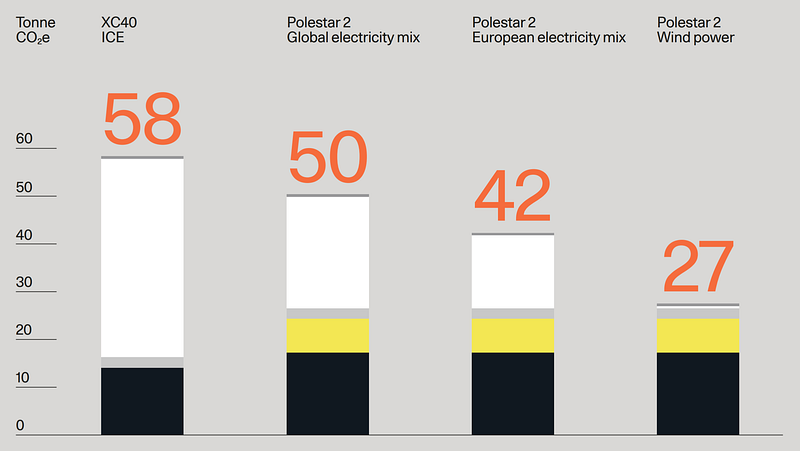
Furthermore, this small benefit comes from the high CO2 emissions of the relatively inefficient benchmark (the Volvo XC40) during its use phase. Had Polestar compared to a more relevant environmentally friendly benchmark like the Lexus UX hybrid, which is fully 60% more efficient, the benchmark’s lifecycle emissions would have been 43 tons (similar to the Polestar 2 charged in Europe).
As highlighted in the introduction, the two big reasons EVs offer such limited emissions reductions relative to hybrids are the emissions involved in electricity generation (white bars) and those embodied in the battery (yellow bars). But that’s not the whole story.
More Energy-Intensive Materials
Thanks to the weight of a large battery pack, most electric cars are very heavy, requiring stronger structural components that make them heavier still. This incentivizes automakers to limit weight gains by using more aluminum (which offers a higher strength-to-weight ratio but consumes much more energy during production than steel). As a result, the Polestar 2 emits about 3 tons of CO2 more from basic materials production and refinement (black bars in the figure above), despite the XC40 being a larger vehicle.
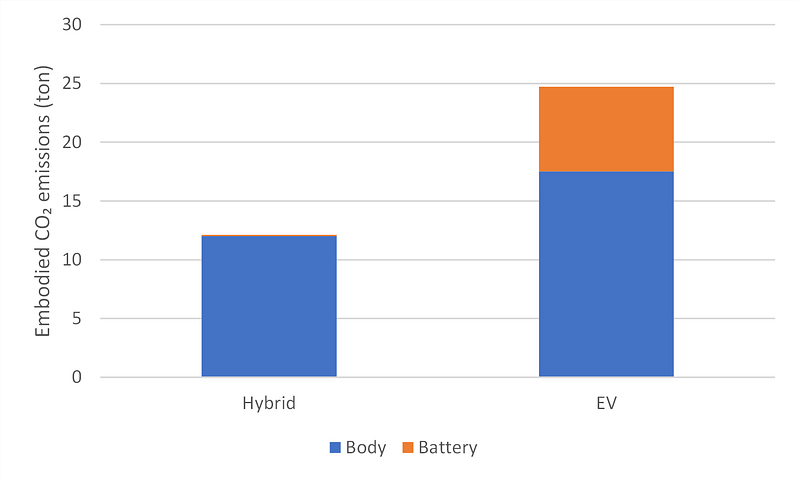
When combined with the embodied emissions of the battery, the Polestar 2 has emitted 10 tons of CO2 more than the XC40 by the time it rolls off the assembly line. Compared to a hybrid like the Lexus UX, that’s about five years of CO2 emissions from gasoline.
Future battery advances may help in this respect, but at the moment, the trend in battery energy density is actually pointing in the wrong direction. Due to soaring raw material costs and the long list of severe problems with cobalt, more automakers are choosing less energy-dense LFP batteries over NCA (as used by the Polestar 2).
The Jevons Paradox
One of the worst effects of EV technology-forcing in the West has been the rise of massive electric SUVs — a classic example of the Jevons paradox where the effects of rising efficiency are canceled out by rising demand.
Electric cars are heavily marketed as offering large fuel cost savings. Actually, this is not true when we correctly compare to hybrids and strip away all taxes, but since gasoline is generally much more heavily taxed than electricity and many non-hybrid models are still for sale, EVs do substantially reduce fuel costs from the perspective of individual consumers.
The result? People buy bigger and heavier cars. Over here in Norway, the undisputed global leader in EV market share due to incentives totaling a ridiculous $30000 per car, the evidence is clear. When comparing the curb weights of the top 10 cars from 2011 to the top 10 electric cars from 2021, we find that the average vehicle has gained an incredible 700 kg.
A small fraction of this massive weight gain is due to the general increase in the popularity of SUVs, but we can safely attribute about 600 kg to the added weight of the battery pack and the Jevons paradox. As illustrated below, this increase in car weight increases the gap in embodied emissions to 12.6 tons.
These additional CO2 emissions represent more energy consumption and higher costs (both during manufacturing and use). Indeed, EV technology-forcing policies in the West have often been luxury subsidies, incentivizing wealthier individuals to splurge on larger and more luxurious cars — a terrible way to spend money earmarked for sustainability.
Time-value of money, energy, and CO2
Lastly, we get to a highly inconvenient truth for capital-intensive green technologies: one dollar, kWh of energy, or ton of CO2 emissions today is worth much more than the same unit 20 years from now. For EVs, this is a problem because of the high costs, energy and material consumption, and emissions involved before they drive their first mile.
The time-value of money, energy, and CO2 is generally represented by the discount rate. For example, a commonly assumed discount rate of 8% means that one dollar in cash next year is valued at only 1/1.08=92.5% of a dollar in cash today. Similarly, a dollar 20 years from now is valued at only 1/1.08²⁰=21.5% of a dollar today. In practice, the time-value of money is an essential economic incentive to invest today’s resources into initiatives that will generate the greatest future returns.
A lower discount rate of around 3% is often used for CO2, which means we assume plenty of responsibility for the damages CO2 emitted today will still be causing in the 22nd century. I find it hard to understand such low discounting given all the ways we can invest energy today to shield ourselves against future climate impacts (on top of the large climate resilience benefits of rapid economic development), but let’s assume this is a fair number.
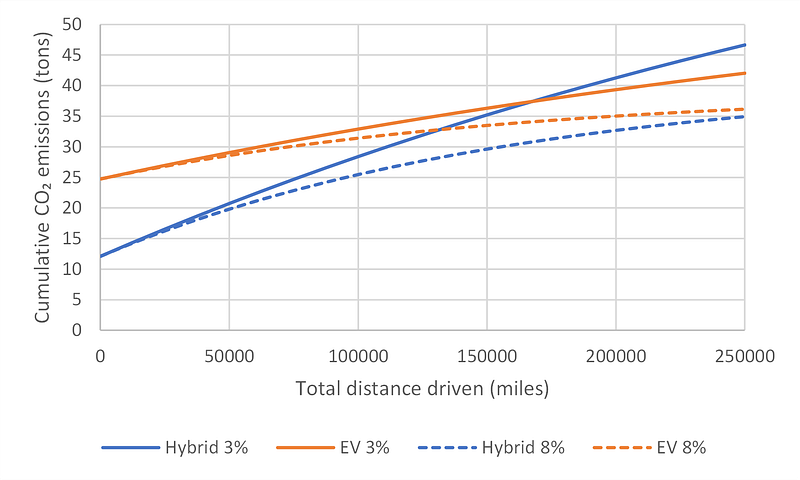
The graph below shows the cumulative CO2 emissions from a hybrid and an EV over a quarter of a million miles when discounted at 3% (representing climate impacts) and 8% (representing energy, materials, and other costs) if the EV is charged with relatively low-carbon electricity (e.g., Europe). As shown, increasing the discount rate from 3% to 8% lifts the point where the hybrid’s emissions exceed those of the EV from 170000 to over 250000 miles. When the exercise is repeated for global average electricity (0.45 ton/MWh), the EV never reaches parity.
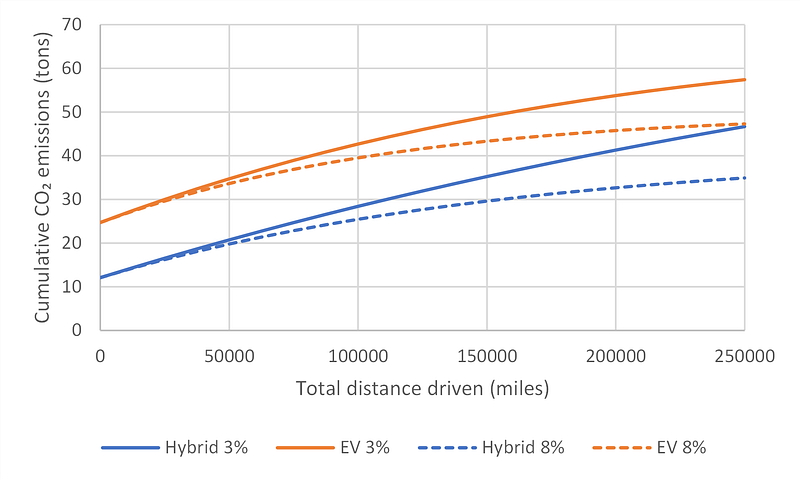
In the most important market in the world, China, things look considerably worse. This example also presents a good opportunity to illustrate another challenge presented by the discount rate: Cleaner electricity in the future is weighed less. As shown below, a halving of Chinese electricity CO2 intensity over the vehicle lifetime still results in substantially higher emissions for the EV than the hybrid after 250000 miles.
All considered, an EV revolution will do next to nothing to mitigate climate change, especially not one involving all the heavy and powerful cars needed to keep the hype train going and overcome range anxiety.
Misleading Studies
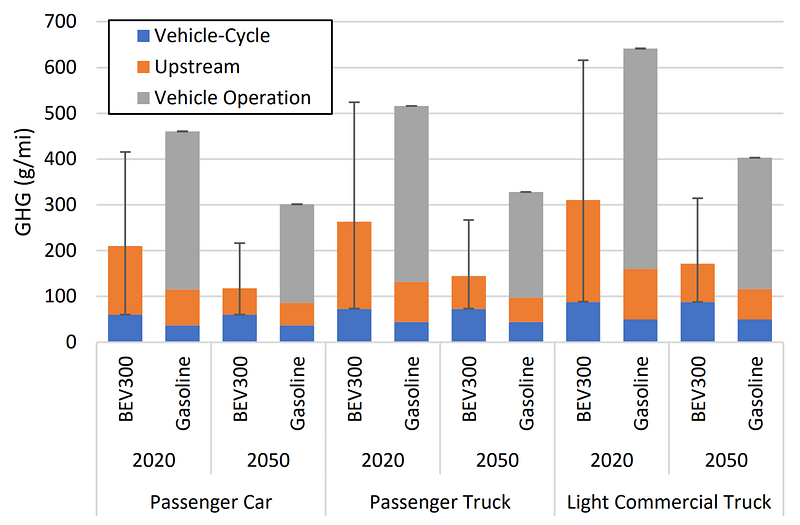
The myth that electric cars bring large climate benefits is perpetuated by several flawed assumptions. For example, the following graph shows that electric cars in the US will cut lifecycle greenhouse gas emissions by half.
The wrong benchmark
The average consumer in the market for an environmentally friendly vehicle won’t be comparing electric cars to the woefully inefficient 26 MPG gasoline benchmark from the Burnham study. No, they will be considering the latest hybrids, several of which already exceed 50 MPG in real-world driving conditions. Doubling the gasoline benchmark’s fuel efficiency would essentially halve the lifecycle greenhouse gas emissions of gasoline cars in the graph above, erasing almost the entire electric car benefit.
If our goal is to reduce greenhouse gas emissions from passenger transport, we should fairly compare technological pathways designed for that purpose. Given that hybrids achieve similar lifecycle greenhouse gas emissions to EVs, that implies a more intelligent technology-neutral greenhouse gas reduction policy where hybrids and electric cars are incentivized equally.
Despite the complete lack of incentives, hybrids already boast twice the sales of electric cars in the US. If hybrids enjoyed a similar $10000 incentive from federal and state rebates, regulatory credits, and avoided fuel taxes as electric cars, there would be no contest (and much faster adoption of low-emission cars).
The Jevons paradox
Next, EV-friendly greenhouse gas numbers ignore the Jevons paradox. In most developed nations, high fuel taxes help cut average annual per capita fuel consumption by a massive factor of 4 relative to the US. This enormous difference is partly due to more hybrid car sales but mainly due to smaller cars and less annual driving.
Quadrupled oil dependence (and emissions) in the US passenger transportation sector is a stark illustration of the failure to internalize a long list of car-related externalities such as air pollution, climate change, time lost in traffic, health impacts from sedentary living, accidents, energy insecurity, high-value real estate occupied by roads and parking, and depressing car-centered cities.

While fixing this huge economic inefficiency with higher fuel taxes is already a tough ask in the US, it will be impossible with electric cars. Fuel taxes affect only the transportation sector, but higher electricity taxes would impact the entire economy. Thus, raising electricity taxes to control demand by tripling fuel prices would never be accepted.
Meanwhile, EVs are heavily marketed as having extremely low running costs so that one can buy a large vehicle (with the help of incentives) and drive it as much as possible without any pain at the pump. The obvious result would be a huge Jevons paradox effect that perpetuates the inefficient situation in the US and threatens decades of progress in Europe and Asia.
The time-value of energy and CO2
EV advocates often point out that electric cars sold today will become cleaner over time as the grid decarbonizes. While this is true, the time-value of energy and CO2 discussed earlier more than cancels out this effect, especially if we account for the Jevons paradox effect. Over a 15-year lifetime, a discount rate of 8% gives the high embodied energy and emissions of an EV a 3x greater weight than emissions savings that might happen toward the end of its life.
Furthermore, if countries like the US can rein in wasteful oil consumption, the limited amount of biofuels we can produce sustainably can take up a larger share in gasoline blends, giving hybrids sold today similar reductions in fuel-related CO2 emissions over their lifetime.
Thus, while the simple adjustment of correctly comparing electric cars to hybrid benchmarks already eliminates commonly reported electric car greenhouse gas benefits, accounting for the Jevons paradox and the time value of energy would make electric cars considerably worse for the climate (and for the economy as a whole).
EVs That Benefit the Climate
While big electric SUVs are little more than a shallow marketing scheme used by governments and companies to appear greener, there are EVs that bring genuine climate change benefits.
Electric 2-a-3-wheelers are by far the best application for battery-electric drive. These vehicles have a negligible environmental footprint relative to electric cars due to their much smaller size and deliver close to the same mobility service in cities at a small fraction of the cost.
As opposed to cars, electric drive has large benefits over the internal combustion engine in this segment. First of all, the energy efficiency of internal combustion engines increases with scale as heat and frictional losses become relatively smaller and combustion gets more efficient. In addition, hybridization is impractical in tiny engines.
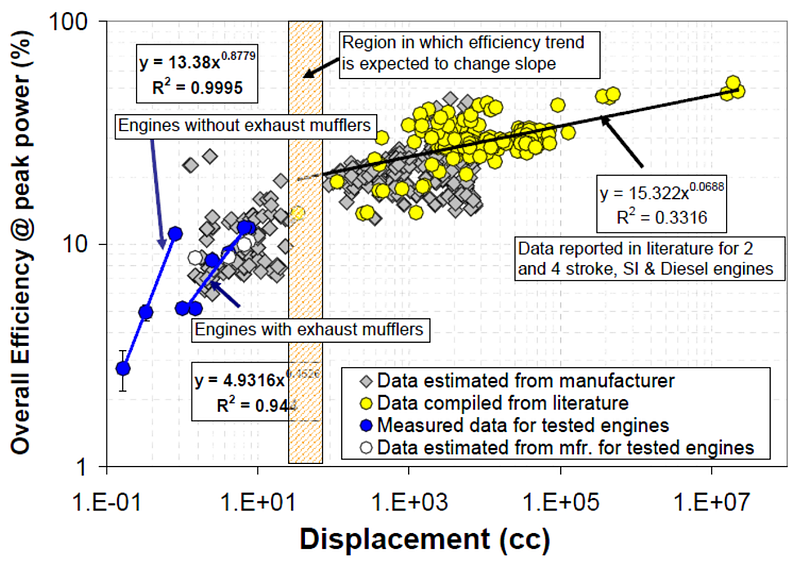
Thus, while a modern hybrid car is about half as efficient as an electric car, a conventional petrol scooter is fully 6x less efficient than an electric alternative. For this reason, the electric scooter can have a similar range and much lower fuel costs.
Furthermore, “filling up” an electric scooter is highly practical with battery swapping stations. Unlike cars, recharging an electric scooter is actually faster than refueling a conventional scooter (and results in a comparable range).
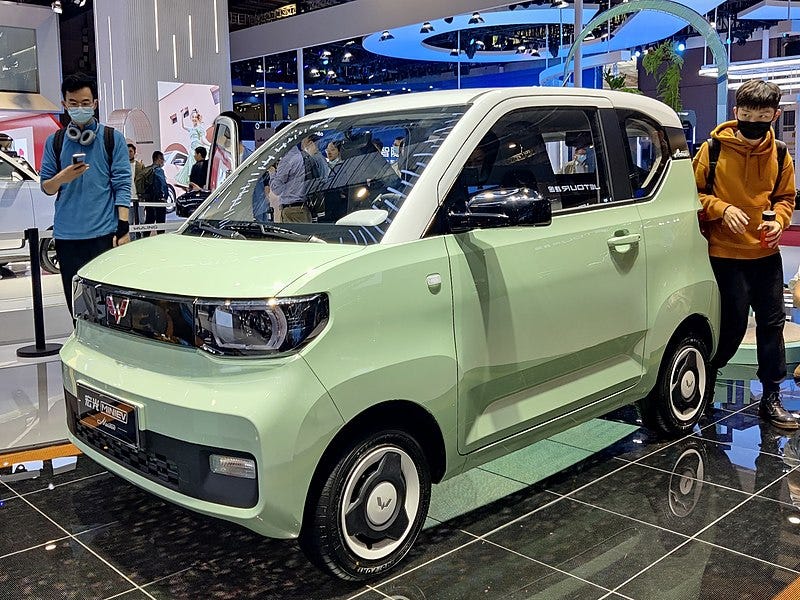
For those who must have a car, the rule is that smaller is better. For example, the top-selling electric car in China is a tiny econobox that weighs 665 kg. Although internal combustion starts to close the efficiency gap at this scale and the highly practical scooter battery swapping solution is not feasible, such small commuter cars still favor battery-electric drive.
Plug-in hybrids are another useful alternative. They can enable electric propulsion for most driving with an 80% smaller battery than a full EV and no need for a vast charger network.
However, a big fully-electric SUV will always be bad for the climate (and the environment in general), even in countries with relatively clean electricity like Norway. Even if we assume electricity is completely carbon-free, a large electric car will still take almost a decade to break even with a hybrid alternative based on the calculations presented earlier.
Also, Norway is not an island, and many other European countries want (and need) its hydroelectric power. Thus, if Norway chooses to waste a substantial fraction of this precious resource to charge 2.5-ton electric SUVs, less clean and reliable hydropower is available for much more valuable uses throughout Europe (e.g., displacing some natural gas power production to reduce strategic dependencies on Russia).
Final Thoughts
Electric cars are probably the world’s single most overhyped climate change solution. They present a highly effective and visible climate action poster child for governments and automakers to create the impression that they’re doing something about climate change, but sadly, most electric cars are hopelessly inefficient at avoiding greenhouse gas emissions.
There are so many better ways to combat climate change, but we seem determined to pick the highest hanging fruits first. The result is obvious:
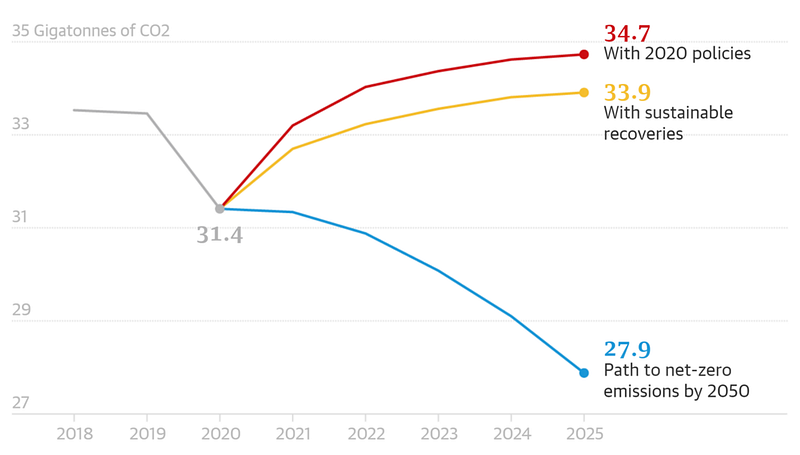
The equally obvious solution? Implement technology-neutral policies (a high CO2 tax with border adjustments) and scrap all technology-forcing policies. Such a policy framework will leverage the full power of the free market to reduce CO2 emissions, and large electric SUVs will end up at the bottom of the list where they belong.


