
Apple Just Proved That Right To Repair Isn’t Always Right
And if this wasn’t predictable, I don’t know what was, but do activists want to listen?
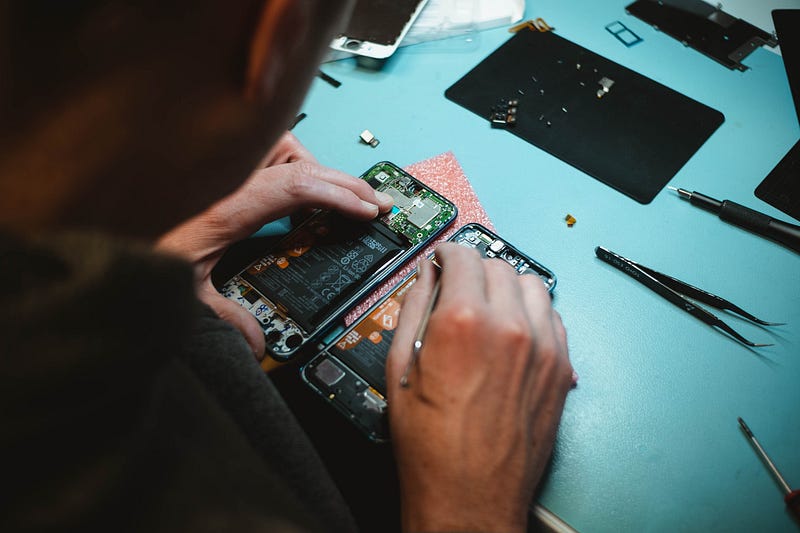
Vehement activism. That’s what bothers me. On the surface, every idea has merit, but is there actual debate? On either side? No, not really. Since the beginning of Right to Repair, both sides kept screaming they’re right, citing the customer’s rights/wellbeing, but here’s the thing about rights — not all of them are necessarily good for you. You have the right to eat 10 ice-creams a day, but is it good for you? Most definitely not. The problem with Right to Repair on both sides of the conversation is that neither side takes a pragmatic and level-headed look at it. And guess what? Apple — of all companies — exposed that.
Whether it was intentionally or not, Apple managed to expose a gaping hole in the topic that has probably been more in the mainstream media than Will slapping Chris — Right to Repair. Exposing it works neither in their favour nor against them, and I guess that’s the good news for Apple. For the customer, there is no good news. Not in this story, and it clearly illustrates how often with the best of intentions, a short-sighted fight against the establishment can backfire in ways most didn’t expect. Apple just recently launched their self-service repair program, which on the surface appears to satisfy at least one of the goals of Right to Repair — remove Apple as much as possible from the repair process and allow the customer or a handy enough friend/neighbour/village priest to repair their iPhone.
Sounds good on paper, right? There’s a Romanian saying “theory is theory, but practice might kill ya”. Or, in this case, might kill your iPhone. The number of videos appearing on the web about people attempting the repair with Apple’s own kit is growing by the minute, and guess what?
- While the Apple repair kit is fantastic value for money — $1300 — if you want to buy it and keep it for many future repairs, as a regular customer when you rent it, those $1300 will be blocked on your card until you return the kit! Let me ask you. How many customers can afford just randomly having $1300 frozen on their cards? That’s the cost of a 13” MacBook Pro! Not to mention the stress and hassle of ordering the thing, returning it, waiting for the $$$ to be released upon receipt. If you ask me, I’m already more tempted to just trade in that phone and get a new one, and not even go through the hassle of Apple themselves repairing it!
- But let’s suppose you do have $1300+ sitting on your card, and you embark on the self-repair journey. Watching the videos of people attempting the repairs, some more skilled than others, each made me feel like I was watching a thriller, not a repair. So far, nobody managed to make it seem as if it was easy-peasy lemon squeezy. Quite the opposite. In fact, it feels just marginally easier than using iFixit tools.
- Then there’s all the missing bits. Oh! You need rubbing alcohol. ESD shielded tweezers, syringe and needle, heat-resistant gloves — all of which are not included in the kit! And let me ask you this: how many regular customers know what ESD even means?!? I do. But I am not a regular customer. I used to program re-chip motherboards for a living.
- Finally, the instruction manuals. They’re great. Don’t get me wrong for a second. Yet how many people are actually good at following them? I gifted a tiny Lego set to a 30-year-old friend of mine. She never played with Lego before and of course she made at least three mistakes, and Lego instructions are pretty darn amazing!
Repairing an iPhone is at least 10 times more challenging than building a small Lego set.
I get it. I empathise. As someone who used to repair computers for a living, I more than understand it. It’s good to have laws that allow things to be repaired, but it’s not as black and white as people might want it to be. I hate to make this joke, but this is one of those situations where 50 shades of grey doesn’t even begin to cover it!
The number of broken iPhones that will come out of the self-repair program is probably going to be higher than those fixed, and on the whole, a lot less people will opt for self-repair than activists might hope; it’s not because the cause has no merit, but because Right to Repair cannot be universally and indiscriminately applied. So far, every tech reviewer has reached the conclusion — Apple’s self repair kit is not for the average customer. I will go further and say, it’s probably not for any customer. The soldering iron is what put bread on my table for a good number of years, and I feel no inclination of taking my iPhone apart!
And what does this all prove? That just because one is entitled to repair, and the tools to repair, doesn’t mean it’s a good and customer-friendly idea. On the other hand, those going against the cause should also not take the Apple example as universal proof that repairing our devices is a bad idea.
Whether my prediction that eventually we’ll get to non-repairable devices anyway to the extent that nothing will be repaired, but recycled and replaced, will turn out to be true or not, what I would urge every activist on either sides of the conversation to take a step back and understand the sheer complexity of the topic. This is as nuanced a conversation as one can ever get in tech.
This is in no way the time and place to apply yes and no verdicts on either sides of Right to Repair.
I, for one, said it twice, Apple’s self-service repair solution is anything but enticing, but how about you? Would you go for it, or would prefer to just get it fixed by Apple or get a replacement? Go for it in the comments… 😉
Attila Vago — Software Engineer improving the world one line of code at a time. Cool nerd since forever, writer of codes and blogs. Web accessibility advocate, Lego fan, vinyl record collector. Loves craft beer!


