
ADHD | Entrepreneurship
ADHD Traits Of Successful Entrepreneurs
Research shows us where ADHD traits and successful entrepreneurship overlap

I’ve been a successful entrepreneur since 2010, and only found out in October 2019 that I have ADHD.
When I first joined Medium a few months ago, I wrote about how my ADHD has made me a successful entrepreneur. That story focused on the non-linear way I became self-employed (do people with ADHD do anything in a linear fashion? I think not), and how I adapted to major changes that arose due to the Coronavirus pandemic.
To follow-up on my previous piece, I want to explore some traits associated with ADHD that can contribute to becoming a highly successful entrepreneur, while also pointing out some potential risks, and how to (hopefully) avoid them.
First, the bad news
There has been quite a bit of research in the past few years about ADHD and Entrepreneurship Orientation (referred to as OE in the scientific literature). Unfortunately, results are nuanced, and not as straightforward as we would like — as usual.
A lot of ADHD qualities can pose both a benefit and a limitation, so the better we understand our neurobiology and how our symptoms impact us, the more we’re able to harness the positive and mitigate the negative. I’ll discuss several common ADHD symptoms and the possible pros and cons to each when it comes to running a business.
Motivation, such an aggravation
Those of us with ADHD frequently struggle with motivation. If we really don’t want to do something, it can be a psychologically painful experience to trick and cajole ourselves into doing it, or suffer the consequences. Without a supervisor, boss, or colleague looking over our shoulder we may struggle with following through when the dopamine “runs out*”.
*Note: dopamine doesn’t literally run out, but ADHD brains process less dopamine when compared to neurotypical brains, and dopamine plays a critical role in reward and motivation.

On the flip side, working for someone else can be incredibly demotivating, and having someone looking over your shoulder can increase anxiety and frustration, and reduce one’s perception of job autonomy.
If we have chosen a start-up we are passionate about, we can hyperfocus on related tasks because we’re very interested in them, and as a result we can be incredibly hard-working and productive. This can lead to success and profit, which will motivate us to keep pushing when we see our hard work paying off.
Whether we are self-employed or work for someone else there are important aspects of the working environment that can facilitate success:
- Flexible workplace
- Accountability
- Support and accommodations
What appropriate accommodations are will differ for each individual, so it’s up to us to learn what works best for us, and then advocate for ourselves with our employers. Even more importantly, as entrepreneurs, it’s our responsibility to set ourselves up for success and arrange our work lives in ways that best suit our needs.
It is our responsibility to arrange our work lives in ways that best suit our needs.
Impulsivity
People with ADHD often struggle with impulsivity, which is the ability to pause between an action and reaction. This deficit can lead us to react to situations or make decisions without first thinking through the potential consequences.
Emotional and behavioural impulsivity can have a negative impact on our personal relationships, which includes working relationships with our colleagues and clients.
Unchecked impulsivity can also lead to bad business decisions. People with ADHD are drawn to what interests and excites us, and if we’re not careful, we can make decisions based on sensation-seeking and novelty-seeking without thinking through whether they’re actually smart business decisions.
Being an entrepreneur and starting your own business requires risk tolerance: we have to be willing to take chances. Founding your own company is a risk unto itself, we have to be willing to go without an income while we build up a customer base, and we are taking the risk that our business may not even become profitable.
Some degree of impulsivity and risk-tolerance can be highly beneficial: taking chances can lead to big things, and being too cautious can mean missed opportunities. This is exactly what Yu & Perez (2021) found when their study demonstrated that the performance advantages of entrepreneurs’ ADHD traits can be attributed to greater focus on risk-taking, proactiveness, and innovation.
Innovation and Imagination
Which leads me to the next ADHD quality I wish to explore: creativity. People with ADHD can be more innovative problem-solvers, and tend to think outside the box, which is a form of cognition called divergent thinking.
Neurodiverse people are more likely than neurotypicals to employ decision-making strategies that deviate from commonly used or previously taught strategies.
I don’t see a down-side to this one. Because our brains work differently from others’, we are more likely to see solutions to problems that others wouldn’t consider, and we have greater ability to think laterally.
This is a highly valuable skill, especially when running your own business. There’s no one there to solve problems for you, so you’ve got to be the final decision maker. The good news is that when you have a fantastic idea you want to try, you don’t have to go through any bureaucratic red tape to get there.
Working in the school system, there were many instances wherein I saw what I believed to be a fairly obvious or easy solution to a problem, but was met with “oh no, we can’t do that”. Public school systems have so many C-Y-A policies in place to protect the adults that, in some circumstances, the children can’t even be given the support they need.
As business owners, we absolutely must have policies in place to protect both ourselves and our clients, but never at the expense of the needs of those clients.
Want to start your own business?
As an entrepreneur with ADHD, one of the best investments I made was signing up for an online software that helps me keep track of my clients, schedules, and billing. It is incredibly important to be organized and keep good records, and that is not always a strength for certain neurotypes, but that doesn’t have to stop you from being a successful business owner.
Know yourself, honestly evaluate your strengths and weaknesses, then work to your strengths. Find ways to either improve upon, work around, accommodate, or outsource your areas of weaknesses wherever possible.
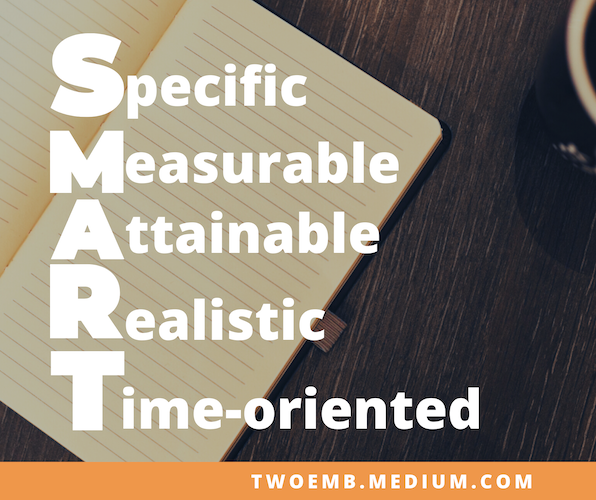
Running your own business is a long game endeavour, and some people with ADHD struggle with long-term planning and goal setting. To help yourself stick with it, set short-term goals along the way. Keep your goals simple, realistic, and concrete so that you can measure your progress and use that data to motivate you.
Be open to learning
One thing I can guarantee is that you will mess up, as we all do. Be prepared to make mistakes, then learn from them. That is how you will benefit from your experience and become a stronger entrepreneur.
Key take-aways if you want to start your own business:
- Follow your passion.
- Learn what your strengths and weaknesses are, work to your strengths, and develop accommodations for your weaknesses.
- Find a way to maintain organization: use what works for you and your business.
- Set short-term goals to keep yourself motivated and track your progress so you can evaluate what is or is not working as your business grows.
- Have fun.
Seriously. Some of the benefits to being your own boss are enjoying greater flexibility, and the ability to pursue what excites and interests you. So go do that.
Good luck!
© Jillian Enright, Neurodiversity MB

Ways to support my work
You can leave a “tip” on Ko-Fi at https://Ko-Fi.com/NeurodiversityMB
Become a paid subscriber to my Substack publication
Check out my online store at https://NeurodiversityMB.ca/shop
Read and share my articles from twoemb.medium.com

Related Stories
ADHD: The Good, the Bad, and the Ugly
My ADHD Made me a Successful Entrepreneur
Impulsivity: It’s a Neurodivergent Thing
ADHD, Actually: The Struggle is Real
Why I Write About Neurodiversity (for love and money)

References
Barkley, Russell A. (2015). Attention-Deficit Hyperactivity Disorder: A Handbook for Diagnosis & Treatment. The Guilford Press.
Hatak, I., Chang, M., Harms, R. et al. (2020). ADHD symptoms, entrepreneurial passion, and entrepreneurial performance. Small Business Economics. https://doi.org/10.1007/s11187-020-00397-x.
Kathju, A. (2021). ADHD and Its Impact on Interpersonal Relationships. In R. Gopalan (Eds.), New Developments in Diagnosing, Assessing, and Treating ADHD, pp. 179–195. IGI Global. http://doi:10.4018/978-1-7998-5495-1.ch011.
Moore, C. B., McIntyre, N. H., & Lanivich, S. E. (2021). ADHD-Related Neurodiversity and the Entrepreneurial Mindset. Entrepreneurship Theory and Practice, 45(1), 64–91. https://doi.org/10.1177/1042258719890986.
Pietersen, M. L., & Botha, M. (2021). Impulsivity and entrepreneurial behaviour: Exploring an unreasoned pathway. International Small Business Journal. https://doi.org/10.1177/02662426211008149.
Robbins, R. (2017). The untapped potential of the ADHD employee in the workplace. Cogent Business & Management, 4(1), 1271384. DOI: https://doi.org/10.1080/23311975.2016.1271384.
Sônego, M., Meller, M., Massuti, R., Campani, F., Amaro, J., Barbosa, C., Rohde, L. A. (2021). Exploring the association between attention-deficit/ hyperactivity disorder and entrepreneurship. Brazilian Journal of Psychiatry, 43(2). https://doi.org/10.1590/1516-4446-2020-0898.
Volkow, N., Wang, GJ., Newcorn, J. et al. (2011). Motivation deficit in ADHD is associated with dysfunction of the dopamine reward pathway. Molecular Psychiatry, 16, 1147–1154. https://doi.org/10.1038/mp.2010.97.
White, H. A. & Shah, P. (2006). Uninhibited imaginations: Creativity in adults with Attention-Deficit/Hyperactivity Disorder. Personality and Individual Differences, 40(6), 1121–1131. https://doi.org/10.1016/j.paid.2005.11.007.
Wiklund, J., Yu, W., Tucker, R., Marino, L. D. (2017). ADHD, impulsivity and entrepreneurship. Journal of Business Venturing, 32(6). https://doi.org/10.1016/j.jbusvent.2017.07.002.
Yang, S., & Jung, C. (2021). A Study on the Effect of Employment Relationship Characteristics on Job Satisfaction: Focusing on the Moderating Effect of Job Autonomy. Journal of the Korea Industrial Information Systems Research, 26(2), 57–72. https://doi.org/10.9723/JKSIIS.2021.26.2.057.
Yu, W., Wiklund, J., & Pérez-Luño, A. (2021). ADHD Symptoms, Entrepreneurial Orientation (EO), and Firm Performance. Entrepreneurship Theory and Practice, 45(1), 92–117. https://doi.org/10.1177/1042258719892987.


