ADHD Awareness
ADHD: The Good, The Bad, the Ugly
Ok, not really “the ugly”, but the bad and the good. In that order.
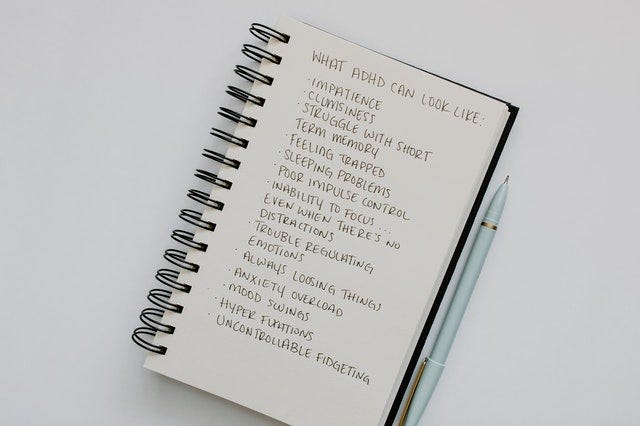
Everyone’s individual experience with ADHD and Neurodiversity will be unique, but I’m going to share some of what it’s like for me. There are some awesome things about having a uniquely wired brain and there are definitely some challenges.
Warning: I was born in the 80s and will unabashedly use too many Simpsons references. Oh, I also use one NSFW word. It was necessary.
The Bad? It’s Frickin’ Exhausting
[insert dramatic sigh, complete with hand on brow]
My brain Never. Stops.
It is sometimes said that people “outgrow” their ADHD, or at least outgrow their hyperactive symptoms as they become adults. Nope. The external hyperactivity just moves inward. Remember those kids who couldn’t sit still and were bouncing off the walls (sometimes literally)?
Yeah, I was one of them.
How I wasn’t diagnosed with ADHD until the age of 36, I’ll never really know… Now I may fidget more subtly (tap my feet, fidget with a pen, or play with my hair), but the hyperactivity is still going on inside my brain at warp speeds. I have several trains of thought going on at once, and all the trains are speeding, at risk of derailment at any moment.
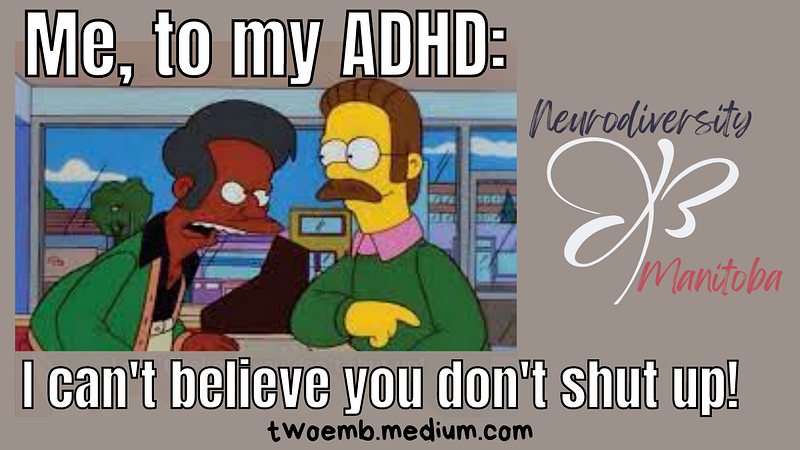
While I write this blog post, I am also completing data entry for my business financials and singing along to some 90s grunge tunes. Yep. Exhausting, but at least there’s good music.
My Working Memory SUCKS.
That’s right, I said it.
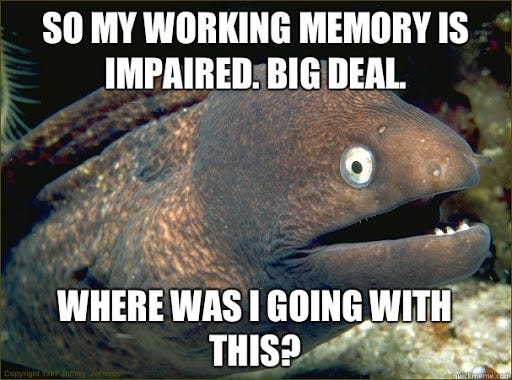
I honestly cannot count the number of times I have left something behind somewhere. Really, I can’t, because I can’t remember. See what I did there? It’s hilariously frustrating.
I had to buy myself one of those bluetooth keychains for my keys because I kept losing them, I use the “Find my Phone” app for my devices daily, and I have to keep several calendars (both hard copy and electronic) so I don’t forget about important appointments. I am grateful technology can take over some of the tasks my brain refuses to do, but I don’t remember negotiating these terms. It appears my brain has all the bargaining chips and I really have no choice in the matter.
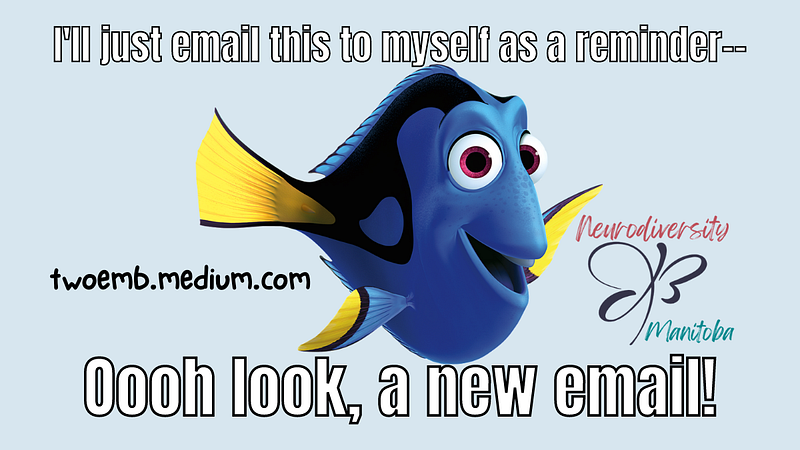
The kicker? This is all while medicated. Yeah. Medication helps with focus, attention, even impulsivity; unfortunately it’s utterly useless when it comes to working memory problems.
Have you ever gone into a room and forgot why you were there? Picture that about a hundred times a day, every day. Did I mention it can be exhausting?
This Analogy is (also) for the 80 and 90s Children:
Combine giftedness and Speeding Train Brain with no working memory, and I’m three out of the four Simpsons characters. It’s like I’ve got Lisa Simpson’s intelligence mixed with Bart Simpson’s impulsivity, and just for fun, we add in a generous dash of Homer Simpson’s absentmindedness.

I never thought I would relate to Homer Simpson, but there you have it. I guess if you like the Simpsons, then that belongs in the “good” section too.
(ADHDers are nothing if not good at segues).
The Good
I think outside the box like nobody’s business.
The box may end up shredded and in the recycling bin, but I definitely thought outside of it.
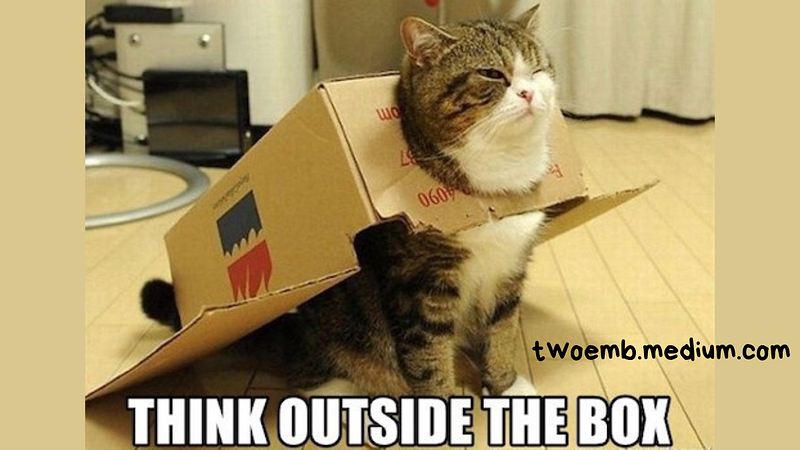
I am a creative and resourceful problem-solver, which has enabled to be a successful entrepreneur for the past 10 years, (almost 11 years and hopefully long into the future once we finally get past this covid shit).
Hyperfocus
The stereotype of someone with ADHD is that they can’t focus or pay attention for a long time.
Nope.
People with ADHD have difficulty regulating their attention, which creates difficulties in telling your brain which thing to attend to, but is not an inability to focus. While it may not be difficult for a neurotypical person to suffer through something they find very boring, because they know they need to do it, a person with ADHD may not be able to force themselves to do that.
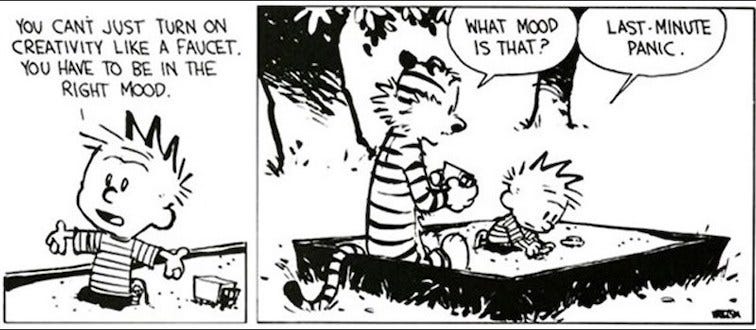
However, if a neurodiverse person is highly interested in something, they can hyperfocus like a boss. As I mentioned in my previous story, “And Then There Were 2(e)”, this has also helped me to be successful in running my business. While I may be prone to procrastination, once the pressure is on I can buckle down, hyperfocus, and get it done.
Believe it or not, procrastinating does not lead me to produce lower quality work: I was the student who pulled all-nighters to get school work done and got As. The ADHD brain often needs the perceived reward (i.e. getting an A on that paper) to be really close before it releases that good ol’ dopamine. So when I put “works well under pressure” on my resume, I really mean it.
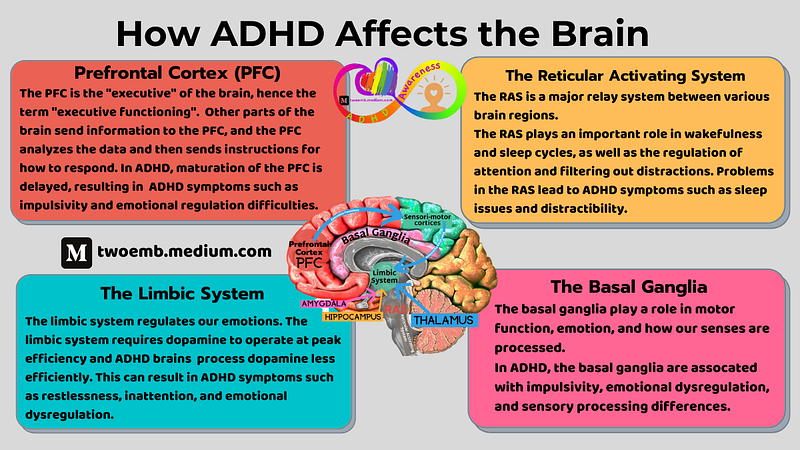
In technical terms:
ADHD brains have lower dopamine receptor availability. Dopamine is known as a reward chemical. It’s a neurotransmitter the brain releases when the brain anticipates something good is going to happen.
And in less technical terms:
When you have fewer dopamine receptors, you have less of that “this hard work is going to pay off” and more of that “I just can’t bring myself to get started on this tedious project.”
Remember how I said people with ADHD have difficulty regulating their attention? Wasn’t I supposed to be talking about the good things about ADHD?
Right. Actually, that difficulty in regulating one’s attention does bring me to my last good thing about ADHD.
I’m Heckin’ Observant
That difficulty in paying attention to one thing at a time actually allows me to be highly observant. I notice all kinds of things that neurotypical brains disregard. In my careers, both as a dog trainer and as a child advocate, my awesome powers of observation have served me very well. I catch signals from dog body language that others miss, and I observe subtle but very important interactions between people that can tell me a lot about their relationships.
People with ADHD are highly sensitive to micro-expressions: A micro-expression is an involuntary facial expression that lasts less than half a second. These very subtle changes are often missed, but can reveal someone’s true feelings about what they are saying, doing, or seeing. This allows me to truly observe and understand someone’s feelings about something without them explicitly telling me, which is a strength in my work supporting families with neurodiverse children and as an ADHD coach.
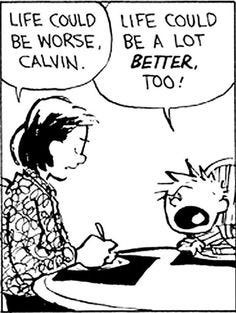
Everyone’s individual experience with ADHD and Neurodiversity will be unique, but everyone’s experience with life will be both good and bad, so either way we have to learn to adapt.
My son is 2e (Gifted with ADHD) just like me and I think he’s pretty awesome. So I guess I’m glad I have ADHD because my ADHD genes were passed on to him, and I wouldn’t change a single thing.
Most of the time anyway…

Related Stories
References
Volkow, N. D., Wang, G. J., Kollins, S. H., Wigal, T. L., Newcorn, J. H., Telang, F., Fowler, J. S., Zhu… Swanson, J. M., et al. (2009). Evaluating dopamine reward pathway in ADHD: clinical implications. JAMA, 302(10), 1084–1091. https://doi.org/10.1001/jama.2009.1308.
About the Author
Jillian is an ADHD 2e Coach and Child Advocate in Manitoba, Canada.
Jillian has a diploma in Child & Youth Work and a Degree in Psychology, as well as being the parent of an amazing 2e/ADHD child.
Jillian writes about Neurodiversity, ADHD, Parenting, Education, and Advocacy at twoemb.medium.com.
Visit ADHDMB.ca and facebook.com/ADHD2ePro to learn more.