
Facilitating Effective Meetings
Add these skills to your facilitation toolkit
In this article, you will learn the eight essential facilitation skills to add to your toolkit to deliver effective meetings.
You are bound to hate your meetings if:
- meetings happen without any notice,
- people turn up late,
- the environment is tense,
- there are no clear instructions,
- there are no specific outcomes,
- there are no accountabilities nor any clear purpose,
- you’re judged for your input.
I hated them too.
But things started improving when I made an effort to use this toolkit to improve my facilitation skills.
Don’t blindly trust me, try it out yourself and see what works for you.
1. Organizing
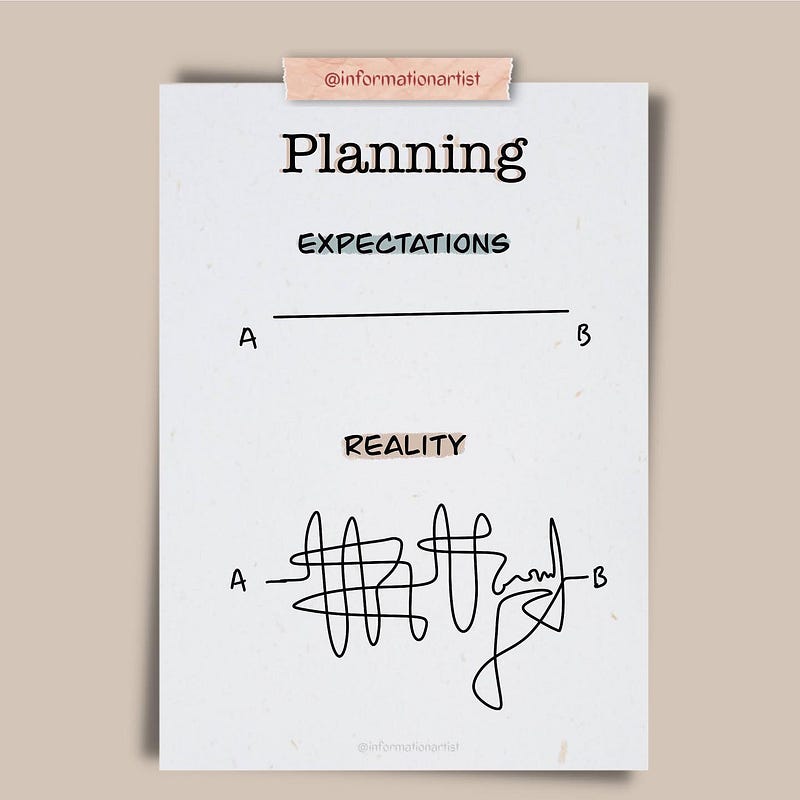
The only way to stay away from meeting fatigue is to make it worth your time. Being prepared is half the victory. Preparation starts from the time you start scheduling the dairy until you get to the conclusion. Always plan with the worst scenario in mind.
Toolkit:
- What do we need to make this meeting happen?
- What is the purpose of this meeting? Why are we having it?
- Who needs to be in the meeting?
- What topics does it address?
- What icebreakers and introductions do you need?
- What is the preferred medium to run it? Remote/Hybrid/Face to Face?
- How will you run the session? Do you require any co-facilitator to help?
- How will you capture any ideas or key points?
- What instructions do you need to share before, after and during the meeting?
- How will you gather feedback?
- What tool do you require, and how will you use it?
The top tip that has always worked for me is to block ‘Focus’ time in my calendar to prepare for the meetings. I’ll elaborate on this in the upcoming productivity blogs.
2. Clarifying
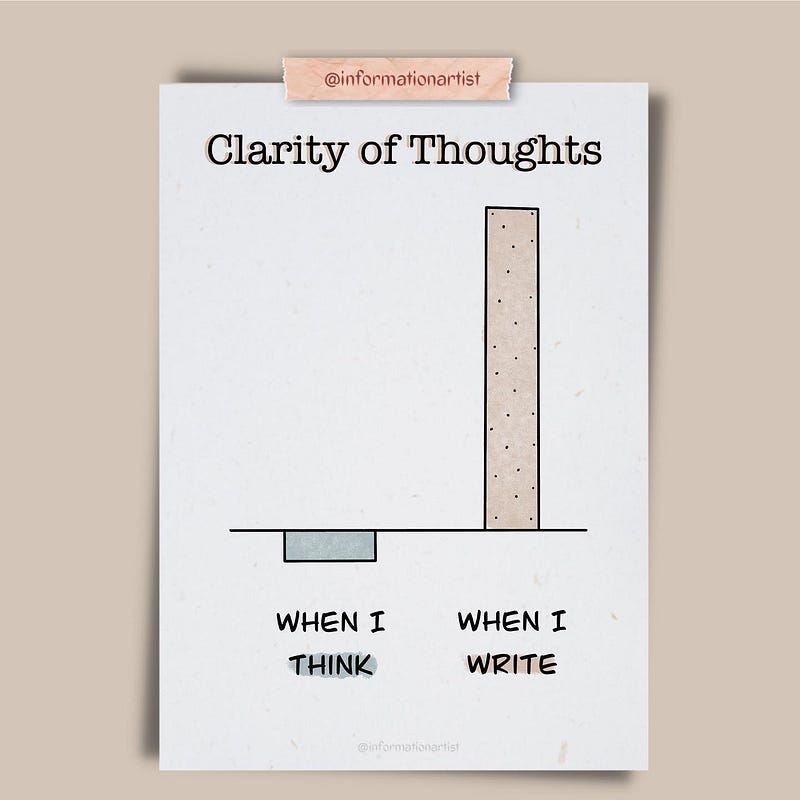
Clarity comes from action, not thoughts. When your thoughts are in the mist, take an action to write or ask, don’t assume.
Toolkit:
- “Are we in agreement?”
- “Have we discussed the….?”
- “Have we identified the…?”
- “Are we ready to move on…?”
- “Are we agreeing to this solution?”
- “If we do more/less of that, what might happen?”
- “Have we understood…?”
3. Reflecting
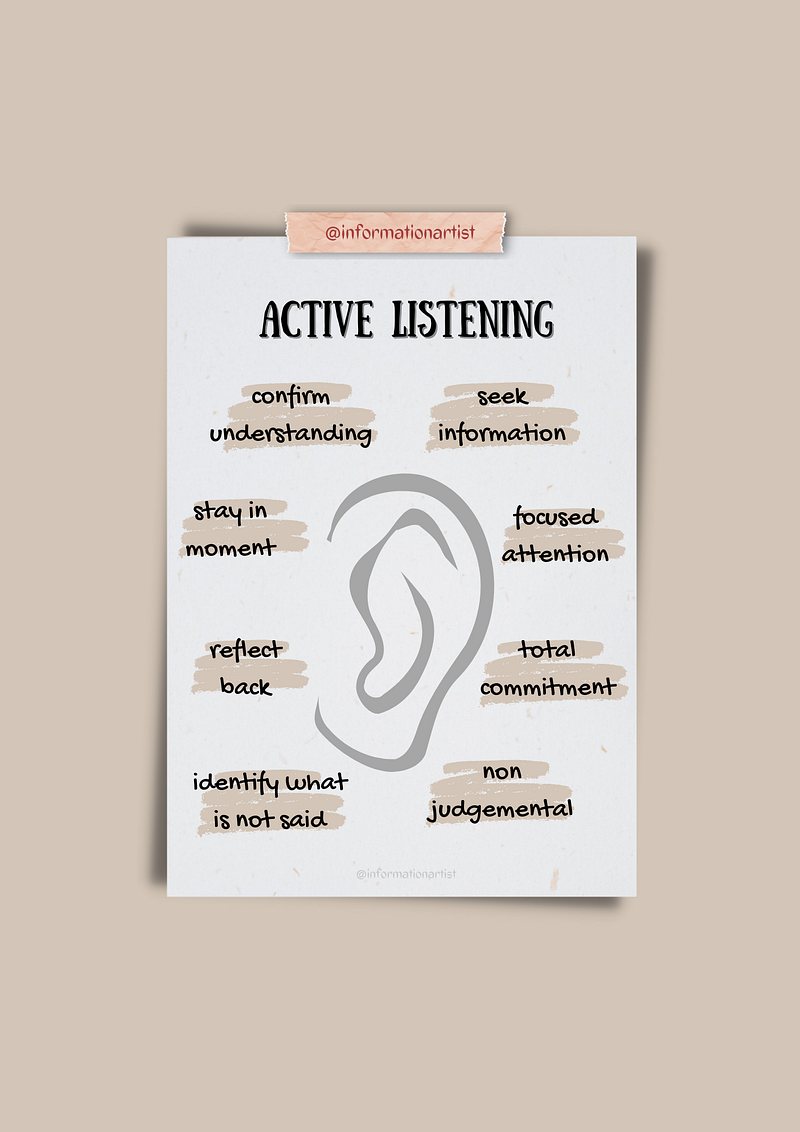
Reflections are the most underestimated yet powerful listening tool. This has been very helpful not only in my facilitation but also in my coaching conversations.
Encourage participation, not attendance. — Ruchira Parchur
Toolkit:
- “What I hear you say is…”
- “Let me share where I think we are…”
- “What is another way that you might…”
- “Can you summarize this for me please?”
- “Please help me understand the impact of this on…”
- “Tell me if I understood you correctly…”
4. Motivating

Dopamine is the pill for motivation. We do need that hit to feel good. As a facilitator, make sure you have abundant of it planned and prepared to use during the session.
Good behaviours when observed should be recognized and acknowledged in time. — Ruchira Parchur
Toolkit:
- “Thank you for contributing…”
- Positive non-verbal gestures of nodding, smiling and leaning forward…
- “That’s amazing progress we have made today…”
- “What a brilliant idea that is…”
5. Comforting

Empathizing and making everyone feel included is essential to balance the group dynamics. Whatever happens in the meeting, it should always make people feel good after it ends. HBR says, empathy allows you to read what’s going on and self-management helps you move the group to a mood that supports getting things done and feeling happy. However, with remote meetings, reading the energy in the room gets very challenging, but you can still express your empathy.
Toolkit:
- “I can understand…may cause you to feel…”
- “It sounds like you feel…because…”
- “It must be… when…”
- “Ruchi, how do you feel about this?”
6. Controlling

Control, don’t command. When things get out of the boundaries, we need to control and bring the awareness of the participants back to our primary purpose. Re-contracting is the most important element in my coaching, and I use it to facilitate conversations that take a diversion.
If you learn to control the situation, you will automatically control the people. — Ruchira Parchur
Toolkit:
- “Let’s get back to the…” (diversion)
- Time out/announce a break when you sense a tense situation, depending on the duration of the meeting (reconvene).
- If the team is dominated by a couple of individuals, balance it out by inviting contributions from others. For example, you may try the technique of giving 10 mins to each participant. Once you deplete it, it won’t refill, and by the end of the session, you should have used at least 5 mins of it. This depends on the type of meeting and its duration.
- “What data do we have…?” (gather facts)
- “We have x mins left, to get the most out of the remaining time, it’s best to focus on…” (respect time)
- If your team members are not inviting each other to participate, it’s a thing you need to work on outside the meetings too. (coach them)
7. Resolving conflicts
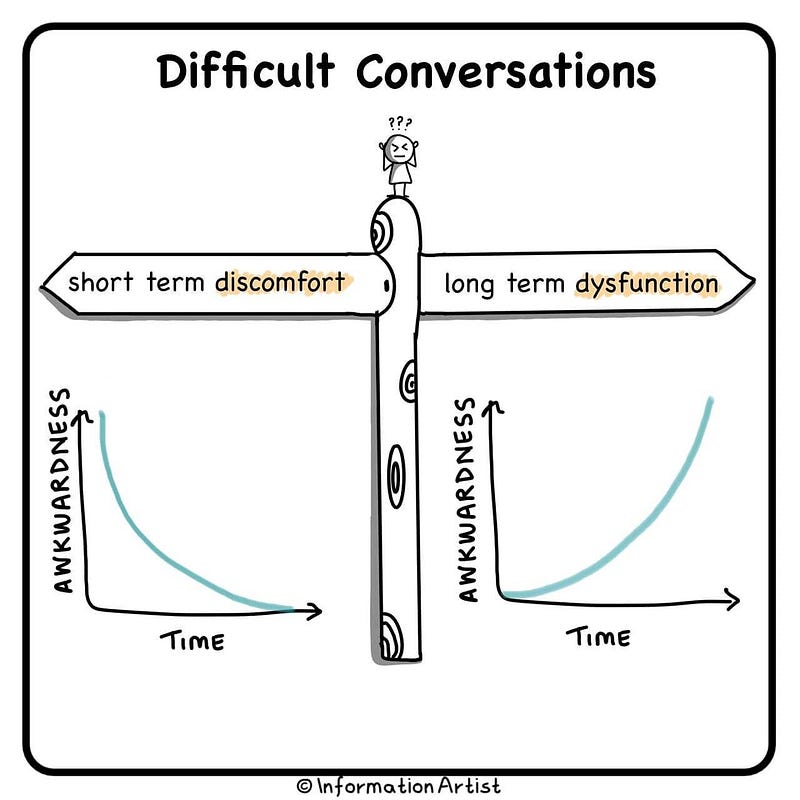
Listening is perhaps the best tool available in your mental marketplace for FREE. Use it abundantly because when you listen actively, you also listen to what is not being said. And that’s important. When you sense conflict, be quick enough to gather the points of unity.
Toolkit:
- “It’s great to see you both concerned about solving this problem…”
- De-escalate personality clashes. Don’t ignore them, bring awareness and move on. But address it in private after the session.
- Identify and notify the boundaries of the session and yourself as a facilitator. A facilitator does not suggest solutions or advice, they guide the conversations towards the outcome by giving the audience a psychologically safe space to think and challenge.
A difficult conversation is either short-term discomfort or long-term dysfunction. The choice is yours. — Ruchira Parchur
8. Concluding
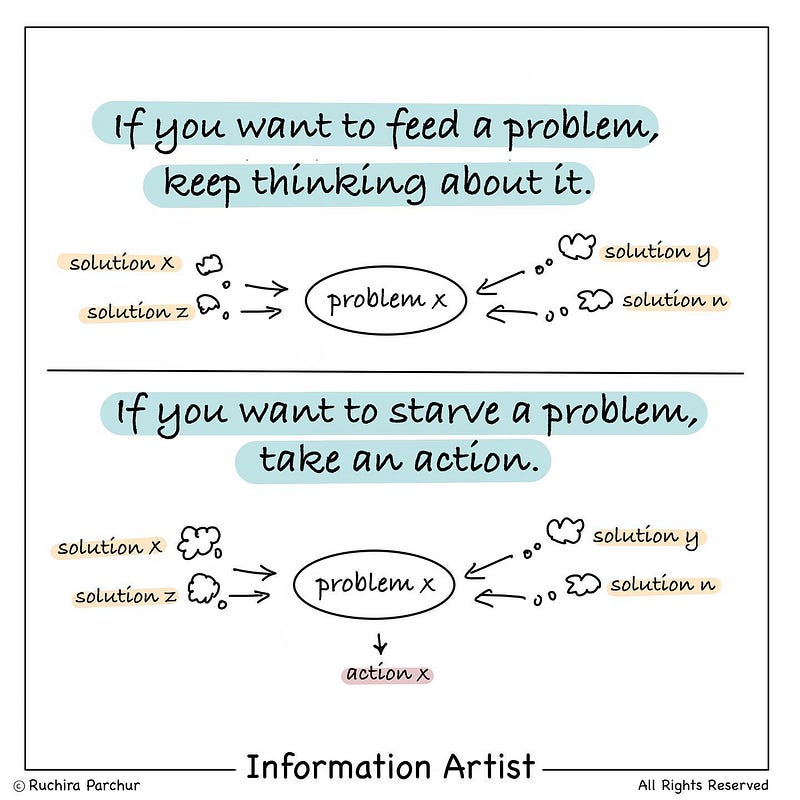
“We keep talking and holding so many meetings but nothing happens after it…” sound familiar?
Conclusion either happens if the items on the agenda have been discussed or if you’ve run out of time. Whatever the case, ensure to summarise the key decisions/points and hold people accountable for the actions and outcomes.
Toolkit:
- “Who” is accountable for “what” and by “when”?
- How do you know the actions have been performed? What is the measure of success?
- “What has been parked that can be discussed next time?”
- Were there any unclear and uncommitted actions from last time?
- Any agenda item that has no closure, should be added to the next agenda.
- Do we really need the next meeting?

As one moves up the corporate ladder, the number of meetings one attend increases along with the value of time. Unfortunately, I always feel that I have less time and more meetings, hence I try to make it as useful and valuable as possible. And I’m still learning.
💭 What are your top tips that I can add to my toolkit?
References: The Eight points are sourced from the book Team Kata by Lawrence Miller (affiliate link).
Thank you for reading and clapping! If you’d like to go the extra mile to support my writing, please consider buying me a coffee or joining Medium using my referral link. This article contains affiliate links.


