avatarRuchi

Summary

The article outlines ten practices to avoid in meetings to ensure they are effective, engaging, and respectful of participants' time.

Abstract

In the article titled "Avoid these 10 things in your meetings," the author emphasizes the importance of conducting meetings with a clear purpose and engaged participants. The piece advises against repeatedly canceling or delaying meetings, especially one-on-ones, as it is considered rude and unproductive. It stresses the need for a shared goal and an agenda to give the meeting importance and recommends allowing attendees to accept or decline invitations to prevent forced attendance. The author suggests soliciting feedback to make meetings more enjoyable, focusing on the quality of the meeting rather than extrinsic motivators like free food, and not overloading the agenda. The article also highlights the importance of observing non-verbal cues, asking about participants' preferred meeting times, and using alternative communication methods like email or Slack when a meeting is not necessary. It advises against putting people on the spot regarding video participation and encourages clear communication in meeting invites.

Opinions

  • Canceling or delaying meetings frequently without a valid reason is disrespectful and disruptive.
  • Meetings should have a clear purpose and agenda to ensure they are meaningful and engaging.
  • Forcing people to attend meetings or entertain them against their will is counterproductive.
  • Feedback should be sought to improve the meeting experience and inclusivity.
  • Extrinsic motivators like free food are not a substitute for a well-planned and purposeful meeting.
  • Overloading the meeting agenda can lead to participants leaving early.
  • Non-verbal cues and unspoken sentiments in meetings should be acknowledged and addressed.
  • Consideration of participants' preferred meeting times is crucial for attendance and engagement.
  • Meetings should only be scheduled when there is a need for collaboration or input from others; otherwise, information should be shared through emails or messaging platforms.
  • It is important to communicate expectations about video participation in advance to avoid making attendees uncomfortable.

Facilitating Great Meetings

Avoid these 10 things in your meetings

In this article, I’m going to share with you 10 things that you can stop doing in your meetings right now.

Are you ready?

Start scrolling…

  1. Don’t keep cancelling or delaying meetings unless it’s no longer needed or no longer serves the purpose. Especially the 1:1s with anyone. It’s rude if it happens more than twice.

Image 1 by someecards

2. Not having a purpose or a shared goal. Give your audience a purpose and agenda to make your meeting important. Next time you schedule a meeting, think about the problem you’re trying to solve by having this meeting.

Image 2 by someecards

3. Stop conducting forced meetings with no engaged audience. Stop mandating forced entertainment. Give people an opportunity to accept/decline meetings.
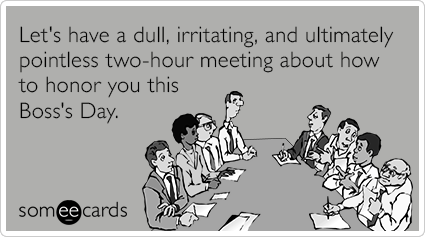
Image 3 by someecards

4. Well, if people hate attending your meetings, then give them a reason to love them. Ask for feedback to improve and make these people feel inclusive.
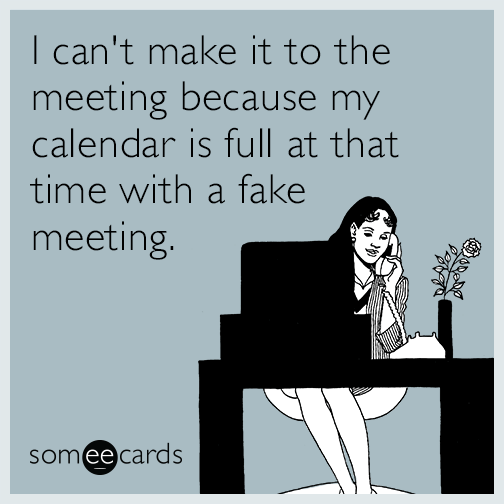
Image 4 by someecards

5. Stop motivating people extrinsically. Free doughnuts, free bagels, free pizzas, free drinks…free me! If you do this, then you’re just filling the quantity of audience in the room. Rather shift your focus to the quality of your meeting.

Image 5 by someecards

6. “Sorry I need to for another meeting now, thanks”, hear this often? If your answer is yes, stop adding 1000 items to your agenda.

Image 6 by someecards

7. Stop ignoring and start observing the things that are not said in the meeting.

Image 7 by someecards

8. Stop assuming, start asking. What is your preferred day/time? What kind of meeting you schedule and when, is equally important as why. Who would want to be stuck in a meeting at 5 pm on a Friday evening?

Image 8 by someecards

9. If you do not intend to get input from others or have a conversation, don’t create a meeting. Share your message through an email or slack.

Image 9 by someecards

10. Don’t put people on spot. If you’d like them to be on/off your cameras, let them know in the invite. Surprises aren’t always great.

Image 10 from Atlassian community

💭 Which one are you taking away to practice?

💭 What’s your top advice on avoiding such boring and disengaged meetings? Share your tips in the comments.

If you’d like to go the extra mile to support me as a writer, please consider buying me a coffee or joining Medium using my referral link. Thank you :)

Facilitation
Meetings
Productivity
Management And Leadership
Remote Working
Recommended from ReadMedium