
FACILITATING EFFECTIVE MEETINGS
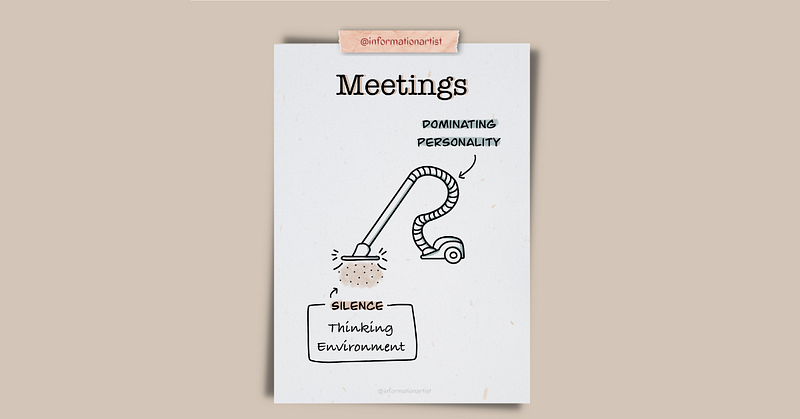
Stop sucking the silence out of your meetings
Adam Grant, an organizational psychologist tweets, “The loudest voices rarely represent the majority. They are usually speaking for the extremes. You won’t understand the views of a group until you’ve invited the quieter voices into the discussion. Don’t mistake silence for disengagement. It’s often a sign of deep reflection.”
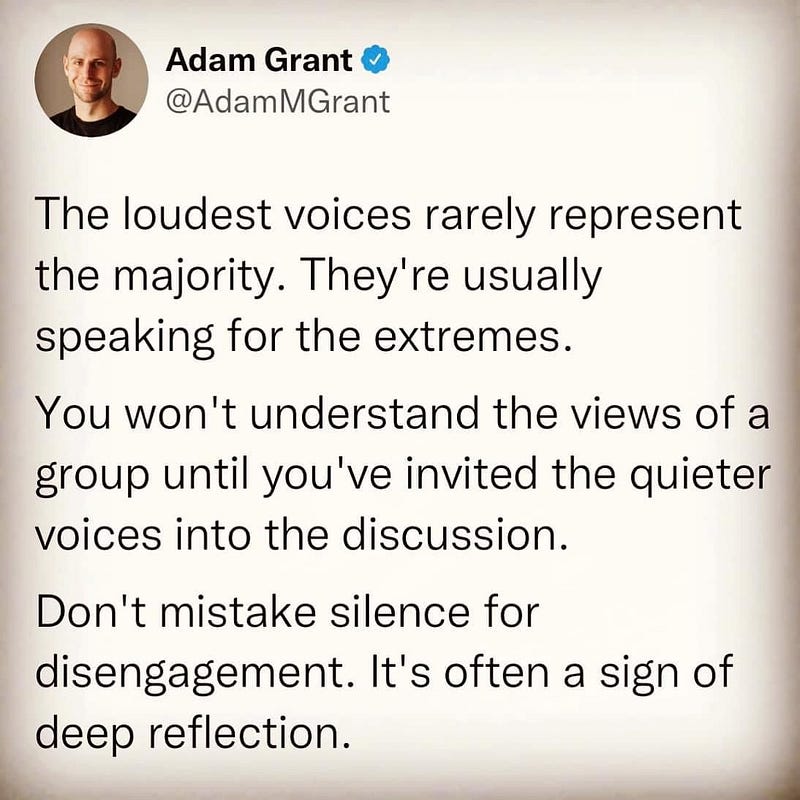
The fact that people have stopped speaking does not mean they have stopped thinking. When people are quiet, they are either thinking or busy thinking about something else. Stop interrupting and giving your voice to others’ silence.
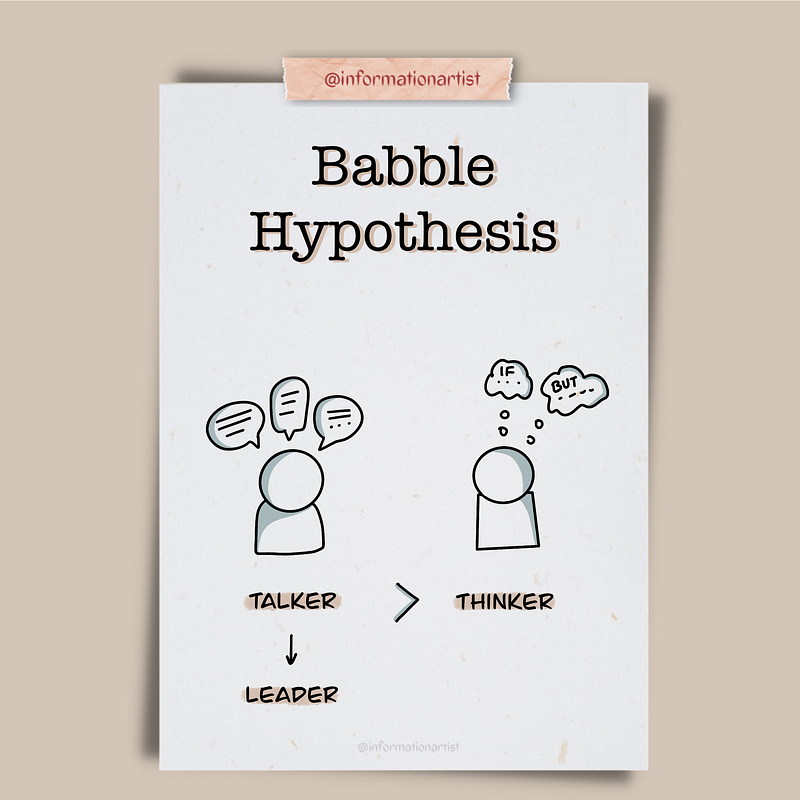
I have been in a million meetings in my life and one thing that stood in common was, the babble hypothesis of someone being perceived as an expert, just because — they talk more than others.
Great leaders are great facilitators too. They pay attention to the energy in the room. They do not allow the loud minority to speak for the silent majority. But the real problem is that those perceived leaders usually have the loudest voice. We need to learn to better adapt and balance the group dynamics. To stay neutral to not let our biases sway, leaders need to build self-awareness.
As a facilitator, how can one ensure to filter the noise and be receptive to value? Well, this is where active listening plays a vital role because, not only do we listen to what is being said, but also listen to what is not being said.
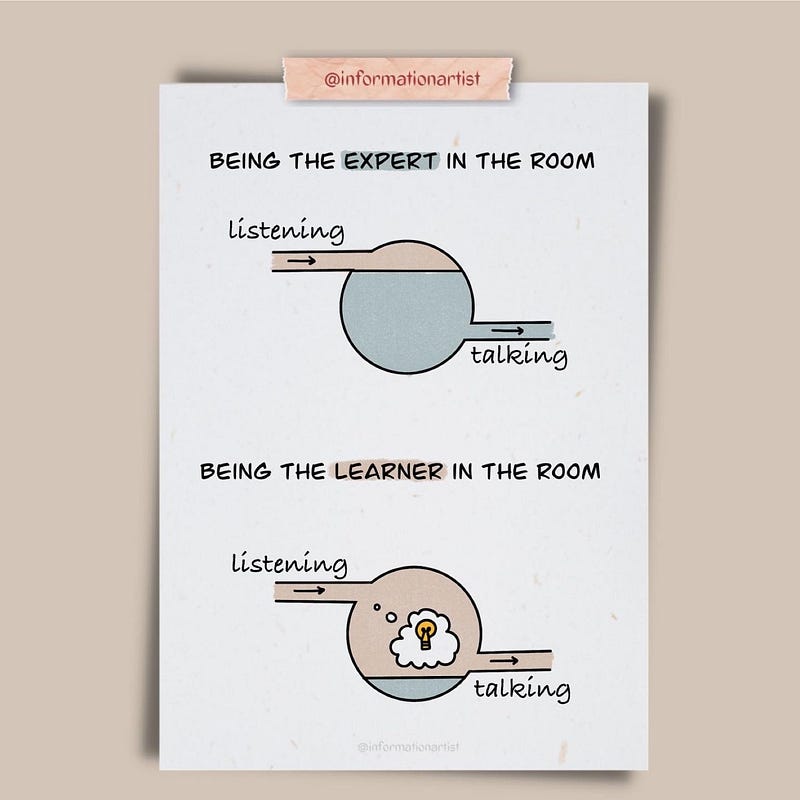
Organizational hierarchy makes us blindly believe that higher-ups are better, so probably we should shut up and let them speak. As managers, we need to remove the assumptions that seeking out knowledge from junior or quiet ones, is not proof of incompetence but a growth mindset in practice. Giving everyone a chance to express their thoughts increases the collective intelligence of the group. The louder (higher) you are, the more people feel you are right and the less you are challenged. And if one isn’t challenged, they stop growing and start assuming that they’re always right.
Stop being the expert in the room. Start being the learner in the room. — Ruchira Parchur
The quiet voices are unlikely to speak if the loud voices do not stop speaking. Remember, the winner of a public debate is mostly the average audience’s IQ, not the highest intelligence. Do not mistake silence for compliance either. The quieter voices usually add to the greatest wisdom when included in the discussion. Unless trust and psychological safety exist, the silent voices will remain silent, and your organization will lose out on insights and knowledge from the diversified thoughts.
Silence is golden, it is necessary to allow people to think and to actively listen. As humans, our natural tendency is to fill the silence. However, nurturing silence to think deeper is a powerful coaching and leadership skill that takes time to master.
💭 How are you going to cultivate a thinking environment?
💭 How will you improve your meetings?
💭 What difference will you make towards the quieter ones?
If you’d like to go the extra mile to support me as a writer, please consider buying me a coffee or joining Medium using my referral link. Thank you :)


