avatarRuchi

Free AI web copilot to create summaries, insights and extended knowledge, download it at here

2694

Abstract

ou heard that right.</p><p id="98a7">Silent Meetings.</p><p id="e61f">“But, how?”</p><p id="8fc7">By brainwriting.</p><p id="83d5">“What is that? Tell me more”.</p><figure id="4488"><img src="https://cdn-images-1.readmedium.com/v2/resize:fit:800/1*mDnaC9bg10UVULdjrPUlPA.png"><figcaption>Meetings visualized by Information Artist</figcaption></figure><div id="21e8" class="link-block"> <a href="https://www.ft.com/content/6d5942a2-a13a-49ea-a833-a6d5ce780ae3"> <div> <div> <h2>It’s OK to be quiet in meetings</h2> <div><h3>When the New York Times announced that a man named Joe Kahn would be its next executive editor, I did what every second…</h3></div> <div><p>www.ft.com</p></div> </div> <div> <div style="background-image: url(https://miro.readmedium.com/v2/resize:fit:320/0*QqacHjGUIBBCGi2Z)"></div> </div> </div> </a> </div><p id="4461">Leigh, suggests instead of brainstorming and verbally jotting down the ideas, pull up a shared whiteboard and write the ideas. Do not identify which ideas belong to whom, rather, focus on the value of the idea than the status of the person who gave it. This neutralizes the Hippo philosophy and gives everyone a fair share of collaborative thinking.</p><p id="b010" type="7">Some of the smartest people rarely speak in work gatherings but everyone listens when they do.</p><p id="f644">Friederike Fabritius and Hans W. Hagemann, in their book ‘<a href="https://amzn.to/3iJNHdI">The Leading Brain</a>’, mention implementing a rule in boardroom meetings that time spent in silence should match or exceed the time spent speaking. If you speak for x minutes, then you should also observe silence for x minutes. The outcome of this experiment led to productive and less conflicted meetings. What do you think about this, will you try it?</p><figure id="be85"><img src="https://cdn-images-1.readmedium.com/v2/resize:fit:800/1*_IByWlGixiucso5N-dTmQw.png"><figcaption>Active Listening visual by Information Artist</figcaption></figure><p id="b48b">What other innovative meeting approaches have you observed or experimented with? Let us know your thoughts in the comments below.</p><div id="bb9c" class="link-block"> <a href="https://qz.com/work/1422191/why-silent-meetings-at-work-are-effective-and-inclusive/"> <div> <div> <h2>The rise of the silent meeting</h2> <div><h3>Everyone appreciates silence-in theory. Poets and philosophers have paid tribute to its depth and resonance for…</h3></div> <div><

Options

p>qz.com</p></div> </div> <div> <div style="background-image: url(https://miro.readmedium.com/v2/resize:fit:320/0*asi-MyfsP930pbCU)"></div> </div> </div> </a> </div><p id="ab2f">If you’d like to go the extra mile to <a href="https://bio.link/informationartist"><b><i>support</i></b></a> me as a writer, please consider <a href="https://www.buymeacoffee.com/InformationArtist?source=about_page-------------------------------------"><b><i>buying me a coffee</i></b></a> or <a href="https://medium.com/@ruchira.parchur/membership"><b><i>joining Medium using my referral link</i></b></a>. Thank you :)</p><div id="9a38" class="link-block"> <a href="https://readmedium.com/inclusion-is-not-me-first-its-me-too-dbfe614f3806"> <div> <div> <h2>Inclusion is not ME FIRST it is ME TOO</h2> <div><h3>INCLUSION is not bringing people into what already exists, it is making a new space, a better place for everyone —…</h3></div> <div><p>medium.com</p></div> </div> <div> <div style="background-image: url(https://miro.readmedium.com/v2/resize:fit:320/1*smkBANkgL2spbn94PANclQ.png)"></div> </div> </div> </a> </div><div id="0401" class="link-block"> <a href="https://readmedium.com/the-best-way-to-achieve-big-goals-is-through-small-steps-c36b85bde1fa"> <div> <div> <h2>The best way to achieve big goals is through small steps.</h2> <div><h3>Small steps still step forward. Your speed doesn’t matter, your progress does.</h3></div> <div><p>medium.com</p></div> </div> <div> <div style="background-image: url(https://miro.readmedium.com/v2/resize:fit:320/1*n3TlXHsy7eED54JEQ1YwVA.png)"></div> </div> </div> </a> </div><div id="02ff" class="link-block"> <a href="https://medium.com/@ruchira.parchur/membership"> <div> <div> <h2>Join Medium with my referral link - Ruchi</h2> <div><h3>As a Medium member, a portion of your membership fee goes to writers you read, and you get full access to every story…</h3></div> <div><p>medium.com</p></div> </div> <div> <div style="background-image: url(https://miro.readmedium.com/v2/resize:fit:320/0*FLy_gxzNO9AJB7lk)"></div> </div> </div> </a> </div></article></body>

Facilitating Effective & Inclusive Meetings

Read this if you hate quiet meetings

In a six-person meeting, two people do more than 60 per cent of the talking.

Innovation breeds ground-breaking ideas and to have those ideas we need diverse thoughts. Ever wondered, what brings you those diverse thoughts when your (unconscious) biases are inclined toward the same group of people. Having a diverse workforce is not equal to diverse ideas, especially when people are not heard and allowed to speak, safely.
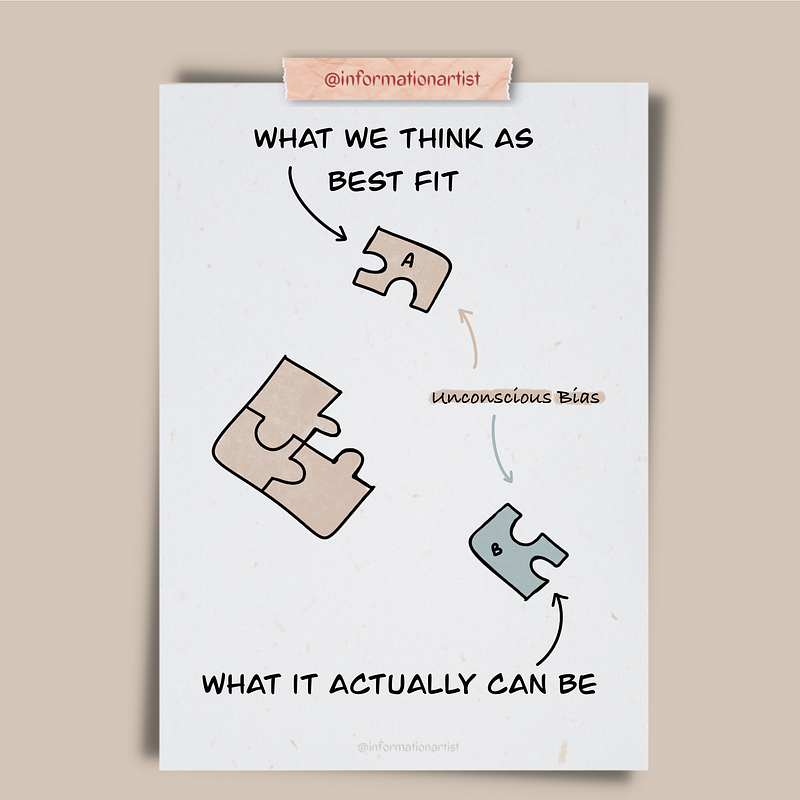
Unconscious Bias visual by Information Artist

In meetings, we all have had our share of filling the void situation where filling the silence with words felt more appropriate than taking a moment to process the information.

Listen to the silence, it has so much to say. — Rumi

According to Leigh Thompson, Northwestern University, in a typical six-person meeting, more than 60 per cent of the talking is done by just two people. I see you nod.

This brings us to the “babble hypothesis”, which suggests that people think that leaders emerge from the quantity of speaking rather than the quality. Refer to the visual below for more clarity.
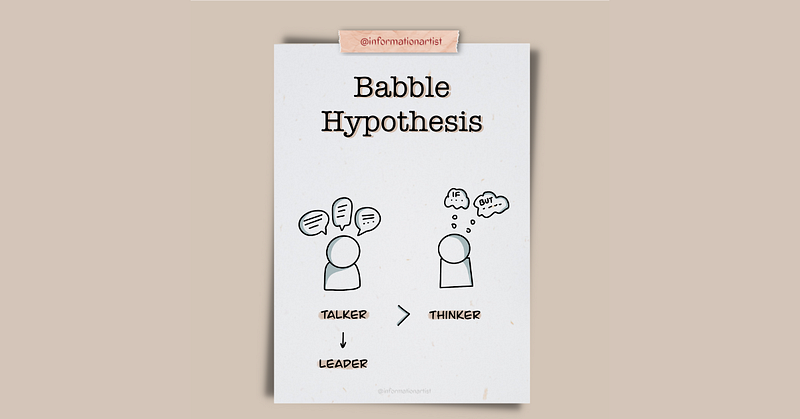
Babble hypothesis visual by Information Artist

In a world that can’t stop talking, we need to embrace the power of shy and quiet individuals. To abolish the dominance of talkative individuals in your meetings, here’s what you can do as a leader and facilitator, - start having silent meetings. Yes, you heard that right.

Silent Meetings.

“But, how?”

By brainwriting.

“What is that? Tell me more”.
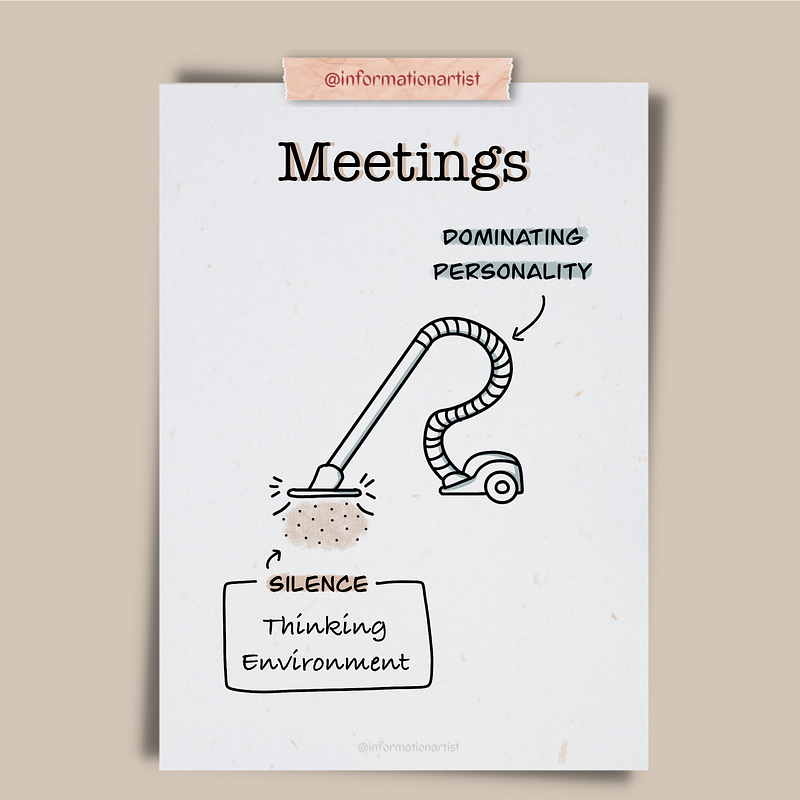
Meetings visualized by Information Artist

Leigh, suggests instead of brainstorming and verbally jotting down the ideas, pull up a shared whiteboard and write the ideas. Do not identify which ideas belong to whom, rather, focus on the value of the idea than the status of the person who gave it. This neutralizes the Hippo philosophy and gives everyone a fair share of collaborative thinking.

Some of the smartest people rarely speak in work gatherings but everyone listens when they do.

Friederike Fabritius and Hans W. Hagemann, in their book ‘The Leading Brain’, mention implementing a rule in boardroom meetings that time spent in silence should match or exceed the time spent speaking. If you speak for x minutes, then you should also observe silence for x minutes. The outcome of this experiment led to productive and less conflicted meetings. What do you think about this, will you try it?
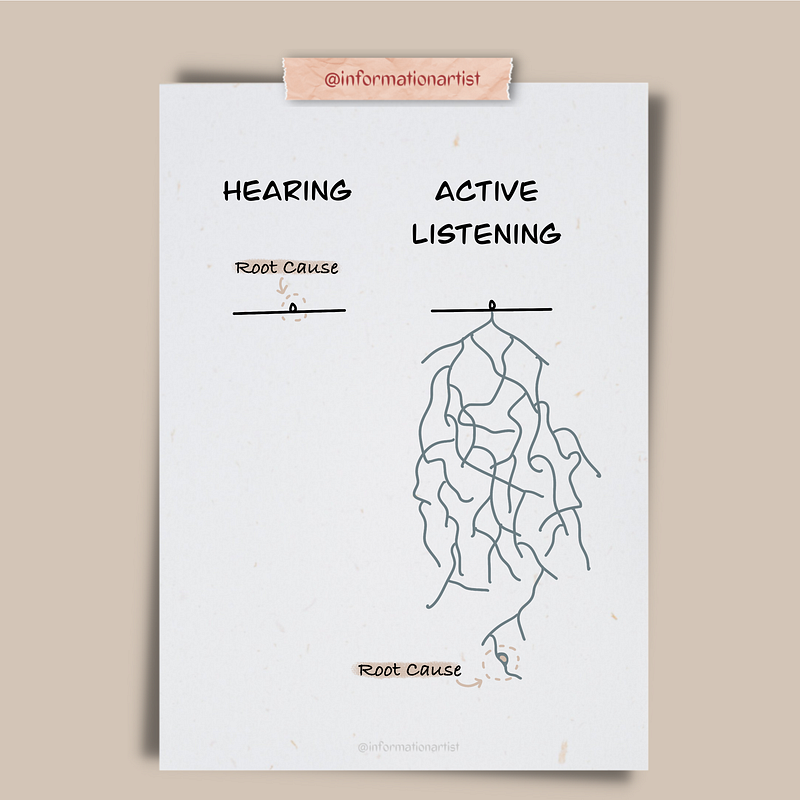
Active Listening visual by Information Artist

What other innovative meeting approaches have you observed or experimented with? Let us know your thoughts in the comments below.

If you’d like to go the extra mile to support me as a writer, please consider buying me a coffee or joining Medium using my referral link. Thank you :)

Meetings
Productivity
Leadership
Facilitation
Inclusion
Recommended from ReadMedium