
Activating a state of calm and relaxation and reducing overall stress chemistry
One of the most talked-about factors in today’s society for burnout and depression is the inability to calm down the nervous system and obtain a state of calm and relaxation to reduce stress. The chemistry of the brain behind this problem might be the solution you’ve been looking for.
After researching the topic of burnout and depression for some years I realized how little we talk about neuroscience when we talk about psychological effects. This is the reason why I would like to suggest some of the tips and tricks I learned from neuroscience to solve this chemical imbalance with no pills and no therapy! We can do this just by understanding how our body works and tuning back to it.
Sometimes we feel we need to push things to the limits ( adrenaline junkies ), to get to extreme situations, to reach the “specialists” because we need higher authority effects to be able to process our internal need of slowing down. We are in a constant rush for things and activities and we can’t listen to our body as it already sends us signals to slow down. I’ve written a piece about listening to your body and being able to distinguish between our body telling us something and our ego.
The need to have extreme reactions and results is also generated by our inability to stop when things are not so clear, confusing and still within the power of one breath to be solved. Our human brain is developed to react around really serious situations.
As a result, smaller and more subtle triggers don’t reach the reptilian brain of survival but instead go directly into our limbic brain which starts registering pain.
The more time we spend in this limbo( the stage between extreme reactions and cognitive behaviors), the more we expose ourselves to pain with no solutions.
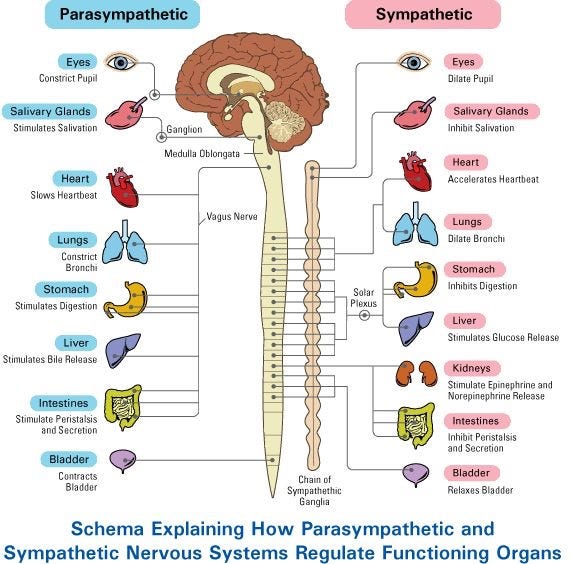
However, the response is in the small things that activate our parasympathetic system which helps us make decisions from a detached perspective, basically bringing our state from an emotional one in the limbic brain to the cognitive one where we can start processing what’s going one. Once we start doing this, we just need to have a consistent ritual about doing this in a small dosage every day with different types of activities included in our routine and we no longer need the extreme situations interventions.
How do we activate our Parasympathetic system?
I mentioned previously that you should look into ways to activate your Parasympathetic system. I’ve started the previous article connected to this one by introducing you to childhood development stages and how we develop coping skills in our childhood for dealing with emotions. That article also starts with the picture my dad took of me when I was 9 years old, sleeping at home with my favorite stuffed animal, a dog called Tete. Even at 9 years old, children need comforting and soothing if they had hard days emotionally. In early childhood, we call these things “safety blanket” but as we grow into adulthood, we continue using different strategies that have the same basic effect of activating our parasympathetic system which makes us feel at ease, protected, safe, loved.
In adulthood that may look like a Sunday of sickness spent at home in which my boyfriend took care of me and comforted me with the basic needs being met by him. He cooked, he let me write which is very relaxing for me, and in the evening he cuddled me to sleep. It might sound like nothing much, but we often forget how important it is to allow ourselves time to do the basic things like eat, sleep, take a bath, enjoy a good book.
Activating your parasympathetic system takes a bit of understanding of how you work as a human and what are the things you enjoy doing for yourself. If you also have a partner and you feel you need support to activate your parasympathetic system, you may also benefit from the help of this loved person who will help you regulate blood pressure levels which is the physical effect of the activation. My cheat sheet of tricks to activate it goes like this:
- Notice your breath and regulate the breathing with the shift of breath from one nostril to another.
In yoga, this breathing exercise is called Nadi Shodhana Pranayama. It’s a beautiful, easy way to start your meditation practice if you’re a fan of it.
2. Stretch your body and yawn or do yoga.
If you’re not a yoga fan like me, then doing some simple stretching should do the trick for you.
3. Increase your Heart Rate for short sprints either during HIIT ( Highly intensive training workout) or sex until you feel endorphins rushing into your body.
The key here is to find a way to have a powerful connection with your body in a short time interval. This will allow the mind to focus on the performance and forget a bit about the stimulation of the environment. It helps you “drown out the crowd”.
4. Use your imagery mind to produce beautiful sceneries in your mind to calm you down.
During my childhood, I used to practice active daydreaming and just stop and wonder about things I would like to experience and live. It helped me develop a positive mindset but also to create inception for how my life will unfold positively. I started this practice after some years in logopedic therapy as I was stuttering and could not speak at the speed of my thinking. My doctor taught me how to use imagery as a way to regain power over my words and envision before I speak so my brain gets to process the thoughts into words with this diversion that slowed the thoughts down allowing me to speak coherently. The rich inner world is one of the traits of highly sensitive people that I find myself into a lot.
5. Find textiles and physical symbols of relaxation.
You might want to reinvent the “safety blanket” or cuddle up with your pet or turn on a scented candle or take a long warm bath. It’s all part of the connection to your body and finding lower levels of arousal for your body to begin the process of defragmentation of all the interactions your body had to deal with in the overstimulated environments.
If these are not enough, it means you’re already in a much deeper pain and your normal dosage of soothing will not solve long term stress. Then the best way is to just take days off and do holiday activities until you restore your energy and you can deal with your body without extreme shut down or burnout states.
Burnout, as also explained here is not something we get in one day of stress. This is the result of long periods in which we neglect our needs for basic soothing and relaxation and we are unable to properly sleep. The easiest way to start losing our health is to start neglecting these needs and to think we can restore them in one magical bullet/pill/ holiday.
There is no quick solution to getting back our health once we are far along this path, however, our routines and rituals of self-care can help us. And as easy and silly and unimportant as it sounds, this is the only secret to the balanced life we’re all looking for.