

Daydreaming is hiding unprocessed trauma
Do you remember the moments in your childhood when you’d just sit somewhere and stare at the world daydreaming?
I am not sure if everybody did that as much as I did, but I thought that was one of my best times to spend time by myself. I grew up with some communication struggles. I was stuttering after the age of 3 when I got electrocuted by accident while playing with my dad’s „toys” who was supposed to watch me while he was fixing some electronics in the house. He’s an engineer and was always more introverted so he never really knew how to handle a baby and play other than keeping me by his side when he was doing something interesting. So I developed curiosity for geeky stuff and my „play” was with electronics. That’s how I got electrocuted. Because of the shock, I started having difficulty talking. I went to a speech-language therapist for about 7 years before I could get rid of this handicap. I was bullied in school. So my logopedician taught me to start planning my words and my ideas by taking the time way ahead from forming the words to release them on my mouth. He taught me that to stop the stuttering I need to give time for the words to come out. My brain has been hyperactive ever since this electrical shock ( because that’s the earliest memory I have of myself). Being hyperactive, I have a lot of „computation” power. I am basically like a supercomputer, always having opened a hundred tabs in the same time ( but I always know where the music is coming from 😅). With such a high cognitive capacity, I struggled to form phrases with both subject and predicate because I was processing new connections and new associations at the same time while speaking and I had difficulty to be understood by people. Kids were the worse trigger because they were impatient and had no mercy in bullying if I would get stuck. I got stuck often if I saw the faces of other people looking at me and waiting for me to conclude. I lost my ability to talk and words just didn’t come out properly. The stuttering was adjusted in 7 years of hard work and a lot of support from the therapist, family and my primary teacher who would allow me the time and space to respond in class when she asked questions.
But by the time I got rid of this problem, I already had formed a habit of isolating myself from people for hours on end looking out the window and daydreaming. This was the coping mechanism for my trauma. I internalized the defectiveness life trap. My speech was me. I was one with my stuttering. Daydreaming helped me think of a better future where all these challenges are miraculously overcome.
What does this mean from a psychological perspective?
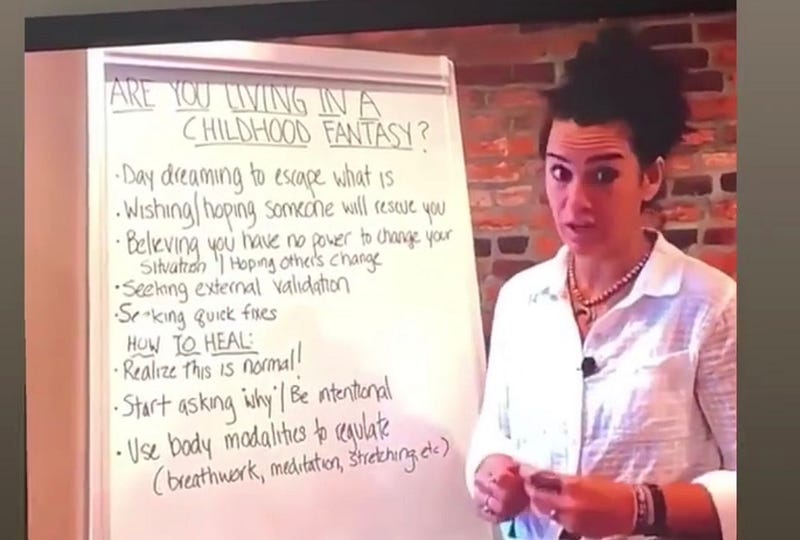
According to psychologist Nicole LePera ( which I highly recommend following on Instagram where she has a community of 1 mil people), childhood fantasy and daydreaming is a way to escape reality that is not as we expected. Wishing and hoping someone would rescue you is part of that unprocessed trauma when you became dependent on someone else to be able to handle your most immediate needs. The time of your childhood when the trauma happened is also relevant for how you develop other side effects from the initial trauma.
If your daydreaming stage occurred earlier than 13 years old, then you’re also in the „magical thinking” bubble.
Here are some of the related effects later in adulthood connected to this.
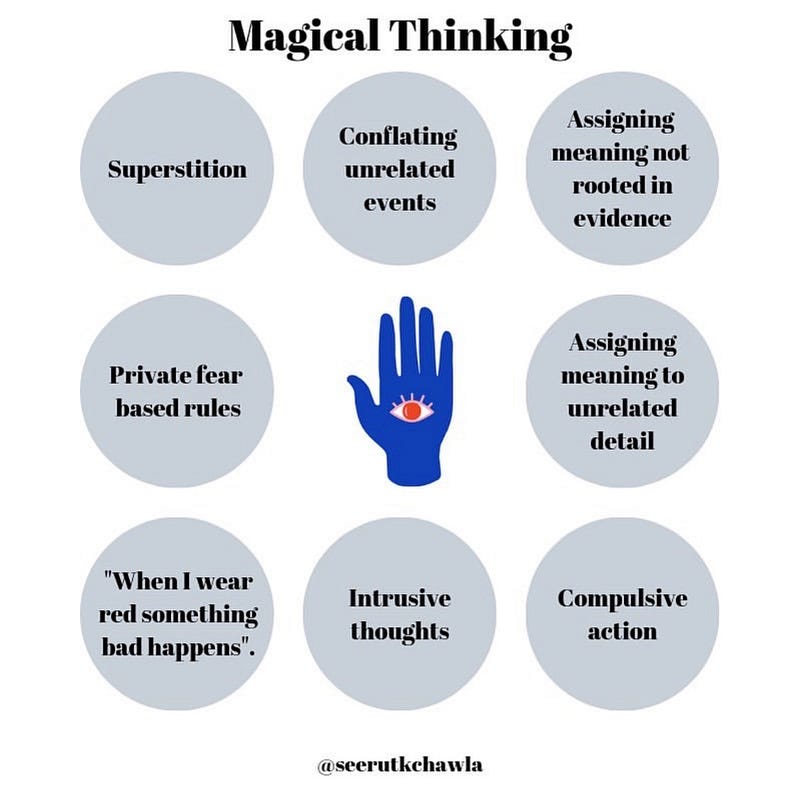
An example I saw in my borderline ex-boyfriend was that he was often assigning meaning to unrelated details. He would look into body postures and read into that and create scenarios of assumptions about my subconscious behaviors and my „true intentions” and feared that I was lying and not to be trusted. He had this belief deeply ingrained in his subconscious and was not able to bring it into a rational mind to see things for what they are. He also had 2 favorite colors which he thought to „bring him luck”. Moreover, he was a highly sensitive guy, and that’s how I also discovered that I am also highly sensitive but in a fundamentally different way than him. The sensitivities we develop are not universal. They all depend on the stage of our childhood development.
I recommend often mapping your childhood events from 2 perspectives:
- Relevant big events ( moving houses, parents getting a divorce, changing schools, moving countries, being abandoned by one or both parents, life-changing illnesses, etc)
- An emotional perspective of memories we hold on to ( good or bad, both types hold a very important doorway into your feelings from that time)
Then try to combine timelines and add details and context to the big events. The „fact-fullness” is the rational mind trying to make sense of the different details in the environment that caused the trauma. But the emotional timeline will indicate a new dimension and level of your same reality from a feelings perspective. You need to combine the 2 ways to go deeper into what caused this and what broke inside you during those moments and fix it.
From a philosophical perspective, I heard a lot of people going through healing processes saying that „some things you will never fix and you simply have to accept it”, but I believe this is just our rational ego protecting us from digging deeper because we are not ready to hit „reset” for our entire reference system. The incredible thing about our brain is that we have this phenomenal capacity to rewire completely all our cognitive maps. Neuroplasticity helps in restarting our brain to a new dimension as long as we are willing to work with it. And yes, life might never look the same after this, but it will be trauma-free. It will set the foundation for identity in the learning from the trauma, not the feelings generated. That only keeps them locked in a time capsule.
Once you made the timeline and connected the dots, try to see through association what coping mechanisms you’ve developed as an alternative to daydreaming.
For example, another really important behaviors people develop complementary or instead of daydreaming that hide the same types of traumas are:
- Gaming — I saw this behavior in my second long term relationship. He was more in a relationship with his computer than with me. One time, he spend 72 hours in an internet cafe without eating and sleeping and after the first 24h he didn’t even have money anymore to play and he just stayed to watch other people play. The intense desire to escape the reality that day was connected to the fact that we planned a month a nice date to go to a theater play and he was extremely anxious to go into adulthood with me. I was pushing „facts” connected to adulthood into him but he was stuck in his emotions unprocessed from his childhood. When I saw he was not replying, I called his friends to find out where he was and his friends called his parents ( we were 19–20 years old at the time) to drag him out of that place. He got criticized by his parents just like a little kid. There was and still is a deep need in him to escape this criticism and defectiveness trap in him through gaming. He is still triggered by criticism until today, 11 years later despite not gaming as much, he finds other escapism methods that bring me to the next one.
- Addictions — drinking, smoking, drugs, sex, binge eating, porn, masturbation, etc. — I’ve seen many people saying „I don’t drink much unless … ( fill in the blank)”. There’s an „excuse” for their behavior so they are not ready to admit to themselves the addiction so they are not willing to work on their trauma and heal it. The borderline ex told me that the girl before couldn’t accept his smoking anymore and he wanted to make sure I am „ok” with it. I told him that I am ok with whatever gives him peace and makes him feel comfortable while being aware of why he „needs” to do that. He didn’t like my answer and it triggered him to think I am not accepting him either. He reenacted his abandonment pattern and made me believe he is not willing to work on this issue because it was too much for him to work on. If I would have stayed in the relationship, it would have made me his victim in a toxic entanglement.
- Compulsive behaviors — reading ( yes, that’s mine), OCD, basically everything that is taken to an extreme. Observing these patterns might require some external people noticing and calling you out on the stuff you do, but still, introspection is the only way to get to the bottom of why this happened to begin with.
These are of course some of the worse forms of escapism you can find. There are mild versions of that as well. Travelling is one way to „disconnect” and to experience a different reality for a few days/ weeks. Then some people also like LARP-ing. My good friend Claus Raasted has been working on such immersive events for some years and is now working on helping leaders change their organizations through his experiences. Check out this cool place in Poland where you can experience an immersive experience in a castle and play a character from the Downton Abbey or from Harry Potter.
The truth about daydreaming, escapism and disconnecting from reality is that we all need that from time to time, but it’s important to be aware of why we need to do it and adjust the exposure to it so it doesn’t become second nature ( or Second Life). It’s a healthy coping mechanism as long as there’s balance and awareness into the decision making process and intention about its benefits.