
LEARNING TO MAKE GUNPOWDER
A Wacky Boys’ School, Recalled With Charm and Hilarity
‘Downton Abbey’ creator Julian Fellowes and other stars were among ‘a hundred little anarchists’ who attended
At the age of 10, I went to Confirmation classes taught by a nun who warned students up front how she would punish the disobedient.
You’d have to walk to the front of the class, turn your palms upward, and ask, “Sister, would you please hit me?” Then she would smack you across the palms with a ruler.
The idea behind this draconian practice was that it wasn’t enough for you to take your punishment — you had to show you knew you deserved it by asking to be hit.
That kind of discipline wasn’t unusual at postwar Catholic schools in my part of New Jersey, on the outskirts of “Sopranos” country, which served many children and grandchildren of immigrants who used such methods at home. Bruce Springsteen went to one not far away, where he was stuffed in a garbage can by a nun who said, “That’s where you belong.”
Some parents encouraged such practices. I knew a teacher who’d had a father tell her, “He needs a good whack every now and then to keep him in line.” By today’s standards, it’s hard to believe, but who couldn’t imagine a member of Tony Soprano’s crew saying something like that?
The nuns who meted out such punishments — the enforcers for the priests — inspired more fear than love. Their methods suggest why so many memoirs of Catholic education are horror stories or comedies of errors that wrest humor from pain.
Ysenda Maxtone Graham’s brief but captivating history of St. Philip’s School in London is an ocean apart — literally and metaphorically — from its American counterparts.
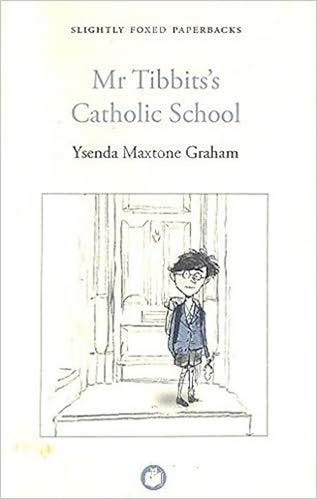
Mr Tibbits’s Catholic School is a love, not horror, story, from the granddaughter and biographer of the model for “Mrs. Miniver.” Maxtone Graham was the perfect person to write it: a witty and elegant English author and essayist well-connected enough to know important alumni but endowed with enough journalistic detachment to avoid puffery.
.jpg)
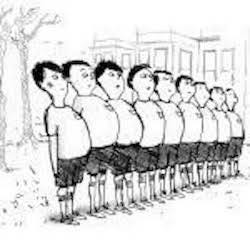
Her book has its share of startling anecdotes about the kinds of practices that used to be common at English boys’ schools: pants-down beatings with a slipper, meals of Spam and watery mashed potatoes that all children had to eat, and cricket games played in frigid weather in just a shirt and itchy wool shorts, with underpants forbidden.
But there’s also ample hilarity in its teachers’ efforts to control what a former student called “a hundred little anarchists in a London townhouse.”
The eccentric founding headmaster, Richard Tibbits, and the staff of St. Philip’s loved their charges in a way that, to judge by the spirited anecdotes in this book, was largely reciprocated.
Tibbits and his “ragbag of untrained teachers” had a quality that too rarely surfaces in memoirs about the nuns who taught students across the Pond: They were human.
The flesh-and-blood realities of those nuns were a perpetual source of mystery to their young American charges. It wasn’t uncommon for children to ask their parents, on first seeing their new teachers in black habits and stiff white wimples, “Do nuns go to the bathroom?”

No one would have been likely to ask that question about Tibbits, who resembled “a Beatrix Potter drawing of a very nice old pig” and was known for “extreme strictness” mixed with “the deepest kindness, compassion and care for the forming of boys’ minds and souls.” Nor would anyone have asked it about his wife, who chain-smoked Benson & Hedges as she presided over the ground-floor corridor in a nylon housecoat.
The Tibbitses attracted teachers with similar quirks. A retired Cockney customs officer, flush with his wife’s money, taught math and boasted, “I could buy the whole lot of you out.”
A beautiful Polish princess arrived as a maternity-leave replacement for one of the few women and fell in love with the geography instructor.
John Tregear, the French teacher, “wore black boots with red cork high heels and drainpipe trousers.” He leaps to immortality in one of the witty line drawings by Kath Walker that add as much to the book as Arthur Watts’ do to E.M. Delafield’s Diary of a Provincial Lady.
Students learned to make gunpowder
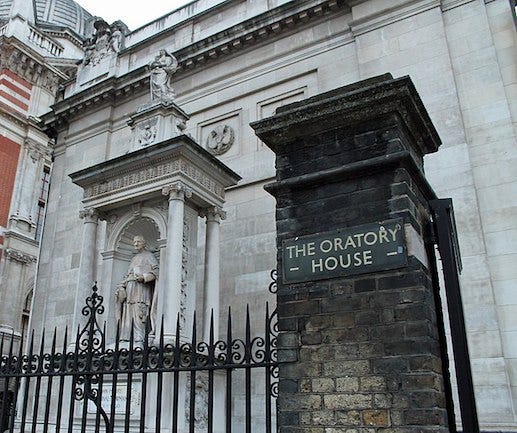
Tibbits had founded St. Philip’s in 1934 as an academy for the 7-to-13-year-old sons of middle and upper class Catholics, many of whom attended Mass at the Brompton Oratory, and his teaching methods suited that group.
As late as the mid-1960s, the school had no classes in biology or chemistry because, Tibbits said, “Gentlemen do not study science.”
When St. Philip’s finally dipped its toe into such fields, its approach might have struck some people as curious — students, for example, learned to make gunpowder.
“The teaching was old-fashioned, and sometimes downright out-of-date,” Maxtone Graham writes. “Textbooks had not been renewed since the founding of the school: in geography lessons, 1960s boys found themselves learning about the exciting new invention of the mechanical combine harvester — which had actually come into widespread use in the 1930s.”
The school had crucifixes and pictures of the Pope on the walls but welcomed doubters. And for all of its eccentricities, it had high educational and spiritual standards that boys strived to uphold.
One former student told Maxtone Graham that at the age of seven he was reading Treasure Island: “You were expected to be good at drawing, good at reading, interested in foreign lands.”
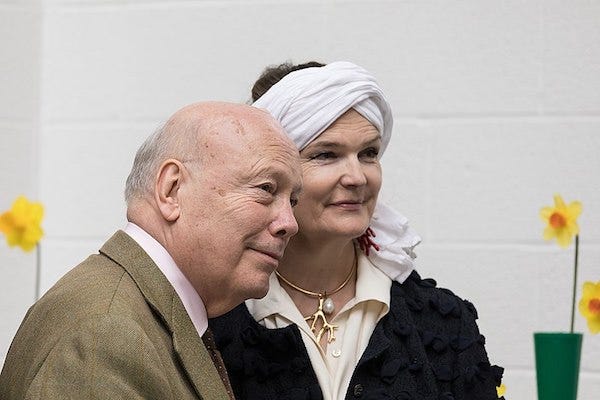
The high-achieving the families associated with the school suggest that students met those standards. “Downton Abbey” creator Julian Fellowes attended St. Philip’s. The biographer Antonia Fraser sent her son, Orlando, there, and the composer Andrew Lloyd Webber’s mother taught singing.
Maxtone Graham has rewarded the trust of the luminaries she interviewed in a book that’s a triumph of tone: She writes in the first person, so that her story reads like a memoir, but keeps her focus on St. Philip’s. In its offhand charm, her book resembles traditional English schoolboy stories less than Diana Athill’s Somewhere Towards the End. Mr Tibbit’s Catholic School might have been called Somewhere Towards the End of the Reign of Richard Tibbits.


St. Philip’s began to change after Tibbits died in 1967, and the process sped up in the 1980s as a new generation of working mothers dared to suggest improvements the old regime would not have tolerated. One was the purchase of a computer.
But the activities depicted on the St. Philip’s website suggest that it has retained its lively spirit, and Maxtone Graham’s melodious hymn to its idiosyncrasies shows how much American schools lose when they impose enough restrictions to drive away the most gifted staff members.
Ninety percent of the teachers at St. Philip’s were “certifiable,” the historian and former student Adam Zamoyski admits. “They wouldn’t be allowed within a mile of a school now. But that was often what made them such good teachers.”
You finish Mr Tibbits’s Catholic School thinking that those “certifiable” teachers might have suited Bruce Springsteen much better than that nun who stuffed him in a garbage can. For the boys lucky enough to go there, those were, as Springsteen might have said, “glory days.”
Janice Harayda is an award-winning critic and journalist who has been a writer and editor for Glamour and the book critic for Ohio’s largest newspaper. She has written for many major print and online media, including the New York Times, the Wall Street Journal, the Washington Post, Newsweek, and Salon.
You might like two of my other stories: