
The Culture Police Have Come For Beatrix Potter — And It’s A Crime
Why Peter Rabbit’s creator deserves a get-out-of-jail-free card
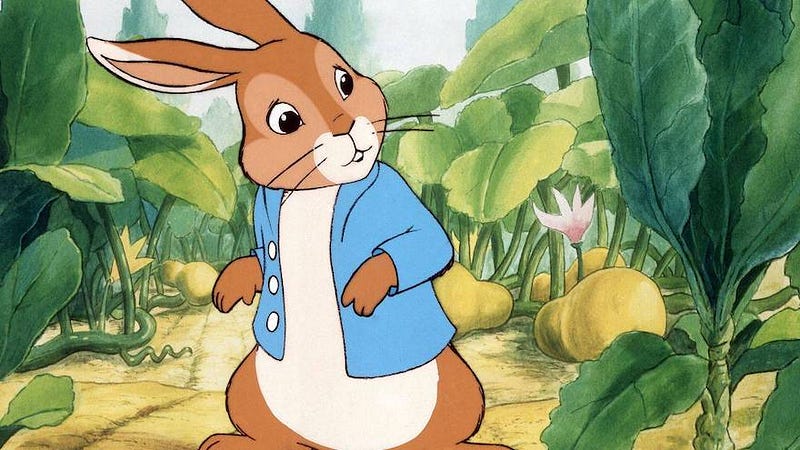
Poor Beatrix Potter. Until recently, the creator of Peter Rabbit has avoided getting hauled into court by the academic police who patrol the literary highways, looking to arrest long-dead authors who violate cultural norms that didn’t exist in their day.
But no more. A few months ago, a postcolonial studies expert slammed Potter for failing to say enough about her debt to an oral storytelling tradition brought to America by enslaved men and women from Africa.
A genius all her own
Never mind that Potter never visited the U.S. and used words and pictures with a genius all her own. Her lapse has “fed into a damaging and reoccurring appropriation of Black cultural forms that continues today,” Emily Zobel Marshall wrote in the Conversation.
There’s so much wrong with that argument that it might not be worth mentioning except for one thing: It’s typical of the trumped-up charges being leveled against authors by vigilantes in universities in America or, in Zobel Marshall’s case, Britain.
Let’s start with its most obvious injustice to one of the greatest author-illustrators in picture book history.
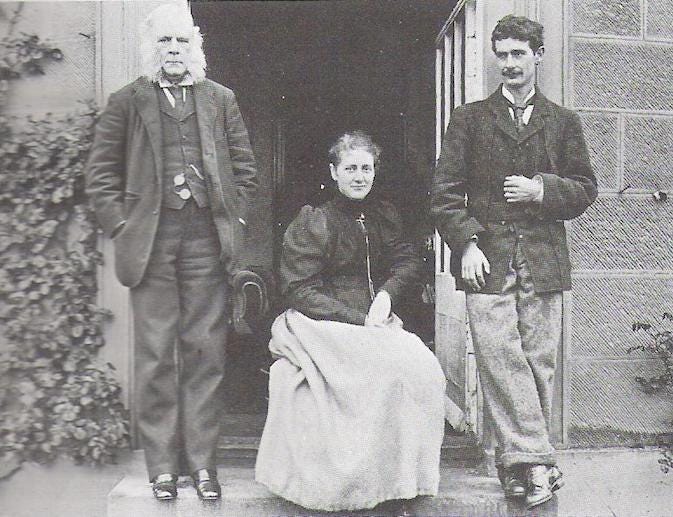
Literary historians have long known that Potter drew on varied sources for books like her tale of Peter Rabbit, a high-spirited rabbit who ignores his mother’s warnings, sneaks into a farmer’s garden, and barely escapes capture.
Potter’s influences included the American writer Joel Chandler Harris and his tales of Uncle Remus and Brer Rabbit, which have minstrel-like aspects that chafe against modern sensibilities. More than four decades ago, a folklore scholar studied the Remus stories and found that 140 had African origins, 27 had European, and 5 had Native American.
There’s simply nothing new in the idea that Potter was influenced by African-American storytelling traditions as Harris interpreted them. She said as much in a letter to her publisher that admitted that The Tale of Mr. Tod imitated Uncle Remus. That’s more than a lot of authors do in acknowledging their influences.
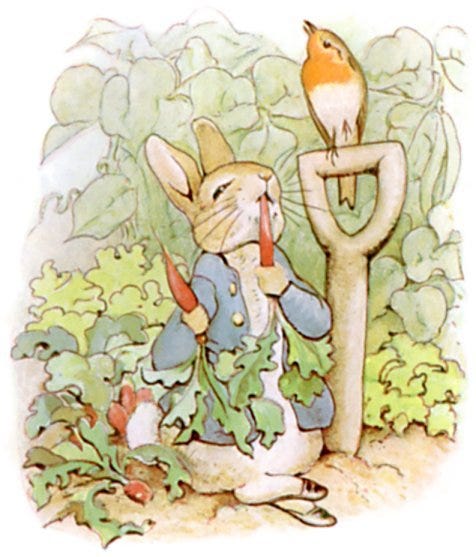

Zobel Marshall allows that the borrowing is not “the main issue” with what Potter did: “This is the traditional way that folktales travel across cultures and geographies.”
Nor does she accuse Potter of plagiarism but of a selective borrowing of ideas, themes, or motifs, the kind that most authors do at times.
One Remus story, for example, resembles her drawings of Peter Rabbit and his cousin, Benjamin Bunny, “with both rabbits wearing fitted jackets and hats in an English country garden.” How do we know that Potter got the idea for the garden from Harris and not from gardens she’d seen in her native England? Apparently, we don’t.
Other charges against Potter are equally speculative, such as that Peter’s filching of radishes from a farmer has to be “directly linked to the need for enslaved people to steal food from their masters to survive” — as though nothing else could explain why an animal might bite into, say, an apple from a neighbor’s tree.
So what, really, did Potter do wrong? As Zobel Marshall sees it, the problem lies not with the crime but with the coverup. Potter fails to credit Harris’ influence on her dust jackets or elsewhere:
“Potter never publicly admitted the source of any inspiration for her drawings, plotlines or protagonists.”

Zobel Marshall doesn’t mention that the original books (which Potter wanted to fit into “small hands”) were tiny. Are we to believe that on those diminutive dust jackets Potter should have listed all those African, Native American, and European influences in the Harris tales she read? You seldom see that much detail even in today’s much larger picture books.
Clearly, if credit is due, authors should give it regardless of any technical issues. Yet Potter found inspiration in so many sources, it’s unclear which — if any — deserve credit.
Even less clear is how any borrowing contributed to that “damaging…appropriation of Black cultural forms” that Zobel Marshall excoriates. Brer Rabbit is a trickster, and trickster characters, particularly coyotes, have a vibrant role not just in African-American but in the Native American folktales that influenced Harris directly and perhaps Potter indirectly.
So why accuse Potter of the “appropriation of Black cultural forms” and not Native American? If “appropriation” is occurring, doesn’t it hurt Native Americans as much as black Americans?
These questions suggest a central problem with the charges of “cultural appropriation” that are regularly flung at authors: “Appropriation” is in the eye of the beholder.
Zobel Marshall’s specialties include “African, Caribbean, African-American and Black British literatures and cultures.” What she sees as a debt to black cultural forms, an expert on Native American forms might have seen as an homage to those traditions.
Literary scholars perform a valuable service in tracing the influences on an author’s work, which can reveal hidden depths. And there’s nothing wrong with reminding a new generation of what an older one knew.
But such efforts shouldn’t involve accusing authors of sins they didn’t commit, such as “appropriation,” or that weren’t sins in their lifetimes. Authors are always imitating others. That’s one of the main ways they learn. Often the greater the author, the greater the influences, and not all require a formal acknowledgment.
Shakespeare borrowed plots, ideas, and characters from Holinshed’s Chronicles for some of his greatest plays, and he isn’t less great for his borrowing. Neither is Beatrix Potter.
Authors’ books need to stand up to close scrutiny by critics and others. But the excesses of overzealous literary police hurt everyone. Unjust accusations do more than damage authors’ reputations. They can keep people away from worthy books and distract attention from what matters most: the quality of a writer’s work.
@JaniceHarayda is an award-winning critic and journalist who has been the book editor of Ohio’s largest newspaper and a vice president of the National Book Critics Circle. Her reviews or other articles have appeared in major media including the New York Times, the Wall Street Journal, the Washington Post, Newsweek, and Salon. She writes regularly about books, publishing, and the media on Medium.
You might like my other stories: