
A Lesbian Kid and a Library Card
Growing up before Google
The mention of Tumblr as a space for finding community in Helianthos’ story about growing up queer made me think about childhood and young adulthood in my pre-internet world.
My parents weren’t into computers, so even when dial-up internet starred to become popular, we didn't seek it out in our house. I didn’t have an email address until the last quarter of my B.A. degree when the professor required that we post questions and responses to a bulletin board she’d set up about the poet and artist William Blake.
I had to take an earlier bus to the university so that I’d have time to make my required posts from the computer lab on the first floor of the library. I wasn’t happy about it. Weren’t the other class assignments enough?
I’d call a William Blake discussion forum a pretty unusual introduction to the internet, but that’s how things sometimes happened back in 1996.
I didn’t have any out gay people in my life, except one older gay couple through a pretty distant connection (they were my grandpa’s girlfriend’s friends), and I’d maybe met them once or twice and only knew them by name.
I didn’t know for sure that I was gay until I was 21. Nobody I knew talked about this kind of stuff when I was a kid, and of course we couldn’t google things.
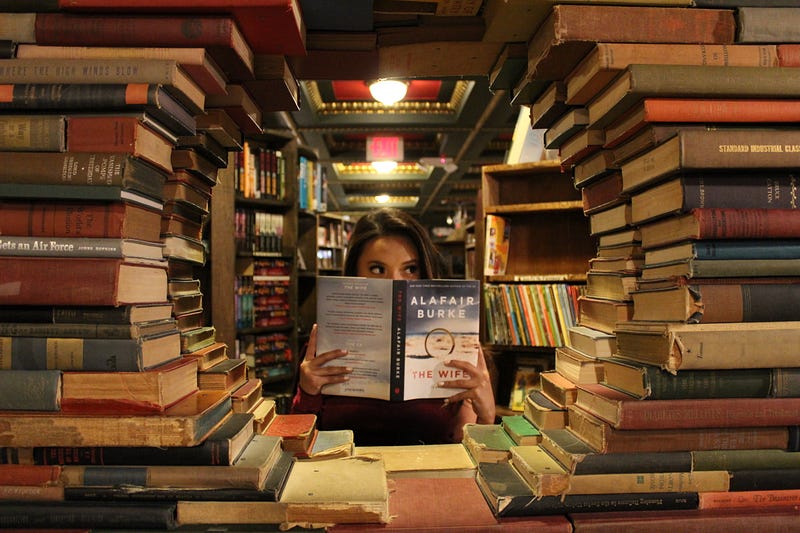
We had the library, though, and I did sometimes read novels that helped me understand what it meant for women to love each other.
As a teenager, I had a job shelving books in a public library, and I remember that I could recognize the books from Naiad Press, a lesbian publisher whose paperbacks were distinctly tall and rectangular. I never checked any of them out, but I knew they were there.
In the books I did take home to read, I didn’t seek out overtly queer content, but I had a knack for finding stories where the lesbian storyline wasn’t revealed on the book cover but crept up on the reader as the book went on.
I checked out a novel called Katherine by Anchee Min, about a Chinese student who falls in love with her visiting American teacher, though she never uses those words. And later I found the novel Some Girls by Kristen McCloy, about a young woman who moves to New York and finds herself captivated by her female neighbor.
Books showed me versions of reality in which that I wouldn’t be alone as a queer person, and they helped me understand what lesbian love actually meant. Before I read novels like these, I only knew the disparaging terms and descriptions, not what love was like between women at all.
I’m young enough that I did have the internet when I was 21 as I started coming to terms with my sexuality, and it was definitely a help to be able to talk with other queer people.
We didn’t have the wealth of resources available now, but I happened to find a website for international email “pen pals” where I found women in other countries who wanted to email each other just to talk. I liked having these non-romantic email friends, much like the postal mail pen pals I’d had when I was younger.
The internet has a big role in my life, and I have a lot of appreciation for it. At the same time, I’m grateful that books came first for me.
My thanks to James Finn for the queer as kids writing prompt, and I hope to read a little about the offline or online journeys of other folks in the comments if you want to share.

This story is a response to the Prism & Pen writing prompt, Queer as Kids: Or … Can We Please Teach Love?


