
Photography, Nature, Hummingbirds
A Hummingbird Named Agave
“Big Red”, our dominant male Allen’s Hummingbird, has a new rival
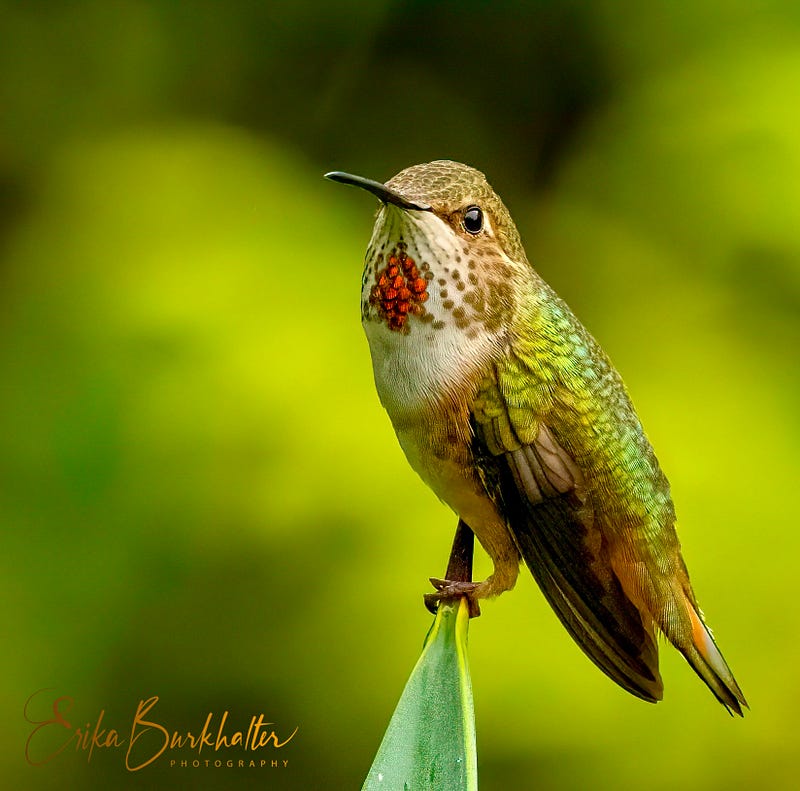
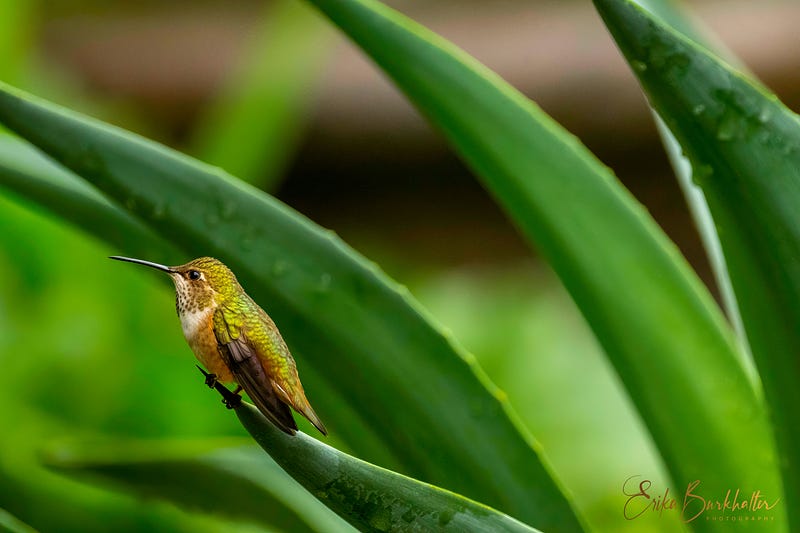
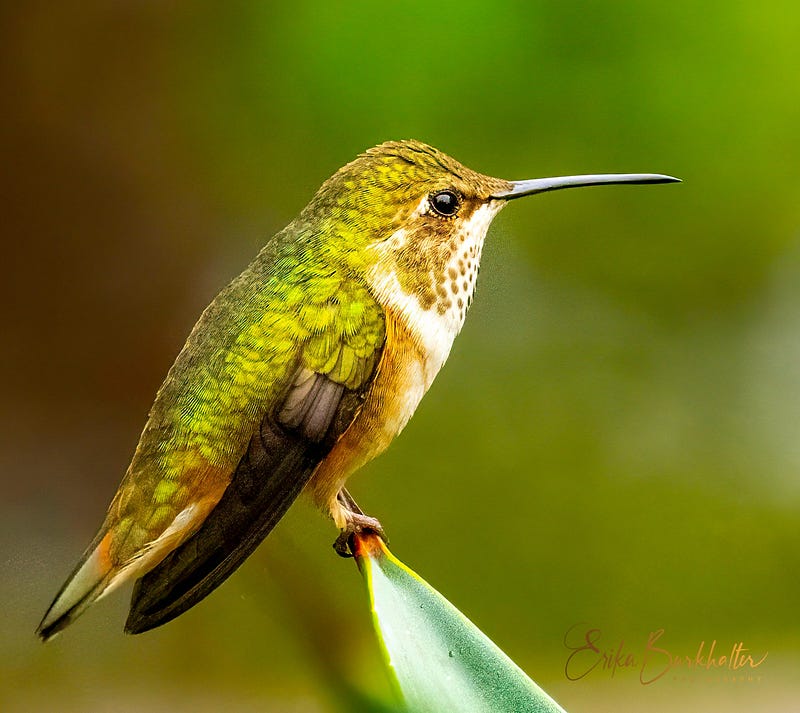
I’ve nicknamed him “Agave,” because he spends most of the day perched on the tip of the giant agave in the center of my backyard, perfectly positioned in the midpoint between the water fountain and the feeder, which he has claimed as his own.
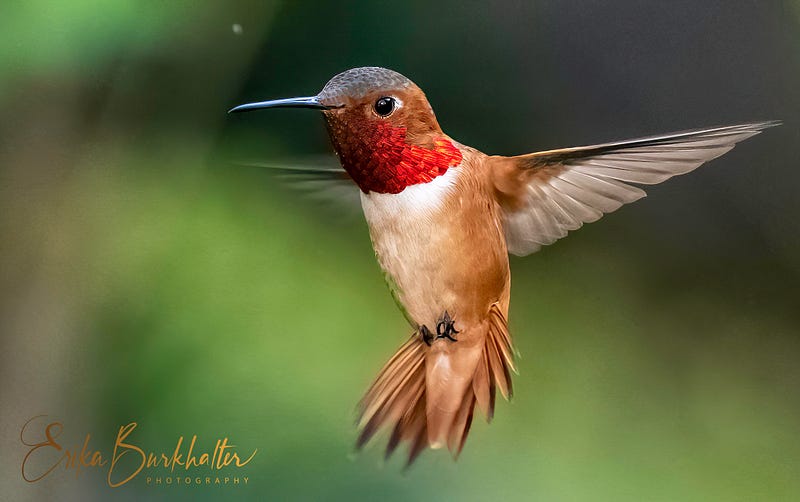
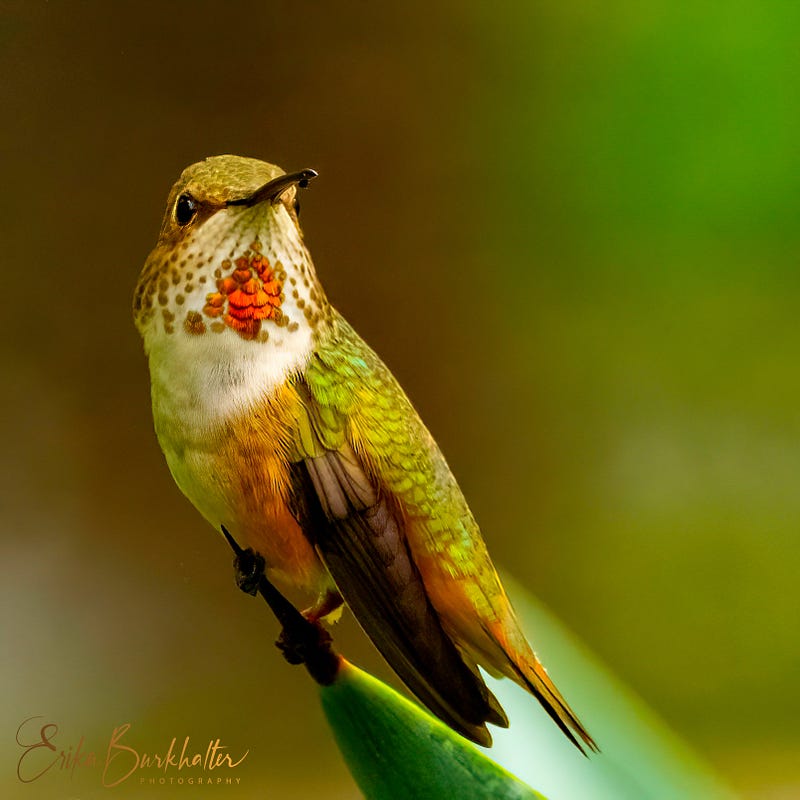
He’s not really “all-grown up” yet. He’s just started to sport those patches of red on his chin. Just for contrast, this is “Big Red,” who has ruled the yard for a couple of years. As you can see, his flashy red “gorget” is in full bloom.
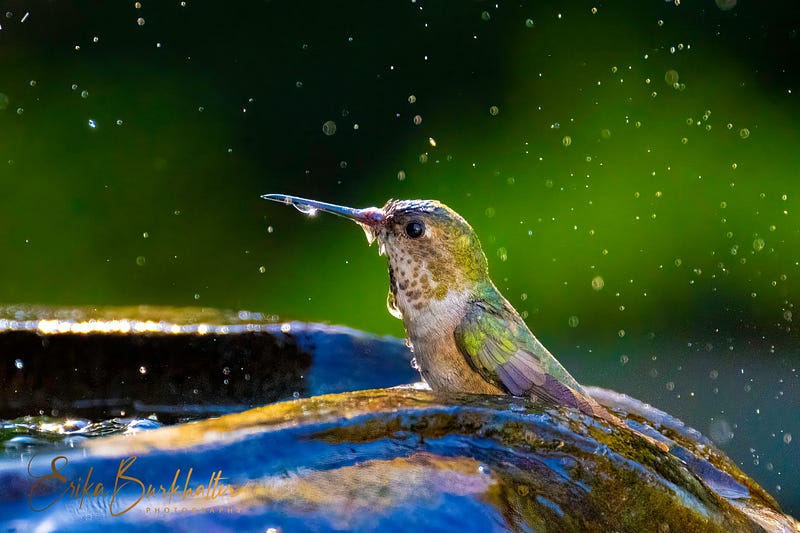
The young males are often hard to distinguish from the females, who also have a just a few little red spots on their chins. This is “Eugenia,” who loves to bathe in our water fountain. As you can see, her markings are similar to Agave’s.
But you can clearly tell that Agave is a male by his behavior. The females tend to spend time in trees, where they are more camouflaged. However, the boys spend their days defending their “turf,” buzzing and screeching and dive-bombing all the other males.
Here, you can see that Agave is on high alert.
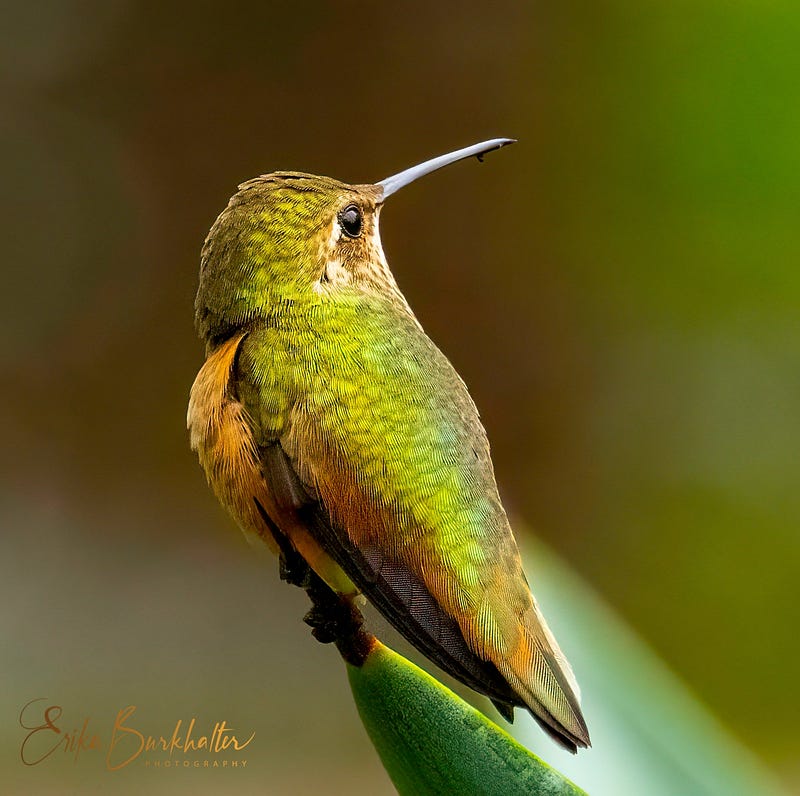
Wait! Does he hear someone coming?
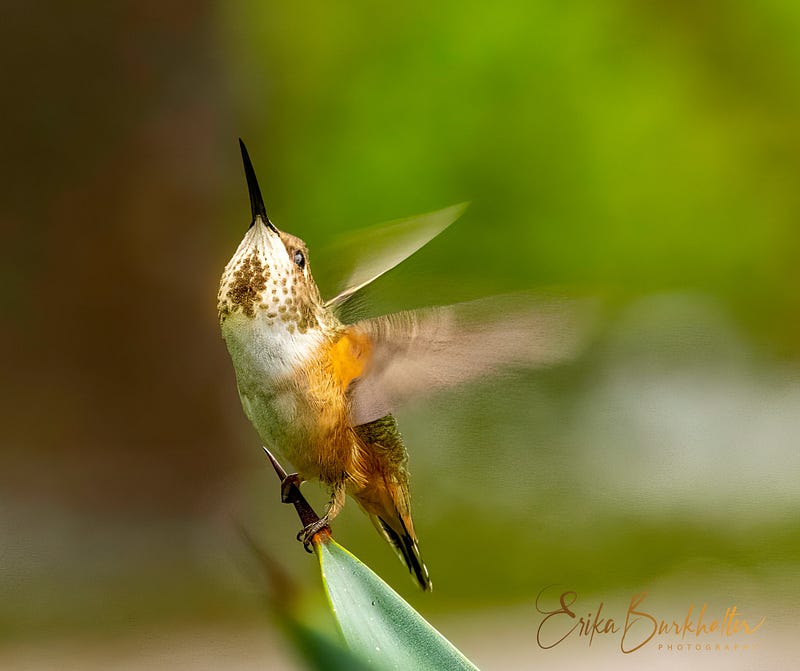
Success! Agave chased that other male away. Now, he’s back on patrol.
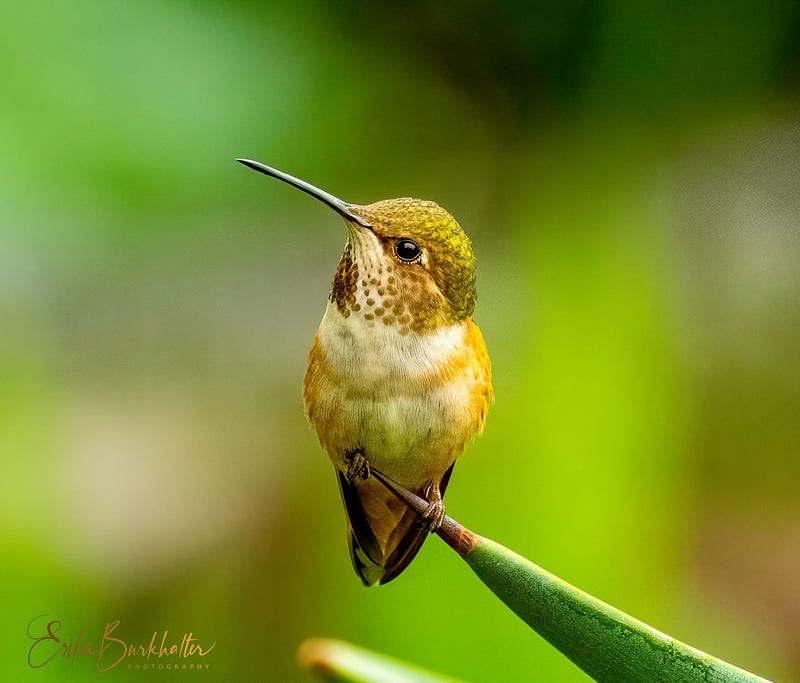
You might notice that, depending on which way Agave is facing toward the sun, his red neck feathers can either look very flashy or quite dark. This is because hummingbirds owe their shimmer not to pigmentation, but to tiny air pockets in their feathers.
If you think about a soap bubble in the sunshine, you get the idea of what causes the shimmer at these birds’ throats. Their feathers bear melanosomes, which are so tiny that 100 million of them can fit on a single hummingbird feather.
We are lucky enough to live in Southern California, where the Allen’s Hummingbirds (and the Anna’s too) are permanent residents. So, I get the chance to really watch them and get to know their personalities. They live for several years too. The average age is about four years, but the oldest known bird was banded and re-released and found again five years and eleven months later.
If you look at the photos of Agave perching, you can see that he has no knees. Their feet never touch the ground. They spend their lives perched on twigs and branches. They also thermoregulate by tucking their feet into their bodies when they are cold and by letting them dangle when it is warm outside.
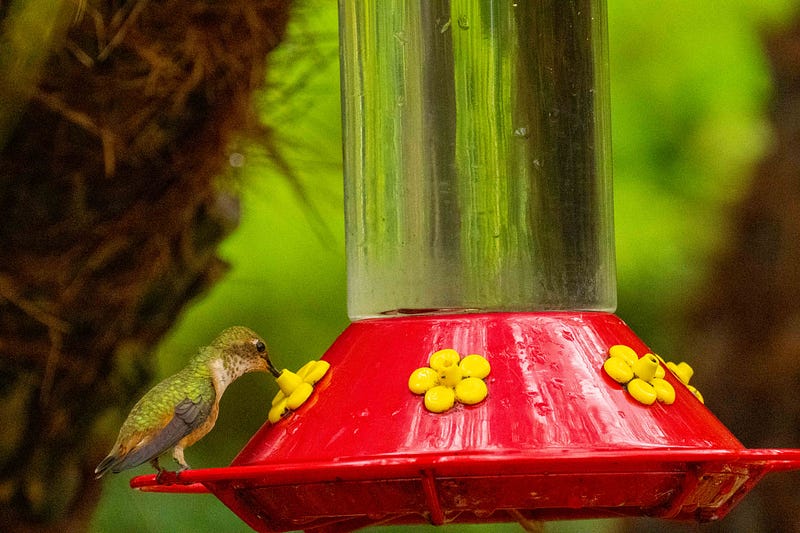
Here is Agave at his feeder. He’s only about 2–4 grams and only 3.5 inches long. He is tiny but mighty. And he defends his feeder with great ferocity.
I hope that you enjoyed reading about Agave. We find him quite entertaining.
You might also enjoy reading about “Big Red,” “Eugenia,” “Mrs. Squirrel.” and some of the other inhabitants of our garden.
Erika Burkhalter is a yogi, neurophilosopher, cat-mom, photographer, and lover of travel and nature, spreading her love and amazement for Mother Earth’s glories, one photo, poem, or story at a time. (MS Neuropsychology, MA Yoga Studies).
If you enjoyed this piece, you might consider subscribing to my stories. You’ll get an alert whenever a story gets published. While I do normally post my stories with free “friends” links on social media, if you enjoy reading on medium, you can help the many talented writers here by joining (that’s my affiliate link). It helps to support the arts and to keep us writing!
Photo and story ©Erika Burkhalter. All rights reserved.


